Close Menu
  • Home
  • UNSUBSCRIBE
  • News
  • Lifestyle
  • Tech
  • Entertainment
  • Sports
  • Travel
Facebook X (Twitter) WhatsApp
Trending
  • Poop-encrusted chamber pots from the Roman Empire reveal oldest known human cases of Crypto parasite
  • Weapons of the world quiz: Can you identify these historical objects of war?
  • ‘The detectors never stopped beeping!’ Nearly 3,000 coins discovered in field are Norway’s largest Viking hoard on record
  • ‘We can no longer ignore diseases in the deep human past’: Malaria influenced early humans’ migrations across Africa, study suggests
  • Used SpaceX rocket stage could hit the moon’s Einstein crater this summer, report finds
  • Does Wegovy carry a risk of ‘eye stroke’ and vision loss? Here’s what the data says.
  • Heartbeats physically stop cardiac cancer from growing — hinting that ‘squeezing’ tumors could be a good way to thwart them
  • Gone in 9 seconds: Claude AI deletes an entire company’s database, then confesses
Facebook X (Twitter) WhatsApp
Baynard Media
  • Home
  • UNSUBSCRIBE
  • News
  • Lifestyle
  • Tech
  • Entertainment
  • Sports
  • Travel
Baynard Media
Home»Lifestyle»Australia’s pink lakes: The remnants of ancient rivers now teeming with microbes that make rosy pigments
Lifestyle

Australia’s pink lakes: The remnants of ancient rivers now teeming with microbes that make rosy pigments

EditorBy EditorAugust 1, 2025No Comments3 Mins Read
Share Facebook Twitter Pinterest LinkedIn Tumblr Reddit Telegram Email
Share
Facebook Twitter LinkedIn Pinterest Email

QUICK FACTS

Name: Lake Hillier, Pink Lake and others

Location: Western Australia

Coordinates: -34.09487137998776, 123.20277096721424

Why it’s incredible: Bacteria and microalgae turn these lakes bubblegum-pink.

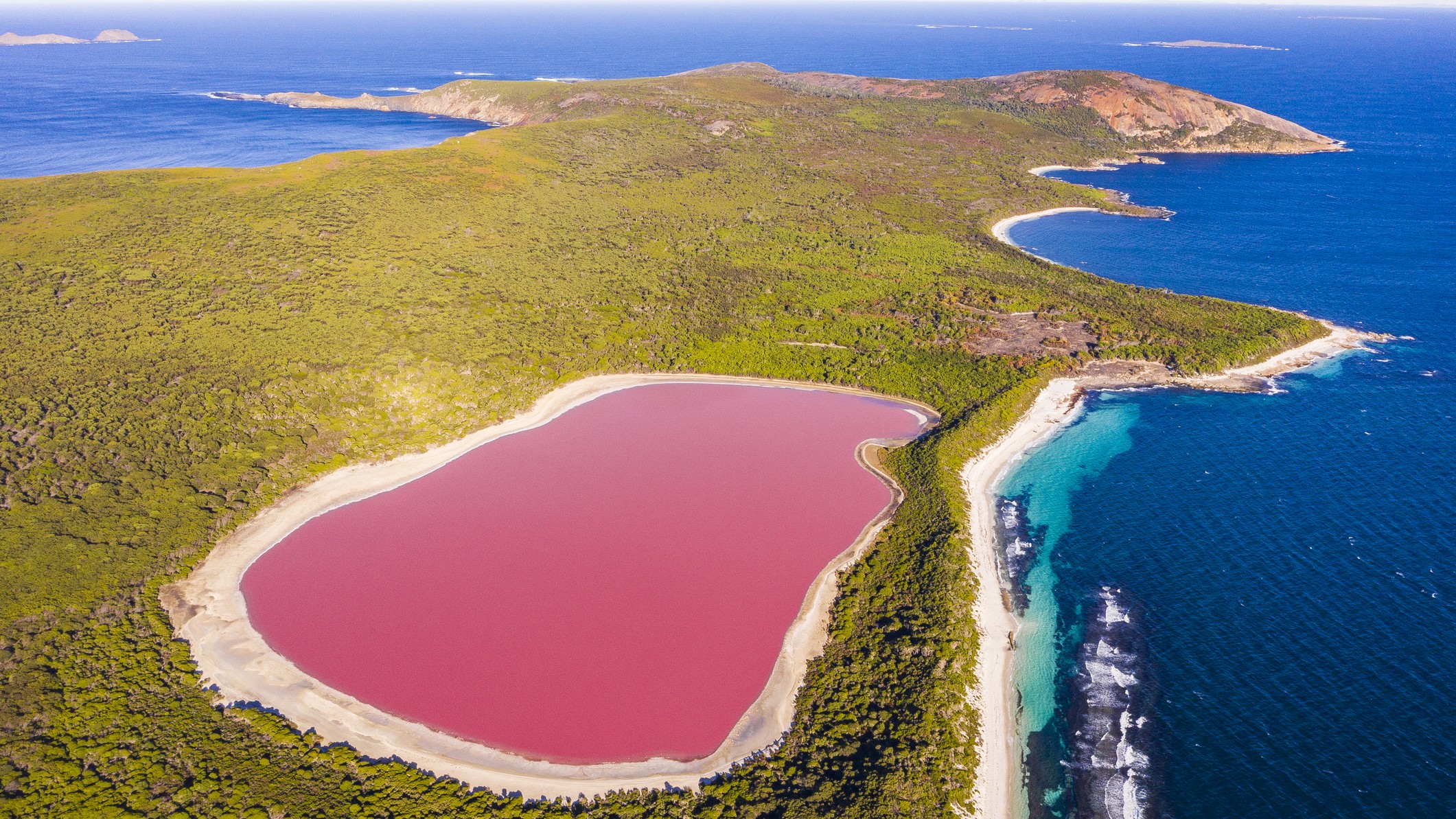
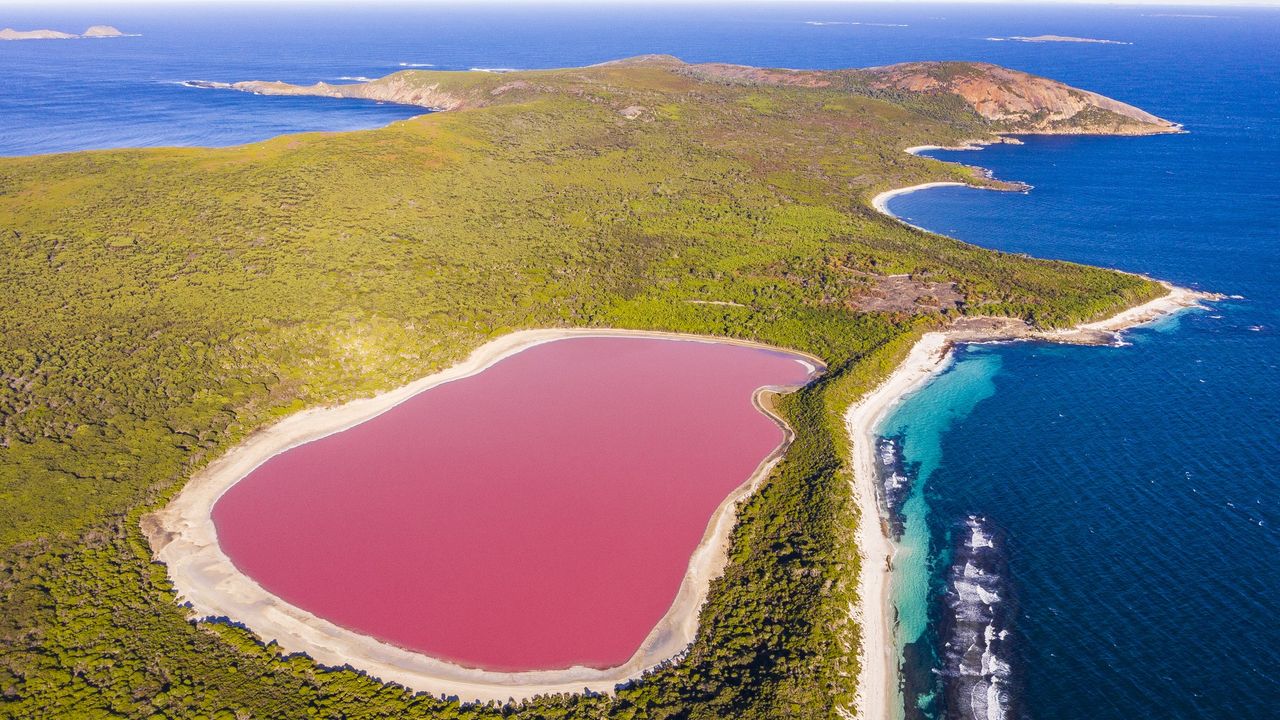
Australia’s pink lakes are bodies of water that harbor rare, pigment-producing microbes. The lakes are about 10 times saltier than the ocean, attracting algae and bacteria that churn out beta-carotene — a red-orange pigment that also gives carrots, crayfish and flamingos their characteristic colors.

Most of the country’s pink lakes are found in Western Australia, which has around a dozen. The lakes are the remnants of rivers that flowed across the landscape more than 15 million years ago, which makes them thousands of years old, according to National Geographic.

As the ancient rivers dried up, pockets of water were left over and partially evaporated over time, concentrating salt and attracting salt-loving microorganisms such as Dunaliella salina and Salinibacter ruber — which are single-celled algae and red bacteria, respectively. D. salina and S. ruber produce beta-carotene when exposed to sunlight, turning the lakes different shades of pink depending on salt levels. Beta-carotene protects these microorganisms from ultraviolet rays and absorbs light energy, enabling them to thrive and reproduce, according to National Geographic.


You may like

But pink lakes are fragile because changes in salinity can upset their regular inhabitants. Heavy rainfall, for example, can dilute the lakes’ salt content to the extent that photosynthetic algae completely replace D. salina and S. ruber.

This recently happened at Lake Hillier on Western Australia’s Middle Island, according to ABC News. Lake Hillier previously harbored a wide array of pigment-producing microbes, but extreme rainfall due to climate change in 2022 disturbed this community. As a result, the lake turned from pink to blue-gray — but experts think it could recover within the next 10 years if salinity returns to its previous levels.

Related: Lake Natron: The caustic, blood-red lake in Tanzania that turns animals to ‘stone’

Lake Hillier is not the only pink lake to have lost its rosy tint. Pink Lake, situated near Esperance in Western Australia, turned blue-gray in the 2000s after a century of salt mining. Salt was extracted to make table salt, salt licks for livestock, and preservatives for meat and hides, according to National Geographic. By the early 2000s, there was not enough salt left in Pink Lake for species like D. salina and S. ruber to survive. As photosynthetic algae took over, the change in color was so dramatic that locals lobbied for the lake to be renamed.

Get the world’s most fascinating discoveries delivered straight to your inbox.

Unlike Lake Hillier, experts don’t think that Pink Lake will recover naturally any time soon — but scientists have suggested artificially pumping salt from nearby salt lakes into Pink Lake to return it to pre-mining levels.

Pink lakes are feeding grounds for nomadic and migratory birds, and they host invertebrates like brine shrimp and salt lake snails, which makes them valuable ecosystems. Extreme environments like pink lakes also help scientists to understand the potential for life on Mars.

“They still produce some of the toughest organisms on the planet,” Angus Lawrie, a conservation biologist and research associate at Curtin University in Australia, told National Geographic.


Discover more incredible places, where we highlight the fantastic history and science behind some of the most dramatic landscapes on Earth.

Source link

Share. Facebook Twitter Pinterest LinkedIn Tumblr Email
Previous ArticleTrump urges Republicans to ‘vote the exact opposite’ way Sen. Susan Collins does
Next Article For one day only, MLB is turning a NASCAR track into a record-breaking stadium
Editor
  • Website

Related Posts

Lifestyle

Poop-encrusted chamber pots from the Roman Empire reveal oldest known human cases of Crypto parasite

April 30, 2026
Lifestyle

Weapons of the world quiz: Can you identify these historical objects of war?

April 30, 2026
Lifestyle

‘The detectors never stopped beeping!’ Nearly 3,000 coins discovered in field are Norway’s largest Viking hoard on record

April 30, 2026
Add A Comment

Comments are closed.

Categories
  • Entertainment
  • Lifestyle
  • News
  • Sports
  • Tech
  • Travel
Recent Posts
  • Poop-encrusted chamber pots from the Roman Empire reveal oldest known human cases of Crypto parasite
  • Weapons of the world quiz: Can you identify these historical objects of war?
  • ‘The detectors never stopped beeping!’ Nearly 3,000 coins discovered in field are Norway’s largest Viking hoard on record
  • ‘We can no longer ignore diseases in the deep human past’: Malaria influenced early humans’ migrations across Africa, study suggests
  • Used SpaceX rocket stage could hit the moon’s Einstein crater this summer, report finds
calendar
April 2026
M T W T F S S
 12345
6789101112
13141516171819
20212223242526
27282930  
« Mar    
Recent Posts
  • Poop-encrusted chamber pots from the Roman Empire reveal oldest known human cases of Crypto parasite
  • Weapons of the world quiz: Can you identify these historical objects of war?
  • ‘The detectors never stopped beeping!’ Nearly 3,000 coins discovered in field are Norway’s largest Viking hoard on record
About

Welcome to Baynard Media, your trusted source for a diverse range of news and insights. We are committed to delivering timely, reliable, and thought-provoking content that keeps you informed
and inspired

Categories
  • Entertainment
  • Lifestyle
  • News
  • Sports
  • Tech
  • Travel
Facebook X (Twitter) Pinterest WhatsApp
  • Contact Us
  • About Us
  • Privacy Policy
  • Disclaimer
  • UNSUBSCRIBE
© 2026 copyrights reserved

Type above and press Enter to search. Press Esc to cancel.