Close Menu
  • Home
  • UNSUBSCRIBE
  • News
  • Lifestyle
  • Tech
  • Entertainment
  • Sports
  • Travel
Facebook X (Twitter) WhatsApp
Trending
  • Scientists discover giant, fan-shaped structure deep beneath the East Antarctic Ice Sheet
  • Artemis III crew revealed: NASA announces astronauts for ‘one of history’s most complex missions’
  • China unveils first-of-its-kind ‘dual-core’ quantum computer — its makers say it improves stability and efficiency
  • PMOS (formerly PCOS): Symptoms, diagnosis and treatment
  • 2,000 years ago in Scotland, people removed a corpse’s brain and fashioned the arm bones into tools
  • Scientists are fast-tracking 3 Ebola vaccines in hopes of shortening the outbreak — when could they be ready?
  • 2 vanished ‘super Earths’ once orbited near Uranus and Neptune, new study hints
  • Ditch full of 7,000-year-old headless human skeletons discovered in Slovakia, baffling archaeologists
Facebook X (Twitter) WhatsApp
Baynard Media
  • Home
  • UNSUBSCRIBE
  • News
  • Lifestyle
  • Tech
  • Entertainment
  • Sports
  • Travel
Baynard Media
Home»Lifestyle»Astronomers spot an enormous explosion from the 1st black hole ever photographed
Lifestyle

Astronomers spot an enormous explosion from the 1st black hole ever photographed

EditorBy EditorDecember 25, 2024No Comments2 Mins Read
Share Facebook Twitter Pinterest LinkedIn Tumblr Reddit Telegram Email
Share
Facebook Twitter LinkedIn Pinterest Email

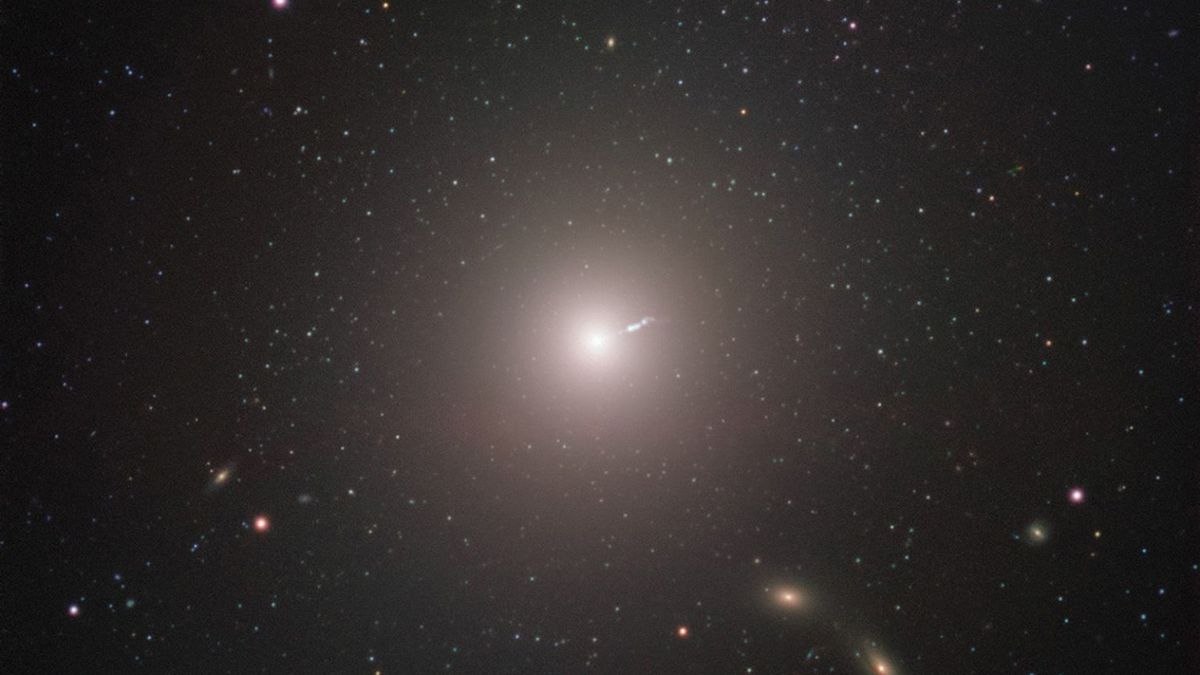
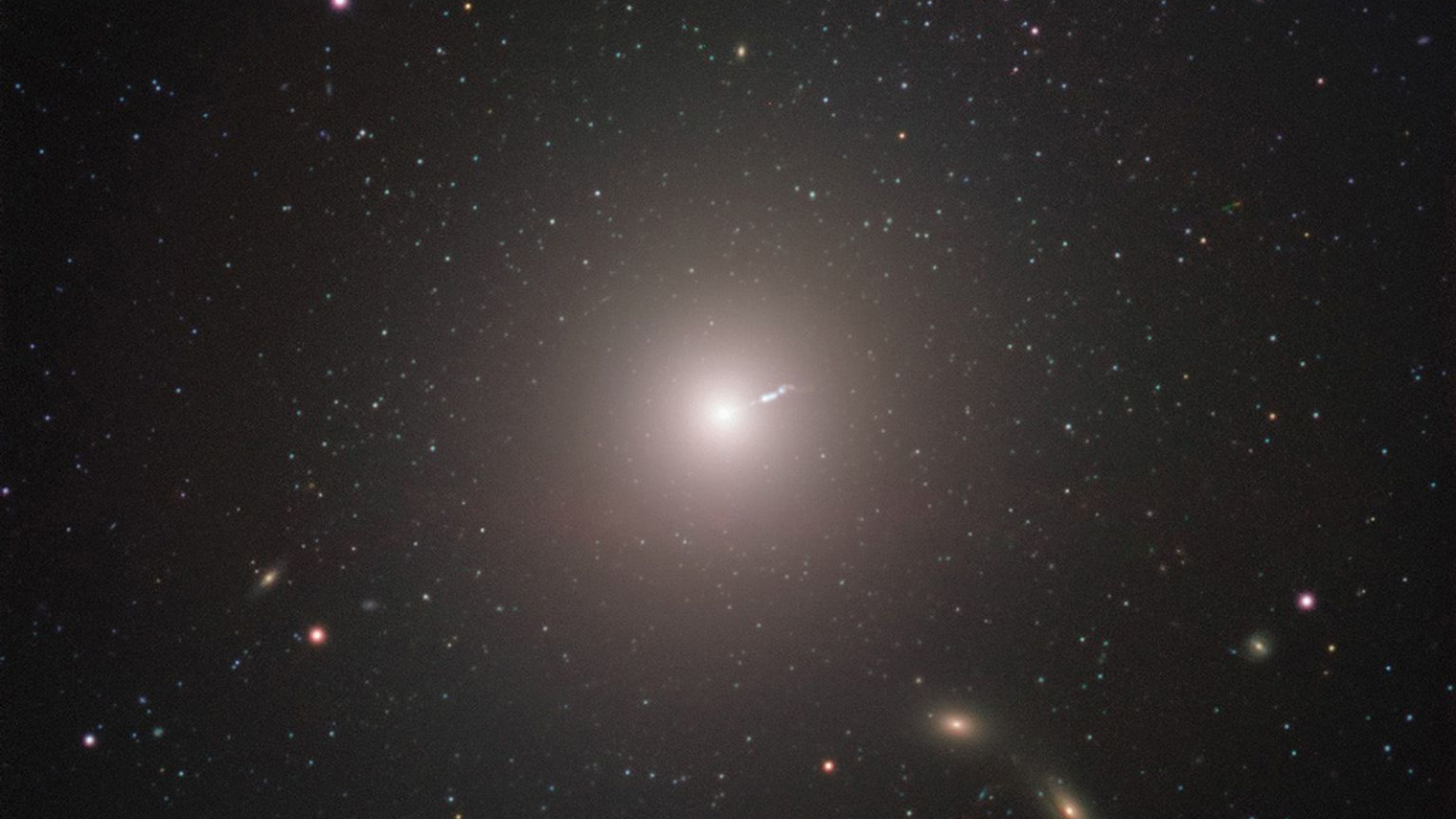
The first black hole ever photographed is still surprising researchers. Immortalized by the Event Horizon Telescope in 2019, M87* , was recently spotted emitting a massive gamma-ray flare. Studying it may help scientists figure out how particles behave near black holes.

Matter falling toward a black hole forms an accretion disk — a hot, swirling ring of particles that appears like a bright halo. This is actually the part of the black hole that scientists capture on camera. The infalling matter accelerates due to the black hole’s gravity, becoming very energetic. Occasionally, some of the material runs into an irregularity in the magnetic field around the black hole and is ejected into the cosmos in a luminous gamma-ray flare.

Researchers know that somewhere in this process, the particles gain an enormous amount of energy — but they aren’t sure exactly when it happens.

The gamma-ray flare emitted by M87*, which lies 55 million light-years away at the heart of the galaxy M87, contained photons, or packets of light, that each had several teraelectronvolts of energy — about the equivalent of a flying mosquito. That’s a mind-boggling amount of energy for such tiny particles. “They’re traveling near the speed of light, and we want to understand where and how they gain such energy,” study co-author Weidong Jin, an astronomer at the University of California, Los Angeles, said in a statement.

To try and find out more, Jin and his colleagues collected data from M87* using the Very Energetic Radiation Imaging Telescope Array System (VERITAS) in Arizona. Then, they analyzed it using a technique called spectral energy distribution. “It’s like breaking the light into a rainbow and measuring how much energy is present in each color,” Jin said.

This helped establish the staggering amount of energy packed into the black hole’s nearly 15 billion-mile-long (24 billion kilometers) flare. Further analysis revealed that the accretion disk changed position relative to the jet, suggesting that the event horizon — the boundary at which matter can no longer escape the black hole’s gravity — influences the flare’s size and trajectory.

Future research into gamma-ray flares may help uncover when and how black holes impart so much energy to the particles surrounding them.

Get the world’s most fascinating discoveries delivered straight to your inbox.

Source link

Share. Facebook Twitter Pinterest LinkedIn Tumblr Email
Previous ArticleTeddi Mellencamp Details First Christmas Without Her Kids Amid Divorce
Next Article Northwest Naturals pet food recalled over bird flu contamination after cat dies
Editor
  • Website

Related Posts

Lifestyle

Scientists discover giant, fan-shaped structure deep beneath the East Antarctic Ice Sheet

June 10, 2026
Lifestyle

Artemis III crew revealed: NASA announces astronauts for ‘one of history’s most complex missions’

June 10, 2026
Lifestyle

China unveils first-of-its-kind ‘dual-core’ quantum computer — its makers say it improves stability and efficiency

June 10, 2026
Add A Comment

Comments are closed.

Categories
  • Entertainment
  • Lifestyle
  • News
  • Sports
  • Tech
  • Travel
Recent Posts
  • Scientists discover giant, fan-shaped structure deep beneath the East Antarctic Ice Sheet
  • Artemis III crew revealed: NASA announces astronauts for ‘one of history’s most complex missions’
  • China unveils first-of-its-kind ‘dual-core’ quantum computer — its makers say it improves stability and efficiency
  • PMOS (formerly PCOS): Symptoms, diagnosis and treatment
  • 2,000 years ago in Scotland, people removed a corpse’s brain and fashioned the arm bones into tools
calendar
June 2026
M T W T F S S
1234567
891011121314
15161718192021
22232425262728
2930  
« May    
Recent Posts
  • Scientists discover giant, fan-shaped structure deep beneath the East Antarctic Ice Sheet
  • Artemis III crew revealed: NASA announces astronauts for ‘one of history’s most complex missions’
  • China unveils first-of-its-kind ‘dual-core’ quantum computer — its makers say it improves stability and efficiency
About

Welcome to Baynard Media, your trusted source for a diverse range of news and insights. We are committed to delivering timely, reliable, and thought-provoking content that keeps you informed
and inspired

Categories
  • Entertainment
  • Lifestyle
  • News
  • Sports
  • Tech
  • Travel
Facebook X (Twitter) Pinterest WhatsApp
  • Contact Us
  • About Us
  • Privacy Policy
  • Disclaimer
  • UNSUBSCRIBE
© 2026 copyrights reserved

Type above and press Enter to search. Press Esc to cancel.