Close Menu
  • Home
  • UNSUBSCRIBE
  • News
  • Lifestyle
  • Tech
  • Entertainment
  • Sports
  • Travel
Facebook X (Twitter) WhatsApp
Trending
  • Lemur used in ‘lemur yoga’ session dies of human herpesvirus, study finds
  • ‘A fine line between reducing stigma and trivialising conditions’: Social media, self-diagnosis and the glamorization of ADHD
  • New 2D memory device stores data on just a single electron
  • Before we ban kids from social media completely, here’s what we should try first | Jonathan Bellack and Mariana Olaizola Rosenblat
  • Scientists uncover a better way to beat ‘the bends’ — using deep-diving pigs
  • Mars may have been losing its water more than 4 billion years ago, oldest-known Martian meteorite suggests
  • ‘The lance head was still inside the pelvis’: Mass grave found in Austria may hold casualties of unknown ancient Roman battle
  • ‘Full-on berserker mode’: Archaeologists solve mystery of medieval soldiers with gruesome square holes in their skull
Facebook X (Twitter) WhatsApp
Baynard Media
  • Home
  • UNSUBSCRIBE
  • News
  • Lifestyle
  • Tech
  • Entertainment
  • Sports
  • Travel
Baynard Media
Home»Lifestyle»Astronomers share best-ever evidence that Betelgeuse has a secret companion star — and they’ve nicknamed it ‘her bracelet’
Lifestyle

Astronomers share best-ever evidence that Betelgeuse has a secret companion star — and they’ve nicknamed it ‘her bracelet’

EditorBy EditorJuly 25, 2025No Comments3 Mins Read
Share Facebook Twitter Pinterest LinkedIn Tumblr Reddit Telegram Email
Share
Facebook Twitter LinkedIn Pinterest Email

The red supergiant Betelgeuse likely has a companion star, astronomers have confirmed.

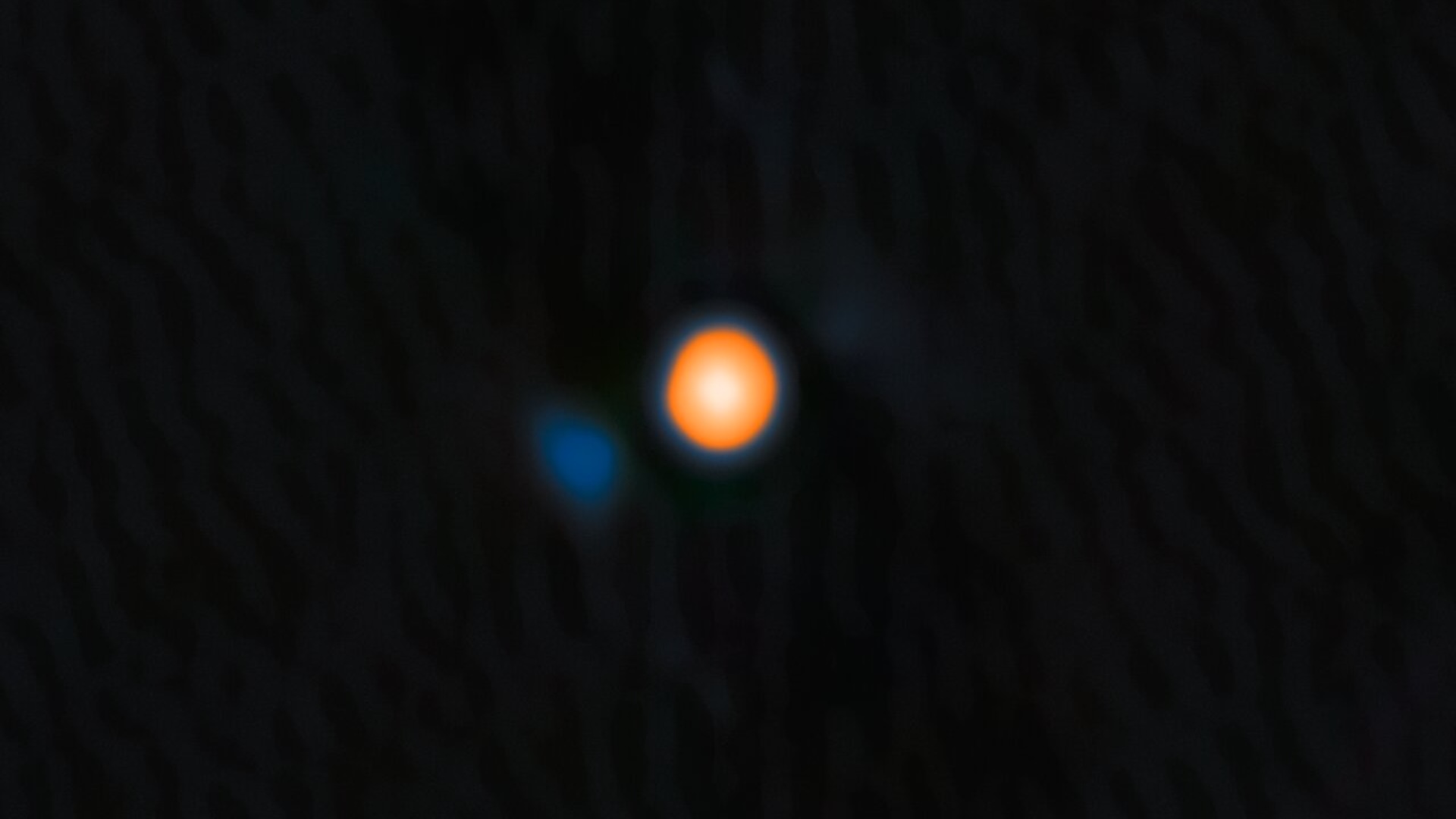
Long theorized to share an orbit with Betelgeuse — an extremely bright star that may go supernova in the next few thousand years — a sun-size companion star has finally appeared in unique observations taken with the Gemini North telescope high on Hawaii’s Mauna Kea.

If confirmed, the newly found star would account for a longstanding mystery: why Betelgeuse has a regular pattern of brightening and dimming about every six years.


You may like

To seek out the companion, astronomers opened and shut the telescope imager in just 14 milliseconds. “That was the only way we could not have Betelgeuse saturate our detectors,” lead author Steve Howell, a senior research scientist at NASA Ames Research Center, told LiveScience.

The new study, published July 24 in the Astrophysical Journal Letters, builds upon the work of two modeling studies in 2024 that suggested Betelgeuse had a companion. But the fresh observations, though compelling, are still not a slam-dunk and will require confirmation.

“It’s barely detected there,” Howell acknowledged, saying the observation was at the very limits of Gemini’s capabilities. But what astronomers saw “matches all the other things in the models, exactly.”

That brief glimpse of the supposed companion shows it is 1.5 times the mass of the sun, and early in its life: The star is so young that it has not started burning hydrogen in its core. The companion orbits Betelgeuse once every six years, at about four times the distance from Earth to the sun.

Get the world’s most fascinating discoveries delivered straight to your inbox.

Related: Parker Solar Probe captures closest-ever photos of the sun during record-breaking flight

A labelled photo of Orion and surrounding constellations

Betelgeuse is visible on the right shoulder of Orion in this image of constellations in the northern sky. The newly discovered companion is not visible at this scale. (Image credit: E. Slawik/NOIRLab/NSF/AURA/M. Zamani)

But the young star is literally touching Betelgeuse as it flies around; Betelgeuse is 700 times the size of our sun, according to NASA, so the companion traces a path through the ginormous star’s outer atmosphere despite orbiting relatively far away.

The uneasy proximity won’t last for long. “It’s going to be subsumed into Betelgeuse, so it’s not a happy ending for the companion,” Howell said, noting this could happen within just 10,000 years. “The question might be, ‘Will Betelgeuse explode in a supernova before the star spirals in?’.”

Howell says the team is now requesting telescope time to observe Antares, another bright star with variable luminosity that might be hiding a companion. Bright stars like Antares and Betelgeuse, he said have been understudied by professionals as they produce absurd glare in the meters-wide telescopes astronomers use. Howell added the ultra-fast exposure technique that his team came up with to study Betelgeuse may be useful for studying bright stars more generally.

In the meantime, his team found time to nickname Betelgeuse’s apparent teammate. The name “Betelgeuse” can be translated from Arabic, NASA stated, as “the hand of al-Jawza’,” which refers to a female character in an Arabian legend. Howell’s team thus named the companion “Siwarha”, or “her bracelet.”

However, Siwarha will remain an unofficial moniker until the companion star is confirmed to exist and the International Astronomical Union (which regulates star namings) approves the name. Sadly, the nickname “Betelbuddy“, coined by researchers studying the hypothetical star last year, may have run its course.

Source link

Share. Facebook Twitter Pinterest LinkedIn Tumblr Email
Previous ArticleColumbia settles with janitors forced to clean swastikas during campus riot
Next Article Trump administration sues New York over sanctuary city policies
Editor
  • Website

Related Posts

Lifestyle

Lemur used in ‘lemur yoga’ session dies of human herpesvirus, study finds

August 15, 2026
Lifestyle

‘A fine line between reducing stigma and trivialising conditions’: Social media, self-diagnosis and the glamorization of ADHD

August 15, 2026
Lifestyle

New 2D memory device stores data on just a single electron

August 15, 2026
Add A Comment

Comments are closed.

Categories
  • Entertainment
  • Lifestyle
  • News
  • Sports
  • Tech
  • Travel
Recent Posts
  • Lemur used in ‘lemur yoga’ session dies of human herpesvirus, study finds
  • ‘A fine line between reducing stigma and trivialising conditions’: Social media, self-diagnosis and the glamorization of ADHD
  • New 2D memory device stores data on just a single electron
  • Before we ban kids from social media completely, here’s what we should try first | Jonathan Bellack and Mariana Olaizola Rosenblat
  • Scientists uncover a better way to beat ‘the bends’ — using deep-diving pigs
calendar
August 2026
M T W T F S S
 12
3456789
10111213141516
17181920212223
24252627282930
31  
« Jul    
Recent Posts
  • Lemur used in ‘lemur yoga’ session dies of human herpesvirus, study finds
  • ‘A fine line between reducing stigma and trivialising conditions’: Social media, self-diagnosis and the glamorization of ADHD
  • New 2D memory device stores data on just a single electron
About

Welcome to Baynard Media, your trusted source for a diverse range of news and insights. We are committed to delivering timely, reliable, and thought-provoking content that keeps you informed
and inspired

Categories
  • Entertainment
  • Lifestyle
  • News
  • Sports
  • Tech
  • Travel
Facebook X (Twitter) Pinterest WhatsApp
  • Contact Us
  • About Us
  • Privacy Policy
  • Disclaimer
  • UNSUBSCRIBE
© 2026 copyrights reserved

Type above and press Enter to search. Press Esc to cancel.