Close Menu
  • Home
  • UNSUBSCRIBE
  • News
  • Lifestyle
  • Tech
  • Entertainment
  • Sports
  • Travel
Facebook X (Twitter) WhatsApp
Trending
  • Lemur used in ‘lemur yoga’ session dies of human herpesvirus, study finds
  • ‘A fine line between reducing stigma and trivialising conditions’: Social media, self-diagnosis and the glamorization of ADHD
  • New 2D memory device stores data on just a single electron
  • Before we ban kids from social media completely, here’s what we should try first | Jonathan Bellack and Mariana Olaizola Rosenblat
  • Scientists uncover a better way to beat ‘the bends’ — using deep-diving pigs
  • Mars may have been losing its water more than 4 billion years ago, oldest-known Martian meteorite suggests
  • ‘The lance head was still inside the pelvis’: Mass grave found in Austria may hold casualties of unknown ancient Roman battle
  • ‘Full-on berserker mode’: Archaeologists solve mystery of medieval soldiers with gruesome square holes in their skull
Facebook X (Twitter) WhatsApp
Baynard Media
  • Home
  • UNSUBSCRIBE
  • News
  • Lifestyle
  • Tech
  • Entertainment
  • Sports
  • Travel
Baynard Media
Home»Lifestyle»Archaeologists discover ‘Land of the White Jaguar,’ centuries-old stronghold of rebel Maya in Mexico
Lifestyle

Archaeologists discover ‘Land of the White Jaguar,’ centuries-old stronghold of rebel Maya in Mexico

EditorBy EditorJuly 30, 2025No Comments3 Mins Read
Share Facebook Twitter Pinterest LinkedIn Tumblr Reddit Telegram Email
Share
Facebook Twitter LinkedIn Pinterest Email

Archaeologists think they’ve found the remains of a centuries-old Maya rebel stronghold in Mexico where Indigenous people resisting the Spanish lived for over a century.

The city of Sak-Bahlán, or the “Land of the White Jaguar,” was home to the Lakandon-Ch’ol people, Maya who resisted Spanish conquest and are known today as the last Maya rebels of Chiapas, a state in modern-day southern Mexico. Its location has evaded archaeologists for decades — until now.

After the Spanish captured their capital of Lacan-Tun (“Great Rock”) in 1586, the Lakandon-Ch’ol moved farther into the jungle, where they established Sak-Bahlán. They remained there for nearly 110 years, until an exploration party led by Friar Pedro de la Concepción discovered the stronghold in 1695. Soon after, Spanish forces subdued the city and renamed it Nuestra Señora de Dolores (“Our Lady of Sorrows”). By 1721, the site was abandoned. Its location was lost, though records of the city were noted in documents and letters from that time.


You may like

Now, researchers think they have found the remains of the site again. Using historical records and geographic information system (GIS) technology, a team led by Josuhé Lozada Toledo, an archaeologist at the National Institute of Anthropology and History (INAH) in Mexico City, pinned down the most likely location of the stronghold.

A river surrounded by tree-covered mountains under a blue sky

The Tzendales River, which flows into the Lacantún River in Chiapas, Mexico. (Image credit: Josuhé Lozada/CINAH Chiapas)

Lozada Toledo relied on accounts from Spanish friar Diego de Rivas to narrow down where Sak-Bahlán might be. A 1695 letter from de Rivas explained that Sak-Bahlán was located on a plain along a bend in the Lacantún River, which runs through Chiapas. Notes from de Rivas in 1698 describe a four-day walk with soldiers from the city to the Lacantún River, followed by a two-day canoeing journey to the junction of the Lacantún and Pasión rivers.

Related: Genomes from ancient Maya people reveal collapse of population and civilization 1,200 years ago

Alongside these accounts, Lozada Toledo considered the difficulty of the terrain and how much cargo a person might be carrying to estimate the actual distances de Rivas covered during those journeys.

Get the world’s most fascinating discoveries delivered straight to your inbox.

“By combining all these variables, I was able to … obtain an approximate range of where the Sak-Bahlán site could be located,” Lozada Toledo said in a translated INAH statement.

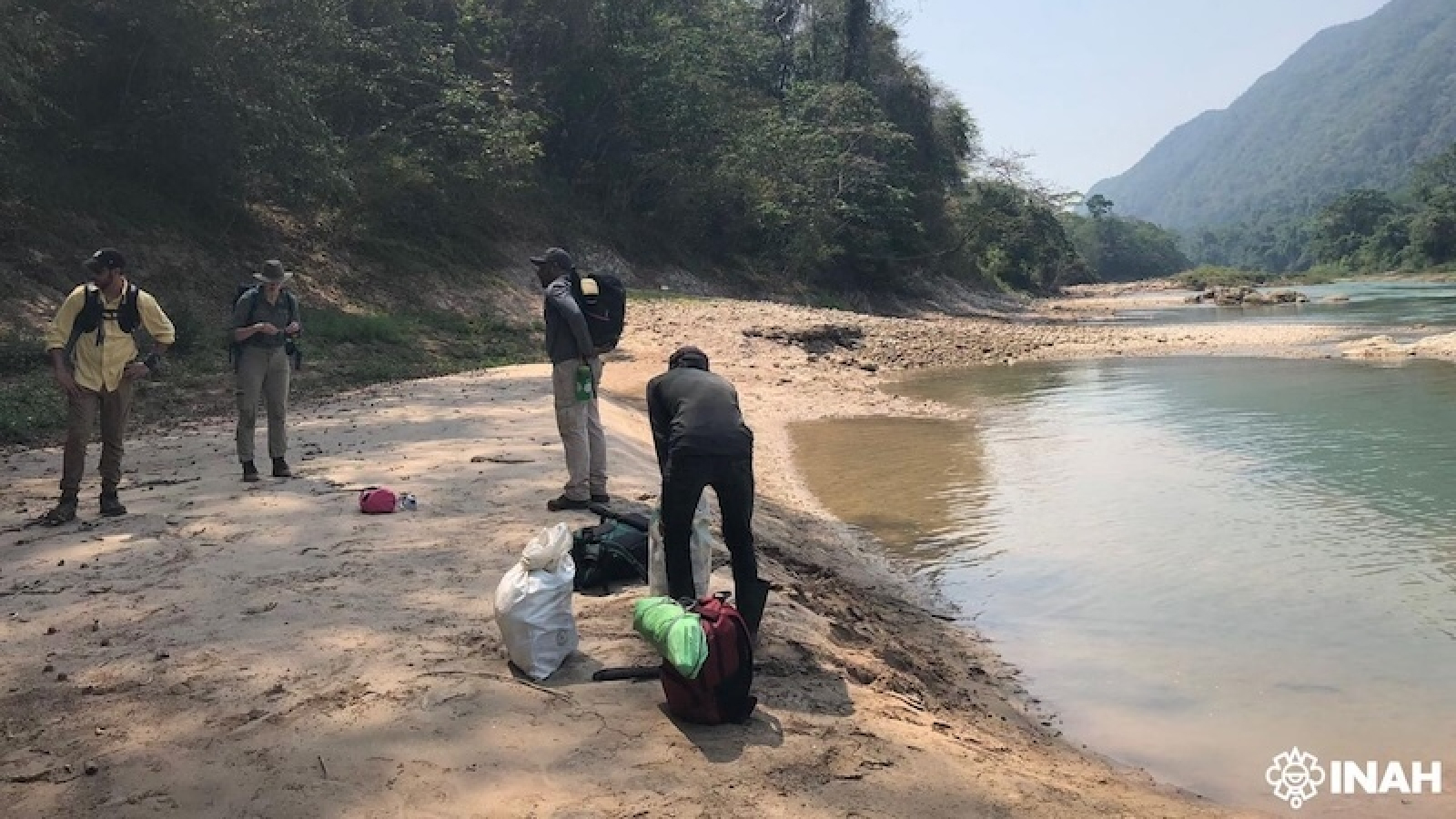
That range turned out to be quite accurate: Archaeologists found what they believe to be Sak-Bahlán near the Jataté and Ixcán rivers, near the border between present-day Mexico and Guatemala.

“It was the most arduous field trip I’ve ever had in my life, but in the end, we found the archaeological evidence, right at the spot I had marked,” Lozada Toledo said.

Archaeologists have already spent two field seasons mapping and excavating the site and testing for when it was occupied, with more still to come.

The research will be detailed in the next issue of the journal Chicomoztoc.

Source link

Share. Facebook Twitter Pinterest LinkedIn Tumblr Email
Previous ArticleFeds investigating viral Cincinnati beating, DOJ confirms
Next Article Massive earthquake off Russia’s east coast is one of the most powerful ever recorded
Editor
  • Website

Related Posts

Lifestyle

Lemur used in ‘lemur yoga’ session dies of human herpesvirus, study finds

August 15, 2026
Lifestyle

‘A fine line between reducing stigma and trivialising conditions’: Social media, self-diagnosis and the glamorization of ADHD

August 15, 2026
Lifestyle

New 2D memory device stores data on just a single electron

August 15, 2026
Add A Comment

Comments are closed.

Categories
  • Entertainment
  • Lifestyle
  • News
  • Sports
  • Tech
  • Travel
Recent Posts
  • Lemur used in ‘lemur yoga’ session dies of human herpesvirus, study finds
  • ‘A fine line between reducing stigma and trivialising conditions’: Social media, self-diagnosis and the glamorization of ADHD
  • New 2D memory device stores data on just a single electron
  • Before we ban kids from social media completely, here’s what we should try first | Jonathan Bellack and Mariana Olaizola Rosenblat
  • Scientists uncover a better way to beat ‘the bends’ — using deep-diving pigs
calendar
August 2026
M T W T F S S
 12
3456789
10111213141516
17181920212223
24252627282930
31  
« Jul    
Recent Posts
  • Lemur used in ‘lemur yoga’ session dies of human herpesvirus, study finds
  • ‘A fine line between reducing stigma and trivialising conditions’: Social media, self-diagnosis and the glamorization of ADHD
  • New 2D memory device stores data on just a single electron
About

Welcome to Baynard Media, your trusted source for a diverse range of news and insights. We are committed to delivering timely, reliable, and thought-provoking content that keeps you informed
and inspired

Categories
  • Entertainment
  • Lifestyle
  • News
  • Sports
  • Tech
  • Travel
Facebook X (Twitter) Pinterest WhatsApp
  • Contact Us
  • About Us
  • Privacy Policy
  • Disclaimer
  • UNSUBSCRIBE
© 2026 copyrights reserved

Type above and press Enter to search. Press Esc to cancel.