Close Menu
  • Home
  • UNSUBSCRIBE
  • News
  • Lifestyle
  • Tech
  • Entertainment
  • Sports
  • Travel
Facebook X (Twitter) WhatsApp
Trending
  • Lemur used in ‘lemur yoga’ session dies of human herpesvirus, study finds
  • ‘A fine line between reducing stigma and trivialising conditions’: Social media, self-diagnosis and the glamorization of ADHD
  • New 2D memory device stores data on just a single electron
  • Before we ban kids from social media completely, here’s what we should try first | Jonathan Bellack and Mariana Olaizola Rosenblat
  • Scientists uncover a better way to beat ‘the bends’ — using deep-diving pigs
  • Mars may have been losing its water more than 4 billion years ago, oldest-known Martian meteorite suggests
  • ‘The lance head was still inside the pelvis’: Mass grave found in Austria may hold casualties of unknown ancient Roman battle
  • ‘Full-on berserker mode’: Archaeologists solve mystery of medieval soldiers with gruesome square holes in their skull
Facebook X (Twitter) WhatsApp
Baynard Media
  • Home
  • UNSUBSCRIBE
  • News
  • Lifestyle
  • Tech
  • Entertainment
  • Sports
  • Travel
Baynard Media
Home»Lifestyle»Angelman syndrome: A disorder that stops people walking and speaking
Lifestyle

Angelman syndrome: A disorder that stops people walking and speaking

EditorBy EditorDecember 12, 2024No Comments3 Mins Read
Share Facebook Twitter Pinterest LinkedIn Tumblr Reddit Telegram Email
Share
Facebook Twitter LinkedIn Pinterest Email

Disease name: Angelman syndrome

Affected populations: The disorder is believed to affect somewhere between 1 in 12,000 and 1 in 24,000 people, although these figures may be underestimated. Many cases of Angelman syndrome can go undiagnosed because the disorder shares symptoms and characteristics with other conditions. Men and women are equally likely to experience the disorder.

Causes: Angelman syndrome is a genetic disorder named after Dr. Harry Angelman, who first reported it in 1965. The disorder principally affects the central nervous system, meaning the brain and spinal cord, and it’s caused by mutations in the UBE3A gene. This gene carries instructions for a protein needed to maintain the normal development and function of cells, including neurons in the brain.

In each cell, humans typically have 23 pairs of chromosomes — thread-like structures that house DNA. One parent contributes half of each chromosome pair, and the other parent contributes the other half. UBE3A is located on chromosome 15. Mutations that delete the gene or change its structure, function or activity can cause Angelman syndrome. In many cases, a mutation develops spontaneously on the copy of the gene from the mother.

The genetic mutations behind Angelman syndrome usually occur randomly, but between 3% and 5% of children inherit them from their parents. In around 10% of people with the condition, the exact cause of the syndrome can’t be identified.

Related: New genetic cause of intellectual disability potentially uncovered in ‘junk DNA’

Symptoms: People with Angelman syndrome normally start to develop symptoms of the disorder in early childhood. These include developmental problems, such as having difficulty sitting unsupported or babbling, that become apparent around ages 6 to 12 months.

Get the world’s most fascinating discoveries delivered straight to your inbox.

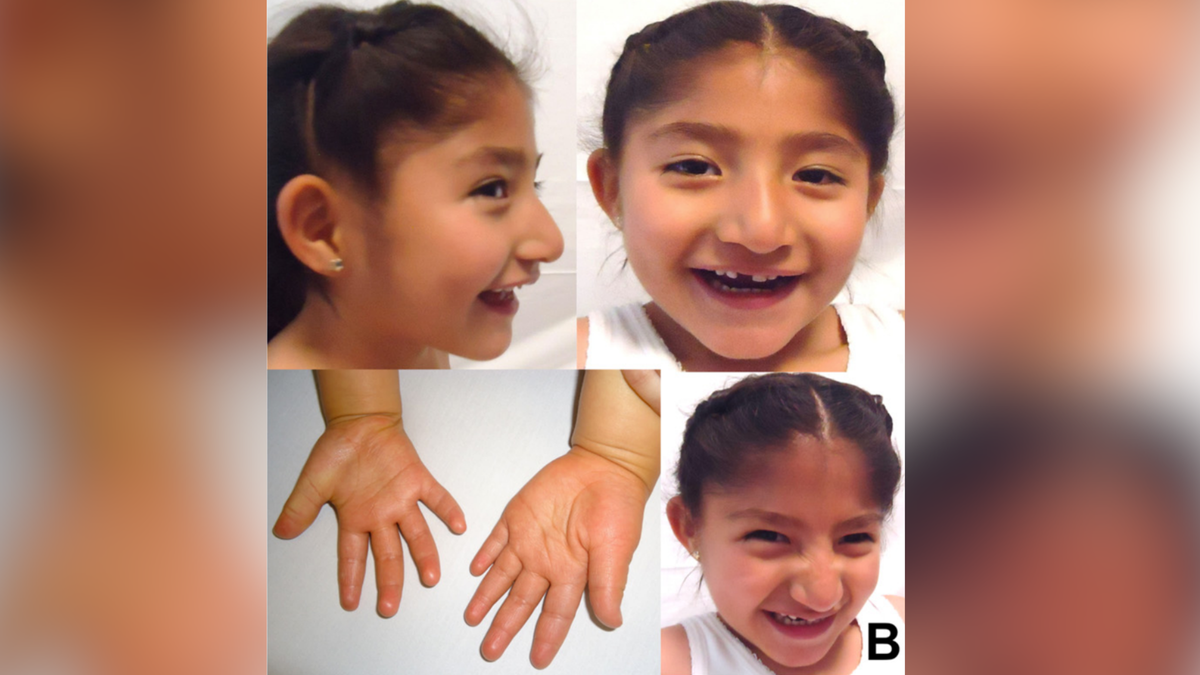
As the disorder progresses, affected people may struggle to speak and walk because of balance and coordination issues. They may also experience seizures, which usually begin when a child is between 2 and 3 years old. Furthermore, some people with the condition may have distinctive facial features, such as a prominent chin, deep-set eyes or abnormally wide mouth. People who have the syndrome usually have a normal life expectancy.

Symptoms of Angelman syndrome can sometimes be confused with other disorders that also cause developmental delays, such as autism or cerebral palsy, possibly leading to misdiagnosis.

A girl with Angelman syndrome is pictured playing with bubbles in the air

Angelman syndrome causes severely delayed development and learning disabilities. (Image credit: Shutterstock)

Treatments: There is currently no cure for Angelman syndrome.

However, several treatment options exist to help manage their symptoms. For example, doctors may prescribe anti-epileptic drugs to control patients’ seizures. Physiotherapy and communication therapy can also help to respectively improve patients’ ability to walk and communicate with others without speaking — by using hand gestures or signs, for example.

This article is for informational purposes only and is not meant to offer medical advice.

Ever wonder why some people build muscle more easily than others or why freckles come out in the sun? Send us your questions about how the human body works to community@livescience.com with the subject line “Health Desk Q,” and you may see your question answered on the website!

Source link

Share. Facebook Twitter Pinterest LinkedIn Tumblr Email
Previous ArticleMan arrested for fare evasion on DC Metrobus found carrying loaded shotgun
Next Article Best LG TV deal: Save $100 on the 48-inch LG B4 TV at Best Buy
Editor
  • Website

Related Posts

Lifestyle

Lemur used in ‘lemur yoga’ session dies of human herpesvirus, study finds

August 15, 2026
Lifestyle

‘A fine line between reducing stigma and trivialising conditions’: Social media, self-diagnosis and the glamorization of ADHD

August 15, 2026
Lifestyle

New 2D memory device stores data on just a single electron

August 15, 2026
Add A Comment

Comments are closed.

Categories
  • Entertainment
  • Lifestyle
  • News
  • Sports
  • Tech
  • Travel
Recent Posts
  • Lemur used in ‘lemur yoga’ session dies of human herpesvirus, study finds
  • ‘A fine line between reducing stigma and trivialising conditions’: Social media, self-diagnosis and the glamorization of ADHD
  • New 2D memory device stores data on just a single electron
  • Before we ban kids from social media completely, here’s what we should try first | Jonathan Bellack and Mariana Olaizola Rosenblat
  • Scientists uncover a better way to beat ‘the bends’ — using deep-diving pigs
calendar
August 2026
M T W T F S S
 12
3456789
10111213141516
17181920212223
24252627282930
31  
« Jul    
Recent Posts
  • Lemur used in ‘lemur yoga’ session dies of human herpesvirus, study finds
  • ‘A fine line between reducing stigma and trivialising conditions’: Social media, self-diagnosis and the glamorization of ADHD
  • New 2D memory device stores data on just a single electron
About

Welcome to Baynard Media, your trusted source for a diverse range of news and insights. We are committed to delivering timely, reliable, and thought-provoking content that keeps you informed
and inspired

Categories
  • Entertainment
  • Lifestyle
  • News
  • Sports
  • Tech
  • Travel
Facebook X (Twitter) Pinterest WhatsApp
  • Contact Us
  • About Us
  • Privacy Policy
  • Disclaimer
  • UNSUBSCRIBE
© 2026 copyrights reserved

Type above and press Enter to search. Press Esc to cancel.