Close Menu
  • Home
  • UNSUBSCRIBE
  • News
  • Lifestyle
  • Tech
  • Entertainment
  • Sports
  • Travel
Facebook X (Twitter) WhatsApp
Trending
  • Why does metal stick together in space?
  • Faster ‘biological aging’ in young adults may help explain rise in early-onset cancers, study hints
  • Computer scientists are rushing to tame tame AI’s voracious appetite for energy
  • Our brains aren’t wired to handle this much bad news. But ‘looking away is not the fix,’ expert says.
  • ‘The fate of Earth depends on a delicate balance’: Our planet may survive the death of the sun after all, new models hint
  • Bullseye! Enormous ‘bow and arrow’ galaxy is unlike anything radio astronomers have ever seen — Space photo of the week
  • IBM creates first sub-1nm computer chip — cramming 100 billion transistors into a tiny fingernail-sized space
  • New chip harnesses quantum computing’s biggest weakness — and tries to turn it into a strength
Facebook X (Twitter) WhatsApp
Baynard Media
  • Home
  • UNSUBSCRIBE
  • News
  • Lifestyle
  • Tech
  • Entertainment
  • Sports
  • Travel
Baynard Media
Home»Lifestyle»Ancient Europeans ate the brains of their dead enemies 18,000 years ago, researchers discover
Lifestyle

Ancient Europeans ate the brains of their dead enemies 18,000 years ago, researchers discover

EditorBy EditorFebruary 9, 2025No Comments3 Mins Read
Share Facebook Twitter Pinterest LinkedIn Tumblr Reddit Telegram Email
Share
Facebook Twitter LinkedIn Pinterest Email

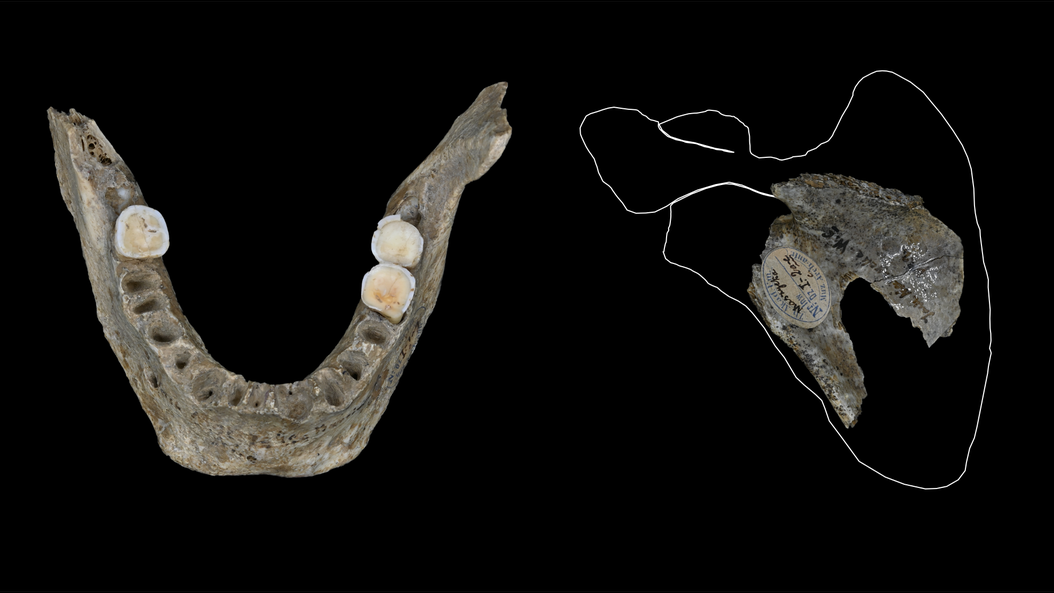
Human remains discovered in a cave in Poland have revealed that ancient European groups cannibalized the dead in an act of war. A new analysis of cut marks and fractures on the bones suggest people removed the ears and scooped out the brains of their vanquished enemies shortly after they died.

In a study published Thursday (Feb. 6) in the journal Scientific Reports, researchers detailed the evidence of cannibalism they found on 53 bones from Maszycka Cave, an archaeological site near Krakow, Poland. The bones were dated to 18,000 years ago, during the Magdalenian period of European prehistory, and came from at least 10 people: six adults and four children.

Using advanced 3D microscopy techniques, the researchers identified cut marks and fractures on 68% of the bones and were able to rule out carnivorous animals and accidental trampling as causes for the injuries.

Looking at two dozen skull fragments, the researchers identified cuts made from scalping, defleshing, and removing the ears and jaw. Additionally, fractures along the cranial sutures suggested that people were breaking corpses’ skulls specifically to remove the brains. Further evidence of butchering could be seen on shoulder, arm and leg bones.

“The location and frequency of the cut marks and the intentional fracturing of the skeleton clearly show nutritional exploitation of the bodies,” study lead author Francesc Marginedas, a doctoral student at the Catalan Institute of Human Paleoecology and Social Evolution (IPHES), said in a translated statement.

Related: 4,000-year-old bones reveal ‘unprecedented’ violence — tongue removal, cannibalism and evisceration in Bronze Age Britain

Entrance to a cave is dark and surrounded by limestone-looking rocks. A blanket of orange-red leaves carpets the foreground.

Entrance to the Maszycka Cave in Poland (Image credit: Institut Català de Paleoecologia Humana i Evolució Social)

The high percentage of bones that had been manipulated after death strongly suggests cannibalistic behavior, the researchers wrote in the study, as people prepared and extracted the edible parts of the bones. Additionally, the pattern of cut marks and fracturing suggested that people prioritized the removal of the most nutritious and calorie-dense parts of corpses — including their brains, bone marrow and muscles — shortly after the individuals died.

Get the world’s most fascinating discoveries delivered straight to your inbox.

But the reason for the cannibalistic behavior is unclear. “In prehistoric contexts, it could be in response to survival needs or to ritual practices, or even to the dynamics of intergroup violence,” study co-author Palmira Saladié, a researcher at IPHES, said in the statement.

However, archaeological evidence from Maszycka Cave suggests this incidence of cannibalism was not related to survival needs. During the Magdalenian period (23,000 to 11,000 years ago) in Europe, the area was characterized by an increase in human populations, the researchers wrote in the study. Therefore, they said, famine is an unlikely explanation for eating other humans.

Because there is no evidence that the cannibalized people had been buried in a respectful way and the human remains are mixed in with butchered animal bones, the researchers think this is an example of “warfare cannibalism.” A combination of too many people and too few resources in the Magdalenian period could have led to territorial tensions and violent struggles to survive.

For the Maszycka Cave skeletons, “the age profile resembles that of a complete nuclear family unit, suggesting that they could have been attacked, subdued and subsequently cannibalized,” the researchers wrote.

Other European sites dating to the same time period also have evidence of cannibalism, which suggests the practice was an important part of the culture in the Magdalenian period, whether they were consuming their own dead or their enemies.

Source link

Share. Facebook Twitter Pinterest LinkedIn Tumblr Email
Previous ArticleWindows 11 Pro for just $17.97
Next Article Why Hasn’t Taylor Swift Headlined Super Bowl Halftime Show? The Truth
Editor
  • Website

Related Posts

Lifestyle

Why does metal stick together in space?

June 29, 2026
Lifestyle

Faster ‘biological aging’ in young adults may help explain rise in early-onset cancers, study hints

June 29, 2026
Lifestyle

Computer scientists are rushing to tame tame AI’s voracious appetite for energy

June 28, 2026
Add A Comment

Comments are closed.

Categories
  • Entertainment
  • Lifestyle
  • News
  • Sports
  • Tech
  • Travel
Recent Posts
  • Why does metal stick together in space?
  • Faster ‘biological aging’ in young adults may help explain rise in early-onset cancers, study hints
  • Computer scientists are rushing to tame tame AI’s voracious appetite for energy
  • Our brains aren’t wired to handle this much bad news. But ‘looking away is not the fix,’ expert says.
  • ‘The fate of Earth depends on a delicate balance’: Our planet may survive the death of the sun after all, new models hint
calendar
June 2026
M T W T F S S
1234567
891011121314
15161718192021
22232425262728
2930  
« May    
Recent Posts
  • Why does metal stick together in space?
  • Faster ‘biological aging’ in young adults may help explain rise in early-onset cancers, study hints
  • Computer scientists are rushing to tame tame AI’s voracious appetite for energy
About

Welcome to Baynard Media, your trusted source for a diverse range of news and insights. We are committed to delivering timely, reliable, and thought-provoking content that keeps you informed
and inspired

Categories
  • Entertainment
  • Lifestyle
  • News
  • Sports
  • Tech
  • Travel
Facebook X (Twitter) Pinterest WhatsApp
  • Contact Us
  • About Us
  • Privacy Policy
  • Disclaimer
  • UNSUBSCRIBE
© 2026 copyrights reserved

Type above and press Enter to search. Press Esc to cancel.