
If an asteroid is on a collision course with the moon, what should humanity do? Try to nudge the space rock out of the way before it strikes? Obliterate it with a nuclear explosion?
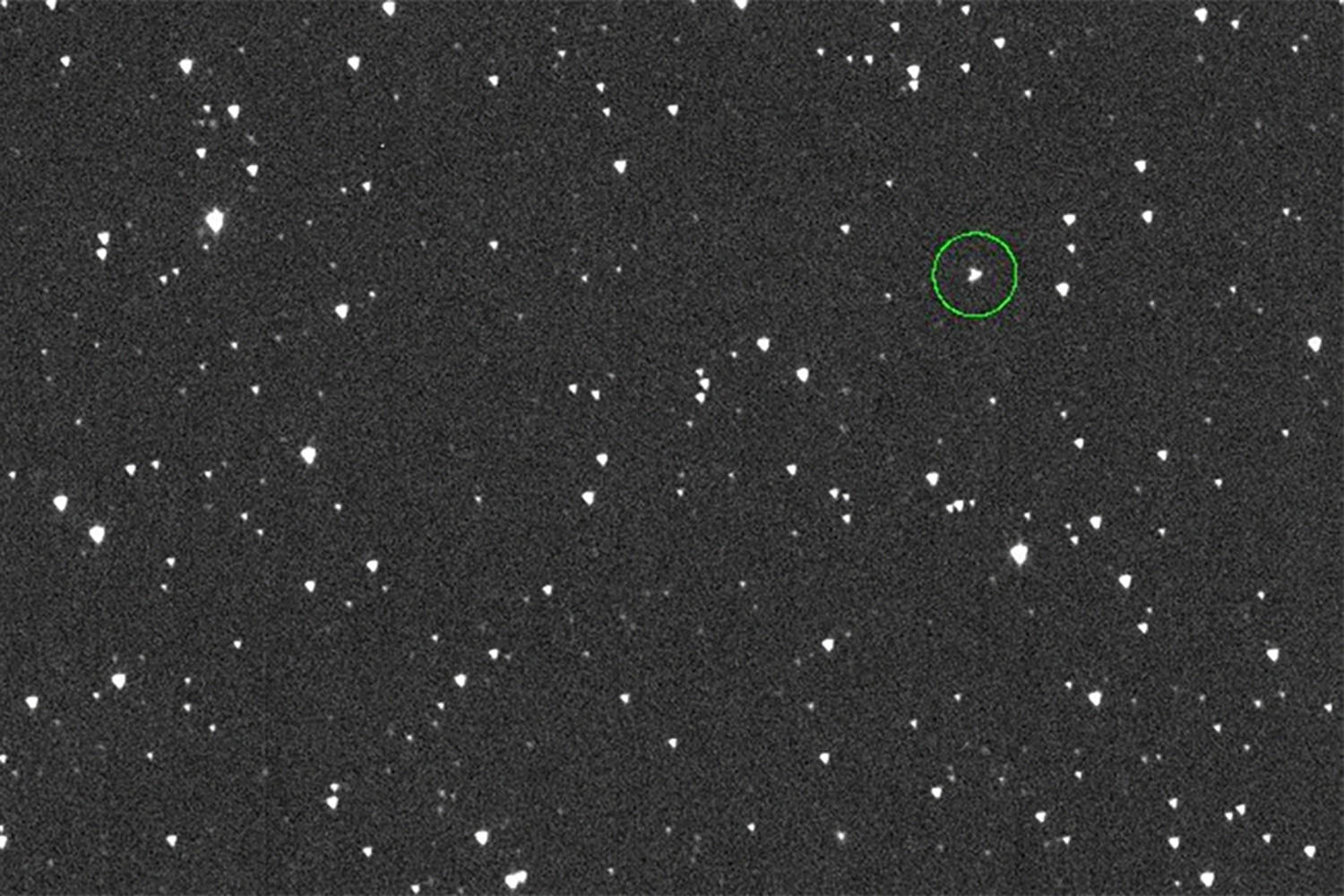
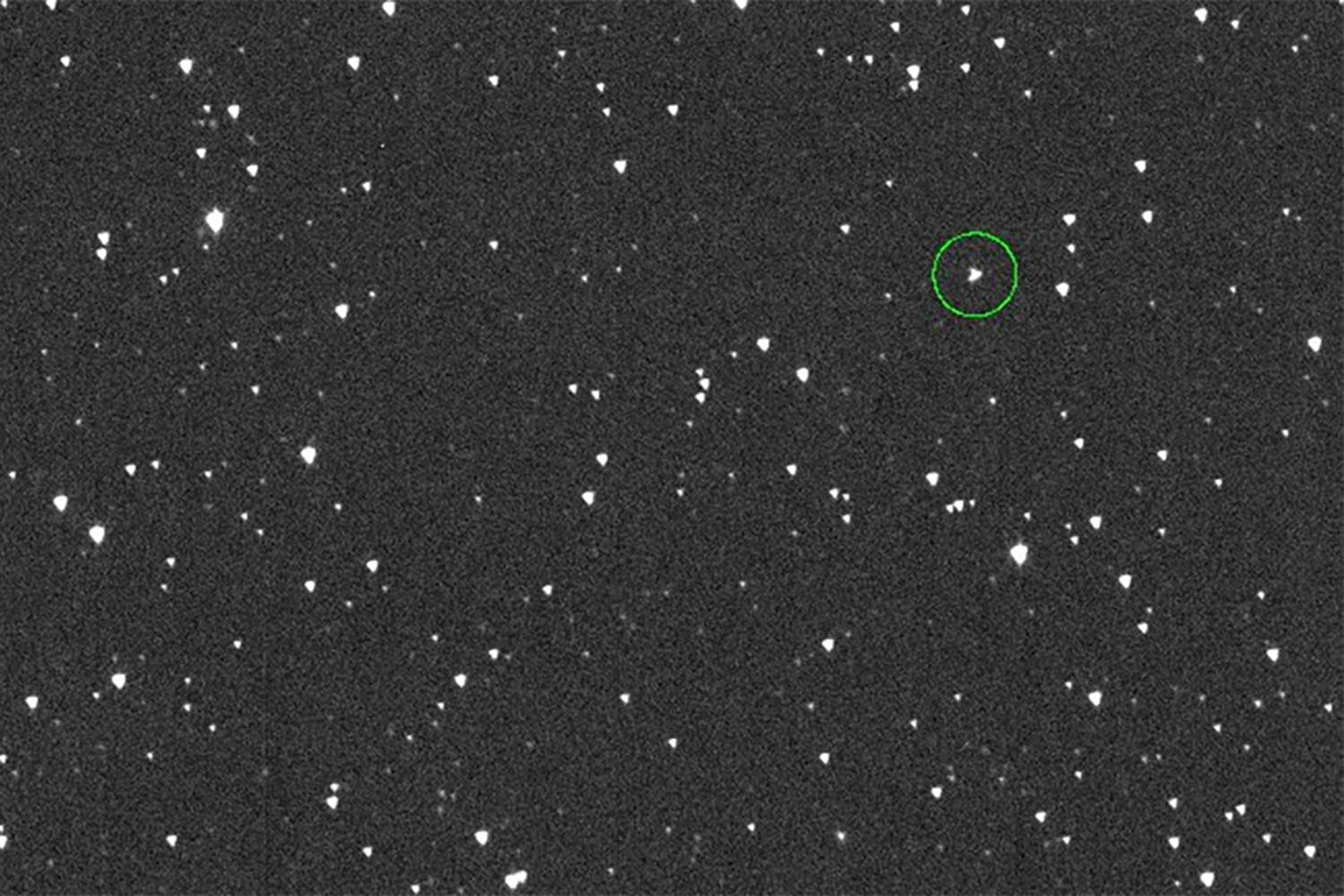
Those are the questions explored in a recent paper from more than a dozen researchers, including several NASA scientists. And they’re not purely hypothetical: An asteroid known as 2024 YR4 is estimated to have a 4% chance of hitting the moon in 2032.
Such a cosmic collision could produce debris “up to 1,000 times above background levels over just a few days, possibly threatening astronauts and spacecraft” in low-Earth orbit, the researchers wrote in the paper, which was uploaded to the preprint website arXiv on Sept. 15 but has yet to be peer-reviewed.
To avoid creating that potentially dangerous debris field, one option is to nuke the asteroid, according to the paper — or trigger what the scientists call a “robust disruption” — before it reaches the moon.
Cue the “Armageddon” movie references.
But using a nuclear explosion to destroy an asteroid has never been tested, so the plan would come with a slew of major risks.
Various key characteristics about asteroid 2024 YR4 aren’t known, including its mass, which would be critical in figuring out how to properly “disrupt” it without creating more problems.
“If the explosion is not enough, you’re just going to create a debris field anyway,” said Julie Brisset, interim director of the Florida Space Institute, who wasn’t involved with the paper.
Asteroid 2024 YR4 was first detected by the Asteroid Terrestrial-impact Last Alert System station in Chile in December. NASA estimates that it measures up to 220 feet across, large enough to be considered a “city killer” because it could be capable of causing severe damage to a city or region on Earth.
Experts initially thought there was a small chance the asteroid could hit our planet, and the probability of such an impact was estimated to be as high as 3% earlier this year. But a collision with Earth was later ruled out.
With Earth now thought to be in the clear, asteroid 2024 YR4 has an estimated 4.3% chance of smacking into the moon.
The authors of the recent paper suggested launching a mission to conduct reconnaissance of the asteroid, including estimating its mass from up close. After that, they proposed, an explosive device could be built, then deployed to the space rock.
Alternatively, if destroying the asteroid with a nuclear explosion is too extreme, the researchers detailed how it could be nudged out of the way.
NASA has some experience with that: In a first-of-its-kind test in 2022, its DART probe intentionally crashed into a small space rock known as Dimorphos to alter its trajectory. The maneuver was carried out 6.8 million miles from Earth and changed Dimorphos’ path in space, shortening its orbit by 33 minutes, according to NASA.
But a successful deflection would also require knowing the mass of asteroid 2024 YR4, Brisset said.
In response to an NBC News inquiry to NASA about the recent paper, Kelly Fast, the agency’s acting planetary defense officer, said in a statement that there are no plans to deflect or otherwise interfere with the asteroid.
However, she said there are plans to study it early next year using the James Webb Space Telescope. Any findings could provide better insight into its orbital path.
“If observed, the additional data could improve our knowledge of where the asteroid will be in December 2032,” Fast said, “and could drop the impact probability to 0%.”
Even if space missions like those described in the paper could be carried out, there would be political considerations to navigate.
Although no astronauts or long-term habitats are on the moon, that might not always be the case. China, for instance, has said it aims to land its astronauts on the moon by 2030. Chinese officials have also said the country may build a nuclear plant on the lunar surface to power a moon base that it plans to jointly operate with Russia.
The United States plans to launch regular missions to the lunar surface before NASA eventually ventures to Mars. But NASA’s future missions and priorities remain in flux amid significant personnel cuts and President Donald Trump’s budget blueprint for NASA, which proposes slashing more than $6 billion from its budget.
Detonating a nuclear device in space could also add tension to the burgeoning space race among the United States, China and other spacefaring countries, with potential conflicts over which countries and space agencies would lead or participate in the project, Brisset said.
“It would probably be countries that have the technical capability to do it,” she said, “which maybe narrows it down to three or four, but would they want to work together?”
