Close Menu
  • Home
  • UNSUBSCRIBE
  • News
  • Lifestyle
  • Tech
  • Entertainment
  • Sports
  • Travel
Facebook X (Twitter) WhatsApp
Trending
  • New robotic heart mimics common, mysterious condition to help researchers study it
  • Canon EOS R6 III review: A wildlife wonder
  • Medieval babies and adults buried together in Sweden were not related, archaeologists discover — raising big questions about early Christian burial practices
  • NASA is creating a fifth state of matter on the ISS, thanks to an upgrade to a mini-fridge-sized quantum lab
  • New sodium metal battery design charges in just 4 minutes and retains its capacity for years
  • Quantum computing wielded to create extremely rare material critical to nuclear fusion
  • Scientists build tiny ‘diving suit’ for cockroaches, turning them into search-and-rescue cyborgs
  • Physicists develop the first working model of quantum mechanics using only ‘real’ numbers
Facebook X (Twitter) WhatsApp
Baynard Media
  • Home
  • UNSUBSCRIBE
  • News
  • Lifestyle
  • Tech
  • Entertainment
  • Sports
  • Travel
Baynard Media
Home»Lifestyle»A strange triangle will appear in the zodiac this month. How to see rare ‘zodiacal light,’ before it disappears.
Lifestyle

A strange triangle will appear in the zodiac this month. How to see rare ‘zodiacal light,’ before it disappears.

EditorBy EditorFebruary 12, 2025No Comments2 Mins Read
Share Facebook Twitter Pinterest LinkedIn Tumblr Reddit Telegram Email
Share
Facebook Twitter LinkedIn Pinterest Email

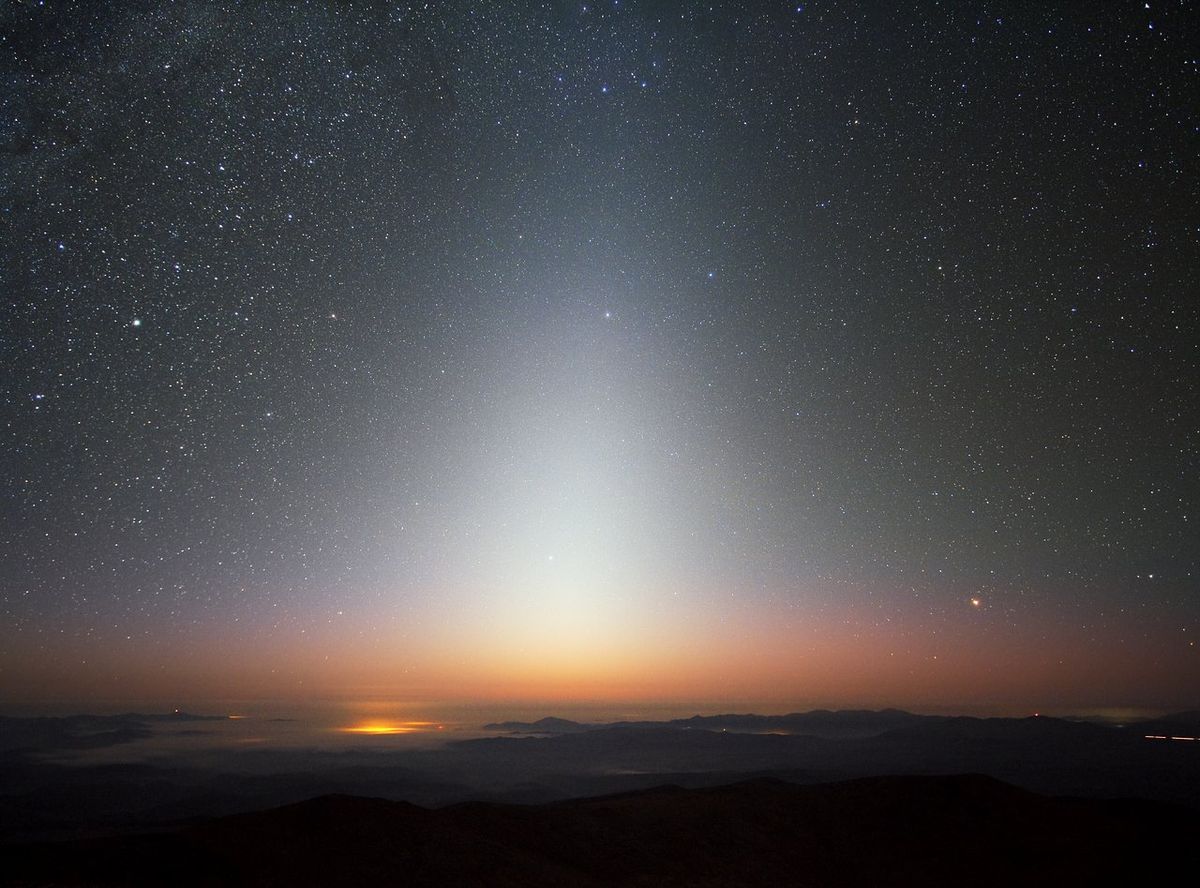
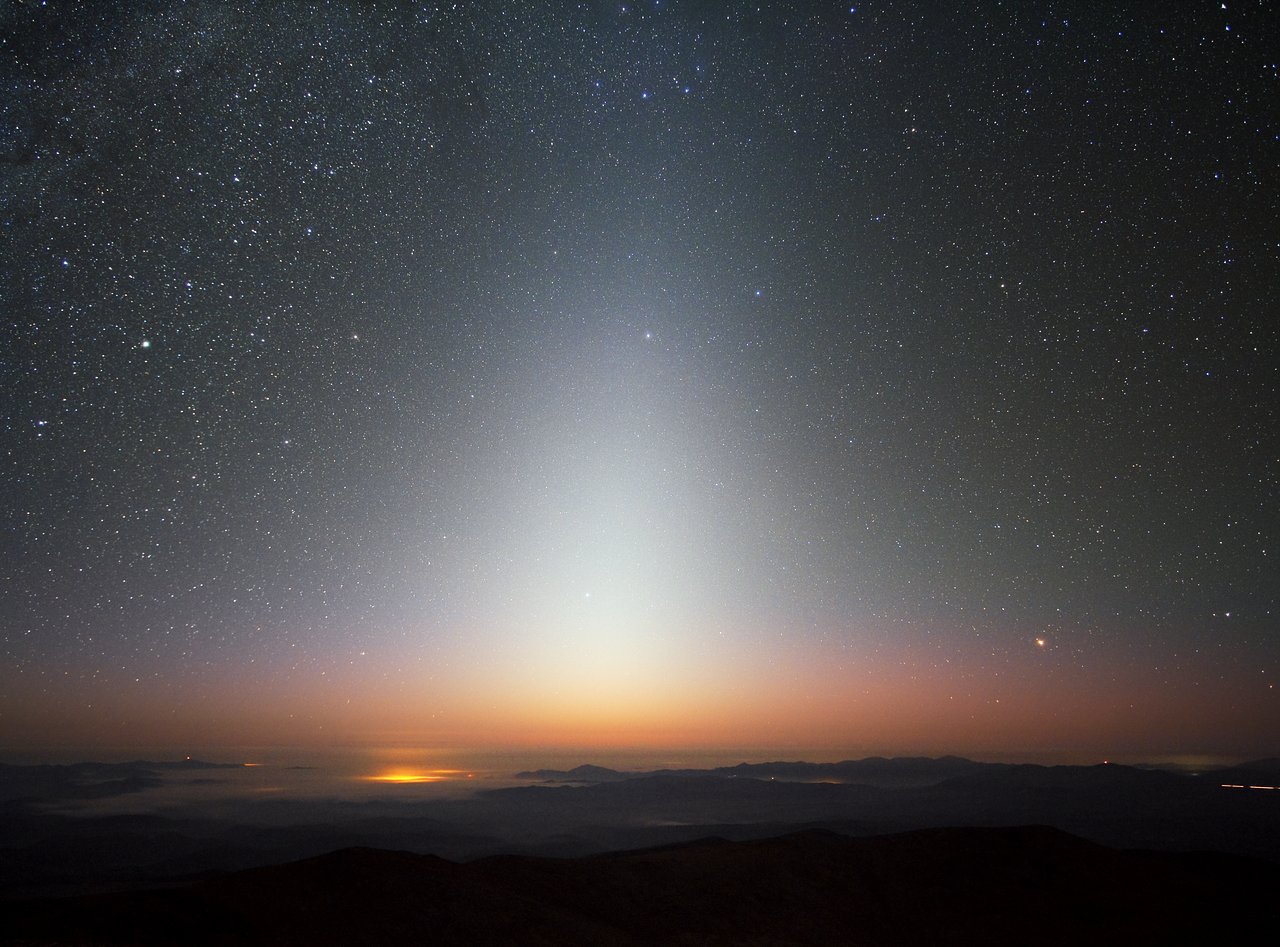
A strange triangle of light will glow in the sky during late twilight in the southwest this month —, but it will only be visible in inky black, moonless skies, and only during the second half of February.

Zodiacal light, often called “false dusk,” is a phenomenon caused by sunlight scattering off interplanetary dust particles within the solar system. These dust particles, comprising remnants from the formation of planets and debris from comets, orbit the sun in the same plane as the planets.

The light’s triangular shape appears in the belt of constellations known as the zodiac, according to the European Southern Observatory. These constellations are found along the ecliptic, the eastward apparent path that the sun traces across Earth’s sky, according to Space.com.

Although it’s long been thought that zodiacal light is caused by dust particles brought into the inner solar system by asteroids and comets, scientists using data from NASA’s Jupiter-orbiting Juno spacecraft claimed in 2020 that some of that dust originates from Mars. The researchers suggested that Mars sheds dust into space, which is then influenced by Jupiter’s gravity and dispersed throughout the inner solar system.

Related: The 10 best stargazing events of 2025

Seeing the faint column of light extending up from the horizon requires careful planning. With a bright moon gone from the twilight sky by Feb. 15, stargazers will have the best chance to spot the phenomenon if they find a remote dark-sky location far from urban areas. It’s vital to have a dark sky towards the west and southwest, making coasts and islands a good choice.

Timing is also key, with the light prominent only for about an hour after sunset — when the sky is sufficiently dark but before its glow fades. Although the light’s triangular glow is unmistakable, look slightly off to one side to better detect its faint brightness. This technique is known in astronomy circles as “averted vision.”

Get the world’s most fascinating discoveries delivered straight to your inbox.

Zodiacal light is visible as a “false dusk” in February because, just before the spring equinox (which this year occurs on March 20), the ecliptic tilts steeply relative to the horizon in the Northern Hemisphere, lifting the light above atmospheric haze and making it easier to see.

Source link

Share. Facebook Twitter Pinterest LinkedIn Tumblr Email
Previous ArticlePocket Popper — a MagSafe stand and Bluetooth speaker in one.
Next Article Get 2 Isle of Paradise Self-Tanning Drops for Price of 1
Editor
  • Website

Related Posts

Lifestyle

New robotic heart mimics common, mysterious condition to help researchers study it

July 11, 2026
Lifestyle

Canon EOS R6 III review: A wildlife wonder

July 10, 2026
Lifestyle

Medieval babies and adults buried together in Sweden were not related, archaeologists discover — raising big questions about early Christian burial practices

July 10, 2026
Add A Comment

Comments are closed.

Categories
  • Entertainment
  • Lifestyle
  • News
  • Sports
  • Tech
  • Travel
Recent Posts
  • New robotic heart mimics common, mysterious condition to help researchers study it
  • Canon EOS R6 III review: A wildlife wonder
  • Medieval babies and adults buried together in Sweden were not related, archaeologists discover — raising big questions about early Christian burial practices
  • NASA is creating a fifth state of matter on the ISS, thanks to an upgrade to a mini-fridge-sized quantum lab
  • New sodium metal battery design charges in just 4 minutes and retains its capacity for years
calendar
July 2026
M T W T F S S
 12345
6789101112
13141516171819
20212223242526
2728293031  
« Jun    
Recent Posts
  • New robotic heart mimics common, mysterious condition to help researchers study it
  • Canon EOS R6 III review: A wildlife wonder
  • Medieval babies and adults buried together in Sweden were not related, archaeologists discover — raising big questions about early Christian burial practices
About

Welcome to Baynard Media, your trusted source for a diverse range of news and insights. We are committed to delivering timely, reliable, and thought-provoking content that keeps you informed
and inspired

Categories
  • Entertainment
  • Lifestyle
  • News
  • Sports
  • Tech
  • Travel
Facebook X (Twitter) Pinterest WhatsApp
  • Contact Us
  • About Us
  • Privacy Policy
  • Disclaimer
  • UNSUBSCRIBE
© 2026 copyrights reserved

Type above and press Enter to search. Press Esc to cancel.