
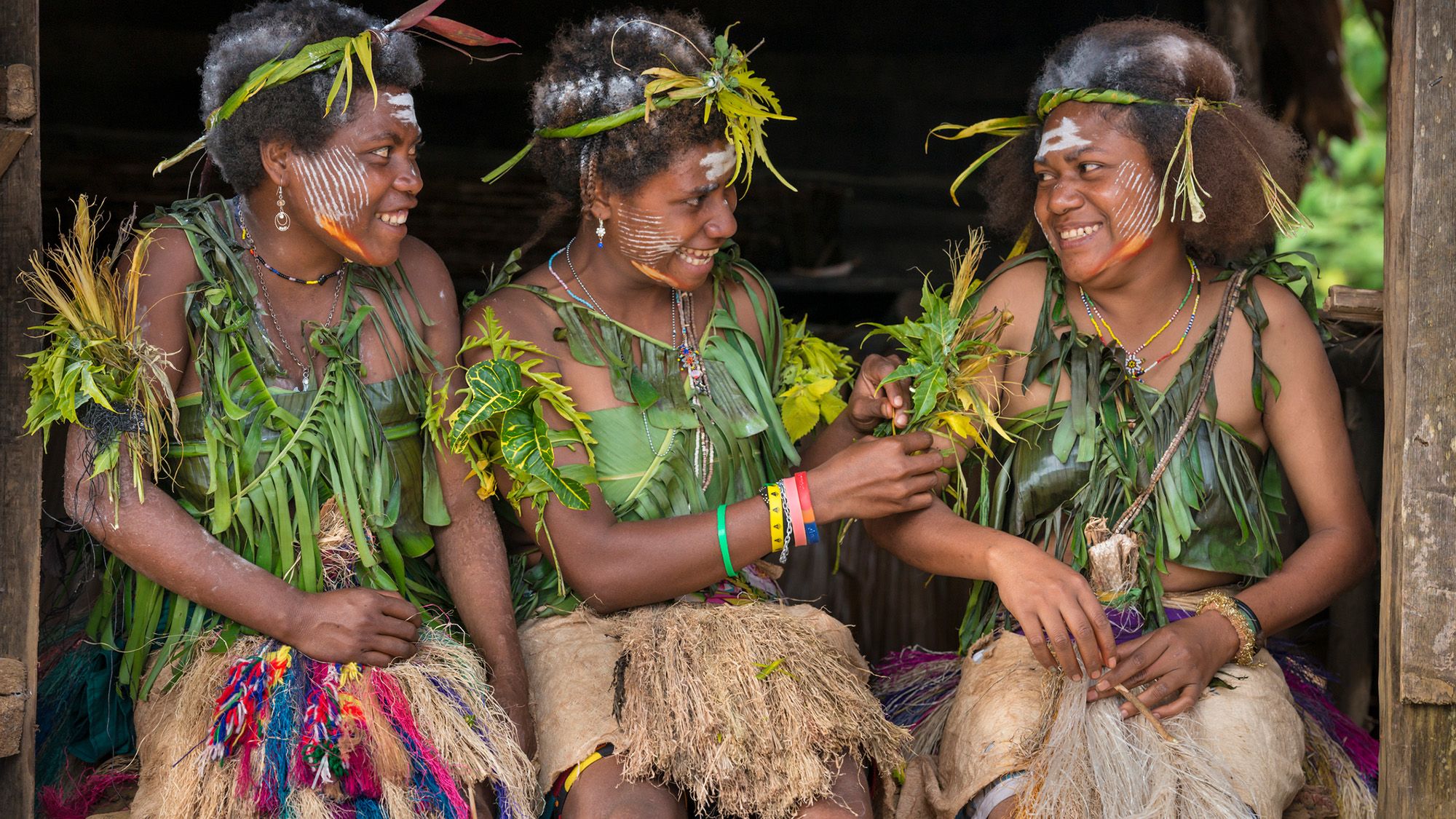
Some people from Oceania harbor thousands of genetic variants inherited from the Denisovans — a mysterious group of extinct humans — that are still active in their immune systems today, a new study finds.
The findings, published June 11 in the journal Science, come from the largest-ever map of Denisovan-inherited DNA ever created. The discovery shows that Denisovan DNA “is not just a remnant of ancient liaisons; it continues to influence our biology today,” study co-author Serena Tucci, an assistant professor of anthropology and head of the Human Evolutionary Genomics Laboratory at Yale University, said in a statement.
Experiments revealed 3,127 variants inherited from Denisovans that still function in the immune systems of modern-day people; some of these variants switch genes that turn the immune response on or off, according to the new research.
However, because many of the immune system genes identified also affect other bodily functions, it is unclear exactly how these genes benefited survival, study first author Patrick Reilly, an evolutionary genomics researcher at Yale, told Live Science.
Denisovan DNA is active in humans today
Previous research has already found that some modern-day people in Oceania — a region that includes New Guinea, the Solomon Islands and Fiji — have some Denisovan DNA. For example, people from Papua New Guinea are known to carry up to 5% Denisovan DNA in their genomes thanks to prehistoric trysts with the enigmatic group of humans who lived in Asia and disappeared around 30,000 years ago. This is among the highest proportion in the world, with modern-day East Asians typically carrying only around 0.1% Denisovan DNA.
Previous research has also shown that modern-day Tibetans carry a Denisovan version of the EPAS1 gene that supports their adaptation to living at high altitudes. People living in the highlands and lowlands of Papua New Guinea have different Denisovan gene variants depending on their local environments.
Yet Oceanians are vastly underrepresented in genomic databases. Sequencing the genomes of Oceanians can give a glimpse into the lives of the Denisovans and is essential for closing gaps in health disparities in Pacific Islanders as a whole, Reilly said.
Get the world’s most fascinating discoveries delivered straight to your inbox.
To fill this gap, Reilly and his team sequenced the genomes of 177 Oceanians from 12 populations and compared them to 1,284 previously published genomes from populations worldwide. Then, they compared these segments to the known Denisovan genome and three Neanderthal genomes.
Combined, the team built a catalog containing three times more Denisovan genetic sequences inherited from Denisovans than were previously identified, over 70% of which were unique to Oceanians.
Natural selection increased the frequency of some of these variants in people from Near Oceania, which includes New Guinea, the Bismarck Archipelago and the Solomon Islands in the Pacific Ocean, including genes linked to bone development, metabolism and fertility.
The team also ran experiments to assess whether any of the Densiovan DNA was changing how genes behaved in these populations, Reilly said.
This revealed that Denisovan genetic variants can switch various immune system genes on or off, although the exact immune functions that were targeted varied among the Oceanic populations studied.
Early migrants to Oceania at least 42,000 years ago benefited from Denisovan genes when they entered their new environment and encountered new disease-causing pathogens, Reilly said.
“This is consistent with multiple independent instances of local adaptation in response to novel immune environments and pathogens during human dispersal into the Pacific,” the authors wrote in the study.
Although the researchers don’t know exactly why natural selection acted on these genes, the findings highlight the major role pathogens played in shaping the way humans and our extinct relatives evolved, Reilly said.
The research is an “outstanding effort to try to understand the biological implications” of the enduring Denisovan genetic variants, Mathilde André, an evolutionary geneticist at the Pasteur Institute in France who was not involved in the study, told Live Science in an email.
The tripling of known Denisovan-inherited genetic sequences, most of which are unique to Oceanians, highlights the need to sequence the genomes from previously unrepresented populations to capture the diversity of Denisovan DNA, André said.
Reilly, P. F., Rong, S., Tejada-Martinez, D., Miller, S. L., Tjahjadi, A., Liu, C., Akers, J., Pomer, A., Prentice, M. E., Merriwether, D. A., Friedlaender, F. R., Koki, G., Friedlaender, J. S., Reilly, S. K., & Tucci, S. (2026). Long-term isolation and archaic introgression shape functional genetic variation in Near Oceania. Science, 392(6803), eadr6749. https://doi.org/10.1126/science.adr6749
See how much you know about early humans with our human evolution quiz!
