Close Menu
  • Home
  • UNSUBSCRIBE
  • News
  • Lifestyle
  • Tech
  • Entertainment
  • Sports
  • Travel
Facebook X (Twitter) WhatsApp
Trending
  • Doctor’s kit found on Mount Vesuvius victim in Pompeii
  • 950-year-old burial of a pet dingo is first clear archaeological evidence of humans ritually ‘feeding’ a grave anywhere in the world
  • Daunian kyathos: A 2,700-year-old ceramic cup from Italy decorated with an exuberant-looking, bug-eyed fellow
  • ‘Truly significant’: James Webb telescope reveals largest-ever map of the universe’s hidden megastructures
  • Webb and Hubble sink deep into the dazzling Whirlpool Galaxy — Space photo of the week
  • ‘Last titan’ of Thailand discovered, and it’s the longest-necked dinosaur on record from Southeast Asia
  • ‘We kept finding large, circular mass graves’ in the Sahara predating the ancient Egyptians, archaeologists report
  • Why aren’t brain transplants possible?
Facebook X (Twitter) WhatsApp
Baynard Media
  • Home
  • UNSUBSCRIBE
  • News
  • Lifestyle
  • Tech
  • Entertainment
  • Sports
  • Travel
Baynard Media
Home»Lifestyle»Doctor’s kit found on Mount Vesuvius victim in Pompeii
Lifestyle

Doctor’s kit found on Mount Vesuvius victim in Pompeii

EditorBy EditorMay 18, 2026No Comments4 Mins Read
Share Facebook Twitter Pinterest LinkedIn Tumblr Reddit Telegram Email
Share
Facebook Twitter LinkedIn Pinterest Email

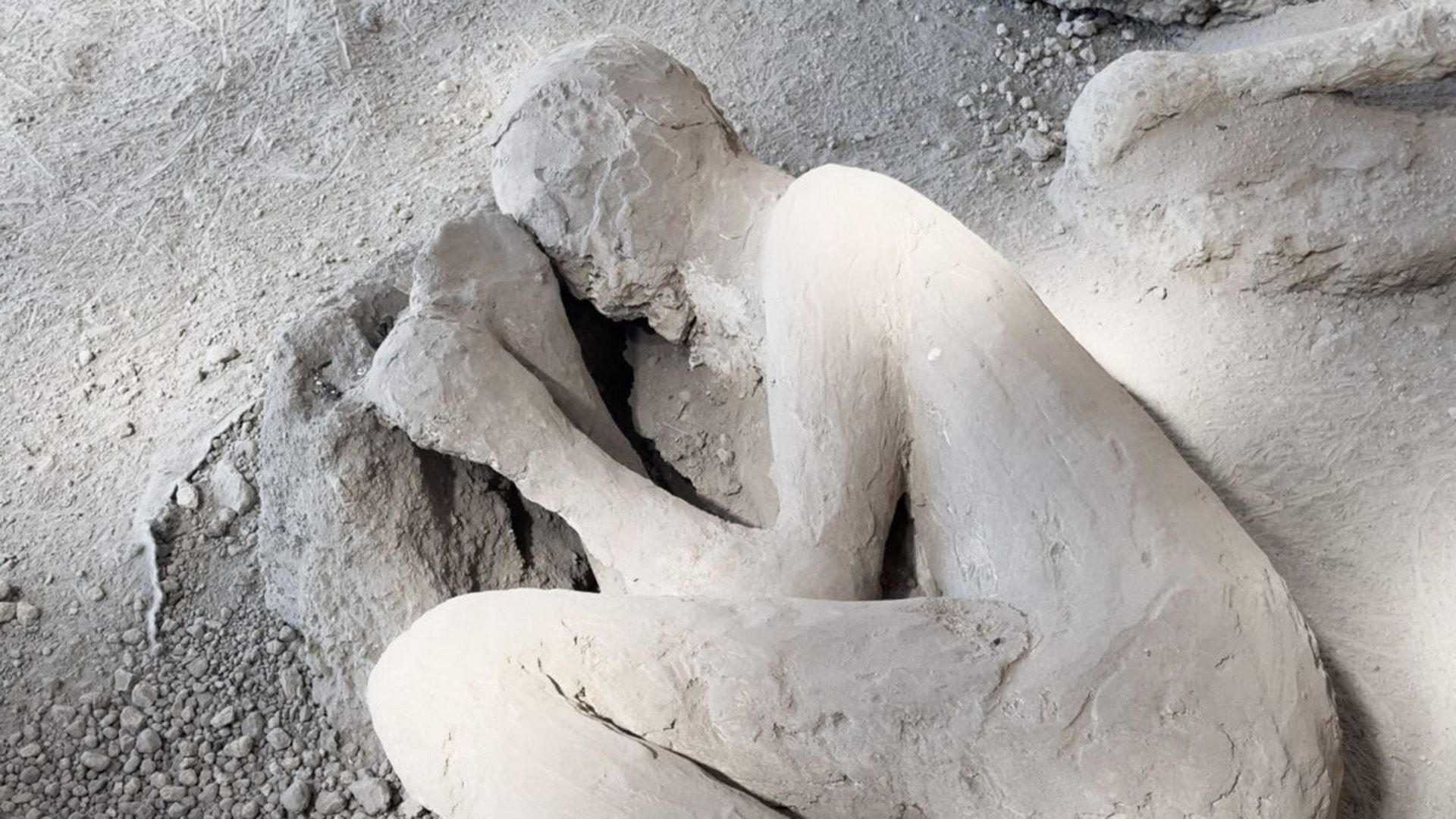
A man who died in Pompeii during the eruption of Mount Vesuvius in A.D. 79 had a medical kit with him when he perished, a new analysis of his body cast reveals.

The medical kit indicates that he was probably a physician — a “medicus” in Latin.

The man was one of 13 people who died while taking shelter in a Pompeii vineyard later called the “Garden of the Fugitives.” But instead of finding refuge, the group was overcome by an explosive burst of deadly gas, likely carbon dioxide and sulfur dioxide, and ash from the volcano, which killed thousands of people in Pompeii and the nearby town of Herculaneum.


You may like

Pompeii was discovered in the 16th century, but most of the scientific work at the Roman seaside city was done more recently. In 1961, plaster casts were made of the voids left in the ash by the bodies of the volcano’s victims in the Garden of the Fugitives ‪—‬ some of the roughly 104 plaster casts of victims made at Pompeii.

New examinations show that the man had been carrying surgical instruments and other “tools of his trade,” according to a translated statement from the Italian government archaeological park that runs the site. But it’s not known whether the man planned to treat people affected by the eruption or if he was hoping to escape the disaster.

“This man brought his tools with him to be ready to rebuild his life elsewhere, thanks to his profession, but perhaps also to help others,” Gabriel Zuchtriegel, director of Pompeii Archaeological Park, said in the statement.

Destructive eruption

The eruption of Vesuvius killed about 2,000 people in Pompeii and nearby towns, although archaeologists now think many others escaped. The event has been studied extensively, in part because of the remarkable preservation of many features of Roman life under the layers of ash. Witnesses also made written accounts of the eruption.

Get the world’s most fascinating discoveries delivered straight to your inbox.

According to the statement, a small case made from “organic material” (possibly leather) was found within one of the plaster casts made when the Garden of the Fugitives was excavated in 1961. However, the case’s contents had remained a mystery until now.

The new investigation, which used X-ray and CT scans, revealed that the case contained several small, metal instruments thought to be surgical tools as well as a tablet made from slate, which was probably used for preparing medicines. (Ingredients like honey, wine, vinegar and plant extracts were common.) The case was locked with a mechanism based on a toothed wheel.

A person wearing purple latex gloves holds a rock in their hands next to a large scanning machine.

Advanced X-ray imaging shows the man’s case contained surgical instruments and a tablet of slate for preparing medicines.

(Image credit: Pompeii Archaeological Park)

These findings suggest the man was a medicus trained in medicine and surgery, the statement said. Educated Greek slaves sometimes had this role but by the time of the Vesuvius eruption — when Titus was the Roman emperor — medicine had a higher status (Julius Caesar granted Roman citizenship to all physicians in 46 B.C.).

The practice of medicine was valued by wealthy Romans, but the last resort of surgery entailed serious risks — there were no antibiotics and no modern anesthesia, and patients often died from infections. In addition, the causes of illnesses were not well understood — diseases like malaria were thought to be caused by “bad air” (under the Greek “miasma” theory), and Roman medical treatments often dealt with supposed curses and malign spirits.

Other artifacts found with the victims of Mount Vesuvius include house keys and oil lamps, and some people were killed while carrying precious jewels and coin “treasures” away from the eruption. The victim thought to be a medicus was also carrying a small fabric bag of bronze and silver coins, the statement said.


How much do you know about the Roman town destroyed by Mount Vesuvius? Find out by taking our Pompeii quiz!

Source link

Share. Facebook Twitter Pinterest LinkedIn Tumblr Email
Previous Article950-year-old burial of a pet dingo is first clear archaeological evidence of humans ritually ‘feeding’ a grave anywhere in the world
Editor
  • Website

Related Posts

Lifestyle

950-year-old burial of a pet dingo is first clear archaeological evidence of humans ritually ‘feeding’ a grave anywhere in the world

May 18, 2026
Lifestyle

Daunian kyathos: A 2,700-year-old ceramic cup from Italy decorated with an exuberant-looking, bug-eyed fellow

May 18, 2026
Lifestyle

‘Truly significant’: James Webb telescope reveals largest-ever map of the universe’s hidden megastructures

May 18, 2026
Add A Comment

Comments are closed.

Categories
  • Entertainment
  • Lifestyle
  • News
  • Sports
  • Tech
  • Travel
Recent Posts
  • Doctor’s kit found on Mount Vesuvius victim in Pompeii
  • 950-year-old burial of a pet dingo is first clear archaeological evidence of humans ritually ‘feeding’ a grave anywhere in the world
  • Daunian kyathos: A 2,700-year-old ceramic cup from Italy decorated with an exuberant-looking, bug-eyed fellow
  • ‘Truly significant’: James Webb telescope reveals largest-ever map of the universe’s hidden megastructures
  • Webb and Hubble sink deep into the dazzling Whirlpool Galaxy — Space photo of the week
calendar
May 2026
M T W T F S S
 123
45678910
11121314151617
18192021222324
25262728293031
« Apr    
Recent Posts
  • Doctor’s kit found on Mount Vesuvius victim in Pompeii
  • 950-year-old burial of a pet dingo is first clear archaeological evidence of humans ritually ‘feeding’ a grave anywhere in the world
  • Daunian kyathos: A 2,700-year-old ceramic cup from Italy decorated with an exuberant-looking, bug-eyed fellow
About

Welcome to Baynard Media, your trusted source for a diverse range of news and insights. We are committed to delivering timely, reliable, and thought-provoking content that keeps you informed
and inspired

Categories
  • Entertainment
  • Lifestyle
  • News
  • Sports
  • Tech
  • Travel
Facebook X (Twitter) Pinterest WhatsApp
  • Contact Us
  • About Us
  • Privacy Policy
  • Disclaimer
  • UNSUBSCRIBE
© 2026 copyrights reserved

Type above and press Enter to search. Press Esc to cancel.