Close Menu
  • Home
  • UNSUBSCRIBE
  • News
  • Lifestyle
  • Tech
  • Entertainment
  • Sports
  • Travel
Facebook X (Twitter) WhatsApp
Trending
  • New robotic heart mimics common, mysterious condition to help researchers study it
  • Canon EOS R6 III review: A wildlife wonder
  • Medieval babies and adults buried together in Sweden were not related, archaeologists discover — raising big questions about early Christian burial practices
  • NASA is creating a fifth state of matter on the ISS, thanks to an upgrade to a mini-fridge-sized quantum lab
  • New sodium metal battery design charges in just 4 minutes and retains its capacity for years
  • Quantum computing wielded to create extremely rare material critical to nuclear fusion
  • Scientists build tiny ‘diving suit’ for cockroaches, turning them into search-and-rescue cyborgs
  • Physicists develop the first working model of quantum mechanics using only ‘real’ numbers
Facebook X (Twitter) WhatsApp
Baynard Media
  • Home
  • UNSUBSCRIBE
  • News
  • Lifestyle
  • Tech
  • Entertainment
  • Sports
  • Travel
Baynard Media
Home»Lifestyle»Lion’s head pendant: An ancient Egyptian board game piece that was later repurposed into a magical religious object with baboons
Lifestyle

Lion’s head pendant: An ancient Egyptian board game piece that was later repurposed into a magical religious object with baboons

EditorBy EditorMay 11, 2026No Comments3 Mins Read
Share Facebook Twitter Pinterest LinkedIn Tumblr Reddit Telegram Email
Share
Facebook Twitter LinkedIn Pinterest Email

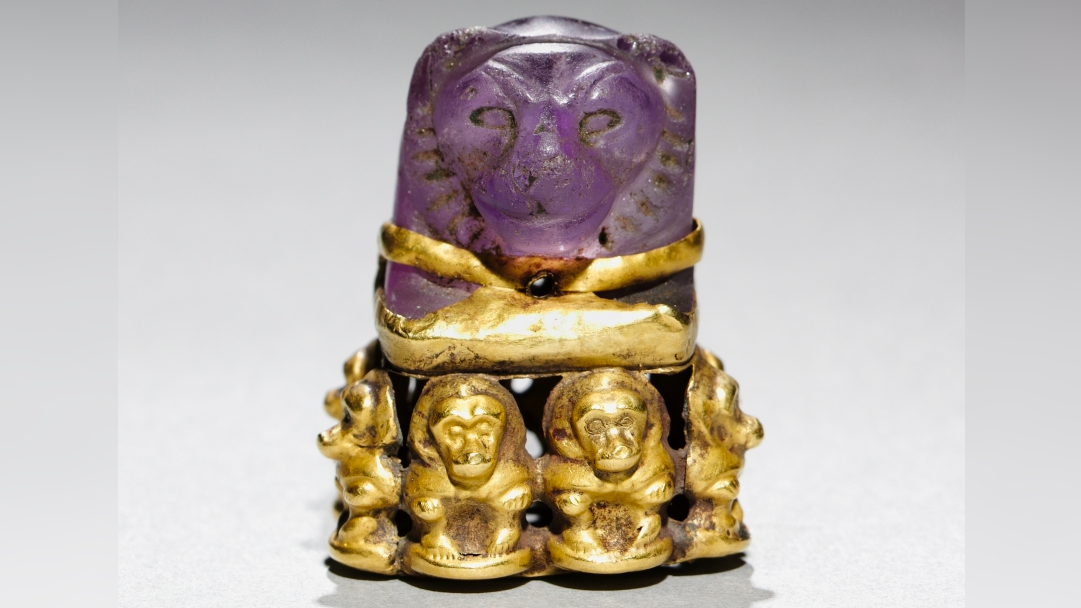
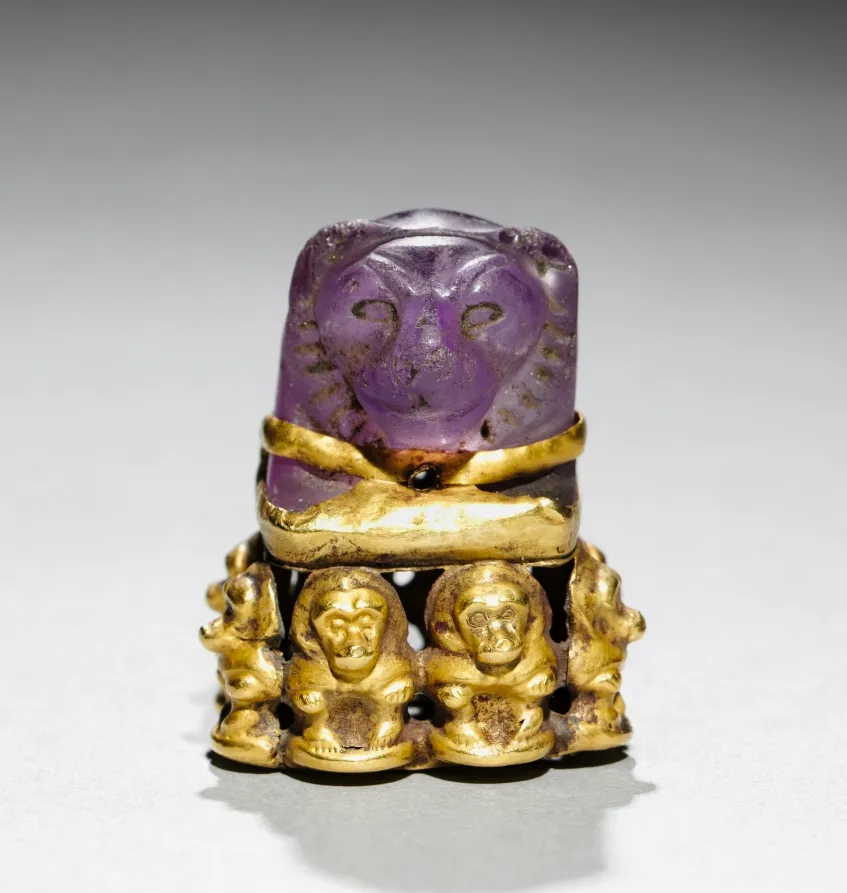
a purple amethyst carved into a lion's head set atop a gold base of baboons

A lion’s head carved out of amethyst has been set into a golden base decorated with baboons.

(Image credit: Purchase from the J. H. Wade Fund 1987.1, Cleveland Museum of Art (Public Domain))

QUICK FACTS

Name: Lion’s head pendant

What it is: An amethyst-and-gold pendant

Where it is from: Sudan

When it was made: Circa 1069 to 715 B.C.

In 1987, the Cleveland Museum of Art acquired an unusual pendant depicting a lion’s head carved out of amethyst on a gold base decorated with baboons. But one part was much older than the other and was originally carved as a game piece.

The lion’s head pendant was crafted out of an ancient Egyptian gemstone as far back as 3,500 years ago. Then, around 2,700 years ago, an artisan in Sudan set the much-older Egyptian gemstone into a new metal mount made of eight seated baboons to create a magical religious object.

According to the Cleveland Museum of Art, the pendant measures about 1.4 inches (3.5 centimeters) tall. A hole just under the lion’s chin pierces the pendant, which would have been suspended on a string.


You may like

The purple amethyst and gold frame are a unique combination. The lion is similar to pieces found in the ancient Egyptian game senet, in which players would move their pawns across a board with 30 squares. The amethyst likely dates to the New Kingdom period (circa 1550 to 1070 B.C.), according to a 1996 study of the artifact. But the gold mount was added considerably later, likely in the Napatan period (circa 750 to 300 B.C.), named for the town that was used as the religious center of Nubia.

Recycling of old stone carvings was common among the ancient Nubians, who lived in what is now southern Egypt and northern Sudan. In the early first millennium B.C., Nubian rulers viewed themselves as descendants of Ramesses II (who reigned from 1279 to 1213 B.C.) and repurposed and retrofitted semiprecious gems into new gold mounts to show their Egyptian connections. Under the later Kushite kings (circa 712 to 664 B.C.), this practice continued in Napata as the rulers incorporated Egyptian customs into their own culture.

MORE ASTONISHING ARTIFACTS

Both the lion and the baboon were sacred in Kushite religion. The lion was associated with the god Amun, who was tasked with protecting the state and who merged with the sun god, Ra, and became known as the powerful creator deity Amun-Ra. The baboons were connected to the sun and the moon and were often depicted with their arms raised. In this pendant, the baboons lift the representation of Amun.

The lion’s head pendant was meant to be worn in life, rather than as a funeral gift, and it demonstrates the ancient Nubians’ clever use of Egyptian heirlooms to create new and religiously charged jewelry.

Get the world’s most fascinating discoveries delivered straight to your inbox.

For more stunning archaeological discoveries, check out our Astonishing Artifacts archives.

TOPICS

astonishing artifacts

gold

Source link

Share. Facebook Twitter Pinterest LinkedIn Tumblr Email
Previous ArticleAre we more closely related to cats or dogs?
Next Article A 2025 Alaskan tsunami was one of the largest on record, new research finds
Editor
  • Website

Related Posts

Lifestyle

New robotic heart mimics common, mysterious condition to help researchers study it

July 11, 2026
Lifestyle

Canon EOS R6 III review: A wildlife wonder

July 10, 2026
Lifestyle

Medieval babies and adults buried together in Sweden were not related, archaeologists discover — raising big questions about early Christian burial practices

July 10, 2026
Add A Comment

Comments are closed.

Categories
  • Entertainment
  • Lifestyle
  • News
  • Sports
  • Tech
  • Travel
Recent Posts
  • New robotic heart mimics common, mysterious condition to help researchers study it
  • Canon EOS R6 III review: A wildlife wonder
  • Medieval babies and adults buried together in Sweden were not related, archaeologists discover — raising big questions about early Christian burial practices
  • NASA is creating a fifth state of matter on the ISS, thanks to an upgrade to a mini-fridge-sized quantum lab
  • New sodium metal battery design charges in just 4 minutes and retains its capacity for years
calendar
July 2026
M T W T F S S
 12345
6789101112
13141516171819
20212223242526
2728293031  
« Jun    
Recent Posts
  • New robotic heart mimics common, mysterious condition to help researchers study it
  • Canon EOS R6 III review: A wildlife wonder
  • Medieval babies and adults buried together in Sweden were not related, archaeologists discover — raising big questions about early Christian burial practices
About

Welcome to Baynard Media, your trusted source for a diverse range of news and insights. We are committed to delivering timely, reliable, and thought-provoking content that keeps you informed
and inspired

Categories
  • Entertainment
  • Lifestyle
  • News
  • Sports
  • Tech
  • Travel
Facebook X (Twitter) Pinterest WhatsApp
  • Contact Us
  • About Us
  • Privacy Policy
  • Disclaimer
  • UNSUBSCRIBE
© 2026 copyrights reserved

Type above and press Enter to search. Press Esc to cancel.