
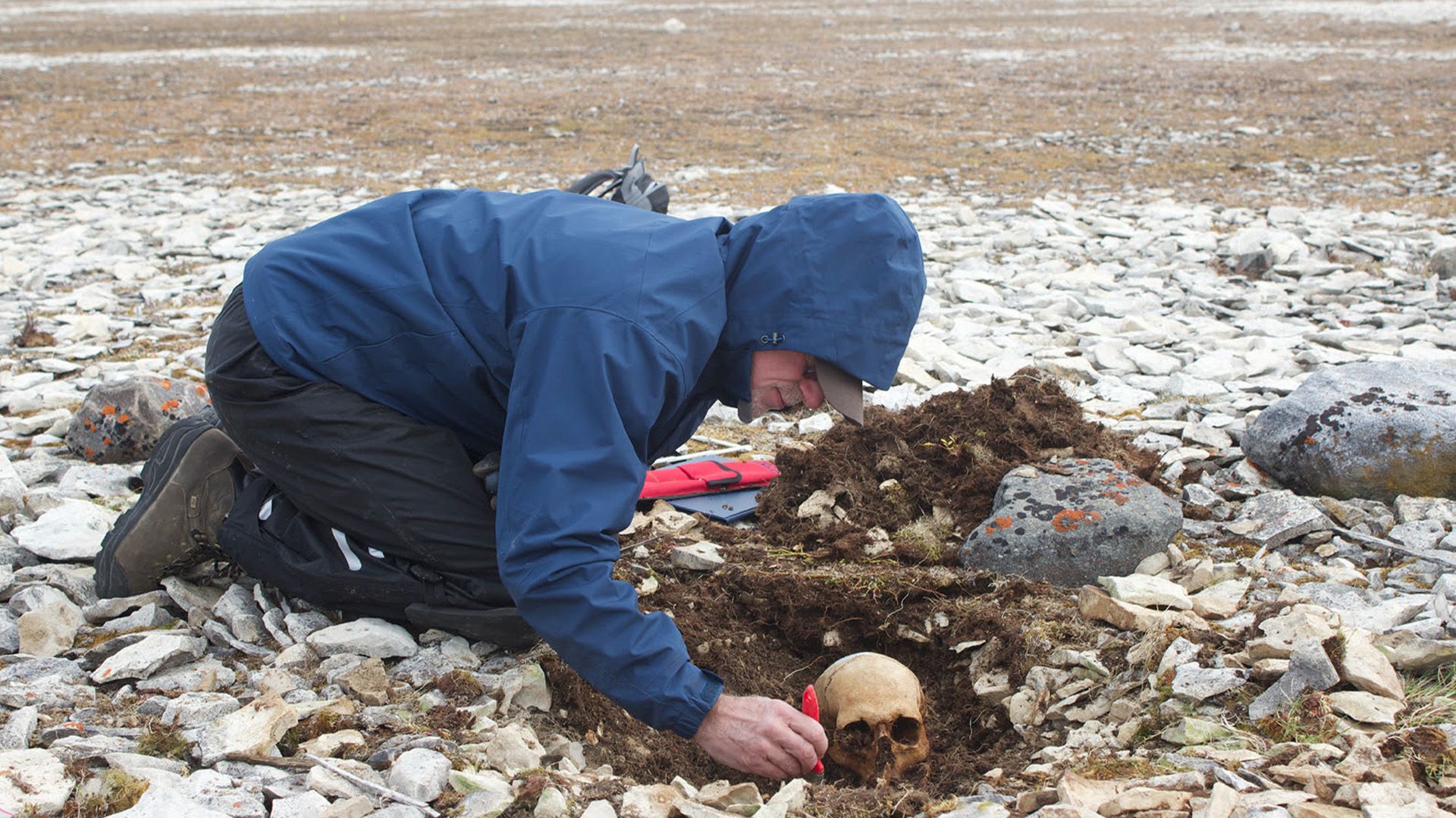
Nearly 180 years after they died of cold and starvation in the Canadian Arctic, four crewmembers who perished in the Franklin expedition have been identified thanks to genetic analyses that matched their DNA with that of living descendants.
Three of the victims were from HMS Erebus, one of the expedition’s two vessels, and died at Erebus Bay, the researchers reported in a new study published Wednesday (May 6) in the Journal of Archaeological Science: Reports. The fourth victim, a captain on HMS Terror, is the first from that ship to be identified with DNA, according to a second study that was published Thursday (May 7) in the journal Polar Record.
The Franklin expedition departed England in May 1845, with an aim of discovering a Northwest Passage, an Arctic route to connect the Atlantic and Pacific oceans. Sir John Franklin commanded the mission’s two ships. However, the ships and their 129 crewmembers became stuck in ice off a Canadian archipelago in late 1846, and Franklin died June 11, 1847.
On April 22, 1848, the surviving 105 crewmembers left the ships off King William Island and tried to make it to the Canadian mainland, walking and dragging boats on sleds, but all of them died along the way.
Search expeditions launched over the following two decades found some human remains and artifacts, as did scientific expeditions launched in the 20th and 21st centuries, which finally led to the discovery of the long-lost ships.
The new DNA analysis sheds light on exactly where each ship’s crew traveled in their doomed attempt to find safety. One victim, Harry Peglar, was “Captain of the Foretop on HMS Terror,” the team found in their research. Papers belonging to Peglar were found on another man’s body in 1859 and include poetry and descriptions of events on board the ships.
Peglar’s remains were discovered about 125 miles (200 kilometers) from the frozen ships, meaning he had made it far into the remote wilderness. “What is known is that he died alone, dressed in the uniform of a steward,” the researchers wrote in the Polar Record study.
The other three newly identified individuals are William Orren, an able seaman on HMS Erebus; David Young, a boy first class on HMS Erebus; and John Bridgens, a subordinate officer’s steward on HMS Erebus.
According to historical records, Orren first went to sea in 1821, when he was just 15 years old. He served on HMS Swan in 1830 and HMS Alfred in 1831. “He wouldn’t sail with the navy again for another 14 years, until he joined the crew of HMS Erebus in Woolwich on 19 March 1845 as an Able Seaman when he was 38 years old,” the team wrote in the first study.
Historical records also say Orren was about 5 feet, 4 inches (1.63 meters) tall, with dark hair, a light complexion and brown eyes. A descendant of his sister provided the DNA that allowed him to be identified.
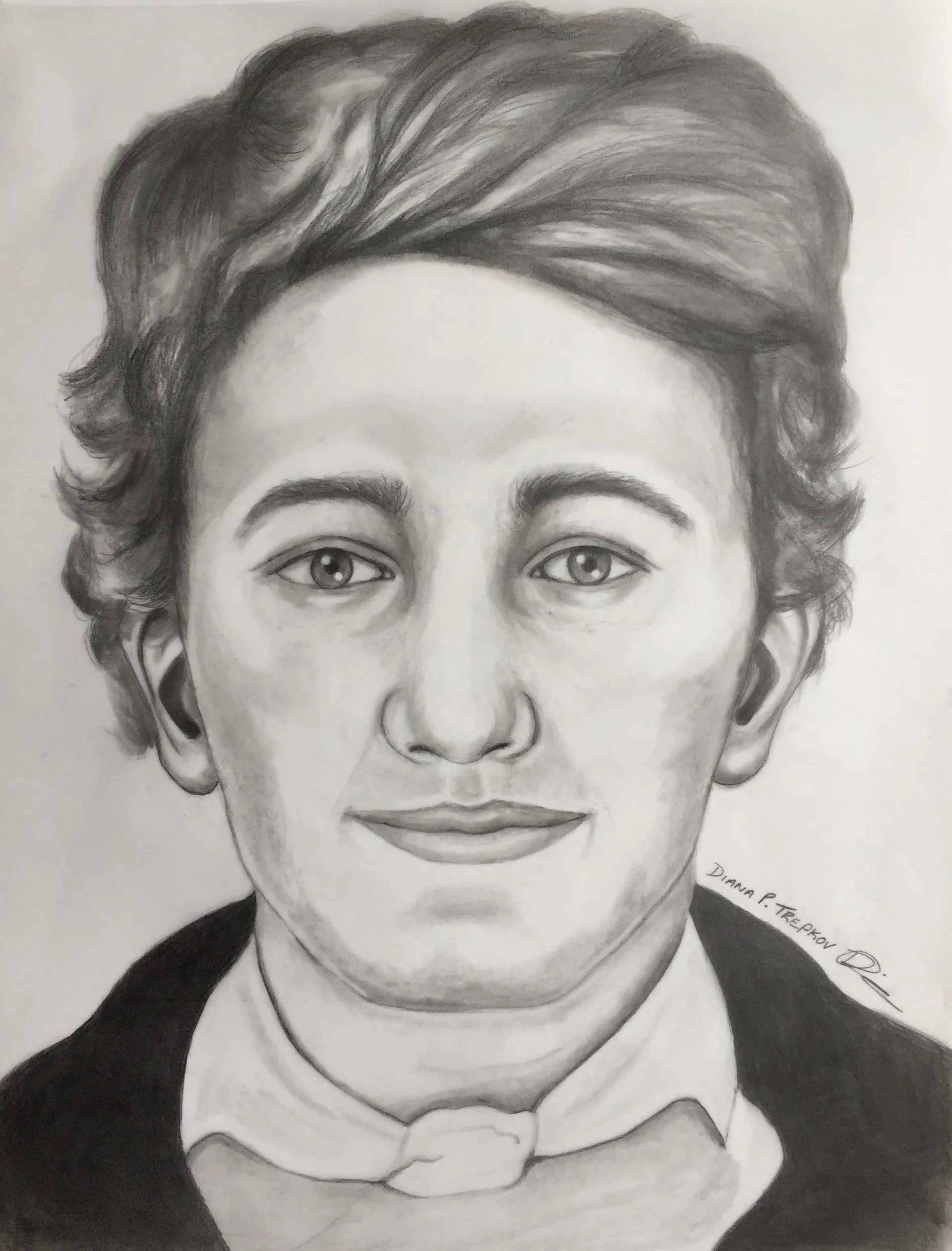
A facial reconstruction of David Young, boy first class from HMS Erebus, who died at Erebus Bay.
(Image credit: 2D Forensic Facial Reconstruction by Diana Trepkov, Investigative Forensic Artist)
Young was 17 years old when he joined HMS Erebus. His father was also a navy sailor but wasn’t posted to the Erebus expedition. The DNA used to identify him came from a descendant of one of his brothers.
Bridgens was born in 1818, and his father was a sailor who never married his mother. Bridgens was trained by his stepfather to be a hairdresser, but he went to sea instead. Records indicate that he first went to sea as a musician in 1829. He served aboard HMS Endymion in 1841, during a war with China, and “volunteered for the Franklin expedition in Woolwich on 20 March 1845, when he was 26 years old,” the team wrote in the article. The DNA of a descendant of one of his half-sisters was used to identify the remains of Bridgens.
“He was 5 ft 6 inches [1.68 m] tall, with dark hair and hazel eyes,” the researchers wrote in the study. “His seaman’s ticket indicates that he was illiterate, which is further demonstrated by his marking his name with a cross on his allotment records.”
Previous DNA studies identified other members of the Franklin expedition, including John Gregory, an engineer on the Erebus, and James Fitzjames, who became captain of the Erebus after Franklin’s death and was likely cannibalized.
“For the living descendants, these findings provide previously unavailable details regarding the circumstances and locations of their relatives’ deaths, as well as the identities of some of the shipmates who died with them,” Douglas Stenton, an anthropologist at the University of Waterloo in Ontario and first author of the Journal of Archaeological Science: Reports paper, said in a statement.
The team’s work continues, and the remains of more crewmembers may be identified.
Stenton, D. R., Fratpietro, S., Gorsalitz, K., & Park, R. W. (2026). DNA identifications of three 1845 Franklin expedition sailors from HMS Erebus. Journal of Archaeological Science Reports, 105739. https://doi.org/10.1016/j.jasrep.2026.105739
