Close Menu
  • Home
  • UNSUBSCRIBE
  • News
  • Lifestyle
  • Tech
  • Entertainment
  • Sports
  • Travel
Facebook X (Twitter) WhatsApp
Trending
  • Diagnostic dilemma: Black and blue patches appeared on a woman’s body, and an antibiotic was to blame
  • ‘Food insecurity is no longer just about low-income countries’: Environmental economist explains how climate change is pushing agricultural systems to the brink
  • Very low and very high heart rates linked to increased risk of stroke in huge study
  • Icy object beyond Pluto has an atmosphere that shouldn’t exist, study suggests
  • Researcher discovers shortcut to Mars that could cut travel time in half — if we build the right spacecraft
  • Canadian ’emoji’ lake vanishes after dramatic, landslide-like collapse — Earth from space
  • The universe may end trillions of years sooner than we thought
  • ‘They weren’t burned by accident’: Mysterious green rocks discovered high in Pyrenees reveal ancient copper-smelting camp
Facebook X (Twitter) WhatsApp
Baynard Media
  • Home
  • UNSUBSCRIBE
  • News
  • Lifestyle
  • Tech
  • Entertainment
  • Sports
  • Travel
Baynard Media
Home»Lifestyle»Diagnostic dilemma: Black and blue patches appeared on a woman’s body, and an antibiotic was to blame
Lifestyle

Diagnostic dilemma: Black and blue patches appeared on a woman’s body, and an antibiotic was to blame

EditorBy EditorMay 6, 2026No Comments4 Mins Read
Share Facebook Twitter Pinterest LinkedIn Tumblr Reddit Telegram Email
Share
Facebook Twitter LinkedIn Pinterest Email

The patient: A 68-year-old woman in the U.S.

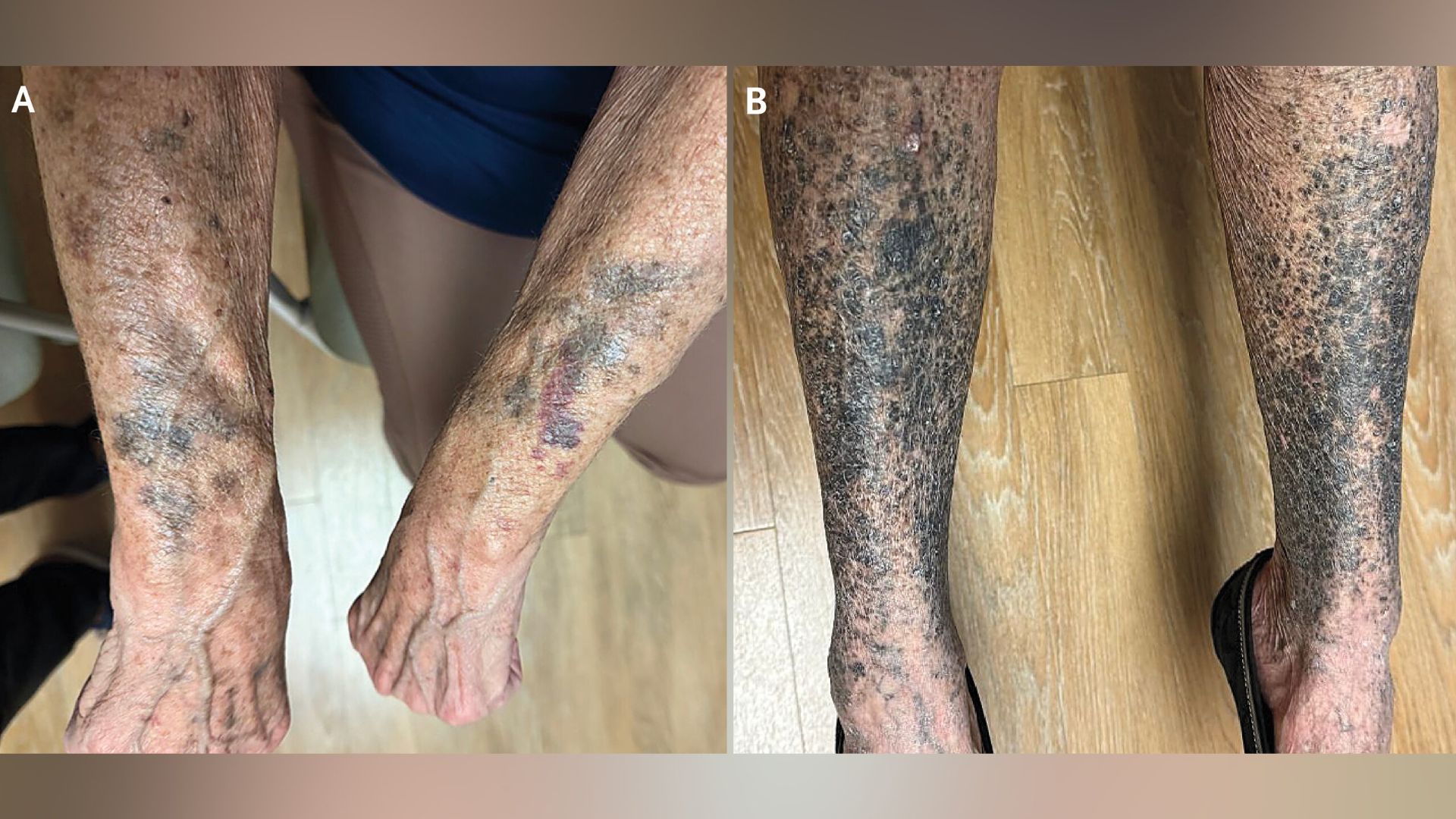
The symptoms: Over the course of six weeks, dark patches appeared on the woman’s arms and legs. The splotches ranged from a bruise-like dark blue and purple to jet-black.

What happened next: While examining the patient, doctors noticed blue-gray “hyperpigmentation” on the woman’s forearms and shins, as well as on the sides of her tongue. The woman noted that the patches had first appeared on her legs before cropping up elsewhere.


You may like

She also told doctors that, two weeks before the patches appeared, she’d started a course of minocycline, an oral antibiotic.

She had been prescribed a daily 100-milligram dose of the drug to treat symptoms of rosacea, which causes chronic inflammation and redness of the face. This inflammation can drive the formation of small, red bumps and pus-filled pimples on the skin, and evidence suggests that antibiotics like minocycline can help eliminate those bumps. In addition to killing bacteria, the drug is known to have anti-inflammatory effects, the latter of which may best explain how it treats rosacea.

The diagnosis: A well-established side effect of minocycline is hyperpigmentation, in which patches of skin become darker than the skin surrounding them. In this case, the woman was diagnosed with type II minocycline-induced hyperpigmentation, which is “defined by blue-gray discoloration of normal skin on the extensor surfaces of the arms and legs,” according to a report of the case.

The antibiotic can also trigger two other types of hyperpigmentation. Type I shows up as blue-black discoloration on scarred or inflamed skin on the face, rather than on healthy skin on the limbs, and type III appears as muddy-brown pigmentation on sun-exposed areas of the body.
Get the world’s most fascinating discoveries delivered straight to your inbox.

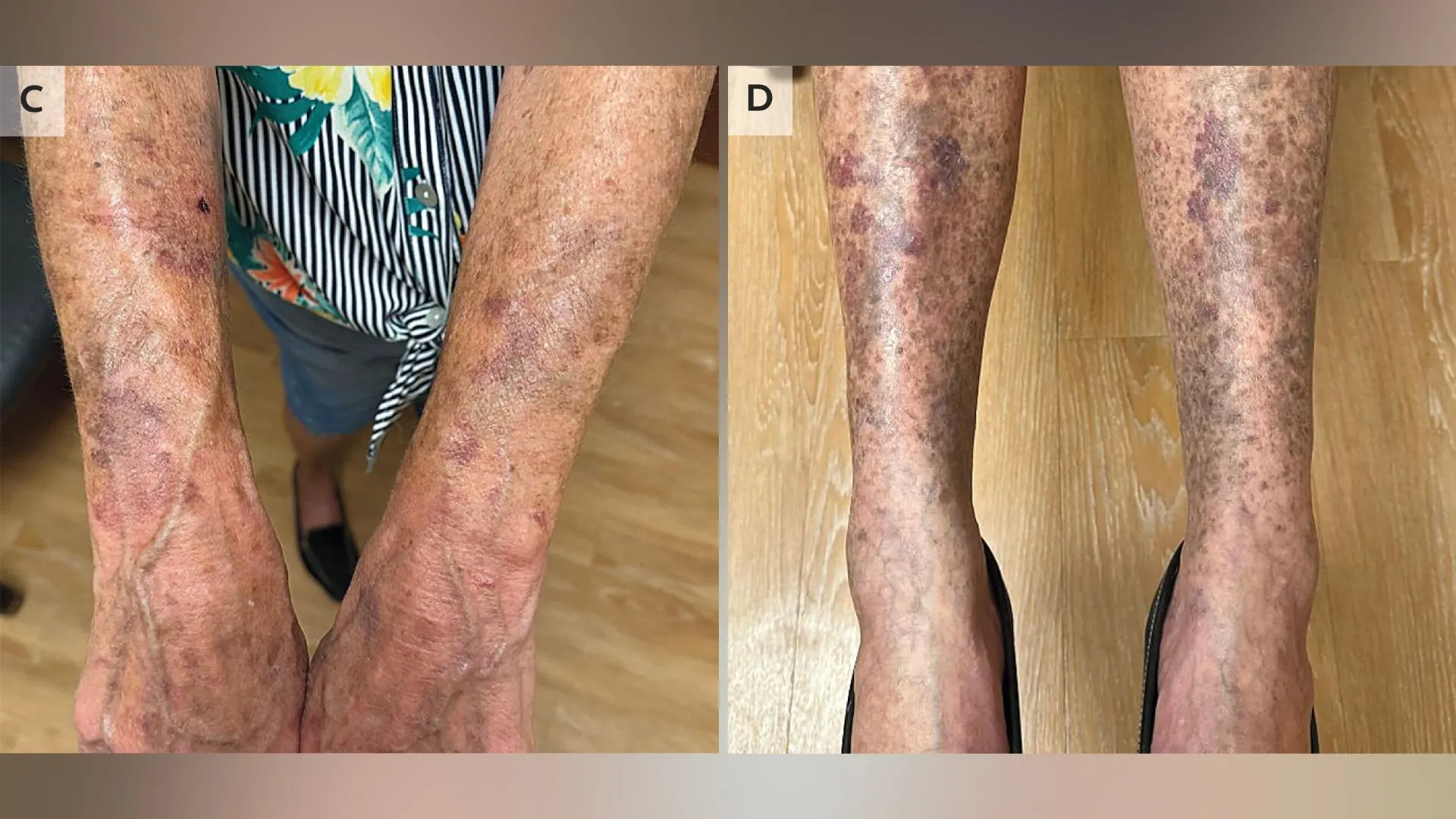
A photo of a pale woman's arms, showing faded but visible blotches of hyperpigmentation, and a second photo showing the same pattern on her shins

At a six-month follow-up appointment, the woman’s hyperpigmentation had faded a bit but was still visible.

(Image credit: The New England Journal of Medicine ©2026)

The treatment: Doctors advised the patient to stop taking minocycline and to avoid sun exposure, as ultraviolet light is thought to worsen hyperpigmentation in these cases. Six months later, the hyperpigmentation in her limbs had “abated somewhat” but was still visible.

What makes the case unique: Hyperpigmentation is not necessarily uncommon for minocycline users with rosacea; one frequently cited study estimates that the side effect shows up in about 28% of people in this population, although that research included only a small number of patients. The true incidence of the side effect is unclear.

This woman’s case was notable, in part, because of how quickly the discoloration developed ‪—‬ within two weeks of starting minocycline. While type I minocycline-induced hyperpigmentation can show up soon after a person starts taking the drug, type II and type III usually take longer to appear.


What to read next

“It typically develops after months of treatment but may rarely occur with shorter courses,” the case report authors noted. Type II and type III are thought to be dose-dependent, in that a certain amount of the drug needs to build up in the body before the dark patches show up.

The cause of minocycline-induced hyperpigmentation isn’t fully understood, but it’s thought to result from how the antibiotic gets broken down in the body. The metabolites, or byproducts, created in this process bind to iron and are then picked up by immune cells called macrophages, in which they accumulate. Additionally, the drug may drive up the activity of cells that make melanin — the pigment that gives skin its color — while also binding to melanin, thereby creating complexes of dark pigment that linger in the skin.

Once a person stops taking minocycline, the pigmentation can take months to years to dissipate, reports suggest. In type III cases, it sometimes never goes away.

For more intriguing medical cases, check out our Diagnostic Dilemma archives.

This article is for informational purposes only and is not meant to offer medical advice.


Can you guess the diagnosis in these strange medical cases? Find out with our diagnostic dilemma quiz!

TOPICS

Diagnostic dilemma

Source link

Share. Facebook Twitter Pinterest LinkedIn Tumblr Email
Previous Article‘Food insecurity is no longer just about low-income countries’: Environmental economist explains how climate change is pushing agricultural systems to the brink
Editor
  • Website

Related Posts

Lifestyle

‘Food insecurity is no longer just about low-income countries’: Environmental economist explains how climate change is pushing agricultural systems to the brink

May 6, 2026
Lifestyle

Very low and very high heart rates linked to increased risk of stroke in huge study

May 6, 2026
Lifestyle

Icy object beyond Pluto has an atmosphere that shouldn’t exist, study suggests

May 5, 2026
Add A Comment

Comments are closed.

Categories
  • Entertainment
  • Lifestyle
  • News
  • Sports
  • Tech
  • Travel
Recent Posts
  • Diagnostic dilemma: Black and blue patches appeared on a woman’s body, and an antibiotic was to blame
  • ‘Food insecurity is no longer just about low-income countries’: Environmental economist explains how climate change is pushing agricultural systems to the brink
  • Very low and very high heart rates linked to increased risk of stroke in huge study
  • Icy object beyond Pluto has an atmosphere that shouldn’t exist, study suggests
  • Researcher discovers shortcut to Mars that could cut travel time in half — if we build the right spacecraft
calendar
May 2026
M T W T F S S
 123
45678910
11121314151617
18192021222324
25262728293031
« Apr    
Recent Posts
  • Diagnostic dilemma: Black and blue patches appeared on a woman’s body, and an antibiotic was to blame
  • ‘Food insecurity is no longer just about low-income countries’: Environmental economist explains how climate change is pushing agricultural systems to the brink
  • Very low and very high heart rates linked to increased risk of stroke in huge study
About

Welcome to Baynard Media, your trusted source for a diverse range of news and insights. We are committed to delivering timely, reliable, and thought-provoking content that keeps you informed
and inspired

Categories
  • Entertainment
  • Lifestyle
  • News
  • Sports
  • Tech
  • Travel
Facebook X (Twitter) Pinterest WhatsApp
  • Contact Us
  • About Us
  • Privacy Policy
  • Disclaimer
  • UNSUBSCRIBE
© 2026 copyrights reserved

Type above and press Enter to search. Press Esc to cancel.