Close Menu
  • Home
  • UNSUBSCRIBE
  • News
  • Lifestyle
  • Tech
  • Entertainment
  • Sports
  • Travel
Facebook X (Twitter) WhatsApp
Trending
  • ‘Nations need to prepare now’: Key Atlantic ocean current is much closer to collapse than scientists thought
  • Neanderthal toddlers grew faster than modern humans, probably because of the harsh environment they evolved in
  • NASA shuts off another Voyager 1 instrument as humanity’s most distant spacecraft prepares for risky ‘Big Bang’ maneuver to save power
  • Florida is facing its most intense drought in 15 years. Here’s how it got so bad and how long it will last.
  • New blood test aims to spot liver scarring when it’s still reversible and before it paves the way to cancer
  • ‘We’re the best servants anyone could dream of!’: AI superintelligence has no need to enslave humans because we’re already bowing to it
  • Glowing ring of plankton surrounding New Zealand islands linked to deadly underwater plateau — Earth from space
  • Omar files new financial form in response to Trump, GOP critics
Facebook X (Twitter) WhatsApp
Baynard Media
  • Home
  • UNSUBSCRIBE
  • News
  • Lifestyle
  • Tech
  • Entertainment
  • Sports
  • Travel
Baynard Media
Home»Lifestyle»Neanderthal toddlers grew faster than modern humans, probably because of the harsh environment they evolved in
Lifestyle

Neanderthal toddlers grew faster than modern humans, probably because of the harsh environment they evolved in

EditorBy EditorApril 21, 2026No Comments3 Mins Read
Share Facebook Twitter Pinterest LinkedIn Tumblr Reddit Telegram Email
Share
Facebook Twitter LinkedIn Pinterest Email

Neanderthal toddlers grew faster than their modern human counterparts, likely as an adaptation to living in a cold, harsh environment, new research suggests.

The discovery, which was made using the bones of a young Neanderthal discovered in Amud Cave in northern Israel in the 1990s, suggests that Neanderthals and modern humans (Homo sapiens) followed different evolutionary paths after they split from a common ancestor around 600,000 years ago, the researchers reported April 15 in the journal Current Biology.

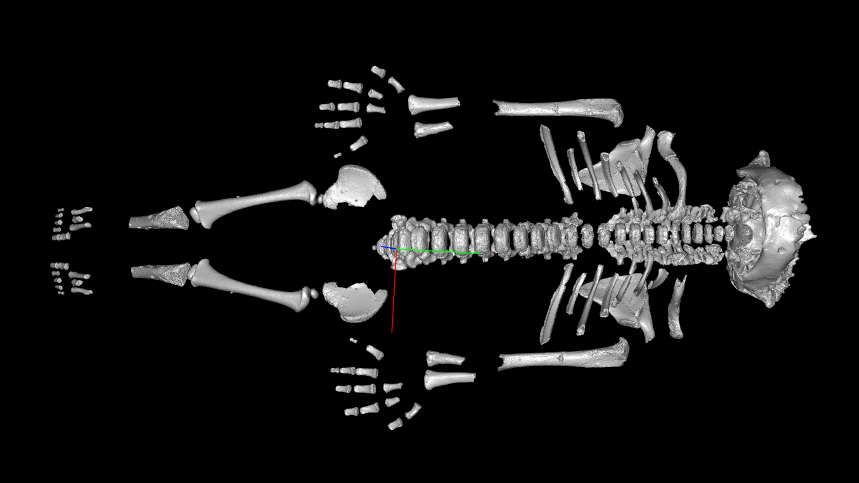
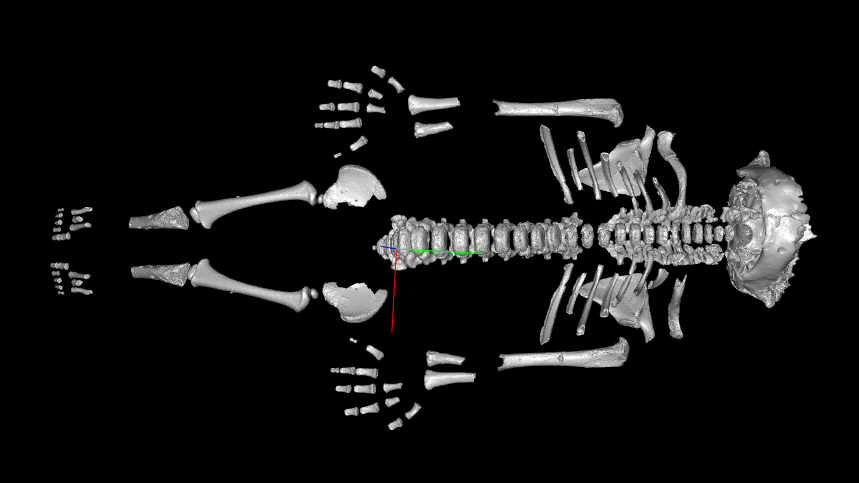
The Neanderthal child’s partial skeleton, called Amud 7, had been placed in a niche in the cave wall with a red deer (Cervus elaphus) jaw on top of it, possibly as a burial offering. Based on stone tools and the shape of the bones, archaeologists determined that the Amud Cave skeletons were Neanderthals who lived sometime between 51,000 and 56,000 years ago.


You may like

The Amud 7 skeleton was found in more than 100 pieces, which included fragments of the child’s arms, legs, chest and skull, all of which displayed distinctively Neanderthal anatomical features even at the child’s young age. However, because Neanderthal infant skeletons are rarely found, the actual age at death of Amud 7 has been difficult for researchers to pin down.

Archaeologists typically estimate an ancient child’s age based on the growth and eruption of teeth and on the size and completeness of various bones. The growth curves for the bones and teeth of modern human babies are well documented, but Amud 7 has revealed that at least one of the Neanderthals’ growth stages was much faster than modern humans’.

When the researchers compared the tooth development of Amud 7 with that of modern humans, they found that the Neanderthal’s lower front teeth yielded an age estimate of about 6 months. But Amud 7’s bones were more in line with those of a 14-month-old modern human. This discrepancy is likely related to differing growth stages, the researchers wrote in the study.

While newborn Neanderthals were comparable with modern human newborns in terms of tooth formation, tooth eruption and the lengths of the arm and leg bones, they had significantly larger skulls. In the second growth stage — infants, toddlers and young children, or about 1 to 6 years old — Neanderthals’ bodies grew significantly faster than their teeth, while modern human babies’ teeth and bodies grew more proportionately. Then, in later childhood, Neanderthals’ body growth and tooth development evened out and more closely matched modern human children’s trajectories, the researchers found.

“The results of this study suggest that the growth trajectory of young Neandertal infants may have differed from that of H. sapiens,” the researchers wrote in the study. Specifically, Neanderthal babies’ bodies developed more rapidly than modern humans’ did in the first years of life but then evened out during later childhood. “This suggests an evolutionary strategy emphasizing accelerated development in the early years of life, likely advantageous in the harsh environments Neandertals inhabited,” the researchers wrote.

Get the world’s most fascinating discoveries delivered straight to your inbox.

Although this new analysis of the Amud 7 skeleton reveals important information about Neanderthal children’s growth and development, the researchers cautioned that more data is needed from other non-adult Neanderthal skeletons. They noted that a larger sample size may shed light on whether this pattern was widespread or a specific ecological adaptation.

Been, E., Hovered, E., Rak, Y., Le Cabec, A., Dean, C., Barash, A. (2026). Rapid growth in a Neandertal infant from Amud Cave in Israel. Current Biology 36. https://doi.org/10.1016/j.cub.2026.03.054


How much do you know about our closest relatives? Test your knowledge with our Neanderthal quiz!

Source link

Share. Facebook Twitter Pinterest LinkedIn Tumblr Email
Previous ArticleNASA shuts off another Voyager 1 instrument as humanity’s most distant spacecraft prepares for risky ‘Big Bang’ maneuver to save power
Next Article ‘Nations need to prepare now’: Key Atlantic ocean current is much closer to collapse than scientists thought
Editor
  • Website

Related Posts

Lifestyle

‘Nations need to prepare now’: Key Atlantic ocean current is much closer to collapse than scientists thought

April 22, 2026
Lifestyle

NASA shuts off another Voyager 1 instrument as humanity’s most distant spacecraft prepares for risky ‘Big Bang’ maneuver to save power

April 21, 2026
Lifestyle

Florida is facing its most intense drought in 15 years. Here’s how it got so bad and how long it will last.

April 21, 2026
Add A Comment

Comments are closed.

Categories
  • Entertainment
  • Lifestyle
  • News
  • Sports
  • Tech
  • Travel
Recent Posts
  • ‘Nations need to prepare now’: Key Atlantic ocean current is much closer to collapse than scientists thought
  • Neanderthal toddlers grew faster than modern humans, probably because of the harsh environment they evolved in
  • NASA shuts off another Voyager 1 instrument as humanity’s most distant spacecraft prepares for risky ‘Big Bang’ maneuver to save power
  • Florida is facing its most intense drought in 15 years. Here’s how it got so bad and how long it will last.
  • New blood test aims to spot liver scarring when it’s still reversible and before it paves the way to cancer
calendar
April 2026
M T W T F S S
 12345
6789101112
13141516171819
20212223242526
27282930  
« Mar    
Recent Posts
  • ‘Nations need to prepare now’: Key Atlantic ocean current is much closer to collapse than scientists thought
  • Neanderthal toddlers grew faster than modern humans, probably because of the harsh environment they evolved in
  • NASA shuts off another Voyager 1 instrument as humanity’s most distant spacecraft prepares for risky ‘Big Bang’ maneuver to save power
About

Welcome to Baynard Media, your trusted source for a diverse range of news and insights. We are committed to delivering timely, reliable, and thought-provoking content that keeps you informed
and inspired

Categories
  • Entertainment
  • Lifestyle
  • News
  • Sports
  • Tech
  • Travel
Facebook X (Twitter) Pinterest WhatsApp
  • Contact Us
  • About Us
  • Privacy Policy
  • Disclaimer
  • UNSUBSCRIBE
© 2026 copyrights reserved

Type above and press Enter to search. Press Esc to cancel.