
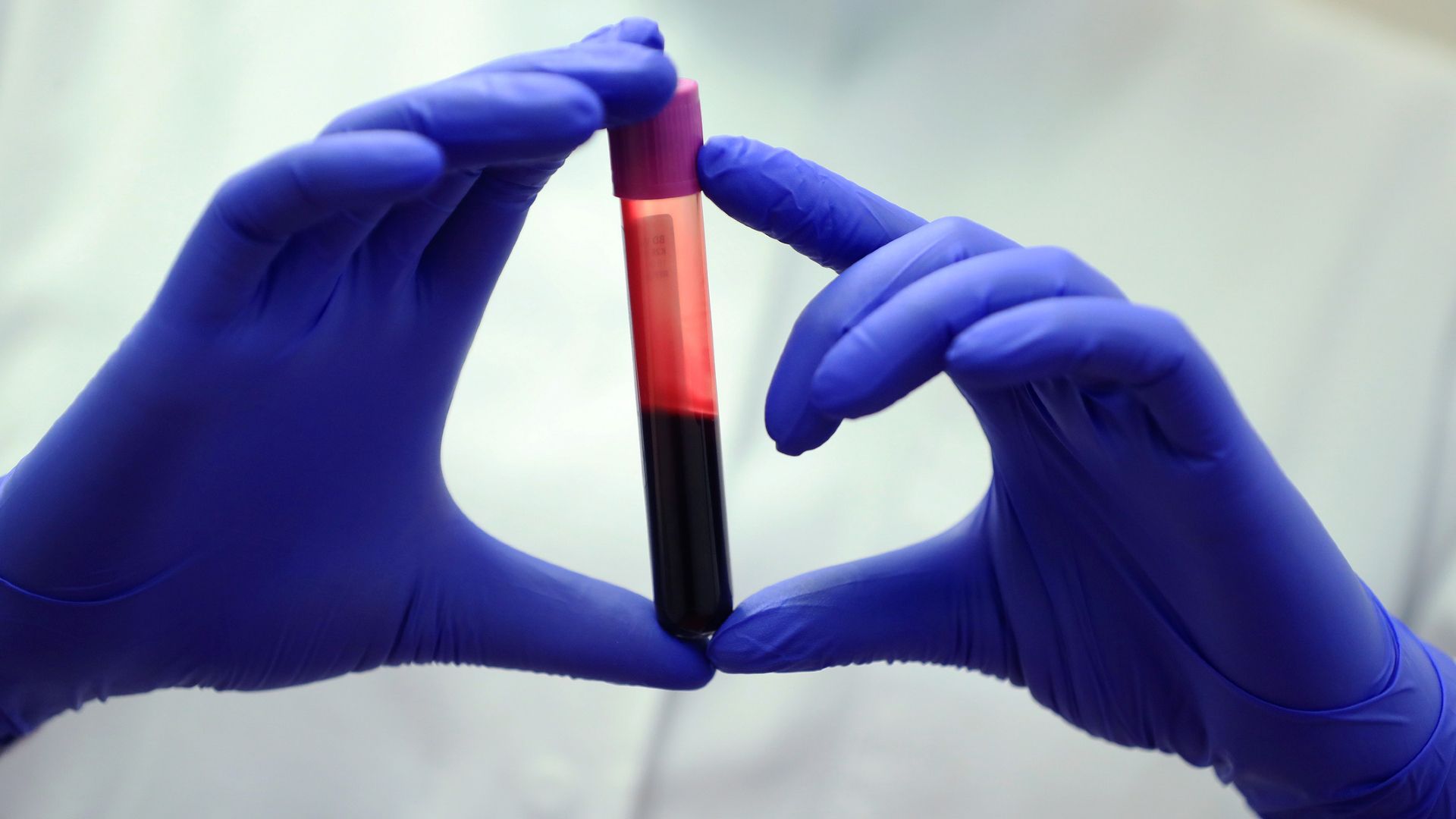
A new blood test can detect a precursor to liver disease, which can in turn be a harbinger of cancer. The hope is that the test could help prevent liver cancer before it occurs.
The test uses a machine learning model to analyze free-floating genetic material circulating in the blood. In the new study, researchers used it to detect bits of DNA that point to early-stage liver scarring, or fibrosis. This early scarring, if left untreated, can develop into severe liver scarring, called cirrhosis, and eventually cancer.
“The best way to intervene in liver cancer is not to detect liver cancer early, but to detect early liver disease,” Velculescu told Live Science.
Once detected, fibrosis can be reversed with antifibrotic medications, lifestyle changes and other treatments, he added. Cirrhosis, by contrast, is largely irreversible.
Signs of disease written in the blood
Millions of Americans have liver fibrosis but don’t know it. Risk factors for developing this scarring include liver inflammation (hepatitis), diabetes, high blood pressure and obesity. When caught early, liver fibrosis is reversible.
But currently, the traditional clinical assessments — such as the fibrosis-4 (FIB-4) blood test that uses age, liver enzymes and platelet blood counts to estimate liver scarring levels — fail to detect early-stage liver disease, Velculescu said.
We’re trying to pick up on changes that are potentially occurring in disease that can occur across the entire genome.
Akshaya Annapragada, MD/PhD student at Johns Hopkins Kimmel Cancer Center.
In the new study, published March 4 in the journal Science Translational Medicine, Velculescu and colleagues first looked at blood samples from 423 people with and without liver disease. By analyzing tens of millions of fragments of cell-free DNA in the blood, they uncovered markers that could distinguish patients with early liver scarring from those without any degree of liver disease.
Also called free-floating DNA, cell-free DNA includes small snippets of genetic material that are released into the blood when cells regenerate and die. Instead of looking for specific mutations, or changes in the letters of DNA, the team used a computer model that looked for larger, genome-wide patterns across all the free-floating DNA shed by cells.
“We’re trying to pick up on changes that are potentially occurring in disease that can occur across the entire genome,” study first author Akshaya Annapragada, an MD/PhD student in Velculescu’s lab, told Live Science. “So, you have more opportunities to find something.”
They identified several factors that were collectively tied to early liver disease. These included the length of the DNA fragments and how often cells shed repetitive sequences of DNA. They also spotted key epigenetic changes, or marks on the genome that change gene activity without altering the underlying DNA code.
With these factors in hand, they built a test that looked for these patterns in blood.
To then assess how well the blood test worked, the team evaluated it in another 221 participants: 30 with early liver disease, 85 with advanced liver disease and 106 with no liver disease. The test detected 50% of the early liver disease cases and about 78% of the advanced cases.
It correctly identified disease-free people in 83% of cases, meaning it falsely flagged liver disease 17 times out of 100.
By using machine learning to spot patterns across the whole genome, the new research enables the team to analyze billions of fragments at once, said Alain Thierry, a professor and research director at INSERM, the French National Institute of Health and Medical Research, who was not involved in the study.
This is an advantage over earlier blood tests that looked for only specific mutations or disease markers, and had to sequence the genome thousands of times to get enough DNA to interpret, Annapragada said. By contrast, “this test only sequences the genome only, like, one to two times, so it’s much cheaper and more efficient.”
The next steps are larger clinical trials to validate the machine learning models that can detect liver fibrosis, Velculescu said
The researchers said they hope tests like theirs eventually pave the way for noninvasive methods of screening for many diseases from a single blood test, which would enable earlier diagnosis and treatment of diseases before they become chronic and irreversible.
This article is for informational purposes only and is not meant to offer medical advice.
Akshaya V. Annapragada et al., Cell-free DNA fragmentomes for noninvasive detection of liver cirrhosis and other diseases. Science Translational Medicine.18,eadw2603(2026). DOI:10.1126/scitranslmed.adw2603
