
Farmers in the market for fertilizer and motorists filling up at the pumps are experiencing a similar feeling this spring.
Sticker shock.
“With the war in the Middle East, fertilizer, particularly nitrogen, has jumped just like gasoline and diesel fuel has,” said Wesley Beck, a corn and soybean farmer in St. James.
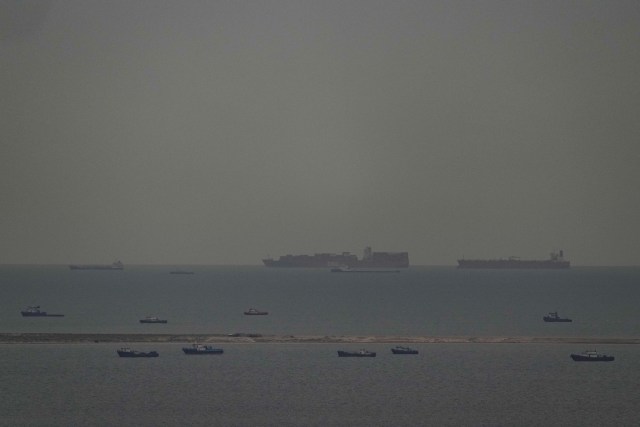
Iran’s chokehold on the Strait of Hormuz, a response to the U.S. and Israel’s war with the Middle Eastern power, is cutting off shipping lanes for fertilizer and other key commodities. This is happening just as Minnesota farmers ready their fields for spring planting, and the war is expected to result in less farm production and higher food prices.
Iran is using its stranglehold on the Strait of Hormuz — a narrow passageway in the Persian Gulf — as an economic weapon to upend world markets. The strait’s shipping lanes are now under threat by Iranian firepower.
That has led ship operators to stop using those shipping lanes, resulting in a backlog of about 3,000 vessels, according to S & P Global Market Intelligence. Spikes in gas and diesel prices, and fertilizer, have followed.
The roiling of the global market in fertilizer has prompted the White House and Congress to seek new help for farm country. That includes expanding the use of biofuels and even adding $15 billion for impacted farmers to a $200 billion spending bill aimed at funding the Iran war.
Related: How far can $12 billion for farmers go? Not far enough to offset high fertilizer prices, disrupted markets
Fertilizers are the single biggest expenditure for many farmers each year. Leading fertilizers include phosphate, nitrogen and potassium, or potash.
Nitrogen is the fertilizer most impacted by the Iran war, although phosphate prices have also surged because of tariffs the Trump administration has placed on Morocco, which holds more than 70% of the world’s known phosphate rock.
But it’s the price of nitrogen-based fertilizer that concerns Minnesota farmers now, especially those like Beck who grow corn.
“Corn is the most nitrogen-dependent crop,” said Gretchen Kuck, an economist with National Corn Growers Association.

And nitrogen is the fertilizer corn growers use now, before the summer growing season. Phosphorus and potash are usually spread in the fall.
Although many Minnesota farmers purchased their nitrogen fertilizer already, locking in prices ahead of time, there are often some in-season needs for nitrogen. And the war means it’s a bad time to be a buyer.
“If you look at the cost of fertilizer versus the price of corn, we’re at historic margins,” Beck said. “That’s putting the squeeze on Minnesota farmers.”
A domino effect for fertilizer prices
The war’s roiling of fertilizer and diesel prices has perhaps been an unintended consequence for the Trump administration, which has already had to provide U.S. farmers with $12 billion in additional farm aid because of the impact of its tariff policy on overseas markets.
But disruptions in one part of the world can create a domino effect on the other side of the world. Along similar lines, hits to the corn industry have far reaching ramifications as the crop is used in thousands of consumer products and is a massive source of livestock feed.
Sizable percentages of phosphates and urea, a dry pellet form of nitrogen, travel through the Middle East to get to the United States. About 12% of urea and 17% of phosphates used in American farmland is shipped through the Strait of Hormuz, according to a report published in the North Dakota State University Agricultural Trade Monitor.
“The bottom line: the Strait of Hormuz accounts for a meaningful share of both U.S. urea and phosphate consumption, and the greater risk is price transmission from global markets, where the disruption is far more severe,” the report concluded.
The United States isn’t the most exposed country when it comes to fertilizers shipped through Hormuz. India, Brazil and Australia all rely on it more, demonstrating how much global economic interest there is in the U.S. and Israel’s war with Iran.
Kuck said many U.S. farmers have already purchased nitrogen fertilizer, but the war’s impact on global fertilizer markets will increase in severity as the conflict with Iran continues.
About 50 major farm groups, including the American Farm Bureau Federation and the American Soybean Association, recently wrote to President Trump asking for help.
Their letter said the shutdown of the Strait of Hormuz and the subsequent increase in the cost of fuel and fertilizer are “further straining a farm economy that already had its back against the wall due to record inflation, trade uncertainty, rapidly declining crop prices and catastrophic natural disasters.”
George Goblish, a farmer in Redwood County, said the pressure will ramp up on farmers if the conflict stretches into late this year or early next year. As of now, the Minnesota farmers most hurt by the fertilizer price spikes are those needing nitrogen this spring. If sky high prices persist into the fall, however, everyone applying potash and phosphates would feel the pain.
“If the prices stay high there will be cutbacks in fertilizer, cutbacks in yield, and then other crops may need to be grown,” Goblish said.
How easily can farmers pivot to other crops?
Corn covers more acreage in Minnesota than any other crop. It’s quite common, though, for farmers to plant other crops, and those could be less impacted by turmoil in the Persian Gulf.
Soybeans are a prime example. Since it’s a legume, soybeans don’t usually need nitrogen fertilizer. A symbiotic relationship with bacteria enables them to capture nitrogen from the atmosphere and convert it into useful ammonia.
Goblish expects some farmers to consider switching from corn to soybeans, wheat or other options if issues persist.
“Some waited until spring for fertilizer hoping that spring prices will be lower than fall prices,” he said. “That’s not happening this year. Odds are those acres will be switched to beans.”
Kuck said the decision to switch crops will be made by individual farmers based on their circumstances, including whether soybean farmers, who’ve seen a key export market in China evaporate because of Trump administration tariffs, have enough capacity to store excess beans.
But she said an insoluble problem is the sharp rise in the cost of diesel, which spiked along with gasoline after Iran shut down shipments in the Persian Gulf.
“With fertilizer you can switch crops,” Kuck said. “But there’s nothing you can do with diesel.”
The price of No. 2 diesel, the indicator for fuel used by farmers, rose from $3.50 to $5.38 per gallon from the end of 2025 to last week.
“Fuel is going to be a major issue,” Goblish said. “People complain about the fuel price at the pump; well, filling up for spring work is about 6,000 to 8,000 gallons of fuel.”
Meanwhile, Beck would consider converting some of his 700-800 acres of corn to soybeans if he hadn’t planned so far ahead. In actuality, decisions on what to plant this year were made last year.
“You tweak it a bit each year, but our family has been here for 150 years doing this and we try to take a long-term view of things in crop rotation,” he said.
Farmers to the White House
Hundreds of farmers and representatives of farm groups gathered Friday on the South Lawn of the White House for an event Trump organized to announce new relief efforts aimed at blunting the impact of the Iran war.
Trump announced an update to renewable fuel standards and said he would seek additional relief for farmers from Congress.
He also rolled out other initiatives, including enhanced loan guarantees for farmers and eased production monitoring requirements the administration says will help farmers by allowing the manufacturers of diesel vehicles to switch to a different diesel exhaust fluid sensor.
Meanwhile, farm organizations, in their letter to the president last week, appealed to the Trump administration to include new relief for farmers as part of a defense spending bill when it is sent to Congress.
Minnesota Reps. Angie Craig, D-2nd District, and Brad Finstad, D-1st District, are behind a bipartisan effort to advance a new bill called the Fertilizer Transparency Act, which would require the U.S. Department of Agriculture (USDA) to publish fertilizer prices weekly on its website, giving farmers access to timely and accurate market data.
Related: D.C. Memo: Scotus upends Trump tariffs that have impacted exports in addition to hiking fertilizer prices and other inputs
“By shining a light on price trends and improving access to reliable information, we’re putting more control back in the hands of the men and women who feed and fuel the world,” Finstad said in a statement.
Meanwhile, Craig, the top Democrat on the House Agriculture Committee, said “President Trump’s tariffs and war with Iran have increased fertilizer costs even as farmers lose markets and commodity prices remain low, putting farmers in an impossible position.”
Craig has also been pushing Congress to allow year-round sales of E15, a fuel blend that contains 15% ethanol, which is produced from corn and sorghum.
Kuck said the nation’s corn growers are “open to temporary solutions “ to the distress in farm country. “But we want a permanent solution and permanent market” for farm products, she said.
“The outlook for all crops is pretty dire,” she said. “We’re looking at minimizing losses rather than maximizing profits.”
