
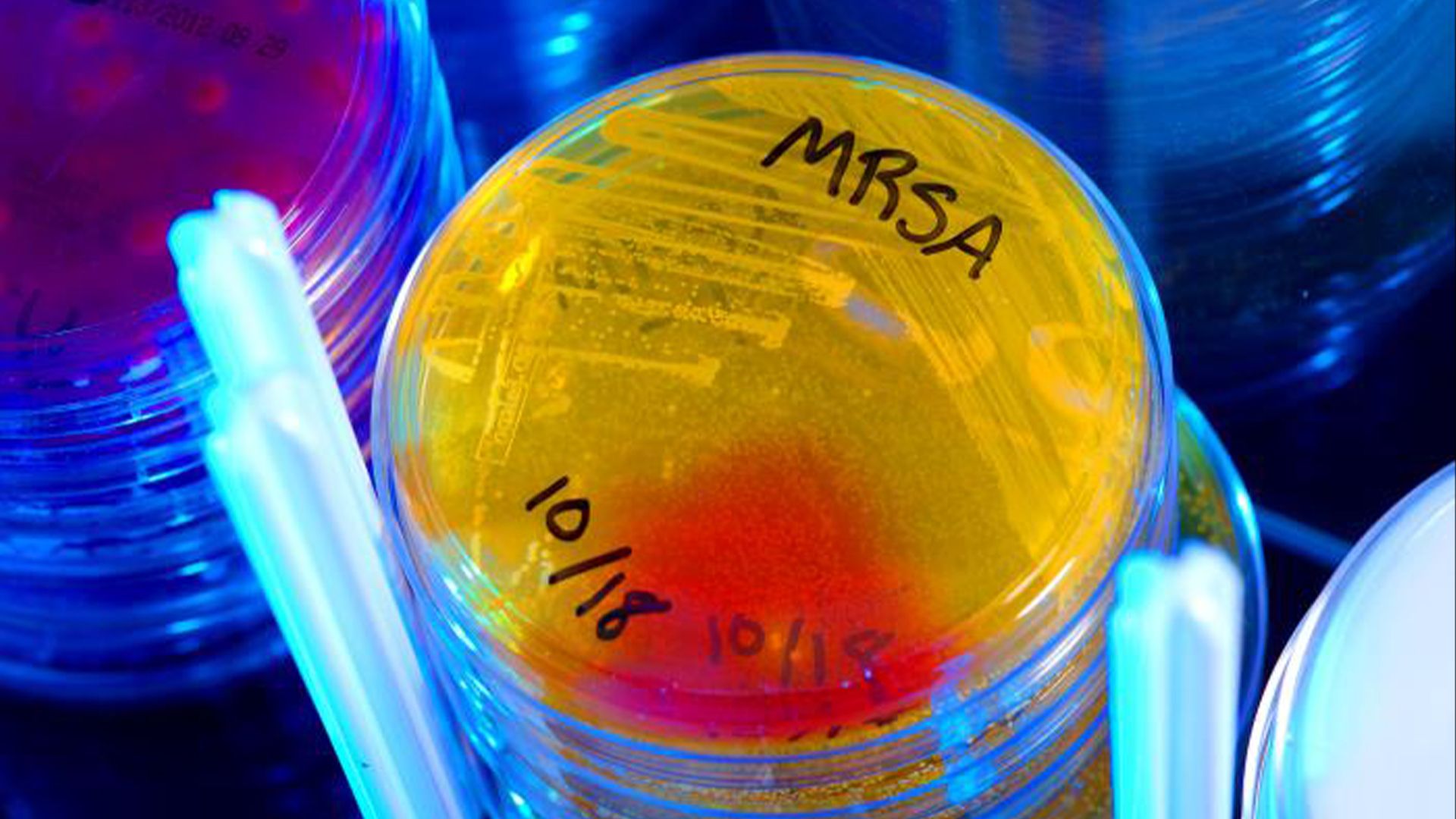
Scientists have reported the discovery of the first in a promising new class of antibiotics — and the find was unexpected, as they hadn’t set out to find new drugs.
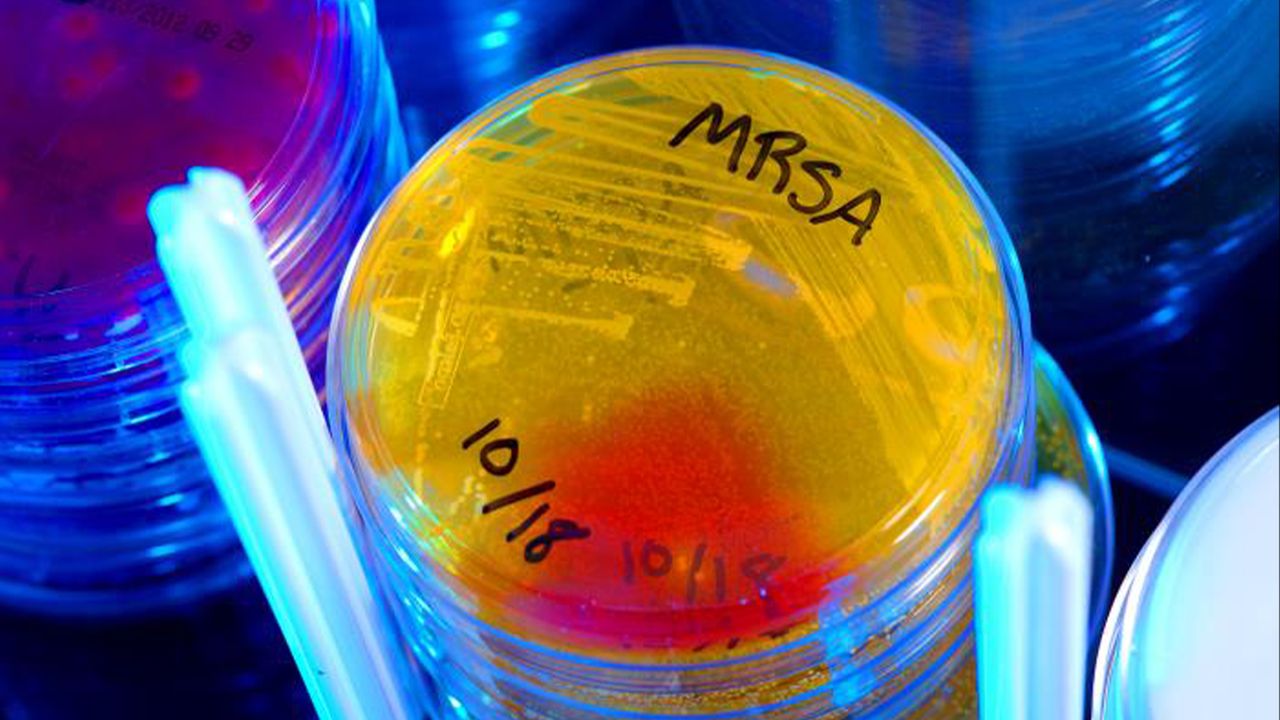
The new antibiotic compound shows promising activity against drug-resistant infections, including methicillin-resistant Staphylococcus aureus (MRSA) and Enterococcus faecium, germs that are notorious for causing resistant infections in hospitalized patients.
However, the team’s initial aim wasn’t to discover new drugs. Instead,the researchers were investigating how a known antibiotic, methylenomycin A, gets made by a soil-dwelling bacterium called Streptomyces coelicolor.
Plants and microorganisms produce a host of complex compounds known as secondary metabolites, many of which happen to have useful medicinal properties in humans. Understanding how these compounds are made within these organisms and how they interact with human cells can help scientists develop effective drugs from these natural products.
The blueprints for producing these different biological molecules are held in specific collections of genes, called “biosynthetic gene clusters.” By deleting individual genes from these clusters, Alkhalaf and Challis could remove specific enzymes involved in the synthesis of methylenomycin A. This research technique enabled them to halt the reaction sequence at key points to study it more closely — and it led them to spot extract previously unobserved intermediate compounds that get produced along the way.
This systematic approach allowed the team to isolate two never-before-seen molecules, which they named pre-methylenomycin C and pre-methylenomycin C lactone. After using an array of techniques to thoroughly characterize the structures of these compounds, they investigated the molecules’ biological activity against a panel of bacterial strains.
Pre-methylenomycin C lactone proved particularly promising. “[It] is active against a range of Gram-positive bacteria, including methicillin-resistant Staphylococcus aureus (MRSA) and a multidrug-resistant strain of Enterococcus faecium,” Challis and Alkhalaf told Live Science. “[It] is 100x better at killing drug-resistant bacteria than the original antibiotic.”
But perhaps more importantly, the new compound doesn’t appear to induce antibiotic resistance in the treated strains.
Repeated exposure to antibiotics can trigger the evolution of defense mechanisms in some bacteria, eventually leading to drug resistance that makes future infections extremely difficult to treat. In a 28-day experiment, E. faecium bacteria were exposed to increasing concentrations of pre-methylenomycin C lactone, providing the perfect opportunity for resistance to develop. But over that period, the team did not observe any change in the minimum inhibitory concentration — the amount of drug needed to produce a visible effect. In short, the antibiotic retained its infection-killing activity, and the bacteria did not evolve any problematic resistance mechanisms.
Expanding this line of research — both to include more bacterial strains and to study the drugs’ effects over a longer time frame — will be two important next steps for the team to demonstrate the full potential of the new molecule.
“It’s a really nice study and I think this is a lesson: if you isolate novel molecules then look for novel activities with those molecules,” said Stephen Cochrane, a medicinal chemist at Queen’s University Belfast in Ireland who was not involved with the work. However, he cautioned that there is a significant difference between a compound with antibacterial activity and an antibiotic used to treat disease.
“The big challenge is translating this into a viable drug — something that persists long enough in the body, isn’t toxic to humans, and is not prone to resistance,” he said.
For Alkhalaf and Challis, this is exactly the direction they hope to pursue next. They are now collaborating with David Lupton, a synthetic chemist at Monash University in Australia, to develop a chemical route to pre-methylenomycin C lactone. This would enable them to produce the molecule from scratch via chemical synthesis, rather than relying on microbes to make it. In turn, this would provide larger volumes of the compound for studies aimed at understanding how the molecule works and how it might affect human cells.
“It would be useful to identify the biological target(s) of the compound in susceptible bacteria and develop a better understanding of how changes to the compound’s structure affect target binding and biological activity,” Alkhalaf and Challis said. Such insight might inform the design of related compounds with even more potent antibiotic activity.
