Close Menu
  • Home
  • UNSUBSCRIBE
  • News
  • Lifestyle
  • Tech
  • Entertainment
  • Sports
  • Travel
Facebook X (Twitter) WhatsApp
Trending
  • ‘Insect apocalypse’ is already fueling malnutrition in some regions, first-of-its-kind study reveals
  • Hantavirus LIVE: American passengers from cruise head to specialized facilities in Nebraska
  • New ‘trick’ fixes major flaw in neutral-atom quantum computers — inching us closer to a superpowerful system
  • A 2025 Alaskan tsunami was one of the largest on record, new research finds
  • Lion’s head pendant: An ancient Egyptian board game piece that was later repurposed into a magical religious object with baboons
  • Are we more closely related to cats or dogs?
  • Declassified Apollo 12 images show UFOs on the moon — Space photo of the week
  • ‘More than 100 million years of evolution’: How snakes evolved and lost their legs
Facebook X (Twitter) WhatsApp
Baynard Media
  • Home
  • UNSUBSCRIBE
  • News
  • Lifestyle
  • Tech
  • Entertainment
  • Sports
  • Travel
Baynard Media
Home»News»Scientists report the biggest black hole flare ever seen, with light of 10 trillion suns
News

Scientists report the biggest black hole flare ever seen, with light of 10 trillion suns

EditorBy EditorNovember 4, 2025No Comments3 Mins Read
Share Facebook Twitter Pinterest LinkedIn Tumblr Reddit Telegram Email
Share
Facebook Twitter LinkedIn Pinterest Email

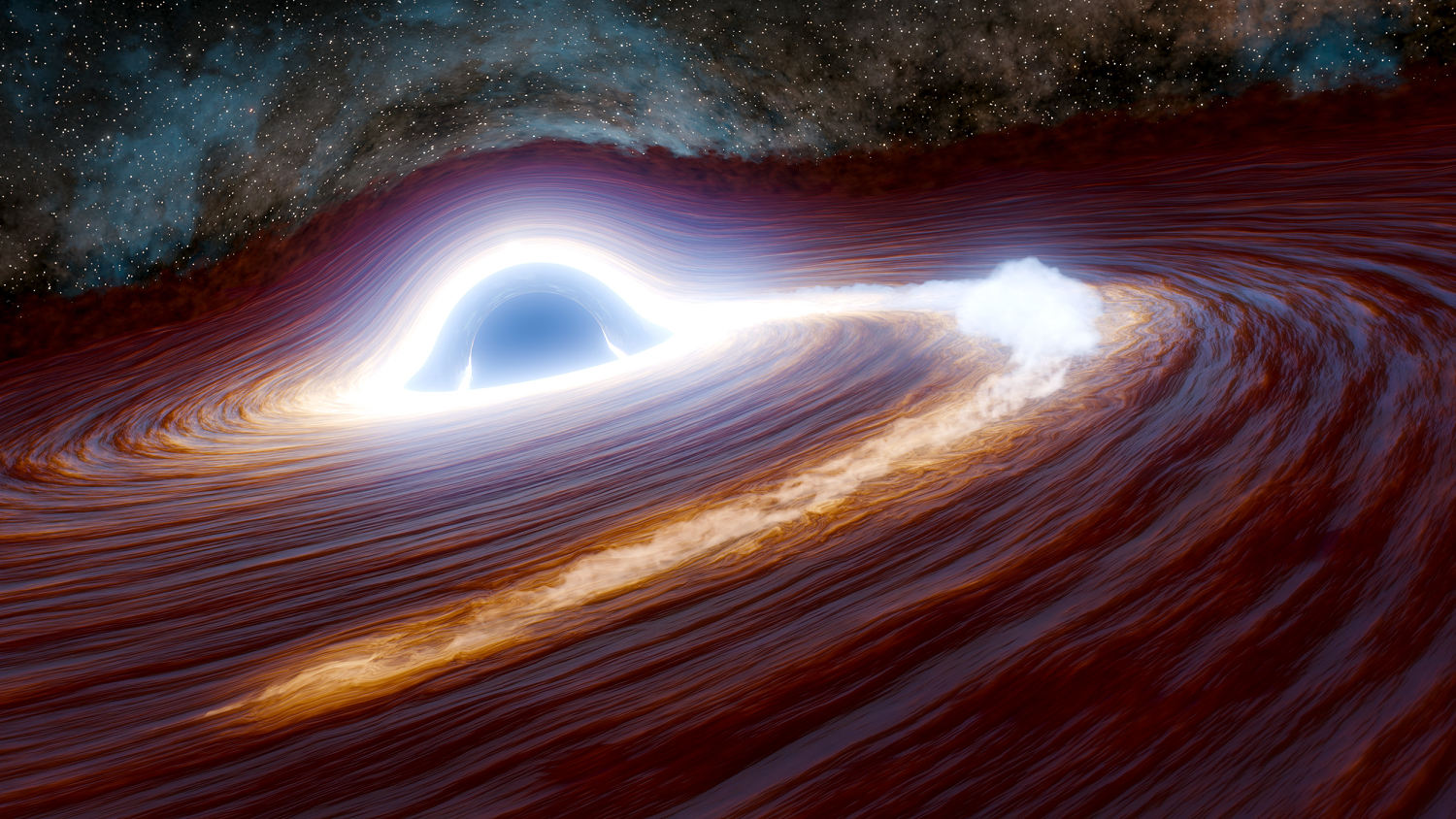
A supermassive black hole violently gobbled up an enormous star, producing a cosmic outburst with the light of 10 trillion suns, according to a new study.

The black hole flare, as the phenomenon is known, is thought to be the biggest and most distant ever recorded — it was detected from 10 billion light-years away.

“This is really a one-in-a-million object,” said Matthew Graham, a research professor of astronomy at the California Institute of Technology and the lead author of the study, which was published Tuesday in the journal Nature Astronomy.

Graham said a black hole flare is the most likely explanation based on the outburst’s intensity and duration, but follow-up studies will help the researchers confirm their findings.

It’s not unusual for black holes to consume nearby stars, gas, dust and other forms of matter, but such a gargantuan flaring event is exceedingly rare, Graham said.

“This massive flare is just so much more energetic than anything we’ve ever seen before,” he said, adding that at its peak, the outburst was 30 times more luminous than any previous black hole flare seen to date.

Part of the intensity came from the sheer size of both cosmic objects involved. The ill-fated star that wandered too close to the black hole is estimated to be at least 30 times the mass of the sun. The enormous black hole and its surrounding disk of material, meanwhile, is estimated to be 500 million times as massive as the sun.

The strong outburst has been going on for more than seven years, Graham said, and is likely still occurring.

The flare was first detected in 2018 during an extensive sky survey using three ground-based telescopes. At the time, Graham said, it was registered as a “particularly bright object,” but during follow-up observations months later, scientists were not able to obtain much useful information.

As such, the black hole flare was mostly forgotten until 2023, when Graham and his colleagues decided to revisit intriguing points of interest from their previous survey. This time around, the astronomers did a rough calculation of the distance to the particularly bright object they had seen, and the result shocked them.

“Suddenly it was: ‘Oh, this is actually quite far away,’” Graham said. “And if it’s that far away and it’s this bright, how much energy is being put out? This is now something unusual and very interesting.”

It’s not yet known how exactly the star met its demise, but Graham said a case of cosmic bumper cars may have jostled the star and knocked it off its regular orbit around the black hole, causing the close encounter.

The findings help provide a fuller picture of how black holes behave and evolve.

“Our idea of supermassive black holes and their environments has really changed over the last five to 10 years,” Graham said. “There was this classic image that most galaxies in the universe have a supermassive black hole in the middle and it just sits there and burbles along and that’s it. Now we know it’s a much more dynamic environment and we’re only beginning to scratch the surface.”

The flare has been steadily fading over time, he said, but it will likely continue to be observable with ground-based telescopes for a few years.

Source link

Share. Facebook Twitter Pinterest LinkedIn Tumblr Email
Previous ArticleAOC pushes back after Brandon Gill objects to Mamdani campaigning in Arabic
Next Article Jonathan Bailey is People’s Sexiest Man Alive 2025
Editor
  • Website

Related Posts

News

Omar files new financial form in response to Trump, GOP critics

April 21, 2026
News

Ex-CENTCOM commanderwarns against ‘risky’ US ground op to seize Iran uranium

April 21, 2026
News

Santa Ana’s Upcoming Report on Police Firing on ICE Protesters Lacks Details

April 21, 2026
Add A Comment

Comments are closed.

Categories
  • Entertainment
  • Lifestyle
  • News
  • Sports
  • Tech
  • Travel
Recent Posts
  • ‘Insect apocalypse’ is already fueling malnutrition in some regions, first-of-its-kind study reveals
  • Hantavirus LIVE: American passengers from cruise head to specialized facilities in Nebraska
  • New ‘trick’ fixes major flaw in neutral-atom quantum computers — inching us closer to a superpowerful system
  • A 2025 Alaskan tsunami was one of the largest on record, new research finds
  • Lion’s head pendant: An ancient Egyptian board game piece that was later repurposed into a magical religious object with baboons
calendar
May 2026
M T W T F S S
 123
45678910
11121314151617
18192021222324
25262728293031
« Apr    
Recent Posts
  • ‘Insect apocalypse’ is already fueling malnutrition in some regions, first-of-its-kind study reveals
  • Hantavirus LIVE: American passengers from cruise head to specialized facilities in Nebraska
  • New ‘trick’ fixes major flaw in neutral-atom quantum computers — inching us closer to a superpowerful system
About

Welcome to Baynard Media, your trusted source for a diverse range of news and insights. We are committed to delivering timely, reliable, and thought-provoking content that keeps you informed
and inspired

Categories
  • Entertainment
  • Lifestyle
  • News
  • Sports
  • Tech
  • Travel
Facebook X (Twitter) Pinterest WhatsApp
  • Contact Us
  • About Us
  • Privacy Policy
  • Disclaimer
  • UNSUBSCRIBE
© 2026 copyrights reserved

Type above and press Enter to search. Press Esc to cancel.