Close Menu
  • Home
  • UNSUBSCRIBE
  • News
  • Lifestyle
  • Tech
  • Entertainment
  • Sports
  • Travel
Facebook X (Twitter) WhatsApp
Trending
  • China unveils first-of-its-kind ‘dual-core’ quantum computer — its makers say it improves stability and efficiency
  • PMOS (formerly PCOS): Symptoms, diagnosis and treatment
  • 2,000 years ago in Scotland, people removed a corpse’s brain and fashioned the arm bones into tools
  • Scientists are fast-tracking 3 Ebola vaccines in hopes of shortening the outbreak — when could they be ready?
  • 2 vanished ‘super Earths’ once orbited near Uranus and Neptune, new study hints
  • Ditch full of 7,000-year-old headless human skeletons discovered in Slovakia, baffling archaeologists
  • Manhattan Project physicist Richard Feynman’s forgotten notes on ‘the restaurant problem’ deciphered after 50 years
  • Doctors need to understand patients’ lived experiences to treat them well—but medical schools may stop requiring that training | Naa Asheley Ashitey
Facebook X (Twitter) WhatsApp
Baynard Media
  • Home
  • UNSUBSCRIBE
  • News
  • Lifestyle
  • Tech
  • Entertainment
  • Sports
  • Travel
Baynard Media
Home»Lifestyle»Humanoid robots could lift 4,000 times their own weight thanks to breakthrough ‘artificial muscle’
Lifestyle

Humanoid robots could lift 4,000 times their own weight thanks to breakthrough ‘artificial muscle’

EditorBy EditorOctober 29, 2025No Comments3 Mins Read
Share Facebook Twitter Pinterest LinkedIn Tumblr Reddit Telegram Email
Share
Facebook Twitter LinkedIn Pinterest Email

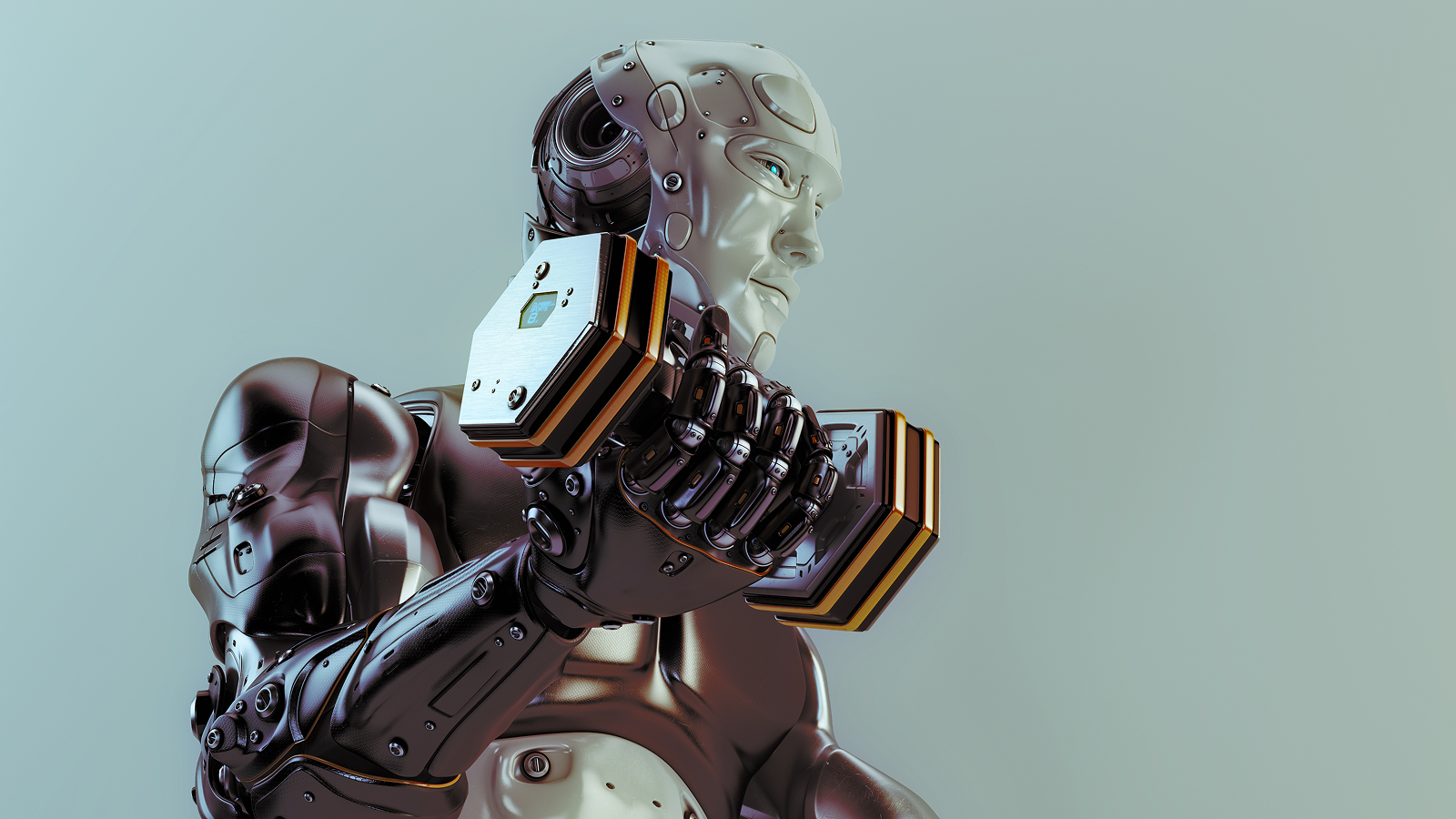
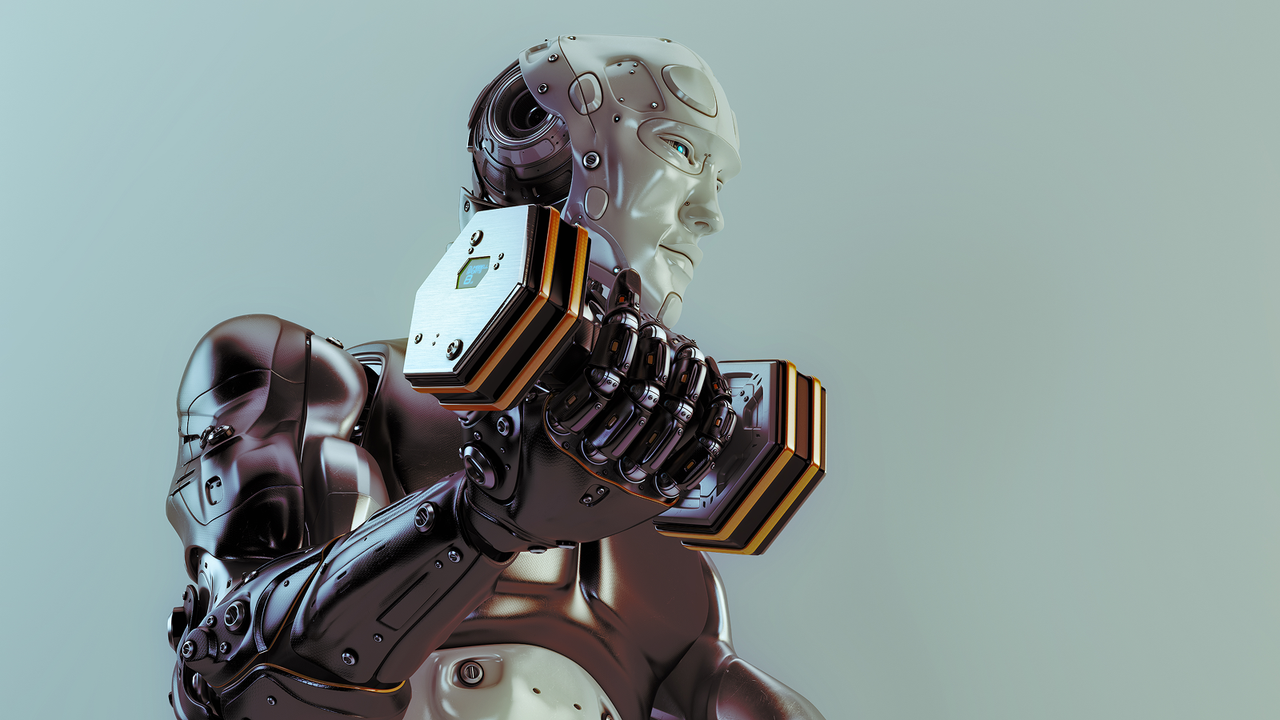
Researchers in South Korea have built an artificial muscle that can lift approximately 4,000 times its own weight. They say it can be used in future humanoid robots.

A key breakthrough with the muscle’s design is its ability to be flexible or taut when needed, which is a first for this field of research. The scientists outlined their findings in a study published Sept. 7 in the journal Advanced Functional Materials.

“This research overcomes the fundamental limitation where traditional artificial muscles are either highly stretchable but weak or strong but stiff,” lead study author Hoon Eui Jeong, a professor of mechanical engineering at the Ulsan National Institute of Science and Technology (UNIST), said in a statement. “Our composite material can do both, opening the door to more versatile soft robots, wearable devices, and intuitive human-machine interfaces.”


You may like

Artificial muscles are often limited by an inability to be flexible or taut; they need to be stretchable while still offering enough energy output, or else their work densities are limited. But soft artificial muscles are believed to be transformative because they’re lightweight, mechanically compliant, and capable of multidirectional actuation (movement).

When the researchers say “work density,” they refer to how much energy per unit volume the muscle can deliver. Achieving high values alongside high stretchability is where the challenge lies for artificial muscles.

Do you even lift, robo?

The scientists described their artificial muscle as a “high-performance magnetic composite actuator,” which means it’s a complex chemical combination of polymers that link together to mimic the pull and release of muscles.

One of these polymers can have its level of stiffness altered and sits in a matrix that has magnetic microparticles on the surface that can also be controlled. This enables the muscle to be animated and controlled through the tunable stiffness, thus allowing it to be moved.

Get the world’s most fascinating discoveries delivered straight to your inbox.

The researchers’ new design integrates two distinct cross-linking mechanisms. The first is a covalently bonded chemical network (two or more atoms that share electrons to achieve a more stable configuration) and a reversible, physically interacting network. The two mechanisms, developed in this way, provide the durability for the muscle to work long-term, the researchers said in the study.

The trade-off between stiffness and stretchability is effectively solved by a dual cross-linking architecture, and the physical network is further reinforced by incorporating a type of microparticle (NdFeB) on the surface of the muscle that can be given a function via a colorless liquid (octadecyltrichlorosilane). The particles are dispersed throughout the polymer matrix.

The composite muscle becomes stiff when bearing heavy loads and softens when it needs to contract. In its stiffened state, the artificial muscle, which weighs just 0.04 ounce (1.13 grams), can support up to 11 pounds (5 kilograms) — roughly 4,400 times its own weight.

A human muscle contracts at approximately 40% strain, but the synthetic muscle achieves a strain of 86.4% — over double that of the human muscle, the researchers said in the study. This enables a work density of 1,150 kilojoules per meter cubed — 30 times higher than human tissue is capable of.

The researchers used a uniaxial tensile test to measure the strength of their artificial muscle. A type of mechanical test that applies a pulling force to a subject until it fractures – the elongation is measured against the applied force to find its ultimate tensile strength.

Source link

Share. Facebook Twitter Pinterest LinkedIn Tumblr Email
Previous ArticleCheryl Hines says she lost friends over her marriage to RFK Jr. and politics
Next Article Jamaican police assess damage from Hurricane Melissa
Editor
  • Website

Related Posts

Lifestyle

China unveils first-of-its-kind ‘dual-core’ quantum computer — its makers say it improves stability and efficiency

June 10, 2026
Lifestyle

PMOS (formerly PCOS): Symptoms, diagnosis and treatment

June 10, 2026
Lifestyle

2,000 years ago in Scotland, people removed a corpse’s brain and fashioned the arm bones into tools

June 10, 2026
Add A Comment

Comments are closed.

Categories
  • Entertainment
  • Lifestyle
  • News
  • Sports
  • Tech
  • Travel
Recent Posts
  • China unveils first-of-its-kind ‘dual-core’ quantum computer — its makers say it improves stability and efficiency
  • PMOS (formerly PCOS): Symptoms, diagnosis and treatment
  • 2,000 years ago in Scotland, people removed a corpse’s brain and fashioned the arm bones into tools
  • Scientists are fast-tracking 3 Ebola vaccines in hopes of shortening the outbreak — when could they be ready?
  • 2 vanished ‘super Earths’ once orbited near Uranus and Neptune, new study hints
calendar
June 2026
M T W T F S S
1234567
891011121314
15161718192021
22232425262728
2930  
« May    
Recent Posts
  • China unveils first-of-its-kind ‘dual-core’ quantum computer — its makers say it improves stability and efficiency
  • PMOS (formerly PCOS): Symptoms, diagnosis and treatment
  • 2,000 years ago in Scotland, people removed a corpse’s brain and fashioned the arm bones into tools
About

Welcome to Baynard Media, your trusted source for a diverse range of news and insights. We are committed to delivering timely, reliable, and thought-provoking content that keeps you informed
and inspired

Categories
  • Entertainment
  • Lifestyle
  • News
  • Sports
  • Tech
  • Travel
Facebook X (Twitter) Pinterest WhatsApp
  • Contact Us
  • About Us
  • Privacy Policy
  • Disclaimer
  • UNSUBSCRIBE
© 2026 copyrights reserved

Type above and press Enter to search. Press Esc to cancel.