Close Menu
  • Home
  • UNSUBSCRIBE
  • News
  • Lifestyle
  • Tech
  • Entertainment
  • Sports
  • Travel
Facebook X (Twitter) WhatsApp
Trending
  • Paris Jackson, Mom Debbie Rowe: Photos
  • FAA restricts Texas airspace after Pentagon reportedly shot down CBP drone
  • Best streaming deal: Save $15 on Roku Streaming Stick 4K
  • Premier League Darts: Stephen Bunting responds to doubters “writing me off” after Night Four Premier League win in Belfast | Darts News
  • Where John F. Kennedy Ex-Girlfriend Daryl Hannah Is Now
  • What are Republican legislators up to in St. Paul?
  • Science history: Carbon-14 is discovered, opening a window into past civilizations — Feb. 27, 1940
  • Best power station deal: Save $420 on Jackery Explorer 2000 v2
Facebook X (Twitter) WhatsApp
Baynard Media
  • Home
  • UNSUBSCRIBE
  • News
  • Lifestyle
  • Tech
  • Entertainment
  • Sports
  • Travel
Baynard Media
Home»Lifestyle»Scientists find best evidence yet that icy moon Enceladus is habitable
Lifestyle

Scientists find best evidence yet that icy moon Enceladus is habitable

EditorBy EditorOctober 3, 2025No Comments3 Mins Read
Share Facebook Twitter Pinterest LinkedIn Tumblr Reddit Telegram Email
Share
Facebook Twitter LinkedIn Pinterest Email

Scientists have discovered that the molecular building blocks needed for life are “readily available” on Saturn’s icy moon Enceladus.

At only 314 miles (505 kilometers) wide, Enceladus could fit inside Colorado — and thanks to its liquid water, hydrothermal energy source and chemical tool kit, it has the potential to host extraterrestrial life.

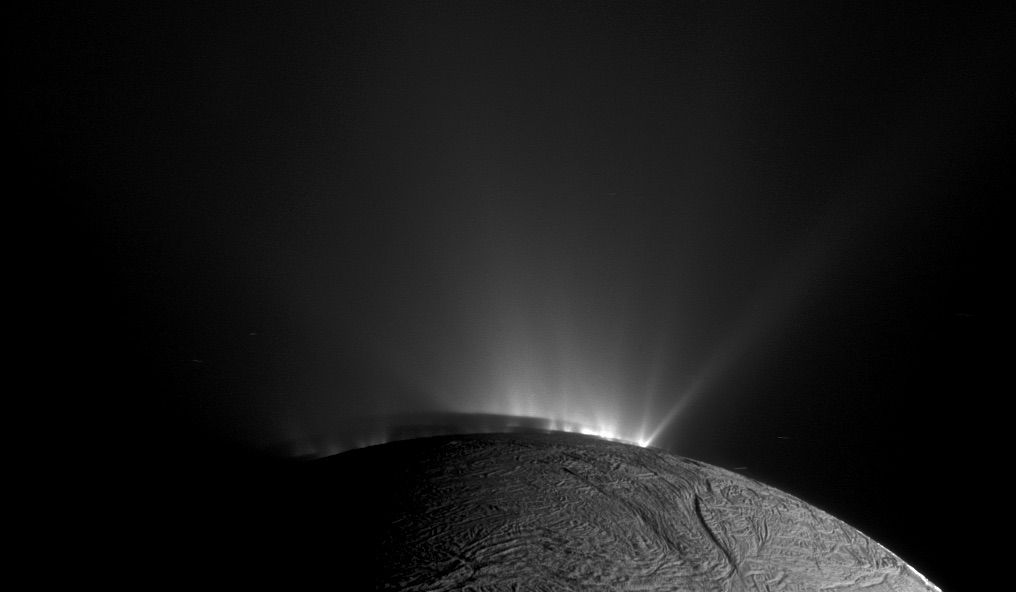
Twenty years ago, NASA’s Cassini spacecraft discovered evidence that a vast salty ocean hidden beneath Enceladus’ surface was spitting out minuscule “ice grains” through cracks near the moon’s south pole. Subsequent studies have spotted five of the six essential elements for life — carbon, hydrogen, nitrogen, oxygen and phosphorus (only missing sulfur) — within these grains.


You may like

However, the majority of these past studies looked at the relatively old ice grains that settled in Saturn’s E ring — a diffuse ring outside the planet’s bright main rings — after being ejected decades or centuries prior. This meant scientists couldn’t be sure that the compounds truly came from Enceladus rather than from space weathering in the ring.

Now, astronomers have identified organic molecules, perhaps including nitrogen and oxygen, in fresh ice grains sprayed from Saturn’s icy moon. The new research was published Wednesday (Oct. 1) in the journal Nature Astronomy.

Secrets of the ice moon

In 2008, as Cassini shot through a geyser of freshly spewed-up ice grains from Enceladus, it collected data on the splatter that covered the spacecraft’s Cosmic Dust Analyzer. These grains hit the spacecraft at 11 miles per second (18 kilometers per second), which was so fast that the water molecules didn’t cluster. This meant the team could see “previously hidden signals,” study co-author Nozair Khawaja, a planetary scientist at the Free University of Berlin, said in a statement.

The researchers used mass spectrometry to analyze the chemical fingerprint of the molecules in the fresh ice grains. They found chemical compounds that, on Earth, are involved in reactions that lead to the formation of complex molecules required for life, including structures potentially containing nitrogen and oxygen.

Get the world’s most fascinating discoveries delivered straight to your inbox.

“These molecules we found in the freshly ejected material prove that the complex organic molecules Cassini detected in Saturn’s E ring are not just a product of long exposure to space, but are readily available in Enceladus’s ocean,” study co-author Frank Postberg, a professor of planetary science at the Free University of Berlin, said in the statement.

Nozair said there are various ways these molecules could become biologically relevant, “which enhances the likelihood that the moon is habitable.” Even so, he said it would still be a huge discovery to not find any life on Enceladus because it would raise “serious questions about why life is not present in such an environment when the right conditions are there.”

ESA is planning a future mission to land a spacecraft on the southern pole of Enceladus to collect more samples. The agency is targeting the early 2040s as the earliest possible launch date.

Source link

Share. Facebook Twitter Pinterest LinkedIn Tumblr Email
Previous ArticleIdaho judge blocks release of graphic images from Kohberger murder scene
Next Article Trump has determined U.S. is in armed conflict with cartels, administration tells Congress
Editor
  • Website

Related Posts

Lifestyle

Science history: Carbon-14 is discovered, opening a window into past civilizations — Feb. 27, 1940

February 27, 2026
Lifestyle

Scientists may have seen a star collapse directly into a black hole without exploding first

February 27, 2026
Lifestyle

Giant ‘spiderwebs’ on Mars contain tiny egg-like structures that scientists ‘can’t quite explain,’ NASA rover reveals

February 27, 2026
Add A Comment

Comments are closed.

Categories
  • Entertainment
  • Lifestyle
  • News
  • Sports
  • Tech
  • Travel
Recent Posts
  • Paris Jackson, Mom Debbie Rowe: Photos
  • FAA restricts Texas airspace after Pentagon reportedly shot down CBP drone
  • Best streaming deal: Save $15 on Roku Streaming Stick 4K
  • Premier League Darts: Stephen Bunting responds to doubters “writing me off” after Night Four Premier League win in Belfast | Darts News
  • Where John F. Kennedy Ex-Girlfriend Daryl Hannah Is Now
calendar
February 2026
M T W T F S S
 1
2345678
9101112131415
16171819202122
232425262728  
« Jan    
Recent Posts
  • Paris Jackson, Mom Debbie Rowe: Photos
  • FAA restricts Texas airspace after Pentagon reportedly shot down CBP drone
  • Best streaming deal: Save $15 on Roku Streaming Stick 4K
About

Welcome to Baynard Media, your trusted source for a diverse range of news and insights. We are committed to delivering timely, reliable, and thought-provoking content that keeps you informed
and inspired

Categories
  • Entertainment
  • Lifestyle
  • News
  • Sports
  • Tech
  • Travel
Facebook X (Twitter) Pinterest WhatsApp
  • Contact Us
  • About Us
  • Privacy Policy
  • Disclaimer
  • UNSUBSCRIBE
© 2026 copyrights reserved

Type above and press Enter to search. Press Esc to cancel.