Close Menu
  • Home
  • UNSUBSCRIBE
  • News
  • Lifestyle
  • Tech
  • Entertainment
  • Sports
  • Travel
Facebook X (Twitter) WhatsApp
Trending
  • ‘The biggest El Niño event since the 1870s’: ‘Super’ El Niño is now the most likely scenario by the end of this year ‪—‬ and the humanitarian cost could be huge
  • Antarctica’s sudden sea ice loss is one of the most extreme and confusing events in the modern climate record. Scientists now know why it’s happening.
  • ‘I heard gasps’: Artemis II astronauts reveal inside story of their mind-bending solar eclipse
  • A pill can stop people from developing COVID after being exposed to the virus, trial finds
  • ‘There are 4 people in those pixels’: Earth-based telescope snapped Artemis II crew orbiting the moon
  • High-status Roman woman was buried in a lead coffin with jet hairpins and exotic resins, archaeologists find
  • Dreame FP10 Air Purifier review: Pet-friendly and low-maintenance
  • ‘Extreme’ crystal that formed in 1945 nuclear bomb test is unlike anything scientists have seen
Facebook X (Twitter) WhatsApp
Baynard Media
  • Home
  • UNSUBSCRIBE
  • News
  • Lifestyle
  • Tech
  • Entertainment
  • Sports
  • Travel
Baynard Media
Home»News»Parts of U.S. may get a glimpse of northern lights this Thanksgiving
News

Parts of U.S. may get a glimpse of northern lights this Thanksgiving

EditorBy EditorNovember 28, 2024No Comments3 Mins Read
Share Facebook Twitter Pinterest LinkedIn Tumblr Reddit Telegram Email
Share
Facebook Twitter LinkedIn Pinterest Email

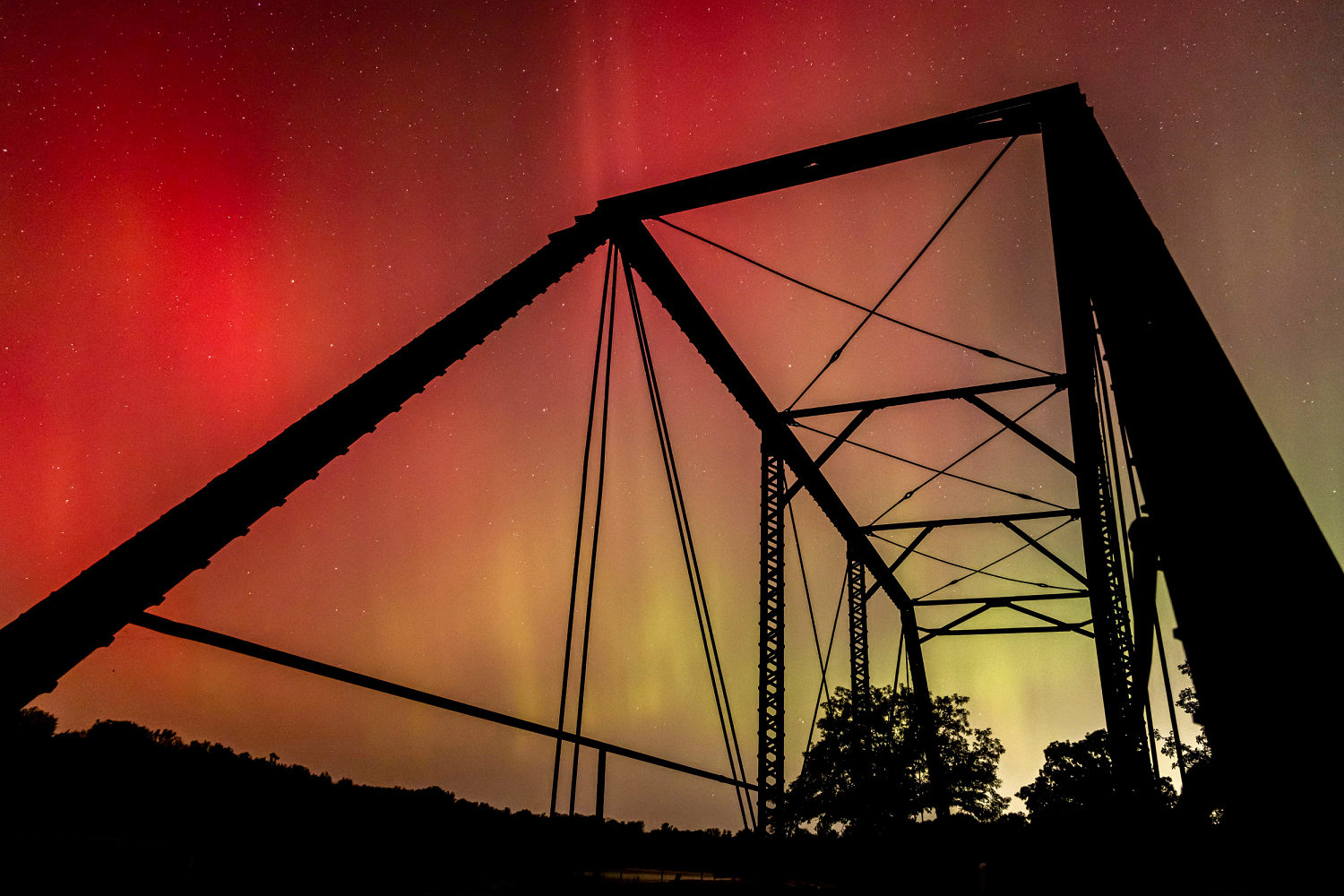
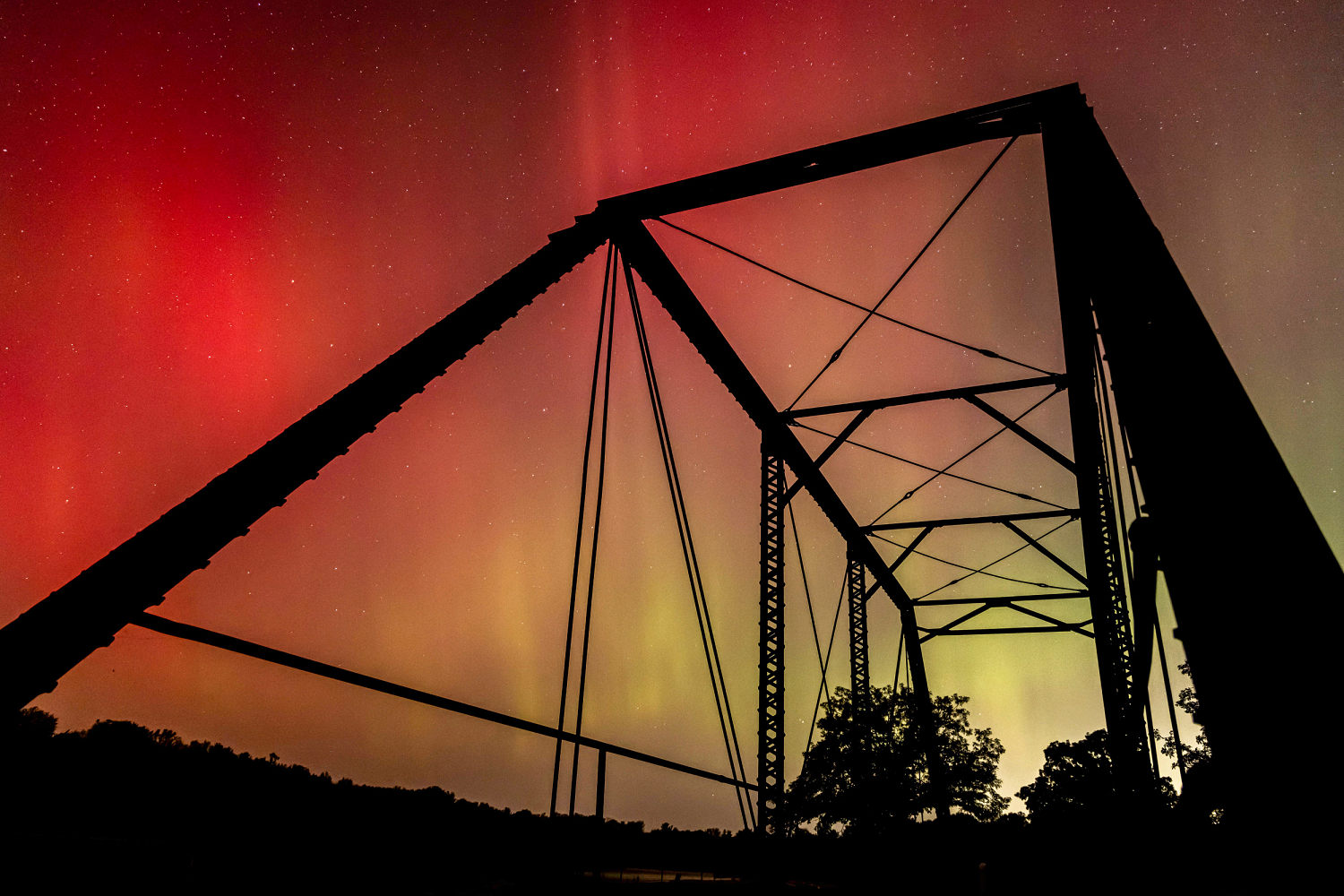
While Thanksgiving may be cool and rainy in many spots across the country, solar storms could offer a glimpse at the northern lights for some in the U.S.

Minor to moderate geomagnetic storms are likely Thursday and Friday, thanks to a filament eruption on Monday, during which the sun shot a cloud of high-energy plasma toward Earth, according to the National Oceanic and Atmospheric Administration (NOAA).

That eruption is now ushering in the possibility that night skies in the U.S. could light up in greens, reds and purples for the Thanksgiving holiday.

How bright the auroras are and how long they remain in the skies depends on how strong the solar storms get, and whether they reach G1 or G2 conditions at all, NOAA meteorologist Mike Bettwy said in an email.

“This is not expected to be a widespread event and will likely only last for short intervals and could be quite faint in the affected locales,” Bettwy said.

Those in states such as Washington, Montana, the Dakotas, Minnesota, Wisconsin, Michigan and Maine are poised to see the northern lights this holiday weekend, and those in northern parts of Idaho, Wyoming, New York, Vermont and New Hampshire have a chance at seeing the aurora borealis as well, according to NOAA.

The aurora borealis is most likely to be visible Thursday evening until early Friday, when NOAA experts are forecasting minor (G1) and moderate (G2) geomagnetic storms, though it is not clear exactly when and where the skies will light up.

Viewers hoping to catch a glimpse can track the latest activity and forecast on the NOAA’s Aurora Dashboard. It also offers short-term forecasts of the northern lights, including maps of where they will be visible and experimental tools that estimate their intensity.

Clear conditions are best to take a peek at the bright lights. Areas of cloudiness are likely to limit viewing possibilities over much of the Northeast and New England, and near the Great Lakes, Bettwy said.

Unlike stronger solar storms that offered many in the U.S. a view of the northern lights earlier this year, Bettwy said don’t expect any major disruptions to communications systems in the country this time around, unless the storms turn out to be more significant than predicted.

The northern lights, or aurora borealis, are usually seen only at high altitudes, but intense enough solar storms can make them visible in areas much farther south than normal.

These solar storms take place when coronal mass ejections, or eruptions from the sun, send giant clouds of plasma into space. When those plasma clouds are directed at Earth, the plumes of charged particles smash into the planet’s magnetic field and interact with atoms and molecules in the upper atmosphere which create radiant auroras.

The sun goes through roughly 11-year cycles of activity, from minimum to maximum. It’s gearing up for an expected peak next July, according to the NOAA, which is why there have been a number of occasions this year in which the northern lights have been visible so far south.

Source link

Share. Facebook Twitter Pinterest LinkedIn Tumblr Email
Previous ArticleBest laptops in 2024 (UK)
Next Article Caroline Dubois’ message to Katie Taylor: Now it’s my turn to come through. Fight me or let the belt go! | Boxing News
Editor
  • Website

Related Posts

News

Omar files new financial form in response to Trump, GOP critics

April 21, 2026
News

Ex-CENTCOM commanderwarns against ‘risky’ US ground op to seize Iran uranium

April 21, 2026
News

Santa Ana’s Upcoming Report on Police Firing on ICE Protesters Lacks Details

April 21, 2026
Add A Comment

Comments are closed.

Categories
  • Entertainment
  • Lifestyle
  • News
  • Sports
  • Tech
  • Travel
Recent Posts
  • ‘The biggest El Niño event since the 1870s’: ‘Super’ El Niño is now the most likely scenario by the end of this year ‪—‬ and the humanitarian cost could be huge
  • Antarctica’s sudden sea ice loss is one of the most extreme and confusing events in the modern climate record. Scientists now know why it’s happening.
  • ‘I heard gasps’: Artemis II astronauts reveal inside story of their mind-bending solar eclipse
  • A pill can stop people from developing COVID after being exposed to the virus, trial finds
  • ‘There are 4 people in those pixels’: Earth-based telescope snapped Artemis II crew orbiting the moon
calendar
May 2026
M T W T F S S
 123
45678910
11121314151617
18192021222324
25262728293031
« Apr    
Recent Posts
  • ‘The biggest El Niño event since the 1870s’: ‘Super’ El Niño is now the most likely scenario by the end of this year ‪—‬ and the humanitarian cost could be huge
  • Antarctica’s sudden sea ice loss is one of the most extreme and confusing events in the modern climate record. Scientists now know why it’s happening.
  • ‘I heard gasps’: Artemis II astronauts reveal inside story of their mind-bending solar eclipse
About

Welcome to Baynard Media, your trusted source for a diverse range of news and insights. We are committed to delivering timely, reliable, and thought-provoking content that keeps you informed
and inspired

Categories
  • Entertainment
  • Lifestyle
  • News
  • Sports
  • Tech
  • Travel
Facebook X (Twitter) Pinterest WhatsApp
  • Contact Us
  • About Us
  • Privacy Policy
  • Disclaimer
  • UNSUBSCRIBE
© 2026 copyrights reserved

Type above and press Enter to search. Press Esc to cancel.