Close Menu
  • Home
  • UNSUBSCRIBE
  • News
  • Lifestyle
  • Tech
  • Entertainment
  • Sports
  • Travel
Facebook X (Twitter) WhatsApp
Trending
  • Lemur used in ‘lemur yoga’ session dies of human herpesvirus, study finds
  • ‘A fine line between reducing stigma and trivialising conditions’: Social media, self-diagnosis and the glamorization of ADHD
  • New 2D memory device stores data on just a single electron
  • Before we ban kids from social media completely, here’s what we should try first | Jonathan Bellack and Mariana Olaizola Rosenblat
  • Scientists uncover a better way to beat ‘the bends’ — using deep-diving pigs
  • Mars may have been losing its water more than 4 billion years ago, oldest-known Martian meteorite suggests
  • ‘The lance head was still inside the pelvis’: Mass grave found in Austria may hold casualties of unknown ancient Roman battle
  • ‘Full-on berserker mode’: Archaeologists solve mystery of medieval soldiers with gruesome square holes in their skull
Facebook X (Twitter) WhatsApp
Baynard Media
  • Home
  • UNSUBSCRIBE
  • News
  • Lifestyle
  • Tech
  • Entertainment
  • Sports
  • Travel
Baynard Media
Home»Lifestyle»Our teeth evolved from fish ‘body armor’ over 460 million years, scientists discover
Lifestyle

Our teeth evolved from fish ‘body armor’ over 460 million years, scientists discover

EditorBy EditorMay 21, 2025No Comments3 Mins Read
Share Facebook Twitter Pinterest LinkedIn Tumblr Reddit Telegram Email
Share
Facebook Twitter LinkedIn Pinterest Email

Our sensitive teeth originally evolved from the “body armor” of extinct fish that lived 465 million years ago, scientists say.

In a new study, the researchers showed how sensory tissue discovered on the exoskeletons of ancient fish is linked to the same “genetic toolkit” that produces human teeth.

“This shows us that ‘teeth’ can also be sensory even when they’re not in the mouth,” study co-author Yara Haridy, a paleontologist and evolutionary biologist at the University of Chicago, said in a statement. Haridy and colleagues published their findings Wednesday (May 21) in the journal Nature.


You may like

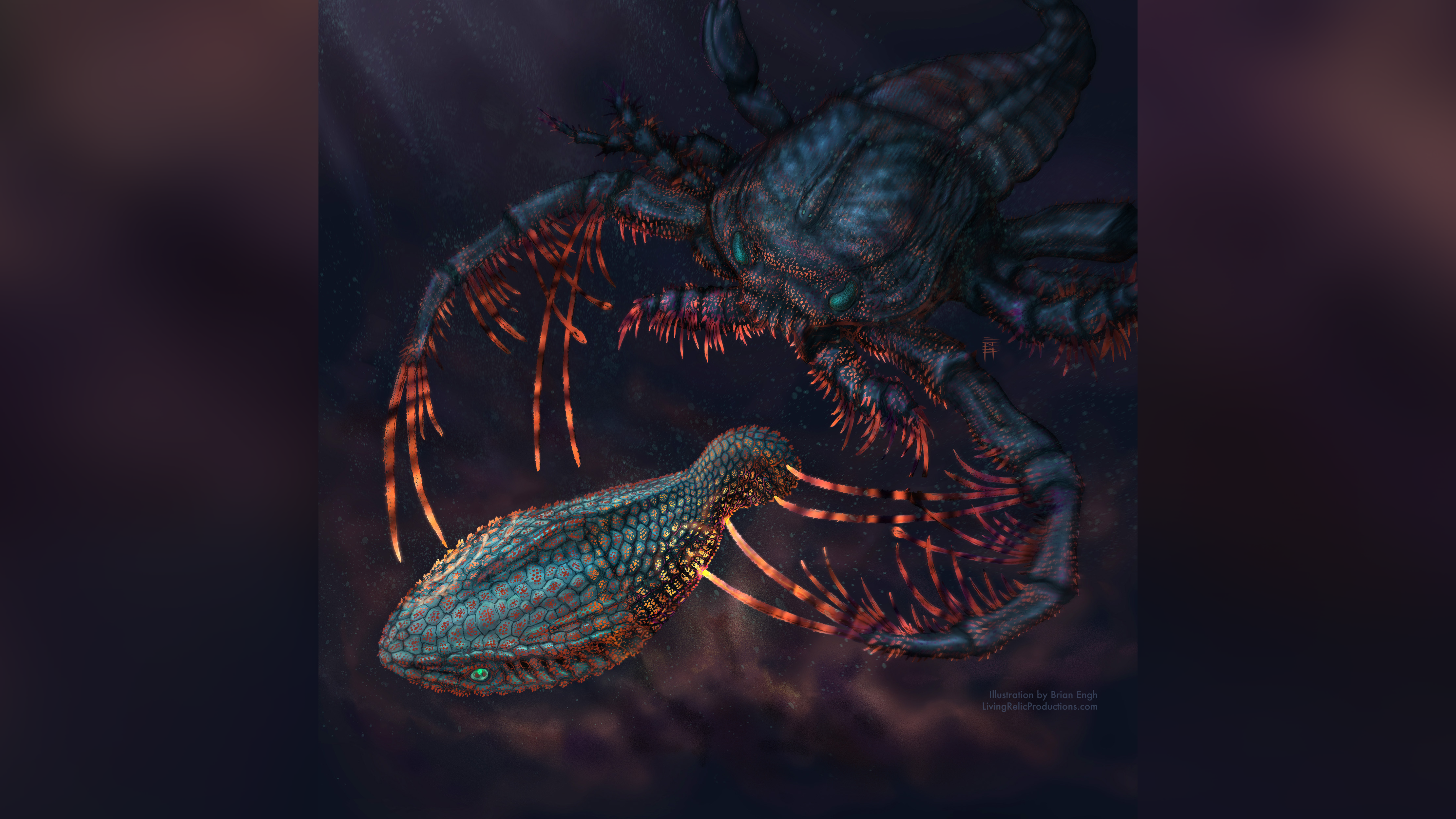
Originally, the researchers set out to identify the earliest vertebrate in the fossil record, seeking out fossil specimens from the Cambrian and Ordovician periods (541 million to 443 million years ago). One telltale sign of a vertebrate species is the presence of internal tubules for dentine, a calcified tissue that is found just underneath the enamel in human teeth, but that is found in external bumps in ancient fish armor.

While using high-resolution CT scans to investigate the jawless “first fish” species Anatolepis heintzi, the researchers discovered what looked like pores filled with dentine. To confirm this, they compared A. heintzi to a coterie of ancient fossils and modern marine life.

But as they looked more closely, they realized that the supposed dentine-lined pores were actually more like the sensory organs on the shells of crabs. A. heintz was therefore an ancient invertebrate arthropod — not a vertebrate fish.

Related: Scientists discover new 15 million-year old fish with last meal fossilized inside its stomach

Get the world’s most fascinating discoveries delivered straight to your inbox.

CT scan image of a tooth-like structure in an ancient jawless fish

A CT scan of a tooth-like structure from the ancient jawless fish Astraspis shows tubules filled with dentine in green. The red areas represent the vascular system that housed the nerves. (Image credit: Yara Haridy)

Clearing up the confusion about the categorization of A. heintz led to an important new insight: Ancient vertebrates like fish and ancient arthropods were making the same mineralized tissue to help them sense their environment. Eventually, that mineralized tissue evolved into dentine — and into our sensitive teeth.

The new study supports the idea that sensory structures evolved on exoskeletons at least 460 million years ago, and then later in evolutionary history, animals used the same “genetic toolkit” to make teeth.

“Viewed through this evolutionary lens, the fact that teeth in the mouth are extremely sensitive is less of a mystery, and more a reflection of their evolutionary origins within the sensory armor of early vertebrates,” the researchers wrote in the study.


Evolution quiz: Can you naturally select the correct answers?

Source link

Share. Facebook Twitter Pinterest LinkedIn Tumblr Email
Previous Article140,000-year-old Homo erectus bones discovered on ‘drowned land’ in Indonesia
Next Article Astronomers spy puzzlingly ‘perfect’ cosmic orb with unknown size and location
Editor
  • Website

Related Posts

Lifestyle

Lemur used in ‘lemur yoga’ session dies of human herpesvirus, study finds

August 15, 2026
Lifestyle

‘A fine line between reducing stigma and trivialising conditions’: Social media, self-diagnosis and the glamorization of ADHD

August 15, 2026
Lifestyle

New 2D memory device stores data on just a single electron

August 15, 2026
Add A Comment

Comments are closed.

Categories
  • Entertainment
  • Lifestyle
  • News
  • Sports
  • Tech
  • Travel
Recent Posts
  • Lemur used in ‘lemur yoga’ session dies of human herpesvirus, study finds
  • ‘A fine line between reducing stigma and trivialising conditions’: Social media, self-diagnosis and the glamorization of ADHD
  • New 2D memory device stores data on just a single electron
  • Before we ban kids from social media completely, here’s what we should try first | Jonathan Bellack and Mariana Olaizola Rosenblat
  • Scientists uncover a better way to beat ‘the bends’ — using deep-diving pigs
calendar
August 2026
M T W T F S S
 12
3456789
10111213141516
17181920212223
24252627282930
31  
« Jul    
Recent Posts
  • Lemur used in ‘lemur yoga’ session dies of human herpesvirus, study finds
  • ‘A fine line between reducing stigma and trivialising conditions’: Social media, self-diagnosis and the glamorization of ADHD
  • New 2D memory device stores data on just a single electron
About

Welcome to Baynard Media, your trusted source for a diverse range of news and insights. We are committed to delivering timely, reliable, and thought-provoking content that keeps you informed
and inspired

Categories
  • Entertainment
  • Lifestyle
  • News
  • Sports
  • Tech
  • Travel
Facebook X (Twitter) Pinterest WhatsApp
  • Contact Us
  • About Us
  • Privacy Policy
  • Disclaimer
  • UNSUBSCRIBE
© 2026 copyrights reserved

Type above and press Enter to search. Press Esc to cancel.