Close Menu
  • Home
  • UNSUBSCRIBE
  • News
  • Lifestyle
  • Tech
  • Entertainment
  • Sports
  • Travel
Facebook X (Twitter) WhatsApp
Trending
  • ‘No longer will anything seem impossible or marvellous’: How an ‘immoral, foul-mouthed and violent man’ wrote the first eyewitness account of a total solar eclipse​​
  • ‘They’ll surf into the eclipse’: Readers share their plans for today’s epic solar eclipse and meteor shower mash-up
  • Young wild octopuses may form a ‘fight club’ and slap territorial fish if they get too close
  • Totality! See the first photos of the Aug. 12 total solar eclipse over Spain
  • Nocturnal dodo? Study suggests we were very wrong about Mauritius’ iconic flightless bird
  • Diagnostic dilemma: Doctors performed surgery to remove a mass in a woman’s gut ‪—‬ and a bug-like creature immediately jumped out
  • New ‘magnetoelastic’ tent generates electricity from wind, body movement and sound to power small devices
  • Largest 2D map of the universe charts 4 billion objects in the night sky — and helps other telescopes with their work
Facebook X (Twitter) WhatsApp
Baynard Media
  • Home
  • UNSUBSCRIBE
  • News
  • Lifestyle
  • Tech
  • Entertainment
  • Sports
  • Travel
Baynard Media
Home»Lifestyle»Giant ‘sea dragon’ fossil could be largest mosasaur ever discovered in Mississippi
Lifestyle

Giant ‘sea dragon’ fossil could be largest mosasaur ever discovered in Mississippi

EditorBy EditorApril 24, 2025No Comments4 Mins Read
Share Facebook Twitter Pinterest LinkedIn Tumblr Reddit Telegram Email
Share
Facebook Twitter LinkedIn Pinterest Email

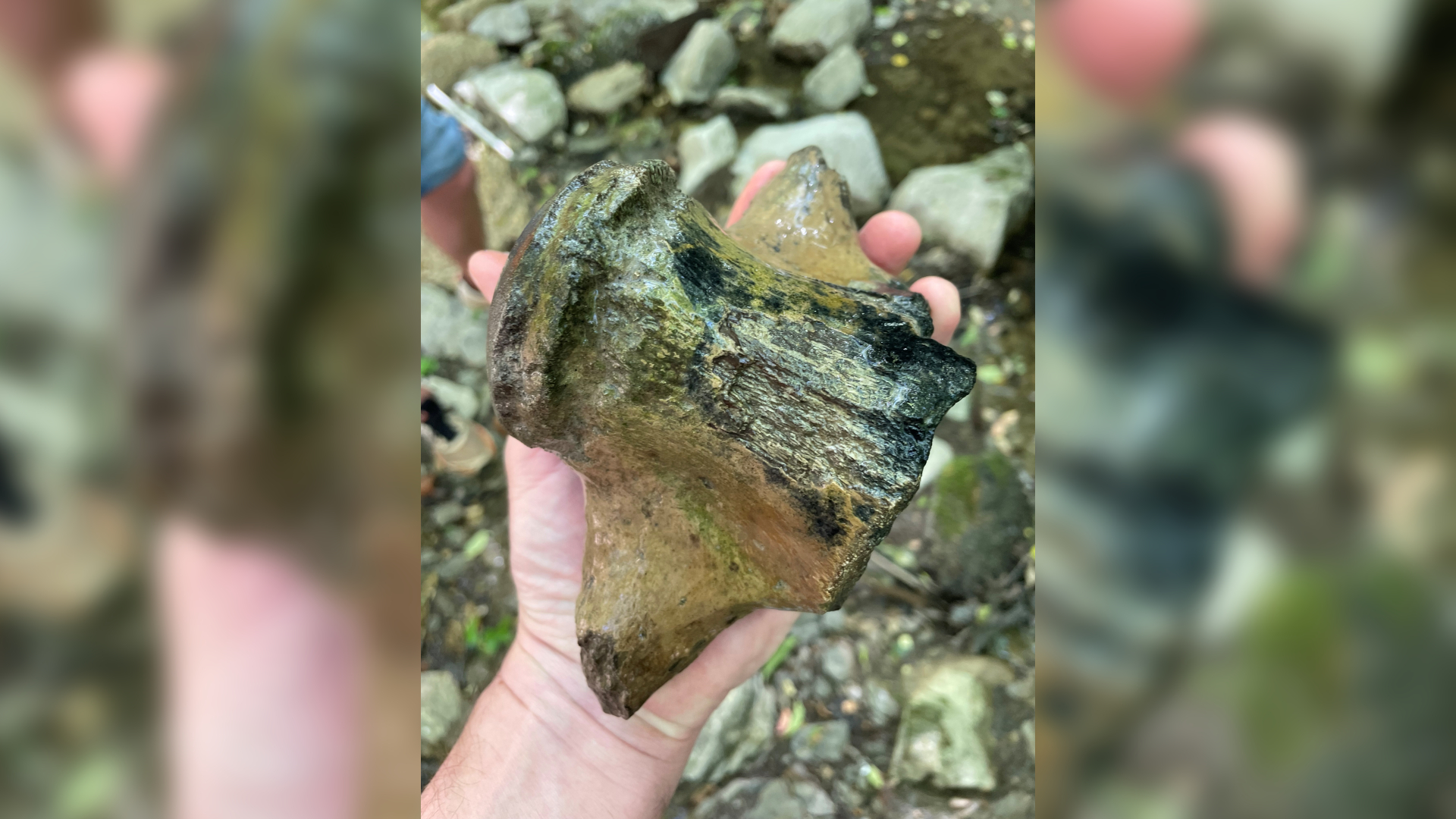
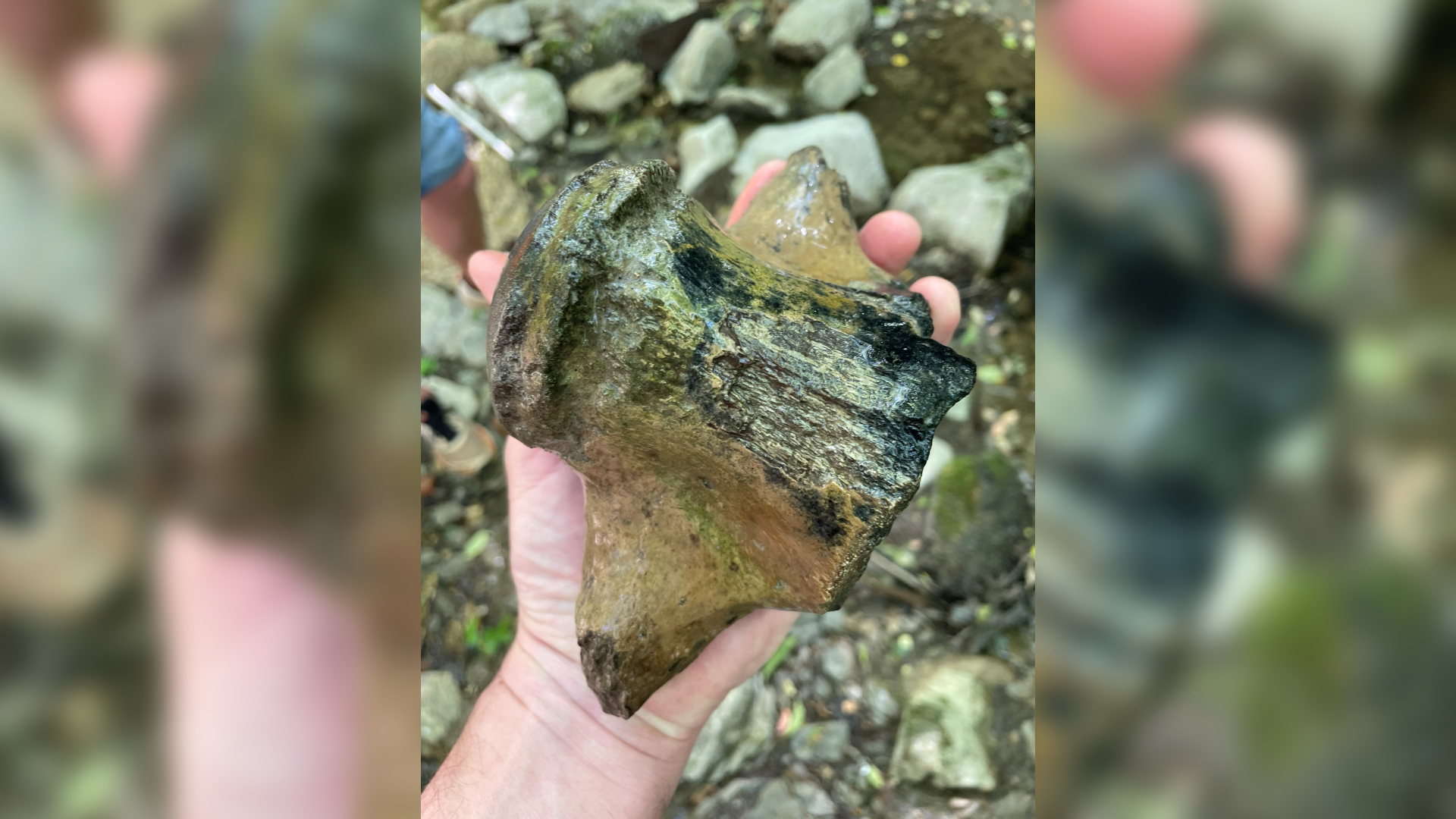
A giant “sea dragon” backbone plucked from a riverbank in Mississippi could belong to the largest mosasaur ever found in the state, scientists say.

Researchers only found a single vertebra from the creature and aren’t sure exactly how large the mosasaur was in total, but it is estimated to have been at least 30 feet (9 meters) long, Hattiesburg American reported.

Mosasaurs, or “sea dragons,” ruled the oceans when dinosaurs dominated the land towards the end of the Cretaceous period (145 million to 66 million years ago). The newly discovered fossil belonged to Mosasaurus hoffmanni, which was one of the largest — if not the largest — mosasaur species.

James Starnes, a geologist at the Mississippi Department of Environmental Quality, spotted the fossil protruding from a stream bed just south of Starkville on April 15, he told Live Science in an email. His fellow geologist, Jonathan Leard, then carefully pulled it out of the sediment.

“I immediately knew what it was, but was completely awe struck by its size,” Starnes said. “The feeling you get when you find a fossil, even as a professional, never gets old. But when you find something you have never seen before, the elation can be overwhelming.”

Related: ‘Red flags’ raised over ancient sea monster pulled from Moroccan mine

Mosasaurs were a diverse group of marine reptiles. Researchers are still figuring out the sizes of the largest mosasaur species, but they likely reached a maximum length of around 50 feet (15 m). One of the largest specimens on record is a skull that belonged to M. hoffmanni and is estimated to be around 56 feet (17 meters) long, according to a 2014 study published in the journal Proceedings of the Zoological Institute RAS.

Get the world’s most fascinating discoveries delivered straight to your inbox.

The newly discovered vertebra fossil is more than 7 inches (18 centimeters) wide at its widest point. Starnes and his colleagues compared the fossil to the largest mosasaur remains held in the Mississippi Museum of Natural Science, which include jaws, portions of a skull and a tooth. Starnes noted that the jaws and skull appeared to be from a smaller individual than the individual represented by the new vertebra, but the tooth looked like it belonged to an individual that was more comparable in size to the new specimen. In other words, the new fossil seemed to belong to a mosasaur that was bigger or as big as the largest in the state museum. Starnes noted it could be the largest in the state’s history.

“It may represent the largest,” Starnes said. “The lumbar vertebra we found is a good indicator to the relative size of the animal. This is the biggest one that I have ever encountered.”

M. hoffmanni was an apex predator, hunting down prey with large jaws and cone-shaped teeth. Large mosasaurs likely ate whatever they wanted for the most part, including fish, sharks, sea birds and even other mosasaurs — researchers have found the remains of mosasaurs in the fossilized stomachs of other mosasaurs. The giant mosasaur that left behind this particulare vertebra likely had no shortage of food in what is now Mississippi, which had a very different environment towards the end of the Cretaceous.

“Mississippi was completely covered at the time by warm shallow tropical sea that was teaming with life, including a wide diversity of sharks, fish, marine lizards, and ammonites,” Starnes said. “Pterosaurs and even some birds would have been flying overhead while a variety of both plant and meat-eating dinosaurs of different sizes and kinds would have been walking the shore lines and through the wooded forests along the coastal estuaries.”

As well as being one of the largest, M. hoffmanni was also one of the last mosasaurs. The group went extinct alongside non-avian dinosaurs after the Chicxulub asteroid slammed into Earth 66 million years ago. The rich marine ecosystems that mosasaurs depended on collapsed following the strike, bringing the reign of this dominant ocean predator to a permanent end.

Source link

Share. Facebook Twitter Pinterest LinkedIn Tumblr Email
Previous ArticleStone Age quiz: What do you know about the Paleolithic, Mesolithic and Neolithic?
Next Article ‘Hell ant’ with scythe-like jaws may be oldest ant fossil ever discovered
Editor
  • Website

Related Posts

Lifestyle

‘No longer will anything seem impossible or marvellous’: How an ‘immoral, foul-mouthed and violent man’ wrote the first eyewitness account of a total solar eclipse​​

August 13, 2026
Lifestyle

‘They’ll surf into the eclipse’: Readers share their plans for today’s epic solar eclipse and meteor shower mash-up

August 13, 2026
Lifestyle

Young wild octopuses may form a ‘fight club’ and slap territorial fish if they get too close

August 12, 2026
Add A Comment

Comments are closed.

Categories
  • Entertainment
  • Lifestyle
  • News
  • Sports
  • Tech
  • Travel
Recent Posts
  • ‘No longer will anything seem impossible or marvellous’: How an ‘immoral, foul-mouthed and violent man’ wrote the first eyewitness account of a total solar eclipse​​
  • ‘They’ll surf into the eclipse’: Readers share their plans for today’s epic solar eclipse and meteor shower mash-up
  • Young wild octopuses may form a ‘fight club’ and slap territorial fish if they get too close
  • Totality! See the first photos of the Aug. 12 total solar eclipse over Spain
  • Nocturnal dodo? Study suggests we were very wrong about Mauritius’ iconic flightless bird
calendar
August 2026
M T W T F S S
 12
3456789
10111213141516
17181920212223
24252627282930
31  
« Jul    
Recent Posts
  • ‘No longer will anything seem impossible or marvellous’: How an ‘immoral, foul-mouthed and violent man’ wrote the first eyewitness account of a total solar eclipse​​
  • ‘They’ll surf into the eclipse’: Readers share their plans for today’s epic solar eclipse and meteor shower mash-up
  • Young wild octopuses may form a ‘fight club’ and slap territorial fish if they get too close
About

Welcome to Baynard Media, your trusted source for a diverse range of news and insights. We are committed to delivering timely, reliable, and thought-provoking content that keeps you informed
and inspired

Categories
  • Entertainment
  • Lifestyle
  • News
  • Sports
  • Tech
  • Travel
Facebook X (Twitter) Pinterest WhatsApp
  • Contact Us
  • About Us
  • Privacy Policy
  • Disclaimer
  • UNSUBSCRIBE
© 2026 copyrights reserved

Type above and press Enter to search. Press Esc to cancel.