Close Menu
  • Home
  • UNSUBSCRIBE
  • News
  • Lifestyle
  • Tech
  • Entertainment
  • Sports
  • Travel
Facebook X (Twitter) WhatsApp
Trending
  • New robotic heart mimics common, mysterious condition to help researchers study it
  • Canon EOS R6 III review: A wildlife wonder
  • Medieval babies and adults buried together in Sweden were not related, archaeologists discover — raising big questions about early Christian burial practices
  • NASA is creating a fifth state of matter on the ISS, thanks to an upgrade to a mini-fridge-sized quantum lab
  • New sodium metal battery design charges in just 4 minutes and retains its capacity for years
  • Quantum computing wielded to create extremely rare material critical to nuclear fusion
  • Scientists build tiny ‘diving suit’ for cockroaches, turning them into search-and-rescue cyborgs
  • Physicists develop the first working model of quantum mechanics using only ‘real’ numbers
Facebook X (Twitter) WhatsApp
Baynard Media
  • Home
  • UNSUBSCRIBE
  • News
  • Lifestyle
  • Tech
  • Entertainment
  • Sports
  • Travel
Baynard Media
Home»Lifestyle»People with this rare genetic condition can’t repair damage to their DNA
Lifestyle

People with this rare genetic condition can’t repair damage to their DNA

EditorBy EditorFebruary 7, 2025No Comments4 Mins Read
Share Facebook Twitter Pinterest LinkedIn Tumblr Reddit Telegram Email
Share
Facebook Twitter LinkedIn Pinterest Email

Disease name: DNA ligase IV (LIG4) syndrome

Affected populations: LIG4 syndrome is an extremely rare inherited condition that was first reported in the U.K. in 1990. Little is known about its exact prevalence worldwide, but as of 2020, approximately 55 cases had been described in the medical literature.

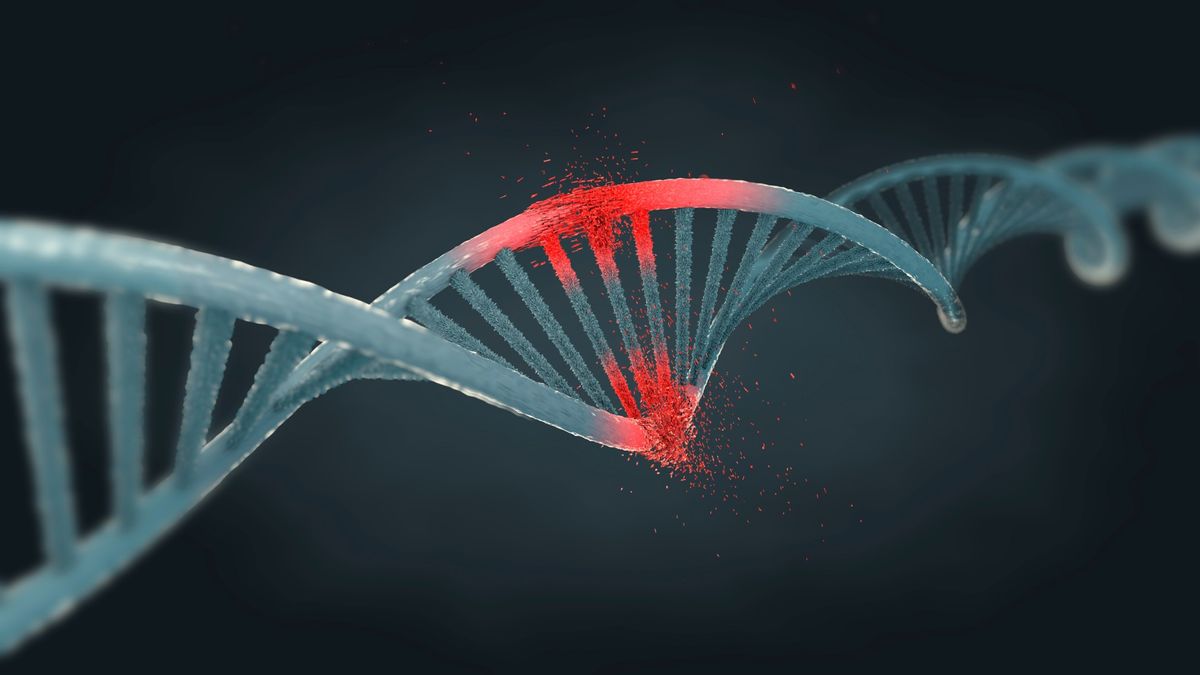
Causes: LIG4 syndrome is caused by a mutation in the LIG4 gene, which carries the instructions needed to make a protein known as DNA ligase 4. This protein is an enzyme that helps repair a specific type of DNA damage —- namely, breaks in both sides of the DNA double helix structure.

These kinds of breaks are commonplace, occurring between 10 and 50 times a day in the average cell in the human body. The breaks are caused by a variety of things, including normal cellular processes like DNA replication, which is needed for cells to multiply, as well as external factors, like exposure to certain chemicals or radiation.

Related: New study provides first evidence of non-random mutations in DNA

If these DNA breaks aren’t repaired, they can prompt cells to self-destruct, or failing that, become cancerous. As LIG4 syndrome impairs this response, people with the condition are particularly susceptible to the knock-on effects of radiation.

The enzyme DNA ligase 4 is also needed to make vital proteins on the surface of immune cells called T cells and B cells that help them to work properly and produce antibodies that fight off infections. Hence, people with LIG4 may also develop an immunodeficiency disorder, such as severe combined immunodeficiency, as a result of their condition.

Get the world’s most fascinating discoveries delivered straight to your inbox.

LIG4 syndrome is inherited in an autosomal recessive manner, meaning that a child needs to inherit two copies of the faulty LIG4 gene — one from each parent — in order to develop the condition.

A black-and-white image of a child with LIG4 syndrome in the center against an enlarged, blurred version of the same image.

A 12-year-old child with LIG4 syndrome. (Image credit: Gruhn B, Seidel J, Zintl F, Varon R, Tönnies H, Neitzel H, Bechtold A, Hoehn H, Schindler D. Successful bone marrow transplantation in a patient with DNA ligase IV deficiency and bone marrow failure. Orphanet J Rare Dis. 2, 5. 2007. PMID 17224058, CC BY 2.0 https://creativecommons.org/licenses/by/2.0/deed.en, via Wikimedia Commons, photo presented against blurred background)

Symptoms: People with LIG4 syndrome typically experience an array of symptoms, which may either develop soon after birth or later in life. These symptoms include microcephaly, when a baby’s brain is much smaller than expected; delays in growth and development; and a reduction in the amount of cells in the blood, including immune cells that help the body to fight infections.

Other characteristic symptoms of LIG4 syndrome are a “bird-like” appearance of the face, as well as skin lesions. People may also have an abnormally-shaped skeleton and develop progressive failure of the bone marrow; bone marrow is a key site of antibody and blood-cell production, so this can cause widespread problems.

Treatments: There is currently no cure for LIG4 syndrome.

However, patients may be offered treatments to help lower their risk of developing severe infections as a result of their immunodeficiency. For example, they may be prescribed antiviral and antifungal drugs or antibiotics.

People with LIG4 syndrome may also receive injections of antibodies to replace defunct ones and they are often advised to avoid any unnecessary exposure to radiation, such as X-rays produced by medical equipment, to minimize potential DNA damage.

According to medical case reports, 10 people with LIG4 syndrome have also reportedly been given a bone marrow transplant in a bid to treat their condition by replenishing their stocks of immune cells. This procedure was successful for six of the 10 individuals. However, the remaining four still died despite treatment — mainly because of infections.

This article is for informational purposes only and is not meant to offer medical advice.

Source link

Share. Facebook Twitter Pinterest LinkedIn Tumblr Email
Previous ArticleToday on Sky Sports Racing: Maljoom headlines Tandridge Stakes line-up | Racing News
Next Article Best Dressed Celebrities of All Time
Editor
  • Website

Related Posts

Lifestyle

New robotic heart mimics common, mysterious condition to help researchers study it

July 11, 2026
Lifestyle

Canon EOS R6 III review: A wildlife wonder

July 10, 2026
Lifestyle

Medieval babies and adults buried together in Sweden were not related, archaeologists discover — raising big questions about early Christian burial practices

July 10, 2026
Add A Comment

Comments are closed.

Categories
  • Entertainment
  • Lifestyle
  • News
  • Sports
  • Tech
  • Travel
Recent Posts
  • New robotic heart mimics common, mysterious condition to help researchers study it
  • Canon EOS R6 III review: A wildlife wonder
  • Medieval babies and adults buried together in Sweden were not related, archaeologists discover — raising big questions about early Christian burial practices
  • NASA is creating a fifth state of matter on the ISS, thanks to an upgrade to a mini-fridge-sized quantum lab
  • New sodium metal battery design charges in just 4 minutes and retains its capacity for years
calendar
July 2026
M T W T F S S
 12345
6789101112
13141516171819
20212223242526
2728293031  
« Jun    
Recent Posts
  • New robotic heart mimics common, mysterious condition to help researchers study it
  • Canon EOS R6 III review: A wildlife wonder
  • Medieval babies and adults buried together in Sweden were not related, archaeologists discover — raising big questions about early Christian burial practices
About

Welcome to Baynard Media, your trusted source for a diverse range of news and insights. We are committed to delivering timely, reliable, and thought-provoking content that keeps you informed
and inspired

Categories
  • Entertainment
  • Lifestyle
  • News
  • Sports
  • Tech
  • Travel
Facebook X (Twitter) Pinterest WhatsApp
  • Contact Us
  • About Us
  • Privacy Policy
  • Disclaimer
  • UNSUBSCRIBE
© 2026 copyrights reserved

Type above and press Enter to search. Press Esc to cancel.