Close Menu
  • Home
  • UNSUBSCRIBE
  • News
  • Lifestyle
  • Tech
  • Entertainment
  • Sports
  • Travel
Facebook X (Twitter) WhatsApp
Trending
  • Chinese medical practitioners used extremely toxic plant as a topical anesthetic 600 years ago, study finds
  • Bead net funerary shroud: A 2,500-year-old beaded veil from Egypt depicting the deceased’s transformation into Osiris
  • Rare genetic disease makes scientists reconsider what the ‘seat of fear’ in the brain really is
  • It’s illegal to repair most of our devices. There’s a surprising reason for that.
  • Jupiter’s Ganymede, the largest moon in the solar system, may be heating up
  • Bizarre patterns on Venus have scientists puzzled
  • Scientists trained an AI model using an IBM quantum computer — and it answered questions correctly that the base model couldn’t
  • How did animals survive the asteroid that killed the dinosaurs?
Facebook X (Twitter) WhatsApp
Baynard Media
  • Home
  • UNSUBSCRIBE
  • News
  • Lifestyle
  • Tech
  • Entertainment
  • Sports
  • Travel
Baynard Media
Home»Lifestyle»Dolní Vĕstonice Portrait Head: The oldest known human portrait in the world
Lifestyle

Dolní Vĕstonice Portrait Head: The oldest known human portrait in the world

EditorBy EditorFebruary 3, 2025No Comments2 Mins Read
Share Facebook Twitter Pinterest LinkedIn Tumblr Reddit Telegram Email
Share
Facebook Twitter LinkedIn Pinterest Email

Name: Dolní Vĕstonice Portrait Head

What it is: A face carved out of mammoth ivory

Where it is from: The South Moravian region of the Czech Republic

When it was made: About 24000 B.C.

Related: Bayeux Tapestry: A 1,000-year-old embroidery depicting William the Conqueror’s victory and King Harold’s grisly death

What it tells us about the past:

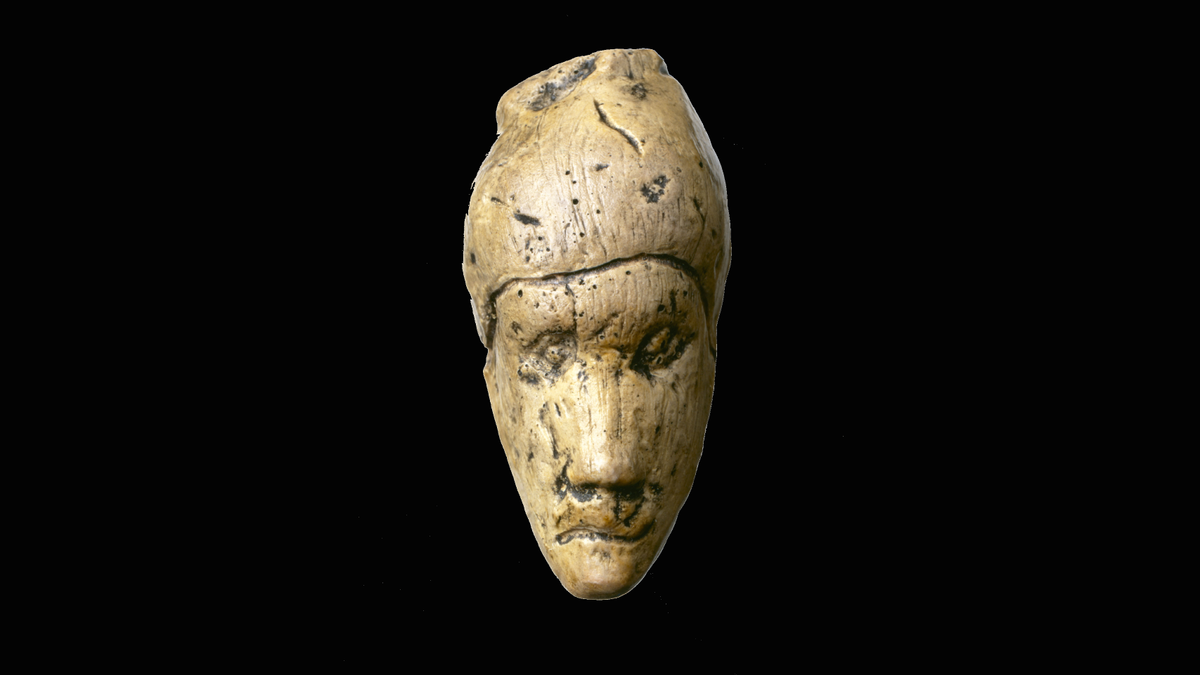
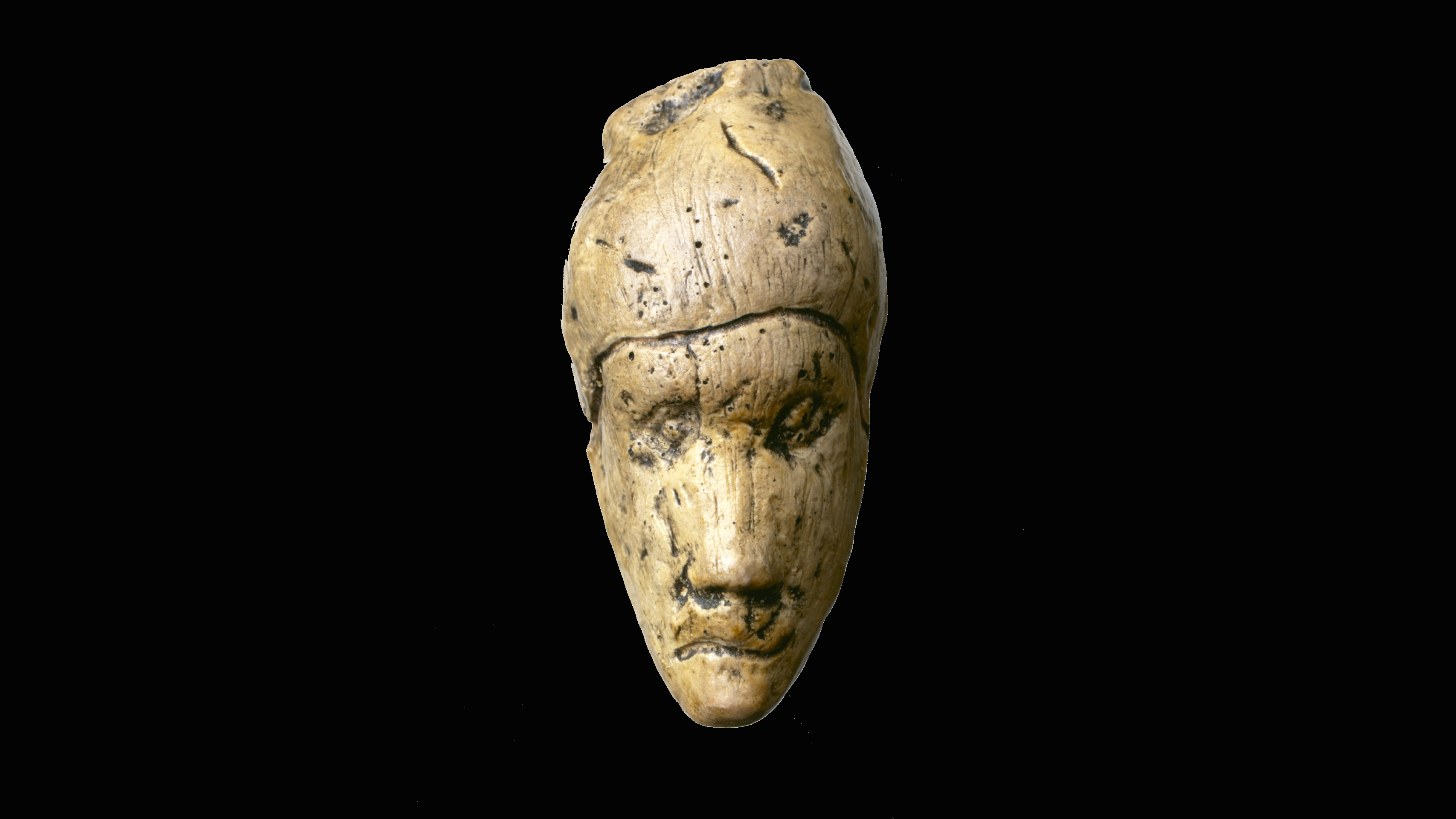
This sculpture, discovered at the archaeological site of Dolní Vĕstonice in the Czech Republic in the 1920s, is considered the oldest surviving portrait of a person anywhere in the world, at 26,000 years old.

Get the world’s most fascinating discoveries delivered straight to your inbox.

Carved with stone tools out of mammoth ivory, the tiny head measures just 1.9 inches (4.8 centimeters) tall and 1 inch (2.4 cm) wide. The sculpture appears to represent a woman’s face, with engraved eyes, a dimpled chin, and a raised nose and mouth. She may be wearing her hair in an updo or under a hat. Unlike other objects from the site — such as the Venus of Vĕstonice, which lacks facial features — this face seems to be individualized, making it the earliest known depiction of a specific person.

During the Upper Paleolithic period, a band of mammoth hunters set up camp at Dolní Vĕstonice, which is now a small village near the southern border of the Czech Republic. This cluster of settlements, sometimes called the “Stone Age Pompeii,” has yielded tens of thousands of ceramics, stone tools and bone objects over the past century of excavations, along with numerous burials.

MORE ASTONISHING ARTIFACTS

In one of these burials, covered in red ocher and arrayed with 10 drilled fox teeth, excavators discovered the skeleton of a middle-aged woman in 1949. Her skull was asymmetrical, potentially due to a traumatic childhood injury. When researchers used forensic techniques to reconstruct the woman’s face from the skull in 2018, they discovered it was very similar to the tiny ivory carving, whose left eye is significantly smaller than the right.

Dolní Vĕstonice is unique in Europe for its abundant artifacts dating to the Late Gravettian period (29000 to 24000 B.C.), including some of the earliest kiln-fired pottery in the world, so it is unsurprising that this little head carved from mammoth ivory is likely the earliest personal portrait in the world.

Many artifacts from Dolní Vĕstonice, including this sculpted head, can be found on display at the Anthropos Pavilion, a museum in Brno, Czech Republic.

Source link

Share. Facebook Twitter Pinterest LinkedIn Tumblr Email
Previous ArticleBest Pokémon building set deal: Get the Mega Pokémon Pokédex for $18.39
Next Article Best TV deal: Save $100 on Amazon Fire TV 55-inch 4-Series
Editor
  • Website

Related Posts

Lifestyle

Chinese medical practitioners used extremely toxic plant as a topical anesthetic 600 years ago, study finds

May 26, 2026
Lifestyle

Bead net funerary shroud: A 2,500-year-old beaded veil from Egypt depicting the deceased’s transformation into Osiris

May 25, 2026
Lifestyle

Rare genetic disease makes scientists reconsider what the ‘seat of fear’ in the brain really is

May 25, 2026
Add A Comment

Comments are closed.

Categories
  • Entertainment
  • Lifestyle
  • News
  • Sports
  • Tech
  • Travel
Recent Posts
  • Chinese medical practitioners used extremely toxic plant as a topical anesthetic 600 years ago, study finds
  • Bead net funerary shroud: A 2,500-year-old beaded veil from Egypt depicting the deceased’s transformation into Osiris
  • Rare genetic disease makes scientists reconsider what the ‘seat of fear’ in the brain really is
  • It’s illegal to repair most of our devices. There’s a surprising reason for that.
  • Jupiter’s Ganymede, the largest moon in the solar system, may be heating up
calendar
May 2026
M T W T F S S
 123
45678910
11121314151617
18192021222324
25262728293031
« Apr    
Recent Posts
  • Chinese medical practitioners used extremely toxic plant as a topical anesthetic 600 years ago, study finds
  • Bead net funerary shroud: A 2,500-year-old beaded veil from Egypt depicting the deceased’s transformation into Osiris
  • Rare genetic disease makes scientists reconsider what the ‘seat of fear’ in the brain really is
About

Welcome to Baynard Media, your trusted source for a diverse range of news and insights. We are committed to delivering timely, reliable, and thought-provoking content that keeps you informed
and inspired

Categories
  • Entertainment
  • Lifestyle
  • News
  • Sports
  • Tech
  • Travel
Facebook X (Twitter) Pinterest WhatsApp
  • Contact Us
  • About Us
  • Privacy Policy
  • Disclaimer
  • UNSUBSCRIBE
© 2026 copyrights reserved

Type above and press Enter to search. Press Esc to cancel.