Close Menu
  • Home
  • UNSUBSCRIBE
  • News
  • Lifestyle
  • Tech
  • Entertainment
  • Sports
  • Travel
Facebook X (Twitter) WhatsApp
Trending
  • Lemur used in ‘lemur yoga’ session dies of human herpesvirus, study finds
  • ‘A fine line between reducing stigma and trivialising conditions’: Social media, self-diagnosis and the glamorization of ADHD
  • New 2D memory device stores data on just a single electron
  • Before we ban kids from social media completely, here’s what we should try first | Jonathan Bellack and Mariana Olaizola Rosenblat
  • Scientists uncover a better way to beat ‘the bends’ — using deep-diving pigs
  • Mars may have been losing its water more than 4 billion years ago, oldest-known Martian meteorite suggests
  • ‘The lance head was still inside the pelvis’: Mass grave found in Austria may hold casualties of unknown ancient Roman battle
  • ‘Full-on berserker mode’: Archaeologists solve mystery of medieval soldiers with gruesome square holes in their skull
Facebook X (Twitter) WhatsApp
Baynard Media
  • Home
  • UNSUBSCRIBE
  • News
  • Lifestyle
  • Tech
  • Entertainment
  • Sports
  • Travel
Baynard Media
Home»Lifestyle»2 meteor showers are about to peak on the same night — what to know about the Delta Aquariids and Alpha Capricornids
Lifestyle

2 meteor showers are about to peak on the same night — what to know about the Delta Aquariids and Alpha Capricornids

EditorBy EditorJuly 26, 2026No Comments3 Mins Read
Share Facebook Twitter Pinterest LinkedIn Tumblr Reddit Telegram Email
Share
Facebook Twitter LinkedIn Pinterest Email

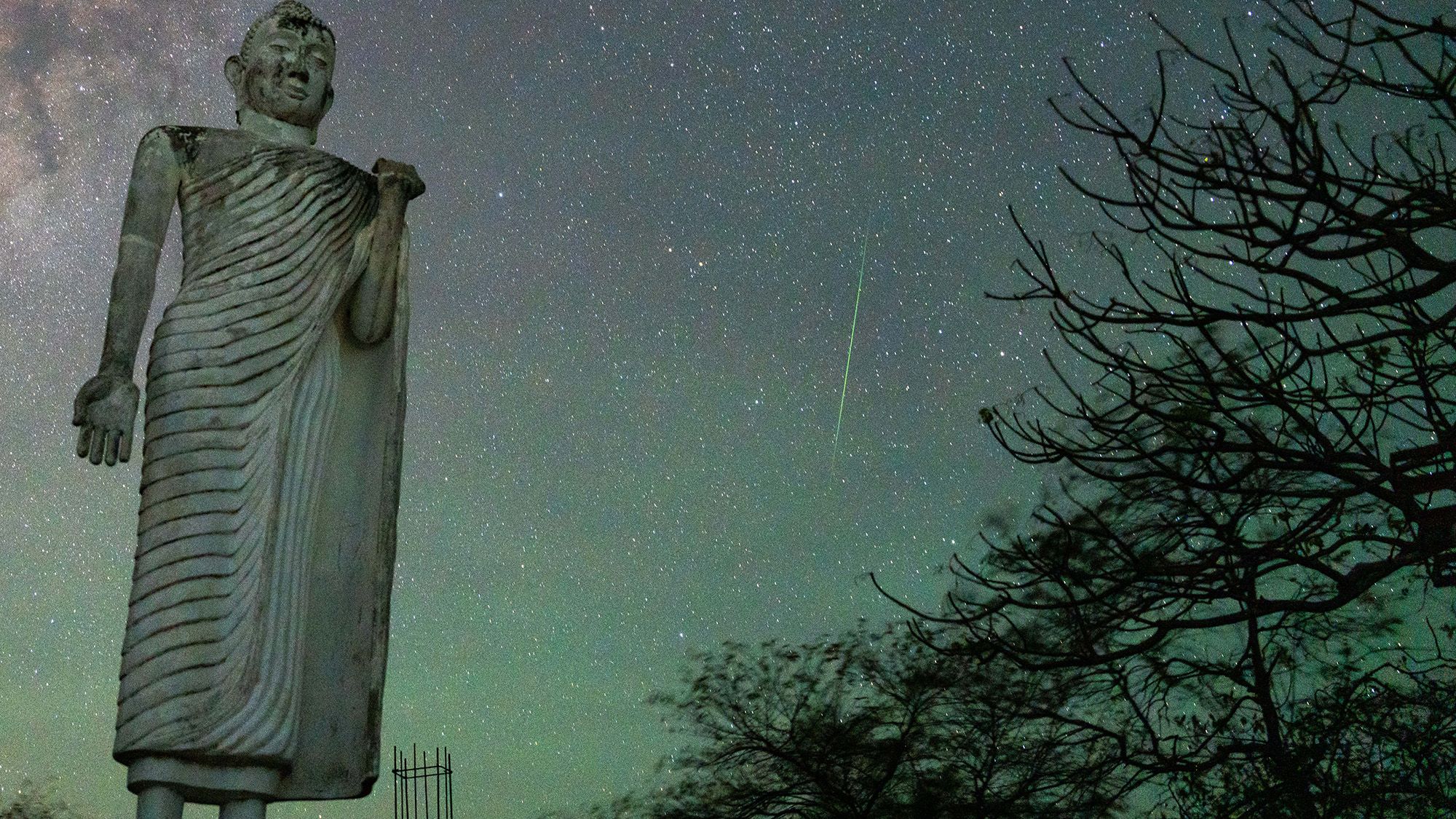
Two meteor showers will peak together overnight on Thursday, July 30, into Friday, July 31 — but skywatchers should expect a moonlit challenge rather than a dazzling display.

Both the Southern Delta Aquariids and the Alpha Capricornids reach maximum activity just one night after July’s full Buck Moon, which turns full on Wednesday, July 29. According to the American Meteor Society, the moon will still be 98% full during the peaks of those meteor showers, meaning bright moonlight will wash out many of the fainter “shooting stars.”

This year, the Southern Delta Aquariids are active from July 12 to Aug. 23 and peak on the night of July 30-31. The meteor shower can result in about 25 shooting stars under ideal dark skies, but the full moon makes this year’s timing far from perfect. The Alpha Capricornids, which are active from July 3 to Aug. 15 this year, offer around five meteors per hour on the same peak night. That’s not many, but the Alpha Capricornid meteor shower is known for bright fireballs — space rocks that shine brightly, and sometimes colorfully, as they catch fire during the plunge through Earth’s atmosphere.

Latest Videos FromLive Science

From North America, the moon will appear bright for much of the night around the meteor showers’ peak. A nearly full moon does not stop meteors from occurring, but it brightens the sky enough to hide the faintest streaks. That’s particularly important for the Southern Delta Aquariids, which can be faint and typically lack fireballs, according to the American Meteor Society. Even still, the overlapping showers make a great night for practicing your meteor shower photography or for taking pictures of the moon.

The best time to try watching will be between midnight and dawn, when the radiant — the point from which the meteors seem to emanate — of the Southern Delta Aquariids, the constellation Aquarius, is highest in the southern sky. Observers in the southern U.S., Mexico and the Caribbean will be better placed than those farther north because Aquarius climbs higher at lower latitudes.


You may like

For the best chance of seeing some shooting stars, keep the moon behind you or blocked by a building, tree or hill, and look toward the darkest part of the sky. Meteor showers are always best viewed with the naked eye.

If you’re clouded out — or mooned out — during the July meteor peaks, don’t worry, as you’ll get a better opportunity in August. The Perseid meteor shower will peak overnight on Aug. 12-13, just after the Aug. 12 new moon, when skies will be moonless for the meteor shower’s peak rate of 100 meteors per hour.

Get the world’s most fascinating discoveries delivered straight to your inbox.

That same new moon will also cause a total solar eclipse to be visible along a narrow path through eastern Greenland, western Iceland and northern Spain. A partial solar eclipse will be seen from parts of Canada and the northeastern U.S. (Remember to protect your eyes with proper solar eclipse glasses at all times during the partial phases.)

The combination of a solar eclipse and the peak of a major meteor shower will make Aug. 12-13 potentially one of the most exciting days of the year for skywatchers.

Source link

Share. Facebook Twitter Pinterest LinkedIn Tumblr Email
Previous ArticleHow to watch ‘Air Jaws: Red, White and Breach’ from anywhere
Next Article Science word of the day: Cenozoic
Editor
  • Website

Related Posts

Lifestyle

Lemur used in ‘lemur yoga’ session dies of human herpesvirus, study finds

August 15, 2026
Lifestyle

‘A fine line between reducing stigma and trivialising conditions’: Social media, self-diagnosis and the glamorization of ADHD

August 15, 2026
Lifestyle

New 2D memory device stores data on just a single electron

August 15, 2026
Add A Comment

Comments are closed.

Categories
  • Entertainment
  • Lifestyle
  • News
  • Sports
  • Tech
  • Travel
Recent Posts
  • Lemur used in ‘lemur yoga’ session dies of human herpesvirus, study finds
  • ‘A fine line between reducing stigma and trivialising conditions’: Social media, self-diagnosis and the glamorization of ADHD
  • New 2D memory device stores data on just a single electron
  • Before we ban kids from social media completely, here’s what we should try first | Jonathan Bellack and Mariana Olaizola Rosenblat
  • Scientists uncover a better way to beat ‘the bends’ — using deep-diving pigs
calendar
August 2026
M T W T F S S
 12
3456789
10111213141516
17181920212223
24252627282930
31  
« Jul    
Recent Posts
  • Lemur used in ‘lemur yoga’ session dies of human herpesvirus, study finds
  • ‘A fine line between reducing stigma and trivialising conditions’: Social media, self-diagnosis and the glamorization of ADHD
  • New 2D memory device stores data on just a single electron
About

Welcome to Baynard Media, your trusted source for a diverse range of news and insights. We are committed to delivering timely, reliable, and thought-provoking content that keeps you informed
and inspired

Categories
  • Entertainment
  • Lifestyle
  • News
  • Sports
  • Tech
  • Travel
Facebook X (Twitter) Pinterest WhatsApp
  • Contact Us
  • About Us
  • Privacy Policy
  • Disclaimer
  • UNSUBSCRIBE
© 2026 copyrights reserved

Type above and press Enter to search. Press Esc to cancel.