Close Menu
  • Home
  • UNSUBSCRIBE
  • News
  • Lifestyle
  • Tech
  • Entertainment
  • Sports
  • Travel
Facebook X (Twitter) WhatsApp
Trending
  • New AI astrophysics algorithms are 95% better at showing how the universe changes over time
  • Diagnostic dilemma: Rectal exam stabilized man’s irregular heartbeat
  • What’s the difference between a lion and a tiger?
  • Yellowstone’s volcano may be fueled in a very different way than we thought
  • Scientists identify 10,000 ‘impossible’ exoplanet candidates, potentially tripling the number of known alien worlds
  • Science news this week: Risky, lifesaving surgery performed on a baby in the womb, AI agent deletes a company database in 9 seconds, and the universe may end much sooner than expected
  • Breakthrough in experimental light-powered quantum computers could mean scaling them up is now far more viable
  • Mount Etna is like no other volcano on Earth, representing ‘a new type of volcanism,’ new research reveals
Facebook X (Twitter) WhatsApp
Baynard Media
  • Home
  • UNSUBSCRIBE
  • News
  • Lifestyle
  • Tech
  • Entertainment
  • Sports
  • Travel
Baynard Media
Home»Lifestyle»Tristan da Cunha: The most remote inhabited island on Earth, forged from a supercontinent breakup
Lifestyle

Tristan da Cunha: The most remote inhabited island on Earth, forged from a supercontinent breakup

EditorBy EditorJanuary 3, 2025No Comments3 Mins Read
Share Facebook Twitter Pinterest LinkedIn Tumblr Reddit Telegram Email
Share
Facebook Twitter LinkedIn Pinterest Email

QUICK FACTS

Name: Tristan da Cunha

Location: South Atlantic Ocean

Coordinates: -37.10837644054316, -12.287346670465638

Why it’s incredible: The group of islands is the most remote inhabited location on Earth.

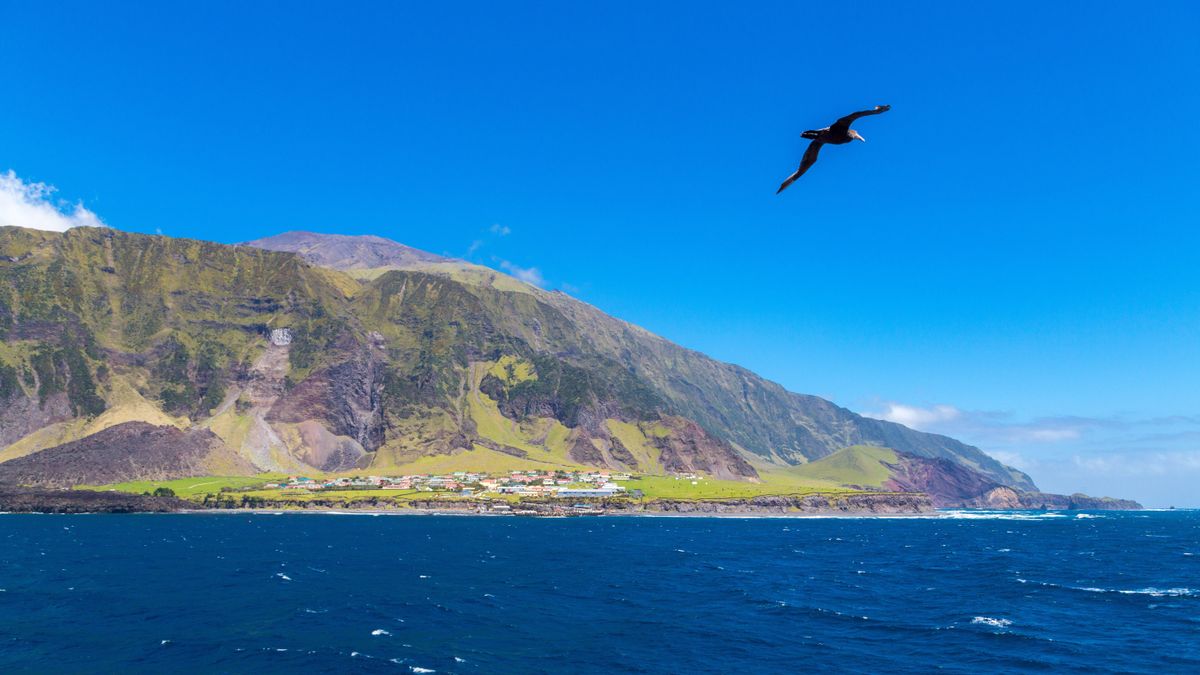
Tristan da Cunha is a group of islands in the South Atlantic Ocean that is home to the world’s most isolated human settlement. Around 250 people holding British Overseas Territories citizenship live on the archipelago’s only inhabited island, also called Tristan da Cunha, in a community known as Edinburgh of the Seven Seas.

Tristan da Cunha, or Tristan for short, comprises six volcanic islands that sit 1,500 miles (2,400 kilometers) southwest of St. Helena island, another British outpost in the Atlantic. Together with Ascension Island, Tristan and St. Helena form a British Overseas Territory that spans more than 2,000 miles (3,250 km) of the Atlantic Ocean, from a point west off the coast of Gabon in Africa to a point farther south than the tip of South Africa.

Related: Perilous expedition to uninhabited island in South Atlantic confirms existence of world’s 8th lava lake

The main island stretches 7.5 miles (12 km) across and its cone-shaped volcano, called Queen Mary’s Peak, rises 6,765 feet (2,062 meters) above sea level. The volcano’s central crater is filled with a heart-shaped lake that freezes over in the winter and thaws in the summer, providing a cold bath for hikers that clamber up to the peak. The island is also a wildlife-watcher’s paradise, with seals, albatrosses and northern rockhopper penguins (Eudyptes moseleyi) breeding on its shores.

Tristan is accessible only by a six-day boat journey from South Africa, and most of its inhabitants are farmers, according to the BBC.

Evidence of past geologic activity deep in Earth’s mantle

A sign on Tristan da Cunha that reads: Welcome to the remotest island. There is an illustration of the island on the sign.

A sign on Tristan da Cunha acknowledging the island’s remoteness. (Image credit: David Forman/Getty Images)

Tristan’s six islands are evidence of past geologic activity deep in Earth’s mantle, each formed from peaks in the oceanic crust. They are located about 250 miles (400 km) east of the mid-Atlantic ridge, where the North and South American plates meet those of Eurasia and Africa. Over time, these plates have slowly moved apart, allowing molten rocks to bubble up into the gaps between them. Tristan’s islands are not connected to the ridge, but they similarly formed as a result of magma gushing from deep within Earth’s layers.

The archipelago was forged eons ago from what scientists call a hotspot — a large plume of hot material that rises from deep within the mantle, Earth’s middle layer, and forms volcanoes in the crust above it. The hotspot in question, known as the Walvis Ridge Hotspot, formed between South America and Africa roughly 132 million years ago, when these continents were breaking up after millions of years spent locked together in the ancient supercontinent Gondwana.

Get the world’s most fascinating discoveries delivered straight to your inbox.

As the continents tore apart and Earth’s crust began grinding westward over the Walvis Ridge Hotspot, volcanoes developed one by one in a horizontal line beneath the opening Atlantic Ocean. These volcanoes grew to become islands and eventually went extinct as they drifted farther away from their source of magma (the hotspot).

The main island of Tristan da Cunha is the second-farthest east of the archipelago, meaning it went extinct shortly after four of the islands — Inaccessible, Nightingale, Middle and Stoltenhoff islands — and shortly before the farthest-east island of Gough.


Discover more incredible places, where we highlight the fantastic history and science behind some of the most dramatic landscapes on Earth.

Source link

Share. Facebook Twitter Pinterest LinkedIn Tumblr Email
Previous ArticleBest earbuds deal: Save $40 on Beats Fit Pro
Next Article Man Utd transfer news: Ruben Amorim gives Amad Diallo and Harry Maguire contract updates | Football News
Editor
  • Website

Related Posts

Lifestyle

New AI astrophysics algorithms are 95% better at showing how the universe changes over time

May 3, 2026
Lifestyle

Diagnostic dilemma: Rectal exam stabilized man’s irregular heartbeat

May 3, 2026
Lifestyle

What’s the difference between a lion and a tiger?

May 2, 2026
Add A Comment

Comments are closed.

Categories
  • Entertainment
  • Lifestyle
  • News
  • Sports
  • Tech
  • Travel
Recent Posts
  • New AI astrophysics algorithms are 95% better at showing how the universe changes over time
  • Diagnostic dilemma: Rectal exam stabilized man’s irregular heartbeat
  • What’s the difference between a lion and a tiger?
  • Yellowstone’s volcano may be fueled in a very different way than we thought
  • Scientists identify 10,000 ‘impossible’ exoplanet candidates, potentially tripling the number of known alien worlds
calendar
May 2026
M T W T F S S
 123
45678910
11121314151617
18192021222324
25262728293031
« Apr    
Recent Posts
  • New AI astrophysics algorithms are 95% better at showing how the universe changes over time
  • Diagnostic dilemma: Rectal exam stabilized man’s irregular heartbeat
  • What’s the difference between a lion and a tiger?
About

Welcome to Baynard Media, your trusted source for a diverse range of news and insights. We are committed to delivering timely, reliable, and thought-provoking content that keeps you informed
and inspired

Categories
  • Entertainment
  • Lifestyle
  • News
  • Sports
  • Tech
  • Travel
Facebook X (Twitter) Pinterest WhatsApp
  • Contact Us
  • About Us
  • Privacy Policy
  • Disclaimer
  • UNSUBSCRIBE
© 2026 copyrights reserved

Type above and press Enter to search. Press Esc to cancel.