Close Menu
  • Home
  • UNSUBSCRIBE
  • News
  • Lifestyle
  • Tech
  • Entertainment
  • Sports
  • Travel
Facebook X (Twitter) WhatsApp
Trending
  • Withings ScanWatch 2 review: Style meets next-level health monitoring
  • AI Chatbots are turbo-charging violence against women and girls: We urgently need to regulate them | Yvonne McDermott Rees
  • ‘The biggest El Niño event since the 1870s’: ‘Super’ El Niño is now the most likely scenario by the end of this year ‪—‬ and the humanitarian cost could be huge
  • Antarctica’s sudden sea ice loss is one of the most extreme and confusing events in the modern climate record. Scientists now know why it’s happening.
  • ‘I heard gasps’: Artemis II astronauts reveal inside story of their mind-bending solar eclipse
  • A pill can stop people from developing COVID after being exposed to the virus, trial finds
  • ‘There are 4 people in those pixels’: Earth-based telescope snapped Artemis II crew orbiting the moon
  • High-status Roman woman was buried in a lead coffin with jet hairpins and exotic resins, archaeologists find
Facebook X (Twitter) WhatsApp
Baynard Media
  • Home
  • UNSUBSCRIBE
  • News
  • Lifestyle
  • Tech
  • Entertainment
  • Sports
  • Travel
Baynard Media
Home»Lifestyle»Full moons of 2025: Names, dates and everything you need to know
Lifestyle

Full moons of 2025: Names, dates and everything you need to know

EditorBy EditorJanuary 1, 2025No Comments4 Mins Read
Share Facebook Twitter Pinterest LinkedIn Tumblr Reddit Telegram Email
Share
Facebook Twitter LinkedIn Pinterest Email

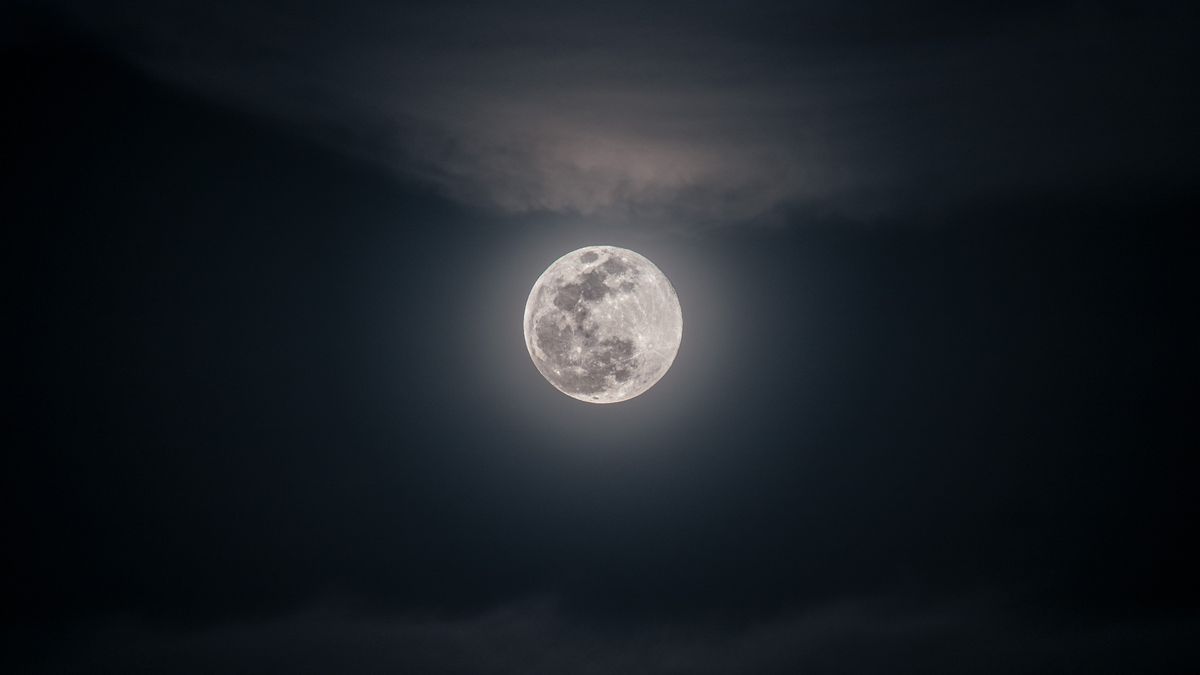
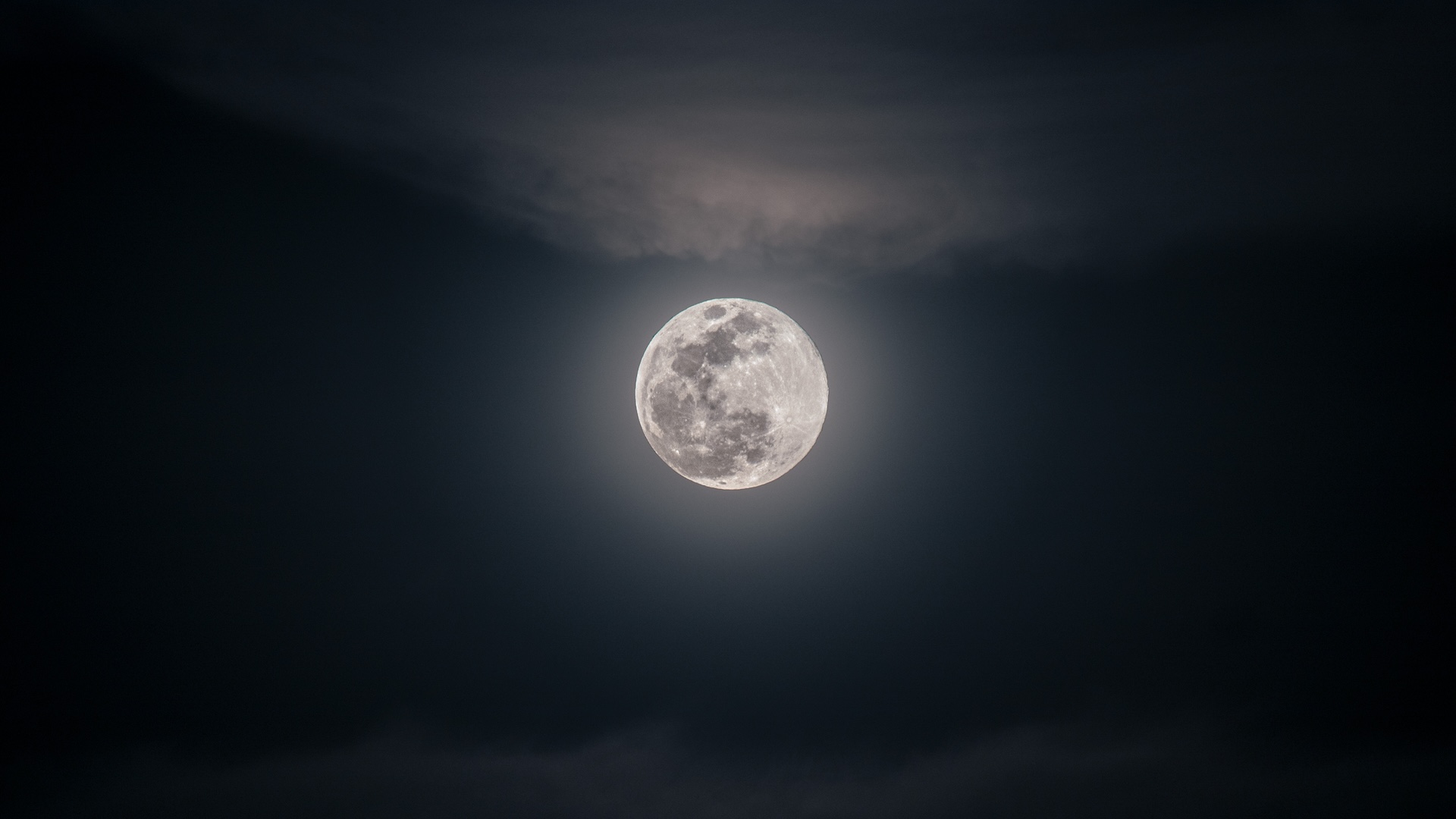
In 2025, you’ll have the chance to see 12 full moons, including three supermoons and two lunar eclipses. Although experienced moon gazers know that the night of the full moon is not the best for observing the lunar surface (even with a good pair of binoculars), the full moon rising as an orb at dusk is a celestial view that’s hard to beat.

Each full moon has a unique name that reflects its agricultural past. Besides the usual collection of full moons in 2025, there will also be three supermoons (when the moon’s monthly perigee, or closest point to Earth, coincides with its full phase) and two total lunar eclipses, the first since 2022.

The moon will be big news in late 2025, with NASA targeting September 2025 to launch its Artemis II mission. The first crewed Artemis mission to the moon since 1972 will send four astronauts on a 10-day mission to orbit and travel beyond the moon. The following mission, Artemis III, will ferry two astronauts to the lunar surface. That’s scheduled for September 2026.

Full moon guide: When’s the next full moon?

Here are all of the full moon dates and times for 2025, according to timeanddate.com, including the most commonly used names in North America:

  • Monday, Jan. 13: Wolf Moon (22:26 UTC/5:26 p.m. EST)
  • Wednesday, Feb. 12: Snow Moon (13:52 UTC/8:52 a.m. EST)
  • Friday, March 14: Worm Moon (6:54 UTC/2:54 a.m. EDT) — also a total lunar eclipse
  • Saturday, April 12: Pink Moon (0:22 UTC/8:22 p.m. EDT)
  • Monday, May 12: Flower Moon (16:56 UTC/12:56 p.m. EDT)
  • Wednesday, June 11: Strawberry Moon (7:45 UTC/3:45 a.m. EDT)
  • Thursday, July 10: Buck Moon (20:39 UTC/4:39 p.m. EDT)
  • Saturday, Aug. 9 Sturgeon Moon (7:58 UTC/3:58 a.m. EDT)
  • Sunday, Sept. 7: Corn Moon (18:12 UTC/2:12 p.m. EDT) — also a total lunar eclipse
  • Monday, Oct. 6: Harvest Moon (3:50 UTC/11:50 p.m. EDT) — also a supermoon
  • Wednesday, Nov. 5: Beaver Moon (13:21 UTC/8:21 a.m. EST) — also a supermoon
  • Thursday, Dec. 4: Cold Moon (23:15 UTC/6:15 p.m. EST) — also a supermoon

Lunar eclipses 2025

The two lunar eclipses in 2025 will be hugely impressive events. The first, on March 13 to 14, will be a total lunar eclipse, during which the full Worm Moon will drift through Earth’s inner umbral shadow and turn a reddish-orange color for 65 minutes from 2:26 to 3:31 a.m. EDT, according to Timeanddate.com. It will be best seen from North and South America.

The second, on Sept. 7 to 8, will be another total lunar eclipse, during which the Harvest Moon will enter Earth’s inner umbral shadow and turn a reddish-orange color for 82 minutes from 1:30 to 2:52 a.m. EDT, according to Timeanddate.com. It will be best seen from Asia and Australia.

What are the moon’s phases?

Scientists typically break the moon’s 29.5-day cycle into 8 phases, determined by the relative positions of the moon, Earth and sun.

Get the world’s most fascinating discoveries delivered straight to your inbox.

The “new moon” begins the cycle when the moon is exactly between Earth and the sun. We cannot see the moon when it’s new; no sunlight is reflected from its Earth-facing side. A new moon is the only time when a solar eclipse is possible. Two partial solar eclipses will occur in 2025: on March 29 and Sept. 21.

As more sunlight hits the moon’s Earth-facing side, we say the moon is waxing. The next phase of the moon is called a waxing crescent, followed by the “first quarter” phase. Half of the moon’s visible surface appears illuminated during the first quarter.

Next comes the waxing gibbous moon, which is partway between a first quarter and a full moon. Halfway through the lunar cycle, the full moon rises and the moon shines bright and large in the sky. During this phase, the moon and sun are on opposite sides of Earth, and the moon’s entire Earth-facing side is illuminated.

After the full moon, the waning cycle begins — first with the waning gibbous phase, then a “last quarter moon” and finally a waning crescent. After almost 30 days, the moon becomes “new” again, and the cycle repeats.

Originally published on Live Science.

Source link

Share. Facebook Twitter Pinterest LinkedIn Tumblr Email
Previous ArticleEFL latest: Robins takes charge at Stoke City
Next Article Genius Products Under $10 That Will Make Your Life so Much Easier
Editor
  • Website

Related Posts

Lifestyle

Withings ScanWatch 2 review: Style meets next-level health monitoring

May 15, 2026
Lifestyle

AI Chatbots are turbo-charging violence against women and girls: We urgently need to regulate them | Yvonne McDermott Rees

May 15, 2026
Lifestyle

‘The biggest El Niño event since the 1870s’: ‘Super’ El Niño is now the most likely scenario by the end of this year ‪—‬ and the humanitarian cost could be huge

May 15, 2026
Add A Comment

Comments are closed.

Categories
  • Entertainment
  • Lifestyle
  • News
  • Sports
  • Tech
  • Travel
Recent Posts
  • Withings ScanWatch 2 review: Style meets next-level health monitoring
  • AI Chatbots are turbo-charging violence against women and girls: We urgently need to regulate them | Yvonne McDermott Rees
  • ‘The biggest El Niño event since the 1870s’: ‘Super’ El Niño is now the most likely scenario by the end of this year ‪—‬ and the humanitarian cost could be huge
  • Antarctica’s sudden sea ice loss is one of the most extreme and confusing events in the modern climate record. Scientists now know why it’s happening.
  • ‘I heard gasps’: Artemis II astronauts reveal inside story of their mind-bending solar eclipse
calendar
May 2026
M T W T F S S
 123
45678910
11121314151617
18192021222324
25262728293031
« Apr    
Recent Posts
  • Withings ScanWatch 2 review: Style meets next-level health monitoring
  • AI Chatbots are turbo-charging violence against women and girls: We urgently need to regulate them | Yvonne McDermott Rees
  • ‘The biggest El Niño event since the 1870s’: ‘Super’ El Niño is now the most likely scenario by the end of this year ‪—‬ and the humanitarian cost could be huge
About

Welcome to Baynard Media, your trusted source for a diverse range of news and insights. We are committed to delivering timely, reliable, and thought-provoking content that keeps you informed
and inspired

Categories
  • Entertainment
  • Lifestyle
  • News
  • Sports
  • Tech
  • Travel
Facebook X (Twitter) Pinterest WhatsApp
  • Contact Us
  • About Us
  • Privacy Policy
  • Disclaimer
  • UNSUBSCRIBE
© 2026 copyrights reserved

Type above and press Enter to search. Press Esc to cancel.