Close Menu
  • Home
  • UNSUBSCRIBE
  • News
  • Lifestyle
  • Tech
  • Entertainment
  • Sports
  • Travel
Facebook X (Twitter) WhatsApp
Trending
  • Complete skin of an adult horse found with 10th-century woman and newborn in rare Siberian burial
  • ‘Geminid Symphony’ and ‘Galactic Gandalf’: See the breathtaking views of our home galaxy from the 2026 Milky Way Photographer of the Year contest
  • Japan’s ‘crawling’ moon robot LEV-2 passed its historic first lunar mission with flying colors
  • Artificial turf contains 400 chemicals tied to cancer and hormone disruption. But is it unsafe?
  • ‘Just defies belief’: 5 million-year-old whale graveyard stretches for 750 miles in the Indian Ocean
  • New blood tests look for many cancers, aiming to catch them early. But do they actually work?
  • In a first, scientists translated an entire viral genome so a quantum computer could read and analyze it
  • Diagnostic dilemma: Man who donated his body after death had rare ‘triple penis’
Facebook X (Twitter) WhatsApp
Baynard Media
  • Home
  • UNSUBSCRIBE
  • News
  • Lifestyle
  • Tech
  • Entertainment
  • Sports
  • Travel
Baynard Media
Home»Lifestyle»800-year-old notebook with ‘rather unpleasant odor’ found in medieval German toilet
Lifestyle

800-year-old notebook with ‘rather unpleasant odor’ found in medieval German toilet

EditorBy EditorMay 20, 2026No Comments4 Mins Read
Share Facebook Twitter Pinterest LinkedIn Tumblr Reddit Telegram Email
Share
Facebook Twitter LinkedIn Pinterest Email

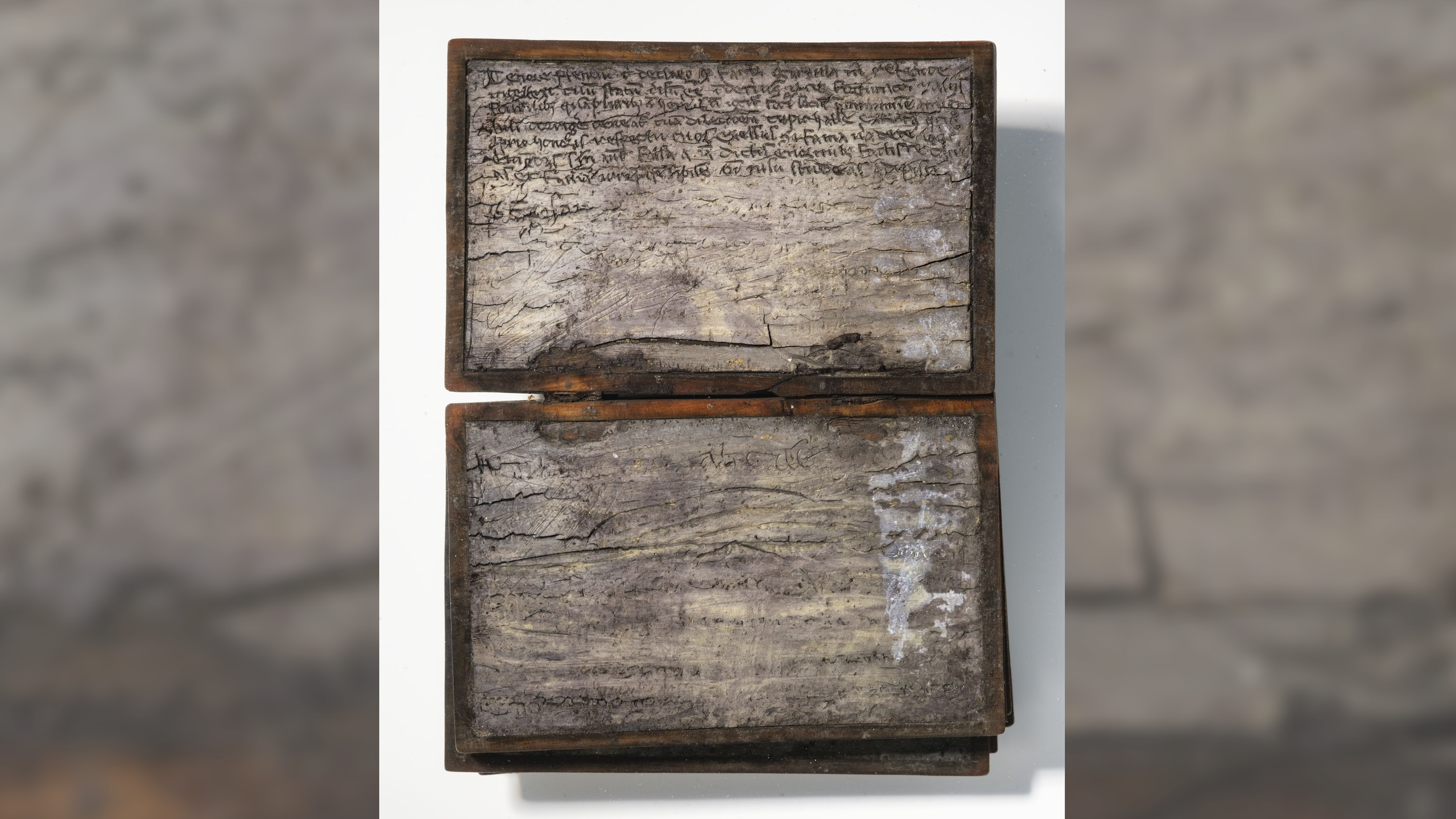
Archaeologists have excavated a perfectly preserved wood-and-wax notebook in a leather satchel from a medieval latrine in Germany. The 10-page notebook, which features Latin cursive writing, was likely dropped by a medieval merchant nearly 800 years ago — possibly while he was wiping with silk toilet paper.

The book and satchel were discovered in the northern German city of Paderborn during construction for a new building, according to a May 12 translated statement from the Regional Association of Westphalia-Lippe (LWL). Archaeologists excavated five medieval latrines that were sealed and airtight, which preserved a number of organic artifacts that would have decomposed otherwise.

During the routine cleaning of the items in the lab, experts realized that an inconspicuous clod of earth was actually a small leather case with a lid.


You may like

“Even after so many centuries in the ground, the latrine find still had a rather unpleasant odor,” Susanne Bretzel, a conservator at LWL, said in the statement.

The small notepad measures about 3.4 by 2.2 inches (8.6 by 5.5 centimeters) and was kept in a slightly larger leather case decorated with a fleur-de-lis pattern. Eight pages of the wooden notebook are double-sided, and two are single-sided; all contained wax that could be written in with a stylus.

Inside the notebook, experts found numerous lines of cursive Latin text, some of which had been written over other lines and in different directions, making it difficult to translate.

“Individual words are recognizable, but the transcription will take some time, as some words may have been corrupted by incorrect spellings,” Barbara Rüschoff-Parzinger, an archaeologist and head of cultural affairs at LWL, said in the statement. Based on the characteristics of the script, the book was used between the 13th and end of the 14th centuries.

Get the world’s most fascinating discoveries delivered straight to your inbox.

a leather bag with a fleur-de-lis stamped design

The tablet was discovered in a leather satchel with a fleur-de-lis decoration.

(Image credit: S. Bretzel/Landschaftsverband Westfalen-Lippe (LWL))

The leather case is also being studied. The embossed fleur-de-lis decoration may suggest the book was a prized possession of an elite member of society, as the lily was a symbol of royal power and divine favor in the Middle Ages, according to the statement.

But the notebook’s owner is still a mystery. “A Paderborn merchant may have been the author, jotting down business transactions and recording his thoughts,” Sveva Gai, the LWL city archaeologist in Paderborn, said in the statement. Unlike most people in this time period, merchants were educated and could read and write, making them among the elite of society, Gai said.

Other artifacts found in the latrines included barrels, a knife, stoneware pottery, pieces of baskets and fragments of silk fabric. These finds help confirm the 13th-to-14th-century date of the book and the elite status of the book’s author.


What to read next

a light-skinned person with clear-gloved hands holds a small wooden tablet with wax inside

Conservator Susanne Bretzel holds the small wax booklet.

(Image credit: E. Daood/Landschaftsverband Westfalen-Lippe (LWL))

“The silk fabric remnants from the latrine were partially torn into rectangular pieces, some extremely finely woven and decorated,” Bretzel said. “Perhaps this was used as toilet paper after the once-elegant fabric was to be discarded.”

Further research may be able to identify the bumbling merchant who accidentally jettisoned his notebook into the toilet.

“As soon as this latrine can be assigned to a specific plot of land, archival research could be used to try to identify the residents of that plot. Then, in the best-case scenario, it would be possible to link the wax tablet to the name of a specific person,” Gai said.

The entire conservation process could take up to a year, Bretzel said, after which the notebook and case will be exhibited at the LWL Museum in Paderborn.


See if you know what these mysterious artifacts are with our archaeological fragments quiz!

Source link

Share. Facebook Twitter Pinterest LinkedIn Tumblr Email
Previous ArticleCelestron AstroMaster LT 70AZ review
Next Article The Appalachian Mountains hold enough lithium to make 500 billion cellphones, researchers discover
Editor
  • Website

Related Posts

Lifestyle

Complete skin of an adult horse found with 10th-century woman and newborn in rare Siberian burial

June 11, 2026
Lifestyle

‘Geminid Symphony’ and ‘Galactic Gandalf’: See the breathtaking views of our home galaxy from the 2026 Milky Way Photographer of the Year contest

June 11, 2026
Lifestyle

Japan’s ‘crawling’ moon robot LEV-2 passed its historic first lunar mission with flying colors

June 11, 2026
Add A Comment

Comments are closed.

Categories
  • Entertainment
  • Lifestyle
  • News
  • Sports
  • Tech
  • Travel
Recent Posts
  • Complete skin of an adult horse found with 10th-century woman and newborn in rare Siberian burial
  • ‘Geminid Symphony’ and ‘Galactic Gandalf’: See the breathtaking views of our home galaxy from the 2026 Milky Way Photographer of the Year contest
  • Japan’s ‘crawling’ moon robot LEV-2 passed its historic first lunar mission with flying colors
  • Artificial turf contains 400 chemicals tied to cancer and hormone disruption. But is it unsafe?
  • ‘Just defies belief’: 5 million-year-old whale graveyard stretches for 750 miles in the Indian Ocean
calendar
June 2026
M T W T F S S
1234567
891011121314
15161718192021
22232425262728
2930  
« May    
Recent Posts
  • Complete skin of an adult horse found with 10th-century woman and newborn in rare Siberian burial
  • ‘Geminid Symphony’ and ‘Galactic Gandalf’: See the breathtaking views of our home galaxy from the 2026 Milky Way Photographer of the Year contest
  • Japan’s ‘crawling’ moon robot LEV-2 passed its historic first lunar mission with flying colors
About

Welcome to Baynard Media, your trusted source for a diverse range of news and insights. We are committed to delivering timely, reliable, and thought-provoking content that keeps you informed
and inspired

Categories
  • Entertainment
  • Lifestyle
  • News
  • Sports
  • Tech
  • Travel
Facebook X (Twitter) Pinterest WhatsApp
  • Contact Us
  • About Us
  • Privacy Policy
  • Disclaimer
  • UNSUBSCRIBE
© 2026 copyrights reserved

Type above and press Enter to search. Press Esc to cancel.