Close Menu
  • Home
  • UNSUBSCRIBE
  • News
  • Lifestyle
  • Tech
  • Entertainment
  • Sports
  • Travel
Facebook X (Twitter) WhatsApp
Trending
  • New robotic heart mimics common, mysterious condition to help researchers study it
  • Canon EOS R6 III review: A wildlife wonder
  • Medieval babies and adults buried together in Sweden were not related, archaeologists discover — raising big questions about early Christian burial practices
  • NASA is creating a fifth state of matter on the ISS, thanks to an upgrade to a mini-fridge-sized quantum lab
  • New sodium metal battery design charges in just 4 minutes and retains its capacity for years
  • Quantum computing wielded to create extremely rare material critical to nuclear fusion
  • Scientists build tiny ‘diving suit’ for cockroaches, turning them into search-and-rescue cyborgs
  • Physicists develop the first working model of quantum mechanics using only ‘real’ numbers
Facebook X (Twitter) WhatsApp
Baynard Media
  • Home
  • UNSUBSCRIBE
  • News
  • Lifestyle
  • Tech
  • Entertainment
  • Sports
  • Travel
Baynard Media
Home»Lifestyle»340-million-year-old ‘nail tooth’ shark found deep inside Mammoth Cave in Kentucky
Lifestyle

340-million-year-old ‘nail tooth’ shark found deep inside Mammoth Cave in Kentucky

EditorBy EditorMarch 12, 2025No Comments3 Mins Read
Share Facebook Twitter Pinterest LinkedIn Tumblr Reddit Telegram Email
Share
Facebook Twitter LinkedIn Pinterest Email

Researchers collecting fossils deep inside Kentucky’s Mammoth Cave have uncovered the remains of a never-before-seen species — an absolutely tiny ancient shark with nail-like teeth.

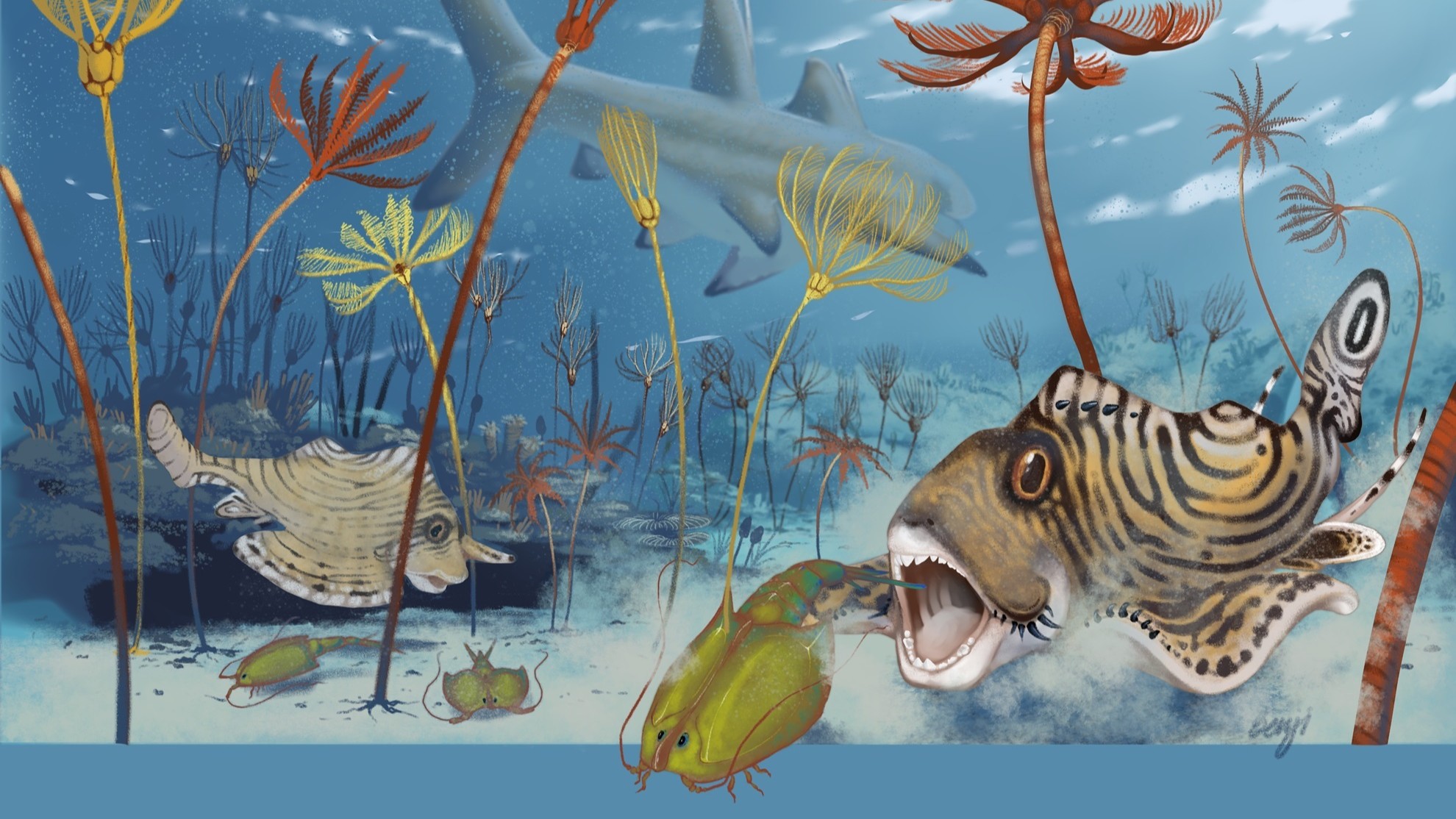
The newfound species is called Clavusodens mcginnisi, or McGinnis’ nail tooth. The animal lived 340 million years ago and belonged to a group of sharks known as obruchevodid petalodonts, or “chipmunk sharks” because of their tiny size and unusual teeth.

These sharks grew to just 3 to 4 inches (7.5 to 10 centimeters) long and fed on crustaceans, worms and other prey on the seafloor, according to a statement released by the National Park Service (NPS). It’s thought their tiny size helped them avoid large predators while foraging.

Researchers unveiled McGinnis’ nail tooth in a study published Jan. 24 in the Journal of Paleontology. The species name is named after David McGinnis, a retired National Park Service superintendent, and their teeth, which resemble old iron nails.

Related: 325 million-year-old shark graveyard discovered deep within Mammoth Cave harbors new fossilized species

Mammoth cave

A team of researchers plucked the fossils out of rocks inside Mammoth Cave, the longest cave system in the world. Mammoth Cave is a treasure trove for ancient fish fossils, with more than 70 different species identified within its walls, according to a 2024 study published in the journal Parks Stewardship Forum.

Underground rivers and streams forged the cave’s passages, which are made up of rocks that have preserved marine sediment from the Carboniferous period (358.9 million to 298.9 million years ago). The cave has given researchers a unique window inside these rocks, and therefore the marine environments they preserve, according to the 2024 study.

Get the world’s most fascinating discoveries delivered straight to your inbox.

Researchers have been documenting vertebrate fossils in Mammoth Cave since 2019. The work is challenging because of the cave’s often cramped conditions and limited space to move equipment in and out.

“Many of these sites have low ceilings requiring crawling for long distances on hands and knees, and at times belly crawling,” the researchers wrote in the new study. “The fish fossils are frequently encountered in the cave ceilings or walls.”

The newly discovered fossils came out of the Ste. Genevieve rock formation and date back to 330.9 million to 323.2 million years ago. The fossils are the oldest obruchevodid petalodonts discovered so far, according to the study.

Researchers suspect that these ancient sharks may have lived in reef-like systems filled with marine invertebrates called crinoids, or sea lilies, that attached themselves to the sea floor like plants. However, that assessment remains speculative until researchers carry out more studies on the ancient fish and their habitat, according to the study.

Discoveries like McGinnis’ nail tooth enable researchers to learn more about long-extinct sharks and the ecosystems they inhabited.

“The fossil discoveries in Mammoth Cave continue to reveal a wealth of new information about ancient shark species,” Barclay Trimble, the superintendent at Mammoth Cave National Park, said in the statement. “Researchers and volunteers collected samples from the main Mammoth Cave system and from smaller isolated caves throughout the park that have provided new data on previously known ancient sharks and revealed several species that are brand new to science.”

Source link

Share. Facebook Twitter Pinterest LinkedIn Tumblr Email
Previous ArticlePakistan rescues 190 hostages from hijacked train amid fighting
Next Article USDA suspends Maine university funding after Trump row over transgender athletes
Editor
  • Website

Related Posts

Lifestyle

New robotic heart mimics common, mysterious condition to help researchers study it

July 11, 2026
Lifestyle

Canon EOS R6 III review: A wildlife wonder

July 10, 2026
Lifestyle

Medieval babies and adults buried together in Sweden were not related, archaeologists discover — raising big questions about early Christian burial practices

July 10, 2026
Add A Comment

Comments are closed.

Categories
  • Entertainment
  • Lifestyle
  • News
  • Sports
  • Tech
  • Travel
Recent Posts
  • New robotic heart mimics common, mysterious condition to help researchers study it
  • Canon EOS R6 III review: A wildlife wonder
  • Medieval babies and adults buried together in Sweden were not related, archaeologists discover — raising big questions about early Christian burial practices
  • NASA is creating a fifth state of matter on the ISS, thanks to an upgrade to a mini-fridge-sized quantum lab
  • New sodium metal battery design charges in just 4 minutes and retains its capacity for years
calendar
July 2026
M T W T F S S
 12345
6789101112
13141516171819
20212223242526
2728293031  
« Jun    
Recent Posts
  • New robotic heart mimics common, mysterious condition to help researchers study it
  • Canon EOS R6 III review: A wildlife wonder
  • Medieval babies and adults buried together in Sweden were not related, archaeologists discover — raising big questions about early Christian burial practices
About

Welcome to Baynard Media, your trusted source for a diverse range of news and insights. We are committed to delivering timely, reliable, and thought-provoking content that keeps you informed
and inspired

Categories
  • Entertainment
  • Lifestyle
  • News
  • Sports
  • Tech
  • Travel
Facebook X (Twitter) Pinterest WhatsApp
  • Contact Us
  • About Us
  • Privacy Policy
  • Disclaimer
  • UNSUBSCRIBE
© 2026 copyrights reserved

Type above and press Enter to search. Press Esc to cancel.