Close Menu
  • Home
  • UNSUBSCRIBE
  • News
  • Lifestyle
  • Tech
  • Entertainment
  • Sports
  • Travel
Facebook X (Twitter) WhatsApp
Trending
  • ‘What are the odds’: Superbright comet and exploding fireball meteor form near-perfect X over European castle
  • ‘Kraken’ octopus that lived at the time of the dinosaurs was a 62-foot-long apex predator of the ocean
  • ‘A landmark moment for the field’: FDA approves first-ever gene therapy for inherited deafness
  • ‘Strong, undeniable public examples of something positive’: Astronaut Chris Hadfield on why Artemis II hit him hard, the importance of spaceflight, and why we need to send a guitar to the moon
  • Artemis II heat shield aced its blistering reentry, ghostly underwater photo reveals
  • Scientists invent artificial neurons that ‘talk’ to real brain cells, paving way to better brain implants
  • Meet AGI CPU — a specialist processor that engineers believe will power the next wave of AI
  • Earth quiz: What do you know about our planet’s most amazing features?
Facebook X (Twitter) WhatsApp
Baynard Media
  • Home
  • UNSUBSCRIBE
  • News
  • Lifestyle
  • Tech
  • Entertainment
  • Sports
  • Travel
Baynard Media
Home»Lifestyle»30,000-year-old ‘toolkit’ found in Czech Republic reveals ‘very rare’ look at Stone Age hunter-gatherer
Lifestyle

30,000-year-old ‘toolkit’ found in Czech Republic reveals ‘very rare’ look at Stone Age hunter-gatherer

EditorBy EditorSeptember 28, 2025No Comments3 Mins Read
Share Facebook Twitter Pinterest LinkedIn Tumblr Reddit Telegram Email
Share
Facebook Twitter LinkedIn Pinterest Email

Around 30,000 years ago, a hunter-gatherer left behind what may be a “personal toolkit” in what is now the Czech Republic, a new study finds.

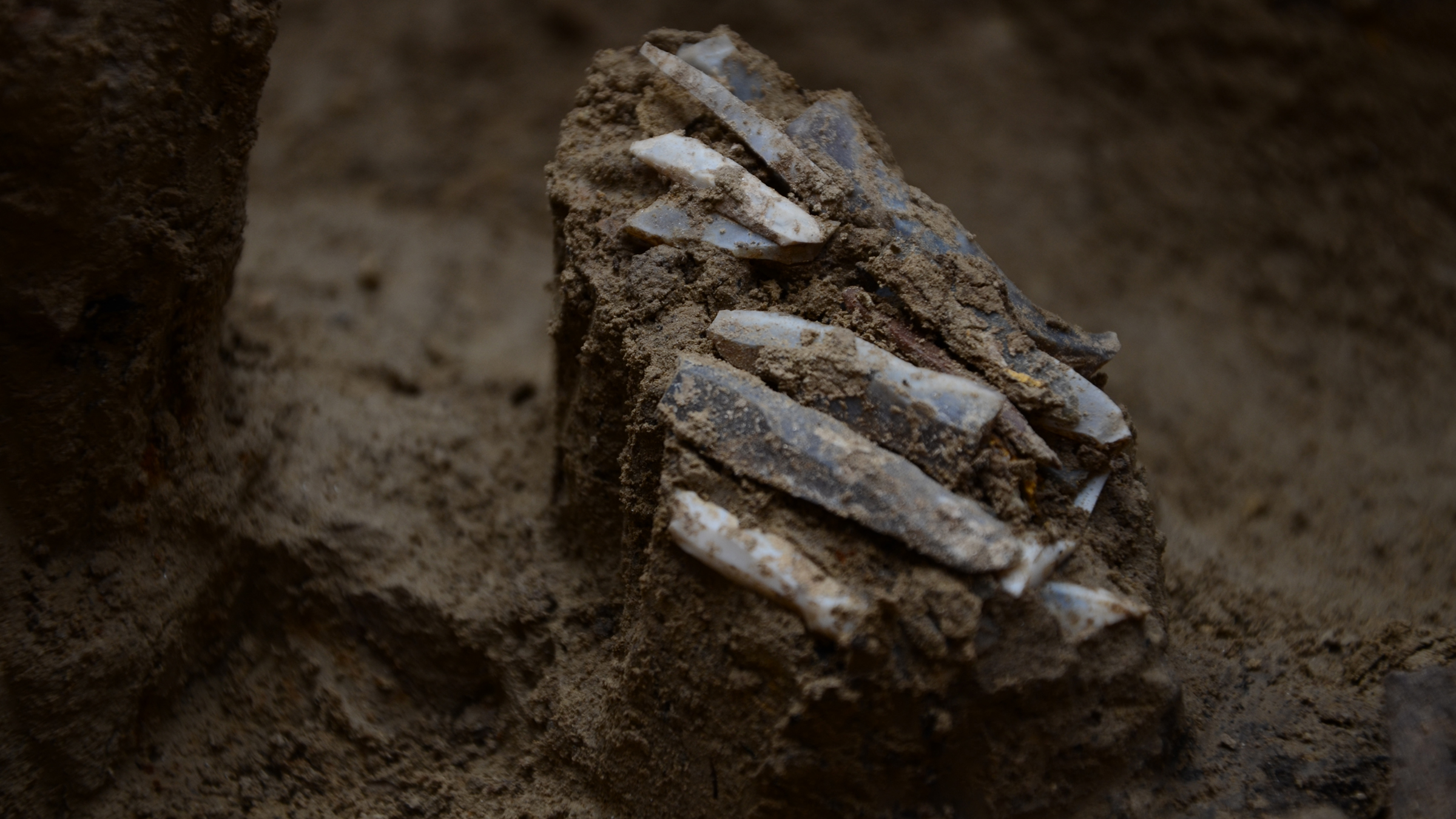
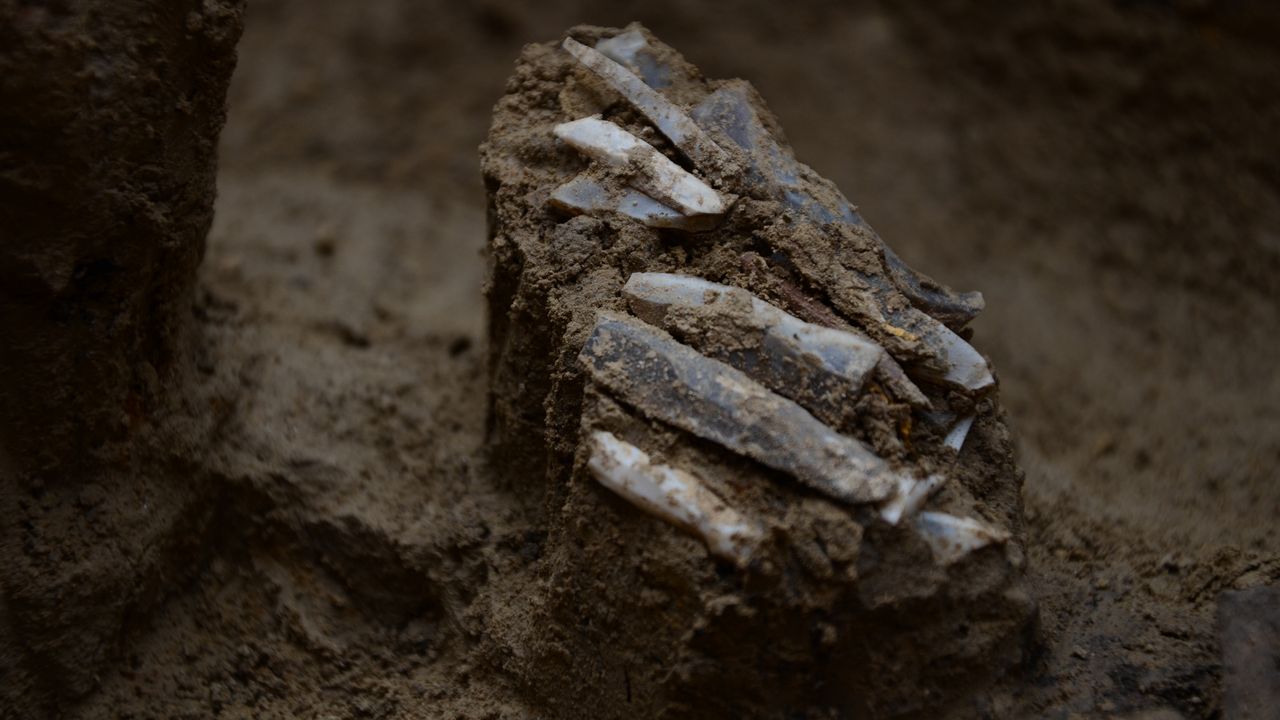
Researchers uncovered the extraordinary cluster of artifacts in 2021 during an excavation at the Paleolithic site of Milovice IV. The “kit” contains 29 stone blades and bladelets that were found clumped together. The nature of the find indicates that the tools were bundled when deposited, likely in a container or case made from a perishable material, according to the study, which was published Aug. 13 in the Journal of Paleolithic Archaeology.

This rare collection is likely the personal gear of a prehistoric person who may have used the tool kit during hunting expeditions and migratory journeys, the authors suggested. But the individual, whose sex is unknown, eventually lost or intentionally discarded the gear at a residential camp, the research team said.


You may like

The find provides a remarkable glimpse into the life of a hunter-gatherer from the Paleolithic, which spans roughly 3.3 million years ago to just over 10,000 years ago.

The artifacts likely highlight an episode in the life of one person — which is “very rare” for the Paleolithic, study first author Dominik Chlachula, a researcher at the Institute of Archaeology of the Czech Academy of Sciences, told Live Science in an email.

Moreover, the discovery may shed light on the behavior of prehistoric people during migrations or hunting trips, which did not tend to leave behind many traces in the landscape and are therefore practically invisible to archaeologists, he said.

Stone Age site

The Milovice IV site where the artifacts were found displays evidence of human activity across thousands of years of the Upper Paleolithic. But the particular archaeological layer in which the cluster was recovered represents a “relatively narrow timespan” of human occupation between roughly 30,250 and 29,550 years ago, according to the study.

Get the world’s most fascinating discoveries delivered straight to your inbox.

Evidence from the layer indicates that Paleolithic humans may have used the site to camp, produce tools and butcher animals , among other activities. But it remains unclear whether such activities occurred during a single occupation or several successive episodes.

If the artifacts from the proposed hunter’s tool kit had been found separated, they would not have stood out from the other discarded or worn-out artifacts commonly found at the Milovice IV site. “It is the context which makes them interesting,” Chlachula said.

An analysis of the tools and their traces of wear revealed that they were used in a variety of ways. While a few show tentative evidence of use as projectiles, others were likely employed for cutting, scraping and drilling. The study suggests that the tools may have been used for activities such as processing meat, animal hides and wood, according to the study.

“We can argue that the cluster is associated with tasks conducted on hunting expeditions, initial butchering of game and possibly the maintenance of weapons or exploitation of woody plant resources,” the authors wrote in the paper.

The latest finds are associated with the Gravettian prehistoric culture, which existed in Europe starting around 33,000 years ago, persisting in different variants for several thousand years. They were known for hunting mammoths, living with dogs, and likely using spear-throwers and bows.

“Their economy was based on hunting and gathering, but they developed complex cultural, technological and social behaviour with long-distance connections,” Chlachula said.


Stone Age quiz: What do you know about the Paleolithic, Mesolithic and Neolithic?

Source link

Share. Facebook Twitter Pinterest LinkedIn Tumblr Email
Previous ArticleExperts question viral TikTok trend of magnesium lotion for better sleep
Next Article Egyptian wrestler pulls 700-ton ship with his teeth
Editor
  • Website

Related Posts

Lifestyle

‘What are the odds’: Superbright comet and exploding fireball meteor form near-perfect X over European castle

April 24, 2026
Lifestyle

‘Kraken’ octopus that lived at the time of the dinosaurs was a 62-foot-long apex predator of the ocean

April 24, 2026
Lifestyle

‘A landmark moment for the field’: FDA approves first-ever gene therapy for inherited deafness

April 23, 2026
Add A Comment

Comments are closed.

Categories
  • Entertainment
  • Lifestyle
  • News
  • Sports
  • Tech
  • Travel
Recent Posts
  • ‘What are the odds’: Superbright comet and exploding fireball meteor form near-perfect X over European castle
  • ‘Kraken’ octopus that lived at the time of the dinosaurs was a 62-foot-long apex predator of the ocean
  • ‘A landmark moment for the field’: FDA approves first-ever gene therapy for inherited deafness
  • ‘Strong, undeniable public examples of something positive’: Astronaut Chris Hadfield on why Artemis II hit him hard, the importance of spaceflight, and why we need to send a guitar to the moon
  • Artemis II heat shield aced its blistering reentry, ghostly underwater photo reveals
calendar
April 2026
M T W T F S S
 12345
6789101112
13141516171819
20212223242526
27282930  
« Mar    
Recent Posts
  • ‘What are the odds’: Superbright comet and exploding fireball meteor form near-perfect X over European castle
  • ‘Kraken’ octopus that lived at the time of the dinosaurs was a 62-foot-long apex predator of the ocean
  • ‘A landmark moment for the field’: FDA approves first-ever gene therapy for inherited deafness
About

Welcome to Baynard Media, your trusted source for a diverse range of news and insights. We are committed to delivering timely, reliable, and thought-provoking content that keeps you informed
and inspired

Categories
  • Entertainment
  • Lifestyle
  • News
  • Sports
  • Tech
  • Travel
Facebook X (Twitter) Pinterest WhatsApp
  • Contact Us
  • About Us
  • Privacy Policy
  • Disclaimer
  • UNSUBSCRIBE
© 2026 copyrights reserved

Type above and press Enter to search. Press Esc to cancel.