Close Menu
  • Home
  • UNSUBSCRIBE
  • News
  • Lifestyle
  • Tech
  • Entertainment
  • Sports
  • Travel
Facebook X (Twitter) WhatsApp
Trending
  • New robotic heart mimics common, mysterious condition to help researchers study it
  • Canon EOS R6 III review: A wildlife wonder
  • Medieval babies and adults buried together in Sweden were not related, archaeologists discover — raising big questions about early Christian burial practices
  • NASA is creating a fifth state of matter on the ISS, thanks to an upgrade to a mini-fridge-sized quantum lab
  • New sodium metal battery design charges in just 4 minutes and retains its capacity for years
  • Quantum computing wielded to create extremely rare material critical to nuclear fusion
  • Scientists build tiny ‘diving suit’ for cockroaches, turning them into search-and-rescue cyborgs
  • Physicists develop the first working model of quantum mechanics using only ‘real’ numbers
Facebook X (Twitter) WhatsApp
Baynard Media
  • Home
  • UNSUBSCRIBE
  • News
  • Lifestyle
  • Tech
  • Entertainment
  • Sports
  • Travel
Baynard Media
Home»Lifestyle»2,800-year-old structure unearthed in Israel was likely used for cultic practices and sacrifice, archaeologists say
Lifestyle

2,800-year-old structure unearthed in Israel was likely used for cultic practices and sacrifice, archaeologists say

EditorBy EditorJanuary 16, 2025No Comments4 Mins Read
Share Facebook Twitter Pinterest LinkedIn Tumblr Reddit Telegram Email
Share
Facebook Twitter LinkedIn Pinterest Email

Archaeologists in Israel have unearthed a series of stone rooms and objects that were likely used for worship and ritual practices in the Kingdom of Judah 2,800 years ago, they say.

The discovery is the only known ritual structure from this period in Jerusalem and one of just a handful unearthed so far in Israel, according to a statement.

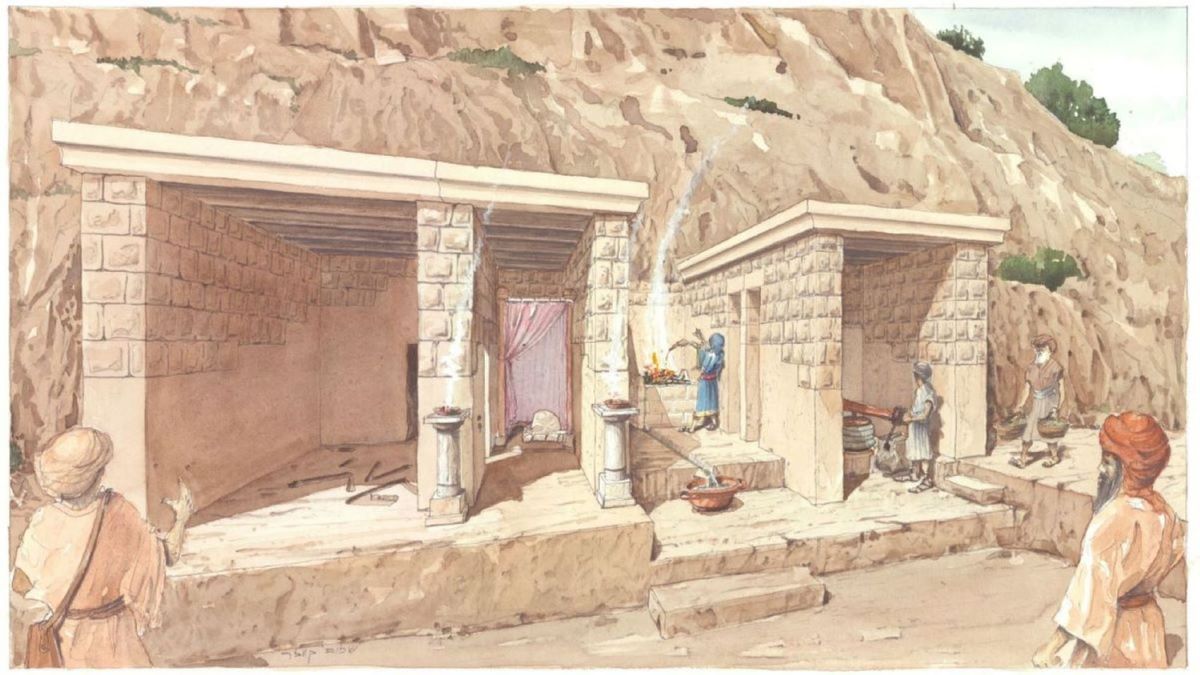
Among the ruins of eight rock-cut chambers, archaeologists found an oil press, a winepress, an altar and a large standing stone, or sacred pillar, known as a “massebah” in the Hebrew Bible. These artifacts date back to the First Temple period (1200 to 586 B.C.) of ancient Israel, suggesting ritual and cultic practices took place close to the First Temple — the first Jewish temple, built by King Solomon, in which to worship God, according to Jewish tradition — which stood just a few hundred yards away on Jerusalem’s Temple Mount.

Archaeologists discovered the structure on the eastern slope of the City of David, an archaeological site in East Jerusalem that is considered to be the city’s ancient settlement core. The northern part of the structure was already known, having been unearthed in 1909 by British army officer Montagu Parker, but the site then stood untouched for 100 years.

Related: ‘Mind-blowing’ discovery reveals 5,000-year-old cultic building in Israel

“When we began excavating the City of David in 2010, we discovered that the site had been sealed with fill from the eighth century BCE, indicating it had fallen out of use during that time,” Eli Shukron, an archaeologist who led the excavations on behalf of the Israel Antiquities Authority, said in the statement.

The reason for this could be the implementation of religious reforms by the then King of Judah, Hezekiah, who sought to eliminate ritual sites and concentrate religious worship at the First Temple, Shukron said.

Get the world’s most fascinating discoveries delivered straight to your inbox.

Excavation site of an ancient cultic complex in the City of David in Israel. The site is covered with a temporary roof. We see three V-shaped grooves in the ground.

Researchers noted the presence of three V-shaped grooves in room 5 of the structure. (Image credit: Israel Antiquities Authority)

It’s unclear which specific rites people performed in the newly unearthed structure, but evidence suggests the rooms were used for worship and related cult practices possibly involving animal sacrifice, according to an article co-authored by Shukron and published Jan. 12 in the Israel Antiquity Authority’s journal ‘Atiqot.

“The most important find was revealed in room 4, comprising the stone massebah and the platform built around it,” the researchers wrote in the article. This room was “undoubtedly” used for worship, the researchers said, and it’s likely the room next to it, room 5, was also used for religious activities and potentially sacrifice.

Reconstruction of an archaeological site in the City of David from above, We see several rooms, some with doors and others with grooves in the ground.

A reconstruction of the excavation site in the City of David from above. (Image credit: Israel Antiquities Authority)

Room 5 has three V-shaped grooves carved into the stone floor, as well as other shapes engraved on the floor and walls. The grooves are “unique and ambiguous,” and worshippers may have used them to crush grapes for wine and nuts for oil, according to the article.

“Another possibility is that the V-shaped grooves were used for a loom,” the researchers noted in the article — although Shukron thinks they may have held a tripod used for ritual practices, according to the statement.

Close to the structure, archaeologists found a small cave filled with objects also dating to the eighth century B.C. — including cooking pots, jars with ancient Hebrew inscriptions, scarabs, loom weights, grinding stones and stamped seals.

Although the purpose of the cave remains unclear, its discovery supports the interpretation of the site as a cultic complex, according to the article. “This complex offers profound evidence for the diversity of cultic practices in the capital of the Kingdom of Judah,” the researchers wrote.

Source link

Share. Facebook Twitter Pinterest LinkedIn Tumblr Email
Previous ArticleJackets, Boots, Pants & More Up to 60% Off
Next Article Preorder PlayStation’s Midnight Black collection
Editor
  • Website

Related Posts

Lifestyle

New robotic heart mimics common, mysterious condition to help researchers study it

July 11, 2026
Lifestyle

Canon EOS R6 III review: A wildlife wonder

July 10, 2026
Lifestyle

Medieval babies and adults buried together in Sweden were not related, archaeologists discover — raising big questions about early Christian burial practices

July 10, 2026
Add A Comment

Comments are closed.

Categories
  • Entertainment
  • Lifestyle
  • News
  • Sports
  • Tech
  • Travel
Recent Posts
  • New robotic heart mimics common, mysterious condition to help researchers study it
  • Canon EOS R6 III review: A wildlife wonder
  • Medieval babies and adults buried together in Sweden were not related, archaeologists discover — raising big questions about early Christian burial practices
  • NASA is creating a fifth state of matter on the ISS, thanks to an upgrade to a mini-fridge-sized quantum lab
  • New sodium metal battery design charges in just 4 minutes and retains its capacity for years
calendar
July 2026
M T W T F S S
 12345
6789101112
13141516171819
20212223242526
2728293031  
« Jun    
Recent Posts
  • New robotic heart mimics common, mysterious condition to help researchers study it
  • Canon EOS R6 III review: A wildlife wonder
  • Medieval babies and adults buried together in Sweden were not related, archaeologists discover — raising big questions about early Christian burial practices
About

Welcome to Baynard Media, your trusted source for a diverse range of news and insights. We are committed to delivering timely, reliable, and thought-provoking content that keeps you informed
and inspired

Categories
  • Entertainment
  • Lifestyle
  • News
  • Sports
  • Tech
  • Travel
Facebook X (Twitter) Pinterest WhatsApp
  • Contact Us
  • About Us
  • Privacy Policy
  • Disclaimer
  • UNSUBSCRIBE
© 2026 copyrights reserved

Type above and press Enter to search. Press Esc to cancel.