Close Menu
  • Home
  • UNSUBSCRIBE
  • News
  • Lifestyle
  • Tech
  • Entertainment
  • Sports
  • Travel
Facebook X (Twitter) WhatsApp
Trending
  • ‘You can’t patch your way out of it’: Cheap AI worm can spread between devices without human guidance — but how did scientists create it?
  • Diagnostic dilemma: After taking a medicine for years, a man suddenly had weird changes in his taste that made food disgusting
  • ‘A weird result from an already weird hominin’: Archaeologists discover all Homo naledi skeletons found in South African cave are female
  • China’s Einstein Probe detected a mysterious cosmic explosion — and scientists have no idea what caused it
  • Satellites reveal Earth has a surprising symmetry in the way it reflects light — and it might be tied to the El Niño cycle
  • Water might secretly be a mix of 2 different liquids, scientists say
  • ‘Weirdos of the sperm whale world’ appear to be evolving 2 different dialects, audio recordings suggest
  • 60 million stars: Euclid space telescope snaps the largest-ever close-up photo of the Milky Way’s crowded heart
Facebook X (Twitter) WhatsApp
Baynard Media
  • Home
  • UNSUBSCRIBE
  • News
  • Lifestyle
  • Tech
  • Entertainment
  • Sports
  • Travel
Baynard Media
Home»Lifestyle»2,700-year-old temple with ‘sacred cave’ discovered in Turkey — and it may honor the ‘mother goddess’
Lifestyle

2,700-year-old temple with ‘sacred cave’ discovered in Turkey — and it may honor the ‘mother goddess’

EditorBy EditorOctober 6, 2025No Comments3 Mins Read
Share Facebook Twitter Pinterest LinkedIn Tumblr Reddit Telegram Email
Share
Facebook Twitter LinkedIn Pinterest Email

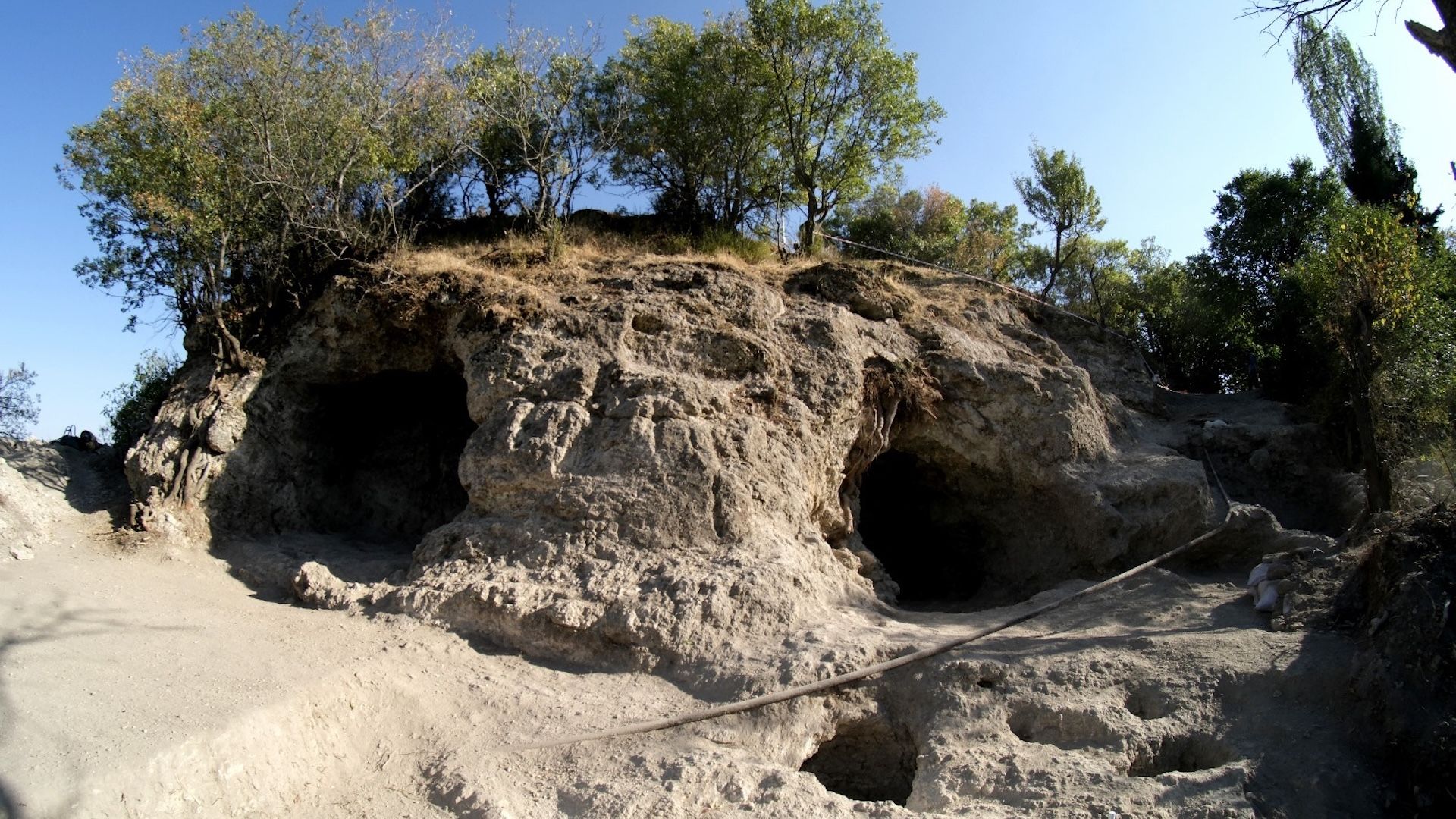
Archaeologists have discovered a 2,700-year-old temple in Turkey that may have been dedicated to a mother goddess.

Found near the modern-day city of Denizli, the temple was built by the Phrygians, who had a kingdom in the area between roughly 1200 and 650 B.C. A prominent deity of the Phrygians was a goddess who may have been associated with fertility and nature. She was known by several names, including “Materan,” “Matar” and “Cybele.” Other cultures, such as the ancient Greeks and the Romans, also worshipped her, and her cult continued to flourish long after the Phrygian kingdom — known as Phrygia and whose most famous ruler is likely King Midas — came to an end.

“The sacred site includes a Phrygian rock monument, a sacred cave, and twin rock idols between [two] structures,” Bilge Yılmaz Kolancı, an archaeology professor at Pamukkale Üniversity who is one of the excavation leaders, told Live Science in an email.


You may like

Pictures show that the rock idols are carved into the rock face itself. The site also contains “numerous libation bowls and drainage channels,” Kolancı said. Libations, which involved the pouring of liquids, were often used in ancient rituals. The research is ongoing, and the team can’t release much more information right now, Kolancı said. However, she confirmed news reports that the site dates to between roughly 2,800 and 2,600 years ago and may be linked to the mother goddess.

“From the pictures, the site does seem to be consistent with other Phrygian sanctuaries that we know about,” said Lynn Roller, a professor emeritus of ancient Mediterranean art at the University of California, Davis who is not involved with the excavation. The “double idols carved into the rock are very worn, so I can’t make out any details. But even in their current state, they are reminiscent of pairs of idols found at Midas City and other Phrygian sites,” Roller told Live Science in an email.

Roller said she would need to examine artifacts from the site to confirm the date. “It does seem, though, that the sanctuary would have been used during the main period of Phrygian culture and power, i.e. the 8th through 6th centuries [B.C.],” she said, adding that “the location, in a mountainous area, is typical of early Phrygian shrines.”

Image 1 of 2

An aerial photo of a primitive carved sanctuary in a stone hill
(Image credit: Courtesy of Bilge Yılmaz Kolancı)

The temple was in use around 2,700 years ago in what is now Turkey.

An image with a circled portion showing carved figures in the rock wall
(Image credit: Courtesy of Bilge Yılmaz Kolancı)

Two idols engraved into the rock between two structures.


However, Roller noted that “the attribution to a fertility and harvest cult strikes me as rather speculative — we really don’t have any good information on what rites were celebrated for the Phrygian goddess Matar — Mother — nor exactly what the deity meant to her worshippers.”

Get the world’s most fascinating discoveries delivered straight to your inbox.

This type of temple isn’t unique to this region, according to Roller.

“It is actually not so surprising to find a Phrygian shrine like this in the region near Denizli,” Roller said. “Denizli is fairly close to ancient Hierapolis — modern Pamukkale — and the Italian Archaeological Mission that has been working in Hierapolis for many years has discovered an early Phrygian shrine within the ancient city,” Roller said.

Research at the newly found temple is ongoing, and the team’s findings will be published in the future, Kolancı said.

Source link

Share. Facebook Twitter Pinterest LinkedIn Tumblr Email
Previous ArticleCommon US chemical TCE linked to increased Parkinson’s disease risk in new study
Next Article Trump’s message to Americans amid shutdown
Editor
  • Website

Related Posts

Lifestyle

‘You can’t patch your way out of it’: Cheap AI worm can spread between devices without human guidance — but how did scientists create it?

June 25, 2026
Lifestyle

Diagnostic dilemma: After taking a medicine for years, a man suddenly had weird changes in his taste that made food disgusting

June 25, 2026
Lifestyle

‘A weird result from an already weird hominin’: Archaeologists discover all Homo naledi skeletons found in South African cave are female

June 25, 2026
Add A Comment

Comments are closed.

Categories
  • Entertainment
  • Lifestyle
  • News
  • Sports
  • Tech
  • Travel
Recent Posts
  • ‘You can’t patch your way out of it’: Cheap AI worm can spread between devices without human guidance — but how did scientists create it?
  • Diagnostic dilemma: After taking a medicine for years, a man suddenly had weird changes in his taste that made food disgusting
  • ‘A weird result from an already weird hominin’: Archaeologists discover all Homo naledi skeletons found in South African cave are female
  • China’s Einstein Probe detected a mysterious cosmic explosion — and scientists have no idea what caused it
  • Satellites reveal Earth has a surprising symmetry in the way it reflects light — and it might be tied to the El Niño cycle
calendar
June 2026
M T W T F S S
1234567
891011121314
15161718192021
22232425262728
2930  
« May    
Recent Posts
  • ‘You can’t patch your way out of it’: Cheap AI worm can spread between devices without human guidance — but how did scientists create it?
  • Diagnostic dilemma: After taking a medicine for years, a man suddenly had weird changes in his taste that made food disgusting
  • ‘A weird result from an already weird hominin’: Archaeologists discover all Homo naledi skeletons found in South African cave are female
About

Welcome to Baynard Media, your trusted source for a diverse range of news and insights. We are committed to delivering timely, reliable, and thought-provoking content that keeps you informed
and inspired

Categories
  • Entertainment
  • Lifestyle
  • News
  • Sports
  • Tech
  • Travel
Facebook X (Twitter) Pinterest WhatsApp
  • Contact Us
  • About Us
  • Privacy Policy
  • Disclaimer
  • UNSUBSCRIBE
© 2026 copyrights reserved

Type above and press Enter to search. Press Esc to cancel.