Close Menu
  • Home
  • UNSUBSCRIBE
  • News
  • Lifestyle
  • Tech
  • Entertainment
  • Sports
  • Travel
Facebook X (Twitter) WhatsApp
Trending
  • New robotic heart mimics common, mysterious condition to help researchers study it
  • Canon EOS R6 III review: A wildlife wonder
  • Medieval babies and adults buried together in Sweden were not related, archaeologists discover — raising big questions about early Christian burial practices
  • NASA is creating a fifth state of matter on the ISS, thanks to an upgrade to a mini-fridge-sized quantum lab
  • New sodium metal battery design charges in just 4 minutes and retains its capacity for years
  • Quantum computing wielded to create extremely rare material critical to nuclear fusion
  • Scientists build tiny ‘diving suit’ for cockroaches, turning them into search-and-rescue cyborgs
  • Physicists develop the first working model of quantum mechanics using only ‘real’ numbers
Facebook X (Twitter) WhatsApp
Baynard Media
  • Home
  • UNSUBSCRIBE
  • News
  • Lifestyle
  • Tech
  • Entertainment
  • Sports
  • Travel
Baynard Media
Home»Lifestyle»2,000-year-old scrolls buried by Mount Vesuvius eruption finally deciphered with help from AI
Lifestyle

2,000-year-old scrolls buried by Mount Vesuvius eruption finally deciphered with help from AI

EditorBy EditorJune 30, 2026No Comments3 Mins Read
Share Facebook Twitter Pinterest LinkedIn Tumblr Reddit Telegram Email
Share
Facebook Twitter LinkedIn Pinterest Email

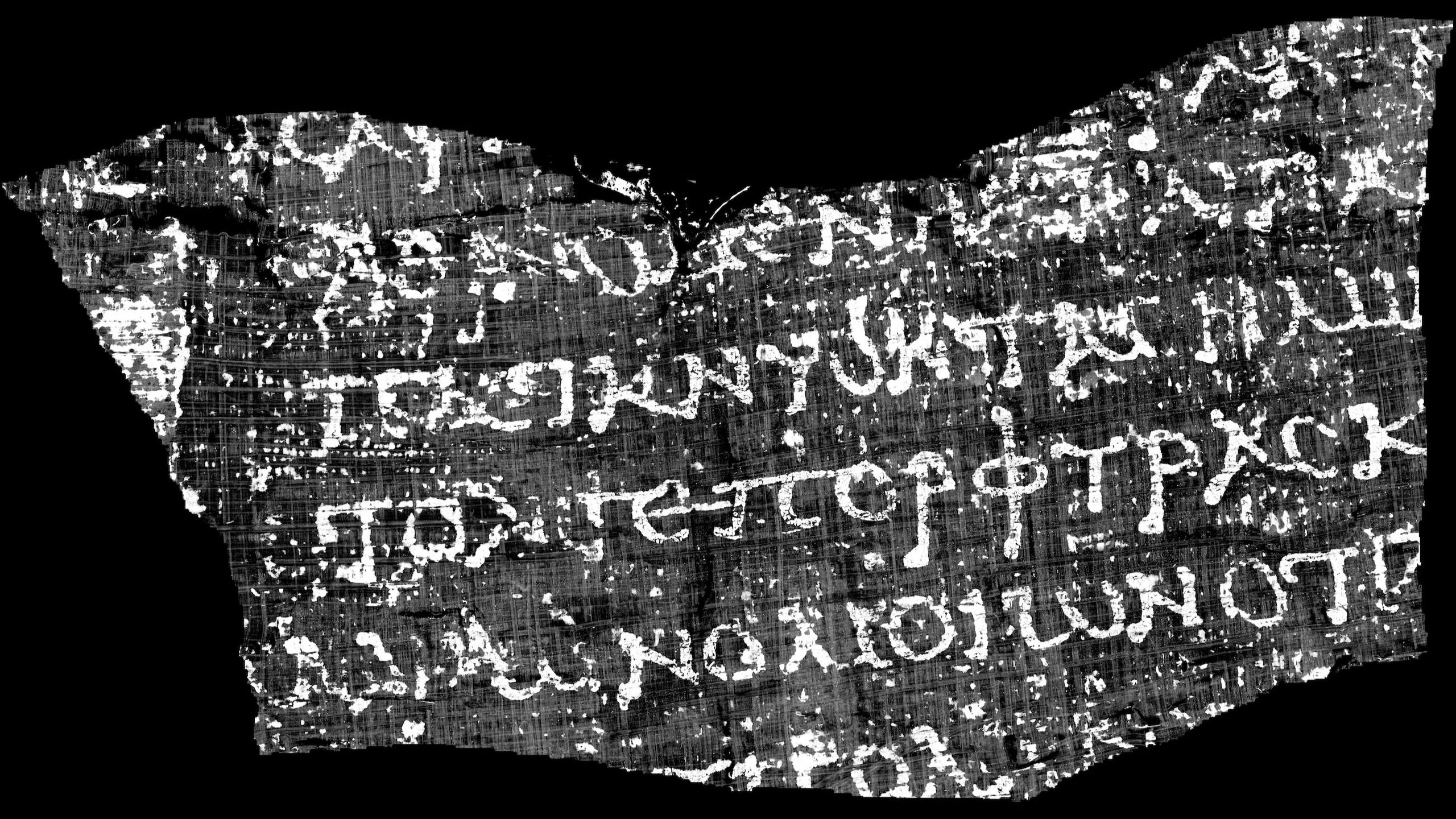
Nearly 2,000 years ago, Mount Vesuvius buried a vast collection of scrolls in ash and scorched them into solid black lumps. Now, without unrolling them, researchers have virtually read two of them —‬ and uncovered what may be a work by a well-known Stoic philosopher.

The breakthrough comes from the Vesuvius Challenge, an international research effort to digitally read the scrolls that were preserved when Pompeii and Herculaneum were buried by ash and pumice in A.D. 79. Papyrologists, who study and preserve the ancient manuscripts, announced June 25 that they had digitally unwrapped the surviving portion of one scroll, known as PHerc. 1667, revealing roughly 5 feet (1.5 meters) of continuous Greek text across 20 columns. Researchers also recovered more than 70 columns of text from a second scroll, PHerc. 172.

“For nearly two millennia, many of these texts have been physically preserved but intellectually inaccessible,” Brent Seales, Vesuvius Challenge co-founder and a computer scientist at the University of Kentucky, said in a statement. “Today ‪—‬ after years of interdisciplinary work combining advanced imaging, artificial intelligence, academic research and an innovation contest ‪—‬ we are finally able to read them.”

Over the past few years, Seales and his team have used a synchrotron to essentially X-ray inside the scrolls and detect the ink ancient Romans used to write. The letters are then studied by papyrologists, who translate the text.

Part of PHerc. 1667 was physically opened in the 1980s, but overlapping layers obscured the writing so badly that the scroll was given a readability score of zero, Federica Nicolardi, a papyrologist at the University of Naples Federico II, said in the statement.


You may like

The handwriting and text of PHerc. 1667 suggest the scroll dates to the second or third century B.C., making it one of the oldest scrolls in the Herculaneum collection. This early date means it could not have been authored by Philodemus of Gadara, the first-century-B.C. Epicurean philosopher whose writings dominated the Herculaneum library.

Experts think the text reads more like a Stoic treatise on ethics and human behavior, and it specifically mentions Aristocreon, the nephew and pupil of the influential Stoic philosopher Chrysippus. Very little of Chrysippus’ own writing has survived, so if the attribution holds up, it would be a significant addition to the historical record of early Stoic thought.

Get the world’s most fascinating discoveries delivered straight to your inbox.

In a separate discovery, researchers identified a new book title within scroll PHerc. 139. The end of the scroll references Philodemus’ eighth book of “On Gods.” While this treatise had previously been known to exist, the new discovery reveals the work extended across at least eight volumes. Experts plan to reexamine other texts in the Herculaneum collection for additional volumes that may belong to the same series.

More than 600 Herculaneum scrolls remain unopened. It’s thought that the villa was once owned by the father-in-law of Julius Caesar.


How much do you know about the Roman town destroyed by Mount Vesuvius? Find out by taking our Pompeii quiz!

Source link

Share. Facebook Twitter Pinterest LinkedIn Tumblr Email
Previous ArticleJapan’s bold experiment to curb antibiotic misuse has been a huge success. Could it work in the US?
Next Article Shadowy tendrils of ancient lava have scarred a dark volcano next to a ‘skull’ in the Sahara — Earth from space
Editor
  • Website

Related Posts

Lifestyle

New robotic heart mimics common, mysterious condition to help researchers study it

July 11, 2026
Lifestyle

Canon EOS R6 III review: A wildlife wonder

July 10, 2026
Lifestyle

Medieval babies and adults buried together in Sweden were not related, archaeologists discover — raising big questions about early Christian burial practices

July 10, 2026
Add A Comment

Comments are closed.

Categories
  • Entertainment
  • Lifestyle
  • News
  • Sports
  • Tech
  • Travel
Recent Posts
  • New robotic heart mimics common, mysterious condition to help researchers study it
  • Canon EOS R6 III review: A wildlife wonder
  • Medieval babies and adults buried together in Sweden were not related, archaeologists discover — raising big questions about early Christian burial practices
  • NASA is creating a fifth state of matter on the ISS, thanks to an upgrade to a mini-fridge-sized quantum lab
  • New sodium metal battery design charges in just 4 minutes and retains its capacity for years
calendar
July 2026
M T W T F S S
 12345
6789101112
13141516171819
20212223242526
2728293031  
« Jun    
Recent Posts
  • New robotic heart mimics common, mysterious condition to help researchers study it
  • Canon EOS R6 III review: A wildlife wonder
  • Medieval babies and adults buried together in Sweden were not related, archaeologists discover — raising big questions about early Christian burial practices
About

Welcome to Baynard Media, your trusted source for a diverse range of news and insights. We are committed to delivering timely, reliable, and thought-provoking content that keeps you informed
and inspired

Categories
  • Entertainment
  • Lifestyle
  • News
  • Sports
  • Tech
  • Travel
Facebook X (Twitter) Pinterest WhatsApp
  • Contact Us
  • About Us
  • Privacy Policy
  • Disclaimer
  • UNSUBSCRIBE
© 2026 copyrights reserved

Type above and press Enter to search. Press Esc to cancel.