Close Menu
  • Home
  • UNSUBSCRIBE
  • News
  • Lifestyle
  • Tech
  • Entertainment
  • Sports
  • Travel
Facebook X (Twitter) WhatsApp
Trending
  • Rare genetic disease makes scientists reconsider what the ‘seat of fear’ in the brain really is
  • It’s illegal to repair most of our devices. There’s a surprising reason for that.
  • Jupiter’s Ganymede, the largest moon in the solar system, may be heating up
  • Bizarre patterns on Venus have scientists puzzled
  • Scientists trained an AI model using an IBM quantum computer — and it answered questions correctly that the base model couldn’t
  • How did animals survive the asteroid that killed the dinosaurs?
  • ‘We can identify these really early, before the clinical diagnosis’: Epigenetic markers may help explain why Native Hawaiians are aging faster
  • Catapult the cow: 6 medieval castles that were never conquered
Facebook X (Twitter) WhatsApp
Baynard Media
  • Home
  • UNSUBSCRIBE
  • News
  • Lifestyle
  • Tech
  • Entertainment
  • Sports
  • Travel
Baynard Media
Home»Lifestyle»2.6 million-year-old stone tools reveal ancient human relatives were ‘forward planning’ 600,000 years earlier than thought
Lifestyle

2.6 million-year-old stone tools reveal ancient human relatives were ‘forward planning’ 600,000 years earlier than thought

EditorBy EditorAugust 15, 2025No Comments4 Mins Read
Share Facebook Twitter Pinterest LinkedIn Tumblr Reddit Telegram Email
Share
Facebook Twitter LinkedIn Pinterest Email

Ancient human relatives moved diverse stones over substantial distances, researchers report, revealing a surprisingly high degree of forward planning 600,000 years earlier than experts previously thought possible.

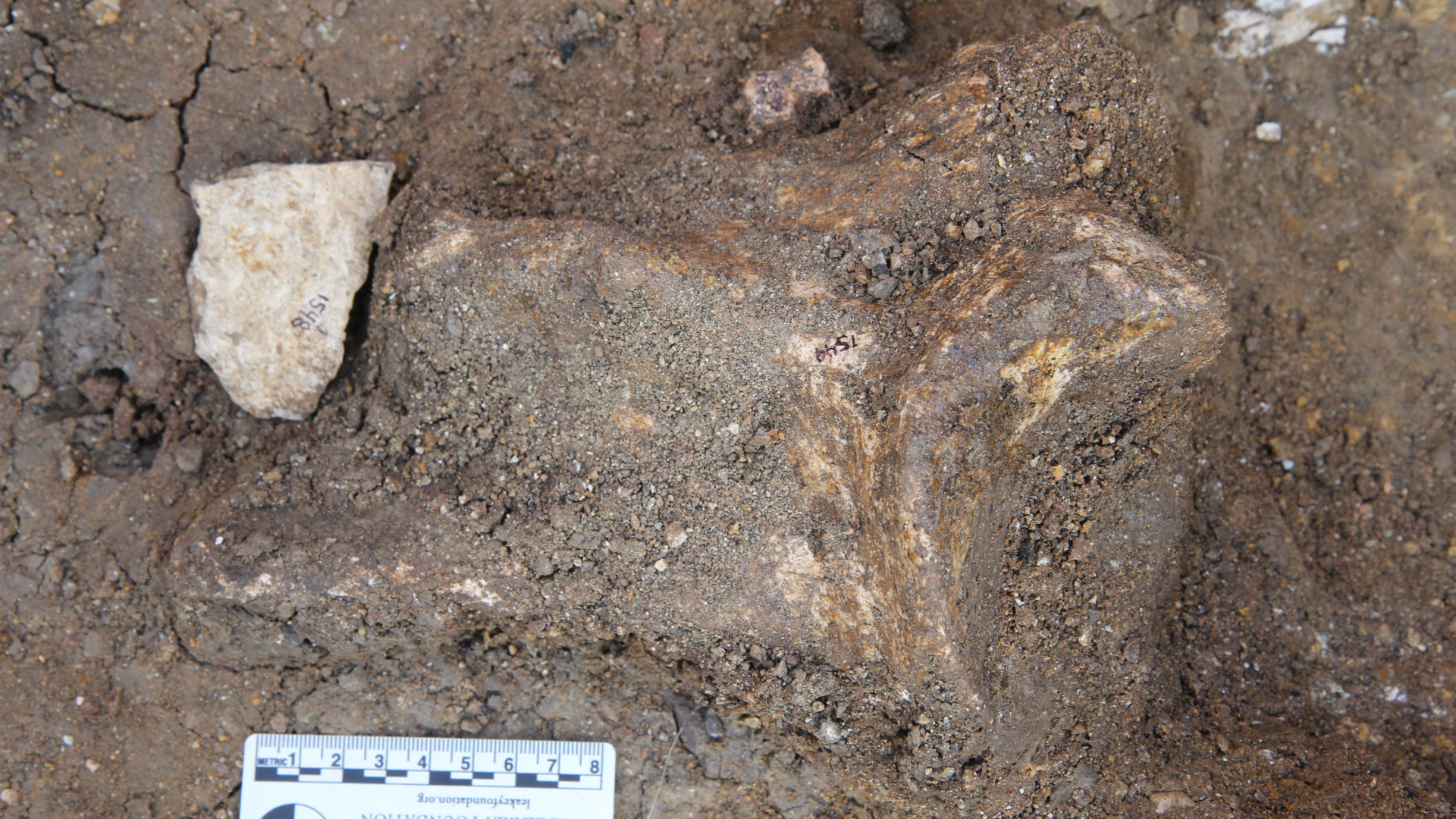
In a study published Friday (Aug. 15) in the journal Science Advances, a team of researchers pored over 401 stone tools from the archaeological site of Nyayanga in Kenya, dated to 3 million to 2.6 million years ago. The tools were made in the earliest known style called Oldowan, which involved chipping flakes off one stone using another stone to make a basic tool. But the kinds of rocks used were surprising — most of them came from locations over 6 miles (9.7 kilometers) away.

Chimpanzees (Pan troglodytes) are also known to carry granite hammerstones for cracking nuts as far as 1.2 miles (2 km), but only through cumulative, shorter-distance bouts, previous research has shown. The new finding establishes that human relatives could move tools more substantial distances, suggesting a better ability to plan ahead.


You may like

“People often focus on the tools themselves, but the real innovation of the Oldowan may actually be the transport of resources from one place to another,” study co-author Rick Potts, a paleoanthropologist at the National Museum of Natural History in Washington, D.C., said in a statement. “The knowledge and intent to bring stone material to rich food sources was apparently an integral part of toolmaking behavior at the outset of the Oldowan.”

The oldest stone tools date back about 3.3 million years, nearly 1 million years before experts think our genus, Homo, originated. These tools were probably created by human ancestors like the australopithecine Lucy. But these early tools were made out of materials sourced locally or from a short distance — roughly 1.7 miles (3 kilometers) away at the most.

a series of different colored stone tools against a black background

These stone tools were made from a variety of materials that could not be found locally. (Image credit: E.M Finestone, J.S. Oliver, Homa Peninsula Paleoanthropology Project)

Around 2 million years ago, human ancestors such as Homo erectus went through some big changes: There were increases to their brain size and body size, some migrated out of Africa, and some began cooking and eating meat. There is also evidence that these early ancestors began to plan ahead, becoming more selective about the rocks they chose to make into tools, and procuring them from significant distances.

But the stone tools from Nyayanga are 600,000 years older than the earliest evidence that human relatives were selecting and transporting rocks long-distance, and also likely predates the emergence of the Homo genus. This means that these groups were figuring out what they needed to process food and how to mentally map their environment, according to Potts.

Get the world’s most fascinating discoveries delivered straight to your inbox.

Related: 1.5 million-year-old stone tools from mystery human relative discovered in Indonesia — they reached the region before our species even existed

It is not clear, however, which species made the tools discovered at Nyayanga.

“Unless you find a hominin fossil actually holding a tool, you won’t be able to say definitively which species are making which stone tool assemblages,” study co-author Emma Finestone, a biological anthropologist at the Cleveland Museum of Natural History, said in the statement.

In this case, the tools were found alongside some fossils attributed to the genus Paranthropus, which “calls into question whether the transport of core and flake technology was exclusive to genus Homo,” the researchers wrote in the study.

Regardless of which species of human relative produced the tools, the fact that they transported them long distances suggests they were far more intelligent than they have been given credit for.

“Humans have always relied on tools to solve adaptive challenges,” Finestone said in the statement. “By understanding how this relationship began, we can better see our connection to it today — especially as we face new challenges in a world shaped by technology.”


Source link

Share. Facebook Twitter Pinterest LinkedIn Tumblr Email
Previous ArticleMamdani says Obama warned of politics’ ‘language of darkness’ after NYC win
Next Article D.C. attorney general sues over federal takeover of local police
Editor
  • Website

Related Posts

Lifestyle

Rare genetic disease makes scientists reconsider what the ‘seat of fear’ in the brain really is

May 25, 2026
Lifestyle

It’s illegal to repair most of our devices. There’s a surprising reason for that.

May 25, 2026
Lifestyle

Jupiter’s Ganymede, the largest moon in the solar system, may be heating up

May 25, 2026
Add A Comment

Comments are closed.

Categories
  • Entertainment
  • Lifestyle
  • News
  • Sports
  • Tech
  • Travel
Recent Posts
  • Rare genetic disease makes scientists reconsider what the ‘seat of fear’ in the brain really is
  • It’s illegal to repair most of our devices. There’s a surprising reason for that.
  • Jupiter’s Ganymede, the largest moon in the solar system, may be heating up
  • Bizarre patterns on Venus have scientists puzzled
  • Scientists trained an AI model using an IBM quantum computer — and it answered questions correctly that the base model couldn’t
calendar
May 2026
M T W T F S S
 123
45678910
11121314151617
18192021222324
25262728293031
« Apr    
Recent Posts
  • Rare genetic disease makes scientists reconsider what the ‘seat of fear’ in the brain really is
  • It’s illegal to repair most of our devices. There’s a surprising reason for that.
  • Jupiter’s Ganymede, the largest moon in the solar system, may be heating up
About

Welcome to Baynard Media, your trusted source for a diverse range of news and insights. We are committed to delivering timely, reliable, and thought-provoking content that keeps you informed
and inspired

Categories
  • Entertainment
  • Lifestyle
  • News
  • Sports
  • Tech
  • Travel
Facebook X (Twitter) Pinterest WhatsApp
  • Contact Us
  • About Us
  • Privacy Policy
  • Disclaimer
  • UNSUBSCRIBE
© 2026 copyrights reserved

Type above and press Enter to search. Press Esc to cancel.