Close Menu
  • Home
  • UNSUBSCRIBE
  • News
  • Lifestyle
  • Tech
  • Entertainment
  • Sports
  • Travel
Facebook X (Twitter) WhatsApp
Trending
  • Ex-Alabama football player accused of wearing wigs to impersonate NFL players in loan fraud scheme
  • Astronomers spotted a pair of monster black holes that could collide in just 100 years — and Earth will feel it
  • Lynette Hooker’s daughter slams stepfather for leaving Bahamas search
  • Big win for mining as Senate votes to remove BWCA moratorium
  • Portugal for Digital Nomads: The Definitive Guide 2024
  • Meta employee accused of accessing 30,000 private Facebook photos
  • Brea Carves Out Disability And Veteran Exemptions in Street Sweeping Law
  • Northern lights may be visible from several US states Friday and Saturday as giant hole opens up in sun’s atmosphere
Facebook X (Twitter) WhatsApp
Baynard Media
  • Home
  • UNSUBSCRIBE
  • News
  • Lifestyle
  • Tech
  • Entertainment
  • Sports
  • Travel
Baynard Media
Home»Lifestyle»18 million-year-old fossils of ape found in Africa, but in an unexpected place
Lifestyle

18 million-year-old fossils of ape found in Africa, but in an unexpected place

EditorBy EditorMarch 26, 2026No Comments5 Mins Read
Share Facebook Twitter Pinterest LinkedIn Tumblr Reddit Telegram Email
Share
Facebook Twitter LinkedIn Pinterest Email

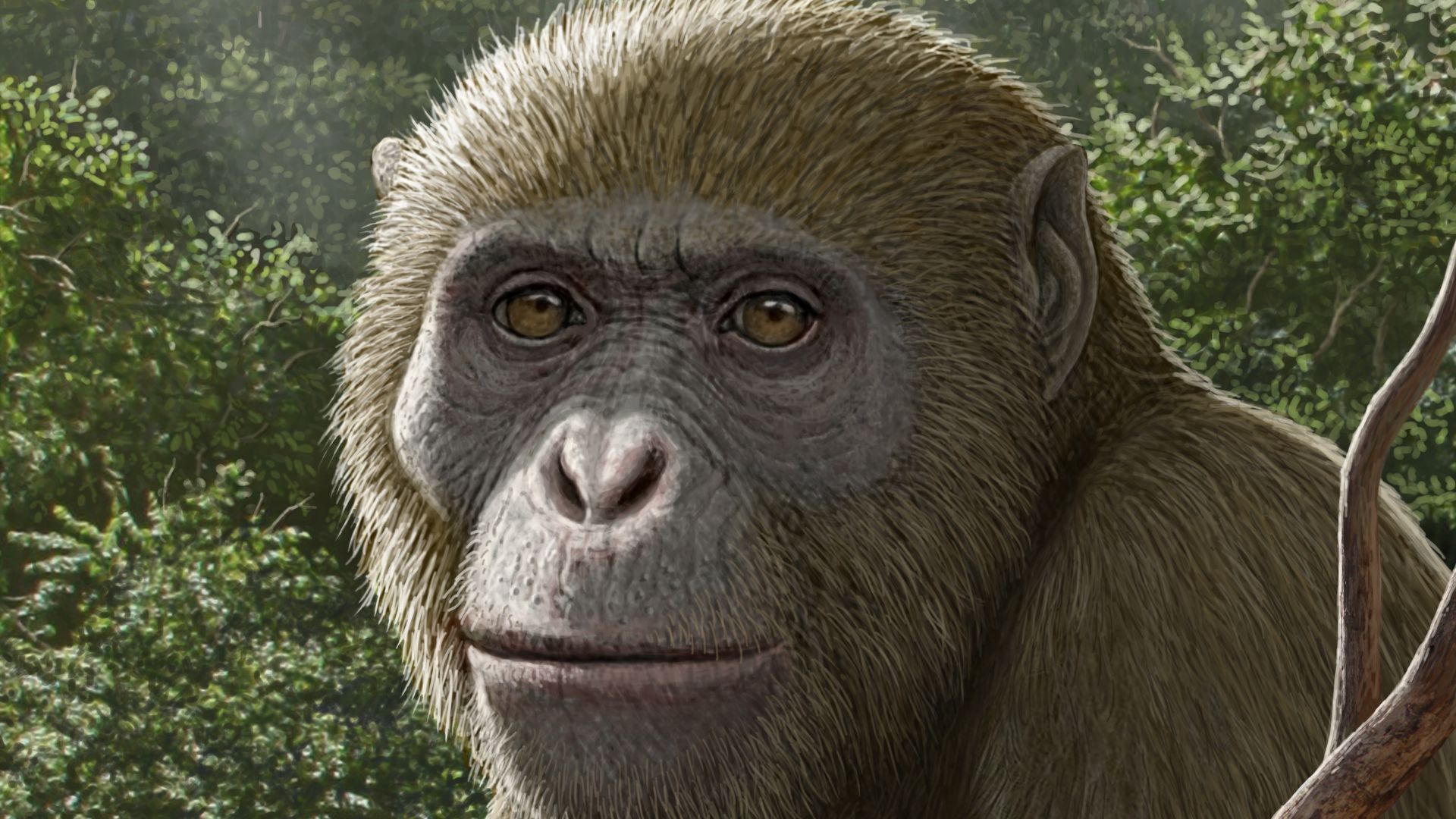
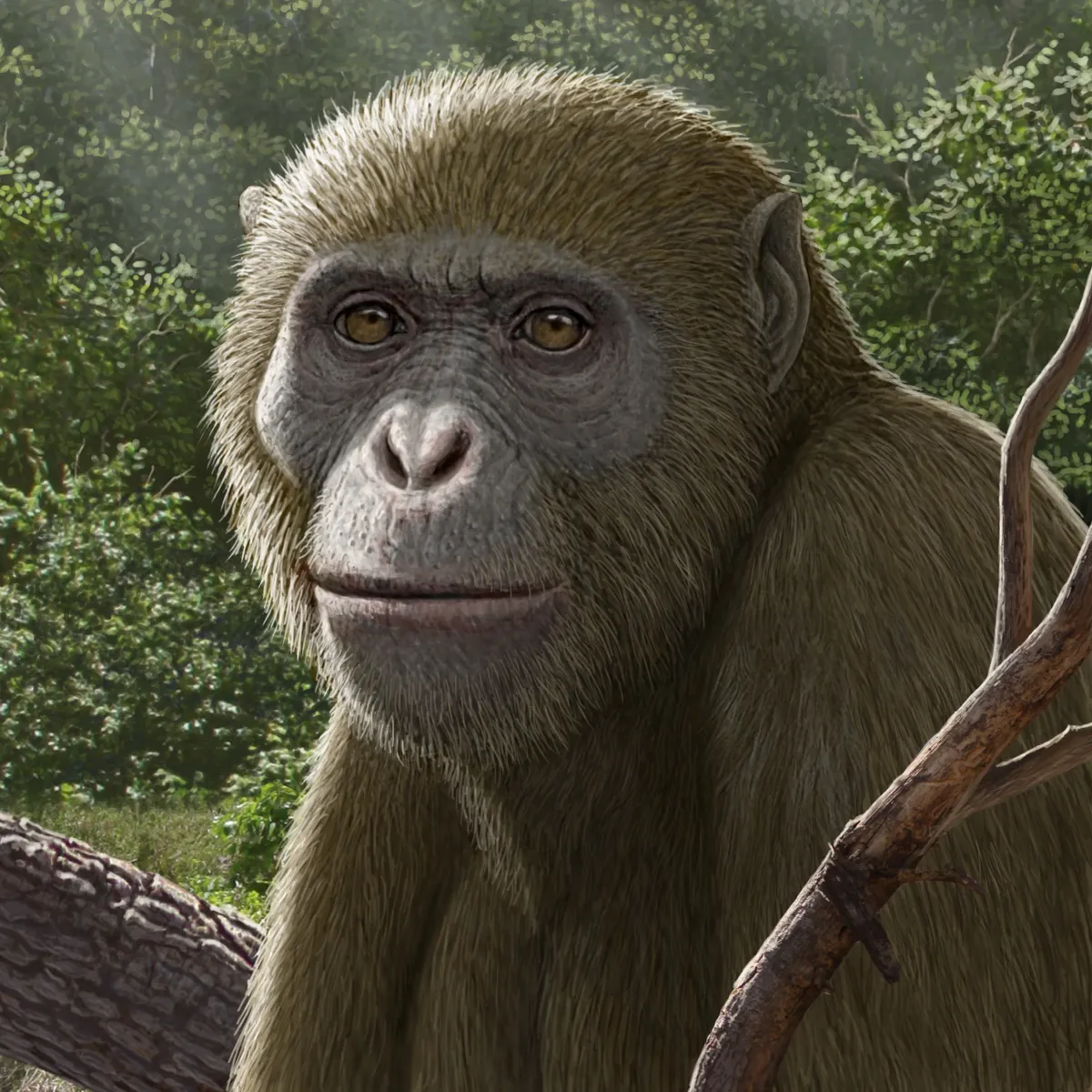
An illustration of an ape-like creature with brown fur and brown eyes sitting behind a small branch with lush jungle behind it

An illustration of Masripithecus moghraensis, an early Miocene ape. (Image credit: Mauricio Antón)

The discovery of an enigmatic ape’s 18 million year-old fossils in Egypt hints that the ancestors of all living apes, a group that includes humans, may have originated in northeast Africa or Arabia, a new study finds.

Scientists have long assumed that modern apes originated in East Africa, but the newfound fossils, which belong to a new genus and species, suggest they emerged farther north.

“Discovering a fossil ape in this region is both significant and somewhat surprising,” study first author Shorouq Al-Ashqar, a paleontologist at Mansoura University in Egypt, told Live Science in an email. “But it also highlights how incomplete our picture has been.”

Article continues below


You may like

Previous research has established that apes first appeared at least 25 million years ago. They soon flourished, diversifying into dozens of species and spreading across Africa, Europe and Asia.

But relatively few of these ancient apes were on the evolutionary line leading to modern apes ‪—‬ a group that includes humans and other great apes, along with gibbons and siamangs. Moreover, the apes that were on our ancestral line seem to have been confined largely to East Africa. As such, this region has long appeared to be a good place to search for the origins of modern apes.

However, after finding the fossilized remains of an ape that lived in what is now northern Egypt between 17 million and 18 million years ago, Al-Ashqar and her colleagues challenge this idea in a study published March 26 in the journal Science.

The remains, discovered in 2023 and 2024, are very incomplete ‪—‬ just a few fragments of lower jawbone and some worn teeth. But Al-Ashqar and her colleagues established that the remains didn’t belong to any known ape species. The researchers have assigned the fossils to a new genus and species named Masripithecus moghraensis; the genus name translates to “Egypt monkey or trickster” in Arabic and Greek, while the species name refers to “Wadi Moghra,” where it was found.

Get the world’s most fascinating discoveries delivered straight to your inbox.

A map of Africa and Europe with black arrows and pink and blue circles showing the dispersal of hominoids. An illustrated brown-furred ape sits in the bottom left corner of the map.

A map showing the dispersal of apes, including Masripithecus moghraensis, in the Miocene. (Image credit: Mauricio Antón)

The find is important, said Sergio Almécija, a biological anthropologist at the Miquel Crusafont Catalan Institute of Paleontology in Spain who was not involved in the study. “Any new fossil ape discovery is precious because of their scarcity, especially when it comes from a region where their presence has previously gone unnoticed,” he told Live Science in an email.

To determine where M. moghraensis fits in the ape evolutionary tree, Al-Ashqar and her colleagues looked at the age and anatomy of a range of ape fossils, as well as evolutionary information in the DNA of living apes.

The analysis placed M. moghraensis on the ancestral line of living apes, just before the split between the great-ape group and the gibbon-siamang, or “lesser ape,” group. This implies that M. moghraensis was very closely related to the last common ancestor of all living apes. That, in turn, suggests this common ancestor must have lived in roughly the same place as M. moghraensis.


What to read next

“The highest odds are [that it lived] in the northern part of the Afro-Arabian landmass,” study co-author Erik Seiffert, an evolutionary biologist at the University of Southern California in Los Angeles, told Live Science in an email.

A close up of a white bone fragment with a shiny brown tooth embedded in it. The fragment is held in someone's hand

A jaw fragment from Masripithecus moghraensis, photographed at the moment of discovery. (Image credit: Professor Hesham Sallam)

However, not everyone agrees with this interpretation. Almécija describes it as “a bit far-fetched.” He would like to see far more complete fossils of M. moghraensis before any attempt to update mainstream scientific ideas about the last common ancestor of living apes.

But Al-Ashqar said the jaw and teeth are among the most useful skeletal parts for working out the evolutionary history of apes. “In mammalian palaeontology, dental anatomy is a cornerstone for interpreting diet and evolutionary history,” she said.

Moreover, the idea that modern apes originated in North Africa and Arabia about 17 million years ago fits to some extent with known evidence, according to David Alba, a paleontologist at the Miquel Crusafont Catalan Institute of Paleontology who wasn’t involved in the analysis.

For instance, today’s nonhuman great apes are found in Africa and Southeast Asia, and fossils show great apes once lived in West Asia, too. Given this information, and the fact that today’s lesser apes are found in South and Southeast Asia, “modern hominoids [apes] must have gone through northeastern Afro-Arabia,” Alba told Live Science in an email, although this doesn’t necessarily mean they originated there.

The exact evolutionary significance of M. moghraensis remains unclear, but its discovery hints that there are more ape fossils yet to be found in and around Egypt. “Further work there could significantly refine our understanding of early ape evolution,” Al-Ashqar said.


Human origins quiz: How well do you know the story of humanity?

Source link

Share. Facebook Twitter Pinterest LinkedIn Tumblr Email
Previous ArticleTrump defends voting by mail in Florida while pushing restrictions
Next Article Skip Starbucks to save gas? There are better strategies
Editor
  • Website

Related Posts

Lifestyle

Astronomers spotted a pair of monster black holes that could collide in just 100 years — and Earth will feel it

April 16, 2026
Lifestyle

Portugal for Digital Nomads: The Definitive Guide 2024

April 16, 2026
Lifestyle

Northern lights may be visible from several US states Friday and Saturday as giant hole opens up in sun’s atmosphere

April 16, 2026
Add A Comment

Comments are closed.

Categories
  • Entertainment
  • Lifestyle
  • News
  • Sports
  • Tech
  • Travel
Recent Posts
  • Ex-Alabama football player accused of wearing wigs to impersonate NFL players in loan fraud scheme
  • Astronomers spotted a pair of monster black holes that could collide in just 100 years — and Earth will feel it
  • Lynette Hooker’s daughter slams stepfather for leaving Bahamas search
  • Big win for mining as Senate votes to remove BWCA moratorium
  • Portugal for Digital Nomads: The Definitive Guide 2024
calendar
April 2026
M T W T F S S
 12345
6789101112
13141516171819
20212223242526
27282930  
« Mar    
Recent Posts
  • Ex-Alabama football player accused of wearing wigs to impersonate NFL players in loan fraud scheme
  • Astronomers spotted a pair of monster black holes that could collide in just 100 years — and Earth will feel it
  • Lynette Hooker’s daughter slams stepfather for leaving Bahamas search
About

Welcome to Baynard Media, your trusted source for a diverse range of news and insights. We are committed to delivering timely, reliable, and thought-provoking content that keeps you informed
and inspired

Categories
  • Entertainment
  • Lifestyle
  • News
  • Sports
  • Tech
  • Travel
Facebook X (Twitter) Pinterest WhatsApp
  • Contact Us
  • About Us
  • Privacy Policy
  • Disclaimer
  • UNSUBSCRIBE
© 2026 copyrights reserved

Type above and press Enter to search. Press Esc to cancel.