Close Menu
  • Home
  • UNSUBSCRIBE
  • News
  • Lifestyle
  • Tech
  • Entertainment
  • Sports
  • Travel
Facebook X (Twitter) WhatsApp
Trending
  • New robotic heart mimics common, mysterious condition to help researchers study it
  • Canon EOS R6 III review: A wildlife wonder
  • Medieval babies and adults buried together in Sweden were not related, archaeologists discover — raising big questions about early Christian burial practices
  • NASA is creating a fifth state of matter on the ISS, thanks to an upgrade to a mini-fridge-sized quantum lab
  • New sodium metal battery design charges in just 4 minutes and retains its capacity for years
  • Quantum computing wielded to create extremely rare material critical to nuclear fusion
  • Scientists build tiny ‘diving suit’ for cockroaches, turning them into search-and-rescue cyborgs
  • Physicists develop the first working model of quantum mechanics using only ‘real’ numbers
Facebook X (Twitter) WhatsApp
Baynard Media
  • Home
  • UNSUBSCRIBE
  • News
  • Lifestyle
  • Tech
  • Entertainment
  • Sports
  • Travel
Baynard Media
Home»Lifestyle»1,700-year-old battered bear skull discovered by Roman arena — and its injuries suggest it fought in a gladiatorial stadium
Lifestyle

1,700-year-old battered bear skull discovered by Roman arena — and its injuries suggest it fought in a gladiatorial stadium

EditorBy EditorSeptember 4, 2025No Comments3 Mins Read
Share Facebook Twitter Pinterest LinkedIn Tumblr Reddit Telegram Email
Share
Facebook Twitter LinkedIn Pinterest Email

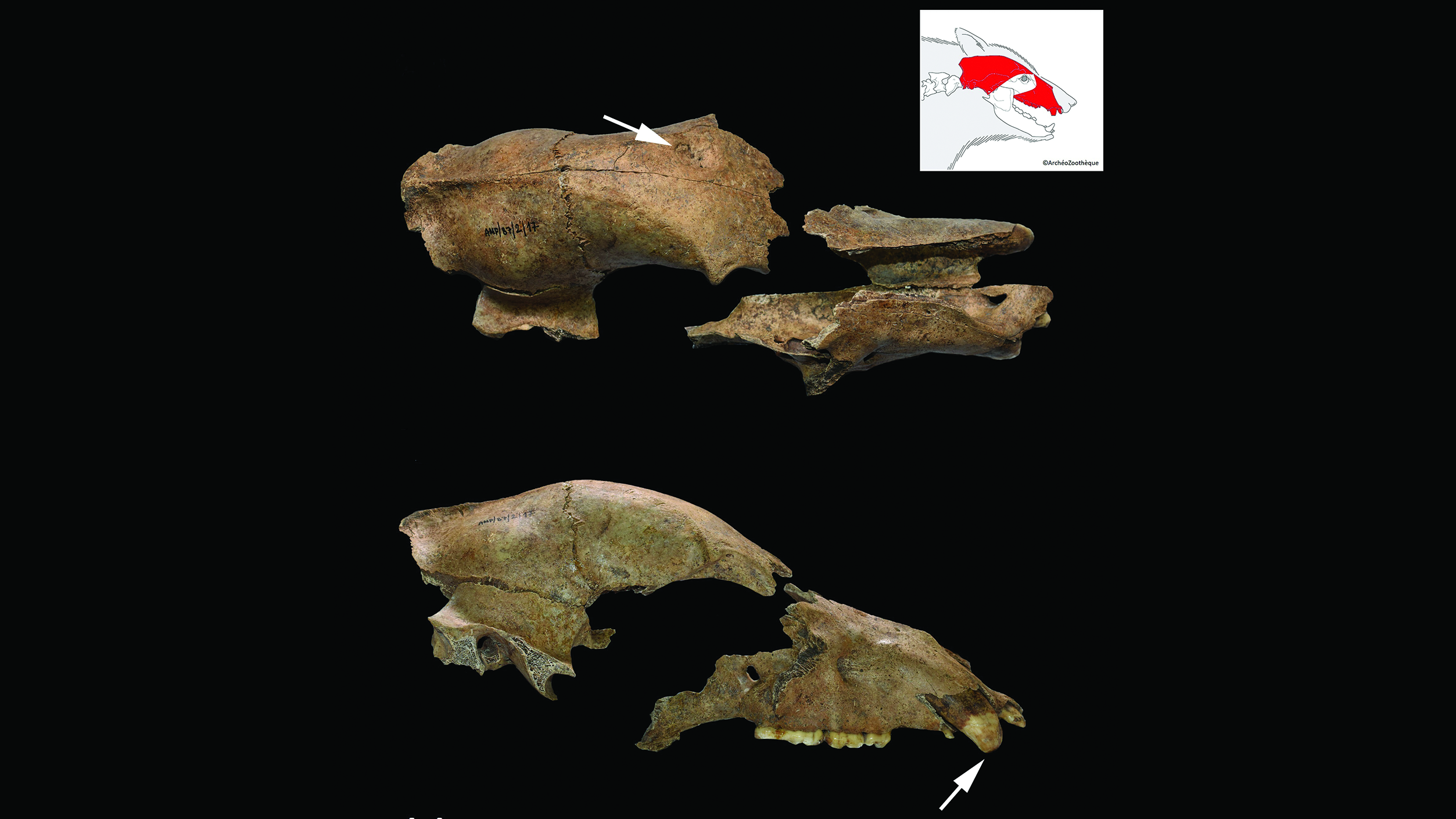
The battered skull of a brown bear discovered near a Roman amphitheater in Serbia reveals that the wild animal had been kept in captivity for years and was fighting off an infection when it died around 1,700 years ago.

The finding is the first direct evidence of the use of bears in the gladiatorial arena and attests to the barbarism of animal spectacles in the Roman Empire.

“We cannot say with certainty whether the bear died directly in the arena, but the evidence suggests the trauma occurred during spectacles and the subsequent infection likely contributed significantly to its death,” study lead author Nemanja Marković, a senior research associate at the Institute of Archaeology in Belgrade, told Live Science in an email.


You may like

In a study published Monday (Sept. 1) in the journal Antiquity, Marković and colleagues detailed their analysis of the fragmented skull of a brown bear (Ursus arctos) excavated in 2016 near the amphitheater at Viminacium, a Roman frontier military base in present-day Serbia.

The amphitheater at Viminacium was built in the second century A.D. Oval-shaped with high walls, it could seat about 7,000 people. Archaeologists recovered the bear skull near the entrance to the amphitheater, along with a number of other animal bones, including those of a leopard, the researchers noted in the study.

“Previous research suggests animals killed in the arena were butchered nearby, their meat distributed, and bones discarded close to the amphitheatre — not buried in a formal animal graveyard,” Marković said.

Bears forced to participate in these ancient spectacles had a variety of roles. They could be made to fight “venatores,” gladiators who specialized in hunting; to brawl with other animals; to execute convicts; or to give trained performances.

Get the world’s most fascinating discoveries delivered straight to your inbox.

Related: Lion mauled gladiator to death 1,800 years ago in Roman Britain, controversial study suggests

a reconstructed Roman amphitheater with wooden stands and ruins of low walls in a lush grassy landscape

A reconstruction of the Roman amphitheater at Viminacium Archaeological Park (Image credit: Anastasija Radenkovic / Getty Images)

The researchers’ analysis of the brown bear skull revealed just how brutal these spectacles were for the animals.

Using ancient DNA analysis, the researchers determined that the bear was male and was from the local area, and his teeth suggested he was about 6 years old when he died. Carbon dating of animal bones from the area where the bear was found gave a date range of A.D. 240 to 350, a time when the Viminacium amphitheater was regularly hosting gladiatorial games.

A large lesion on the front of the bear’s skull showed signs of healing but also signs of infection, suggesting he was struggling with the injury at death. This traumatic injury could have been inflicted by a “venator” equipped with a spear, the researchers wrote in the study.

The animal’s jaws also showed evidence of infection, and the researchers identified abnormal wear on his canine teeth. Captive bears are known to chew on the bars of their cages, the researchers noted, which can lead to the kinds of dental and jaw problems seen in this ancient bear.

“This bear was likely kept in captivity for years, not just weeks,” Marković said, in which case he would have featured repeatedly in Roman spectacles at Viminacium.

Although historical records mention the use of brown bears in gladiatorial spectacles, “this study provides the first direct osteological evidence for the participation of brown bears in Roman spectacles,” the researchers concluded, and offers a glimpse into the use and treatment of animals in the Roman Empire.


Roman emperor quiz: Test your knowledge on the rulers of the ancient empire

Source link

Share. Facebook Twitter Pinterest LinkedIn Tumblr Email
Previous ArticleSenator Wyden clashes with RFK Jr over child health policies at hearing
Next Article RFK Jr. says he doesn’t know Covid death data
Editor
  • Website

Related Posts

Lifestyle

New robotic heart mimics common, mysterious condition to help researchers study it

July 11, 2026
Lifestyle

Canon EOS R6 III review: A wildlife wonder

July 10, 2026
Lifestyle

Medieval babies and adults buried together in Sweden were not related, archaeologists discover — raising big questions about early Christian burial practices

July 10, 2026
Add A Comment

Comments are closed.

Categories
  • Entertainment
  • Lifestyle
  • News
  • Sports
  • Tech
  • Travel
Recent Posts
  • New robotic heart mimics common, mysterious condition to help researchers study it
  • Canon EOS R6 III review: A wildlife wonder
  • Medieval babies and adults buried together in Sweden were not related, archaeologists discover — raising big questions about early Christian burial practices
  • NASA is creating a fifth state of matter on the ISS, thanks to an upgrade to a mini-fridge-sized quantum lab
  • New sodium metal battery design charges in just 4 minutes and retains its capacity for years
calendar
July 2026
M T W T F S S
 12345
6789101112
13141516171819
20212223242526
2728293031  
« Jun    
Recent Posts
  • New robotic heart mimics common, mysterious condition to help researchers study it
  • Canon EOS R6 III review: A wildlife wonder
  • Medieval babies and adults buried together in Sweden were not related, archaeologists discover — raising big questions about early Christian burial practices
About

Welcome to Baynard Media, your trusted source for a diverse range of news and insights. We are committed to delivering timely, reliable, and thought-provoking content that keeps you informed
and inspired

Categories
  • Entertainment
  • Lifestyle
  • News
  • Sports
  • Tech
  • Travel
Facebook X (Twitter) Pinterest WhatsApp
  • Contact Us
  • About Us
  • Privacy Policy
  • Disclaimer
  • UNSUBSCRIBE
© 2026 copyrights reserved

Type above and press Enter to search. Press Esc to cancel.