Close Menu
  • Home
  • UNSUBSCRIBE
  • News
  • Lifestyle
  • Tech
  • Entertainment
  • Sports
  • Travel
Facebook X (Twitter) WhatsApp
Trending
  • ‘Full-on berserker mode’: Archaeologists solve mystery of medieval soldiers with gruesome square holes in their skull
  • Rare belching disorder could be treated with singing, study hints — but not everyone is convinced
  • ‘If this is the new normal, then we are in very deep trouble’: Brazil’s drying aquifers could have ripple effects across the world
  • Foodborne illnesses: Is the US really being hit harder this year?
  • James Webb telescope just spotted the oldest, closest pair of black holes in the early universe
  • Saving old trees may protect people’s health more than planting new ones, study of Chicago neighborhoods finds
  • Memory may not work how we thought, study of mice in artificial hibernation finds
  • Romans unceremoniously dumped plague victims down a well, mysterious mass grave in Croatia suggest
Facebook X (Twitter) WhatsApp
Baynard Media
  • Home
  • UNSUBSCRIBE
  • News
  • Lifestyle
  • Tech
  • Entertainment
  • Sports
  • Travel
Baynard Media
Home»Lifestyle»150,000-year history of Earth’s magnetic field reveals clues about the climate when early humans were spreading out of Africa
Lifestyle

150,000-year history of Earth’s magnetic field reveals clues about the climate when early humans were spreading out of Africa

EditorBy EditorMay 16, 2025No Comments3 Mins Read
Share Facebook Twitter Pinterest LinkedIn Tumblr Reddit Telegram Email
Share
Facebook Twitter LinkedIn Pinterest Email

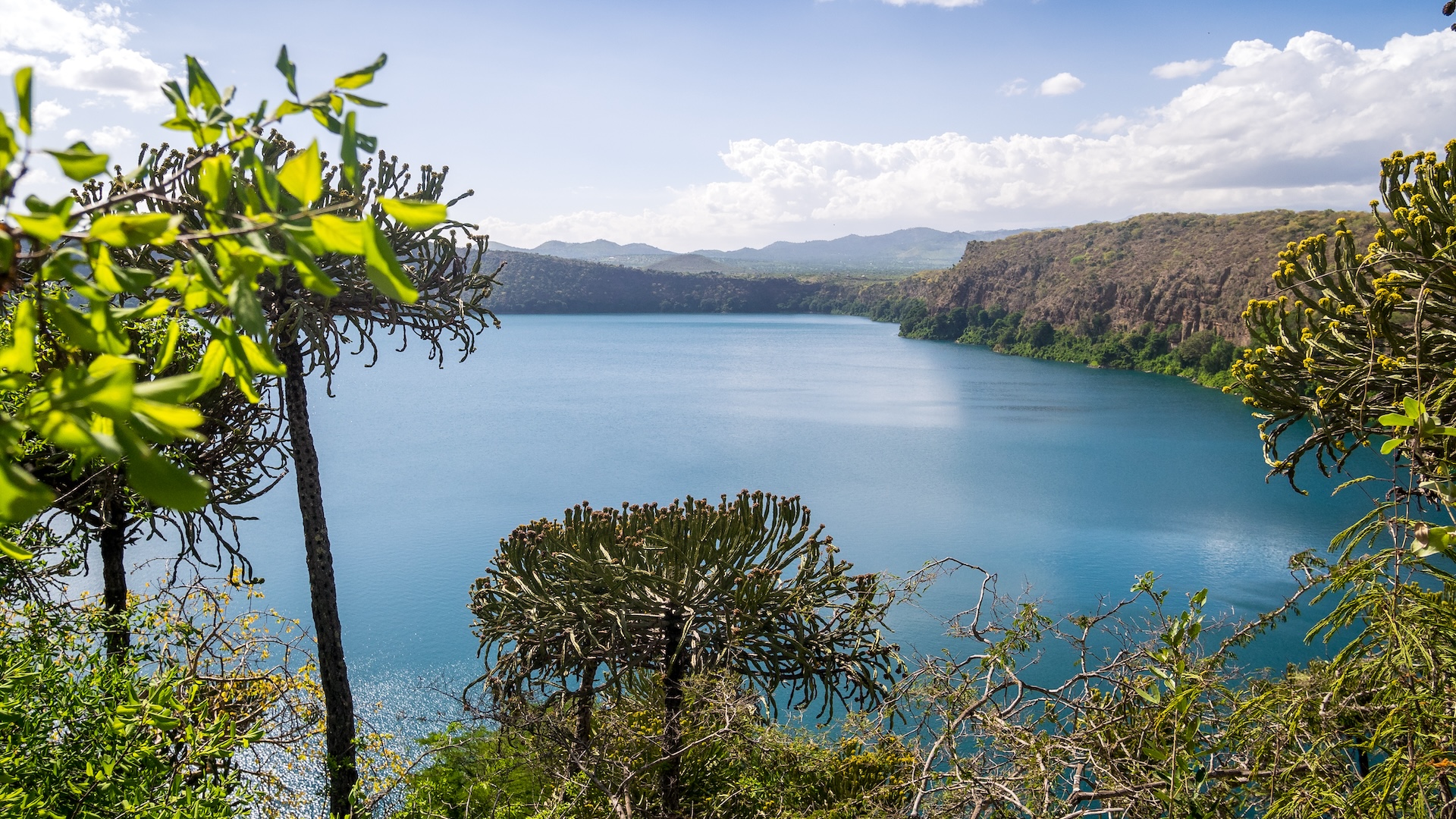
A tree-ringed African lake has yielded a record of Earth’s magnetic field spanning the past 150,000 years.

A core of rock and sediment drilled from the bottom of Lake Chala, a picturesque crater lake on the border of Tanzania and Kenya, contains records of the wobbles in the planet’s magnetic field. This rock also contains valuable information about the climate over the past 150,000 years, when modern humans were flowing out of Africa, into the Arabian Peninsula and onward to Europe and Asia.

“There is an effort to try to understand what conditions drove [humans] to leave Africa and go populate the rest of Eurasia,” said Anita Di Chiara, a paleomagnetist at Italy’s National Institute of Geophysics and Volcanology in Rome. To use ancient sediment records to reconstruct the past climate, though, “we need ages,” Di Chiara told Live Science. “We need a way to date these sediments.”


You may like

That’s where the variations in Earth’s magnetic field come in. When rocks form, they lock in a record of the magnetic field via small magnetic crystals that align with the field at that time. Most of these rock records come from near the poles, where these signals are stronger, Di Chiara said. “Getting an equatorial record is kind of special,” she said.

Scientists like Di Chiara can compare the magnetic changes in rock layers from one location, like Lake Chala, to layers around the world where researchers already know how old the rocks are. They can also use layers in the rock from known events to calibrate the data. For example, the core from Lake Chala includes an ash layer from the Toba supervolcano, which erupted in Indonesia 74,000 years ago.

Lake Chala is a special place to get this kind of data, Di Chiara said. It’s a crater lake fed by runoff from the surrounding cliffs and forests, not from large streams or rivers. That means the layers at the bottom of the lake aren’t mixed up by one-off events, like floods. Instead, the layers are stacked neatly, season by season.

The researchers found six magnetic excursions — temporary, sometimes localized fluctuations in the magnetic field — in the 150,000-year record, they reported in April in the journal Geochemistry, Geophysics, Geosystems. One was an anomaly not seen elsewhere in the rock record, Di Chiara said. Such excursions may be caused by chaotic circulation in Earth’s inner core or by interactions between the solid inner core and the liquid outer core.

Get the world’s most fascinating discoveries delivered straight to your inbox.

A magnetic excursion probably would have gone unnoticed to ancient East Africans, but today, fluctuations in the magnetic field matter a lot. That’s because the magnetic field protects the planet from the solar wind, a flow of charged particles from the sun. A weaker field means more disruption to communications and electronic equipment from these particles.

The historical data will help researchers predict what the magnetic field will do.”They’re going to be very happy,” Di Chiara said.

Source link

Share. Facebook Twitter Pinterest LinkedIn Tumblr Email
Previous ArticleLiving lunch box? Iceland orcas are unexpectedly swimming with baby pilot whales, but it’s unclear why.
Next Article NASA spacecraft snaps eerie image of eclipsed sun with an extra moon overhead. What’s going on?
Editor
  • Website

Related Posts

Lifestyle

‘Full-on berserker mode’: Archaeologists solve mystery of medieval soldiers with gruesome square holes in their skull

August 14, 2026
Lifestyle

Rare belching disorder could be treated with singing, study hints — but not everyone is convinced

August 14, 2026
Lifestyle

‘If this is the new normal, then we are in very deep trouble’: Brazil’s drying aquifers could have ripple effects across the world

August 14, 2026
Add A Comment

Comments are closed.

Categories
  • Entertainment
  • Lifestyle
  • News
  • Sports
  • Tech
  • Travel
Recent Posts
  • ‘Full-on berserker mode’: Archaeologists solve mystery of medieval soldiers with gruesome square holes in their skull
  • Rare belching disorder could be treated with singing, study hints — but not everyone is convinced
  • ‘If this is the new normal, then we are in very deep trouble’: Brazil’s drying aquifers could have ripple effects across the world
  • Foodborne illnesses: Is the US really being hit harder this year?
  • James Webb telescope just spotted the oldest, closest pair of black holes in the early universe
calendar
August 2026
M T W T F S S
 12
3456789
10111213141516
17181920212223
24252627282930
31  
« Jul    
Recent Posts
  • ‘Full-on berserker mode’: Archaeologists solve mystery of medieval soldiers with gruesome square holes in their skull
  • Rare belching disorder could be treated with singing, study hints — but not everyone is convinced
  • ‘If this is the new normal, then we are in very deep trouble’: Brazil’s drying aquifers could have ripple effects across the world
About

Welcome to Baynard Media, your trusted source for a diverse range of news and insights. We are committed to delivering timely, reliable, and thought-provoking content that keeps you informed
and inspired

Categories
  • Entertainment
  • Lifestyle
  • News
  • Sports
  • Tech
  • Travel
Facebook X (Twitter) Pinterest WhatsApp
  • Contact Us
  • About Us
  • Privacy Policy
  • Disclaimer
  • UNSUBSCRIBE
© 2026 copyrights reserved

Type above and press Enter to search. Press Esc to cancel.