Close Menu
  • Home
  • UNSUBSCRIBE
  • News
  • Lifestyle
  • Tech
  • Entertainment
  • Sports
  • Travel
Facebook X (Twitter) WhatsApp
Trending
  • IBD is caused by a broken ‘inflammation brake’ in some patients
  • Hanging lamp in the form of a sandaled right foot: A 1,600-year-old bronze lamp with multilayered Christian symbolism
  • Never-before-seen shark that ‘walks’ on land discovered off Papua New Guinea
  • Diagnostic dilemma: Woman’s infertility may have been caused by rare semen allergy
  • James Webb telescope detects ‘galaxy-killing wind’ near the dawn of time
  • What will the Amazon rainforest look like in 100 years?
  • The US just approved bemotrizinol, a sunscreen ingredient long used in Asia and Europe. Here’s how it works.
  • James Webb telescope finds a cosmic cloud of creation buried in the Sword of Orion — Space photo of the week
Facebook X (Twitter) WhatsApp
Baynard Media
  • Home
  • UNSUBSCRIBE
  • News
  • Lifestyle
  • Tech
  • Entertainment
  • Sports
  • Travel
Baynard Media
Home»Lifestyle»1,000-year-old altar and human sacrifices from Toltec Empire discovered in Mexico
Lifestyle

1,000-year-old altar and human sacrifices from Toltec Empire discovered in Mexico

EditorBy EditorMarch 27, 2026No Comments3 Mins Read
Share Facebook Twitter Pinterest LinkedIn Tumblr Reddit Telegram Email
Share
Facebook Twitter LinkedIn Pinterest Email

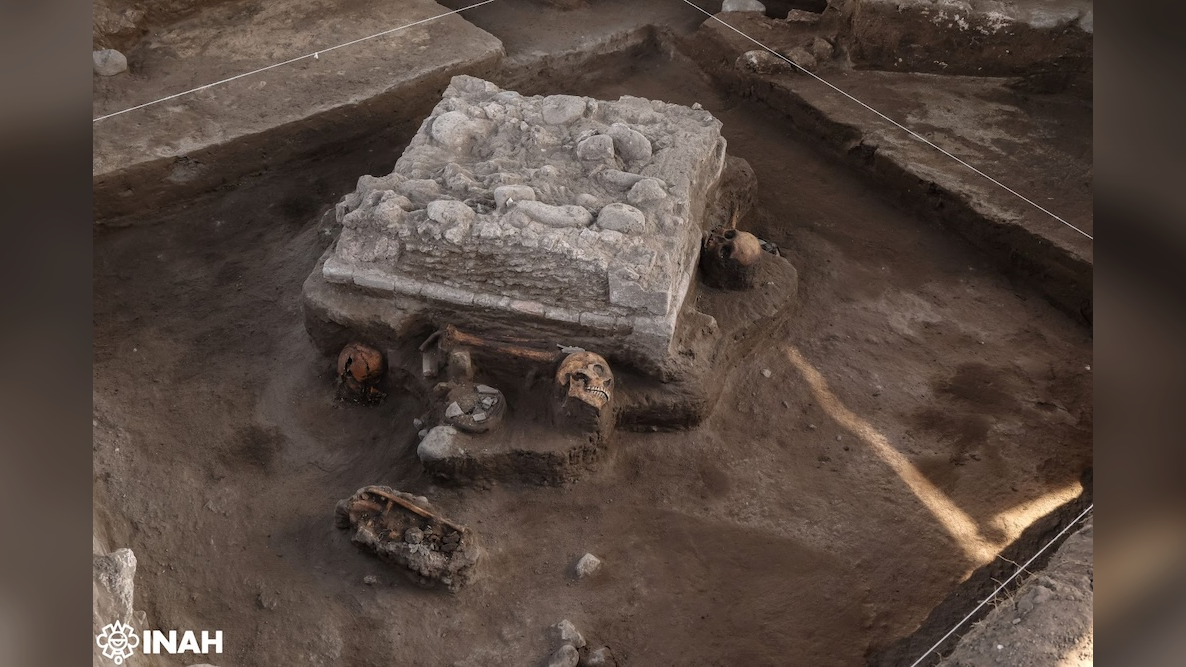
Archaeologists in Mexico have unearthed a square stone altar used for human sacrifices during the Toltec Empire more than 1,000 years ago.

The altar, human bones, obsidian knives and ceramic vessels were discovered during excavation for a transportation project near the archaeological site of Tula, about 55 miles (88 kilometers) north of Mexico City.

In a translated statement posted Tuesday (March 24) by Mexico’s National Institute of Anthropology and History (INAH), archaeologists described the altar — also called a momoztli in Nahuatl — as a three-layer construction of stones that measures about 10 square feet (1 square meter). Four human skulls and several human leg bones were recovered from three sides of the altar, likely from people who were sacrificed.

Article continues below


You may like

“We know that they are offerings because they are located specifically in certain sections of the feature, but we don’t know if they have any other remains underground that cannot be physically seen,” Víctor Francisco Heredia Guillén, the archaeologist who’s coordinating the project, said in a translated video.

Archaeologists discovered the remains of walls around the altar, suggesting it was located in a courtyard. Additional rooms flanked the courtyard and may have been part of a palace or other residential structure housing ancient Tula’s elite, Heredia said.

Between the fall of Teotihuacán around A.D. 550 and the rise of Tenochtitlán in 1325, Tula was an important Mesoamerican urban center and the capital of the Toltec Empire, which lasted from 950 to 1150. Located in Mexico’s Hidalgo state, Tula was contemporary with the Maya site of Chichén Itzá in the Yucatán Peninsula. Tula boasts a large pyramid dedicated to the feathered serpent god Quetzalcoatl that is topped with four massive statues of Toltec warriors.

close-up of a stone altar and human skulls

Skulls and other human body parts were discovered around the ancient altar. (Image credit: Gerardo Peña/INAH)

The newly discovered altar likely dates to the imperial period of Tula’s occupation, according to the archaeologists. By that time, the Toltec had gained a reputation as fierce warriors, and the human sacrifices may have been enemies offered after the Toltec defeated them.

Get the world’s most fascinating discoveries delivered straight to your inbox.

One of the skulls appears to still be attached to part of the spine, suggesting decapitation was part of the sacrificial ritual.

“In this case, although metal was already being worked in the postclassic period, we know that decapitations were still done here with obsidian or flint knives, and they left cut marks on the bones,” Heredia said.

But additional research will be required to learn more about the sacrificial victims. Anthropological analysis should reveal whether the bones came from men or women, and chemical analysis may show whether the victims were local or came to Tula from afar, Heredia said.

“Each discovery like this expands our knowledge of one of the great civilizations of Mesoamerica,” Claudia Curiel de Icaza, the Mexican secretary of culture, said in the statement.


First Americans quiz: How much do you know about the first people to reach the Americas?

Source link

Share. Facebook Twitter Pinterest LinkedIn Tumblr Email
Previous ArticleSenate unanimously advances DHS funding deal without ICE and CBP amid shutdown
Next Article Suspect in Gilgo Beach serial killings expected to plead guilty, sources say
Editor
  • Website

Related Posts

Lifestyle

IBD is caused by a broken ‘inflammation brake’ in some patients

June 23, 2026
Lifestyle

Hanging lamp in the form of a sandaled right foot: A 1,600-year-old bronze lamp with multilayered Christian symbolism

June 22, 2026
Lifestyle

Never-before-seen shark that ‘walks’ on land discovered off Papua New Guinea

June 22, 2026
Add A Comment

Comments are closed.

Categories
  • Entertainment
  • Lifestyle
  • News
  • Sports
  • Tech
  • Travel
Recent Posts
  • IBD is caused by a broken ‘inflammation brake’ in some patients
  • Hanging lamp in the form of a sandaled right foot: A 1,600-year-old bronze lamp with multilayered Christian symbolism
  • Never-before-seen shark that ‘walks’ on land discovered off Papua New Guinea
  • Diagnostic dilemma: Woman’s infertility may have been caused by rare semen allergy
  • James Webb telescope detects ‘galaxy-killing wind’ near the dawn of time
calendar
June 2026
M T W T F S S
1234567
891011121314
15161718192021
22232425262728
2930  
« May    
Recent Posts
  • IBD is caused by a broken ‘inflammation brake’ in some patients
  • Hanging lamp in the form of a sandaled right foot: A 1,600-year-old bronze lamp with multilayered Christian symbolism
  • Never-before-seen shark that ‘walks’ on land discovered off Papua New Guinea
About

Welcome to Baynard Media, your trusted source for a diverse range of news and insights. We are committed to delivering timely, reliable, and thought-provoking content that keeps you informed
and inspired

Categories
  • Entertainment
  • Lifestyle
  • News
  • Sports
  • Tech
  • Travel
Facebook X (Twitter) Pinterest WhatsApp
  • Contact Us
  • About Us
  • Privacy Policy
  • Disclaimer
  • UNSUBSCRIBE
© 2026 copyrights reserved

Type above and press Enter to search. Press Esc to cancel.