
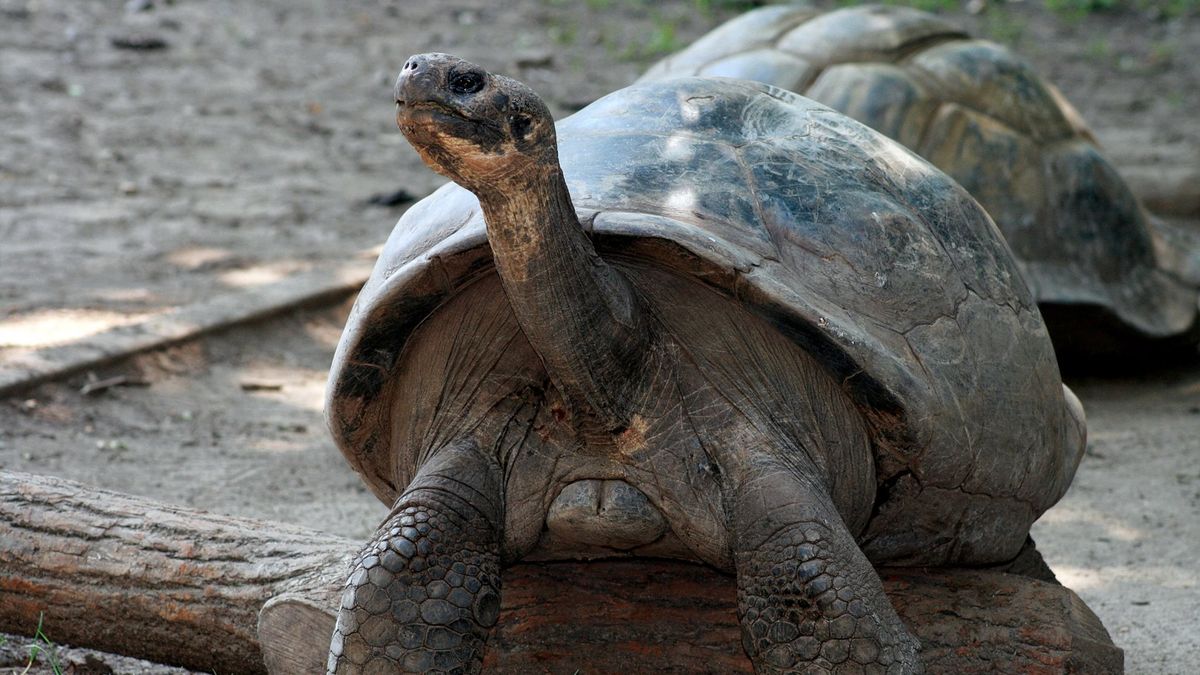
An endangered giant tortoise has become the oldest first-time mom of her species after having her first babies at around 100 years old.
Philadelphia Zoo recently hatched eggs laid by an elderly western Santa Cruz Galápagos tortoise (Chelonoidis niger porteri), named Mommy. Her exact age is unknown, but Mommy has been at the zoo for more than 90 years.
Western Santa Cruz Galápagos tortoises are critically endangered in their native home of the Galápagos Islands, and there are fewer than 50 kept in U.S. zoos. This is the first time Philadelphia Zoo has hatched western Santa Cruz Galápagos tortoises in its more than 150-year history, according to a statement released by the zoo.
“This is a significant milestone in the history of Philadelphia Zoo, and we couldn’t be more excited to share this news with our city, region, and the world,” Jo-Elle Mogerman, the president and CEO of Philadelphia Zoo, said in the statement. “Mommy arrived at the Zoo in 1932, meaning anyone that has visited the Zoo for the last 92 years has likely seen her.”
Related: World’s oldest tortoise still randy at 191 years old
Western Santa Cruz Galápagos tortoises are a subspecies of Galápagos tortoises. These giant tortoises are the largest tortoise species on Earth. Males are usually larger than females and grow up to around 1.8 meters (6 feet) long, tipping the scales at about 570 pounds (260 kilograms), according to the San Diego Zoo Wildlife Alliance.
Human activity on the Galápagos has killed off several of its tortoise species and brought western Santa Cruz Galápagos tortoises to the brink of extinction. Historically, sailors reduced tortoise numbers by hunting them for meat. People have also disrupted their habitat and introduced invasive species such as goats, which compete with tortoises for food, and predators like cats and rats, which prey on young tortoises and their eggs, according to the International Union for Conservation of Nature Red List.
Mommy is part of a captive breeding program in U.S. zoos to help safeguard this tortoise subspecies. She finally reproduced for the first time with a male named Abrazzo — who is also around 100 years old. Abrazzo moved to Philadelphia in 2020 after previously living at the Riverbanks Zoo and Garden in South Carolina, which successfully bred western Santa Cruz Galápagos tortoises in 2019, according to the statement.
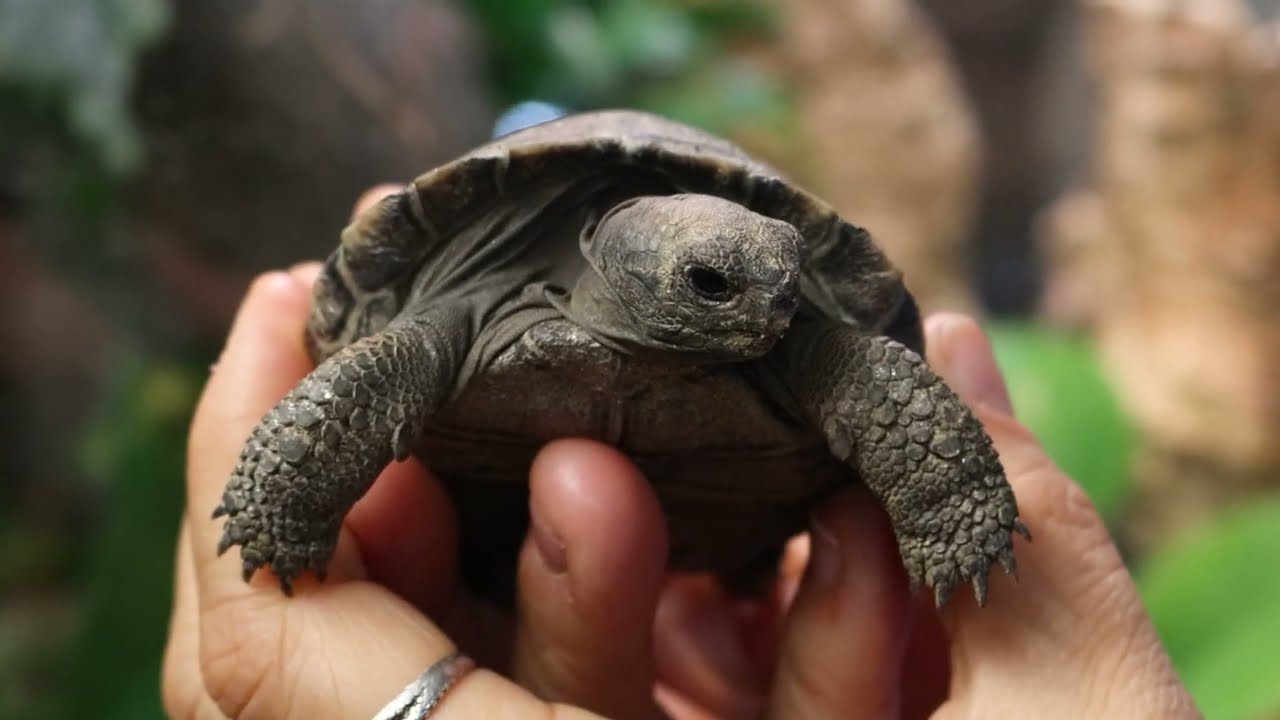
Tortoises and other reptiles usually remain capable of reproduction throughout their lives after reaching maturity, so they can keep breeding long into old age. Researchers aren’t sure how long Galápagos tortoises can live, but one individual was recorded reaching the age of 171, according to the San Diego Zoo Wildlife Alliance.
After mating, Mommy laid 16 eggs in November 2024. Keepers took the eggs and placed them in an artificial incubator. Like most tortoises and turtles, the sex of hatchling Galápagos tortoises is determined by the temperature at which eggs are incubated. Temperatures below 82.4 degrees Fahrenheit (28 degrees Celsius) produce males, while temperatures above 85.1 F (29.5 C) produce females. The keepers incubated half of the eggs at the male temperature and half at the female temperature to get a mix, but only female eggs have hatched so far, according to the statement.
Ashley Ortega, who coordinates the captive Galápagos tortoise Species Survival Plan at Gladys Porter Zoo in Texas, said in the statement that the program was “thrilled” to help welcome the hatchlings and noted that Mommy becoming the oldest first-time producing female of her species made the feat even more incredible.
“Prior to the hatchlings, there were only 44 individual Western Santa Cruz Giant tortoises in all U.S. zoos combined, so these newest additions represent a new genetic lineage and some much-needed help to the species’ population,” Ortega said. “We are excited to learn more about how we can replicate this success at other accredited zoos since the team in Philly has accomplished something that was seemingly impossible.”
