
Humans have been exploring space for almost 70 years. But if we thought all that experience would make it any easier for us to venture beyond our planet, then 2024 has put that idea to rest.
While there have been some major achievements in space exploration this year, including China returning farside lunar samples to Earth for the first time, a record-breaking student-made rocket and the first-ever private spacewalk, there have also been some major blunders from NASA, SpaceX and other organizations from across the globe.
From astronauts stranded on board a leaky space station and crashlanding moon landers to a tumbling solar sail, here are 10 of the biggest space mishaps of 2024.
Related: NASA delays historic Artemis missions — yet again
Astronauts stranded in space
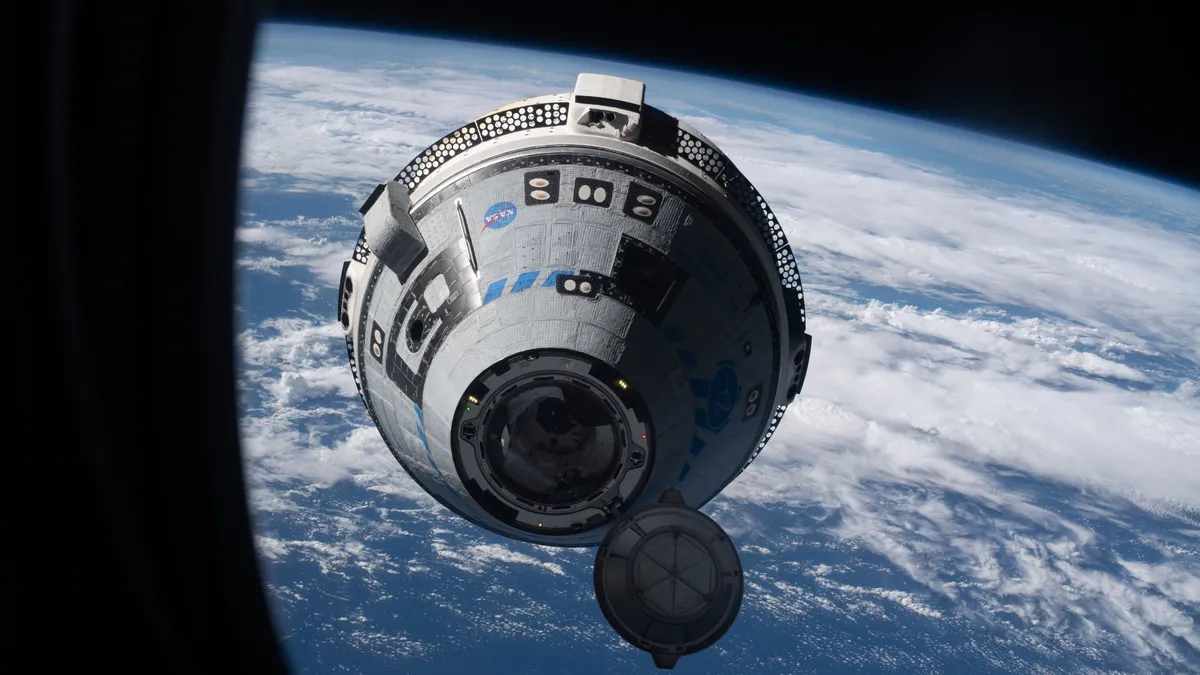
The most high-profile and long-running space mishap story in 2024 was probably the saga of Boeing’s leaky Starliner capsule, which stranded NASA astronauts Butch Wilmore and Suni Williams on board the International Space Station (ISS) in June.
The defective capsule, which had multiple issues, eventually returned to Earth without passengers in September, after several delays as NASA scrambled to find a solution. Some experts claimed that the astronauts would have been perfectly safe on board the returning vessel. However, this was disputed by other experts.
The pair were originally supposed to spend just a week in space, but by the end of 2024 they will have spent 209 days on the ISS and are not scheduled to return until at least March 2025.
ISS leak and ‘areas of concern’
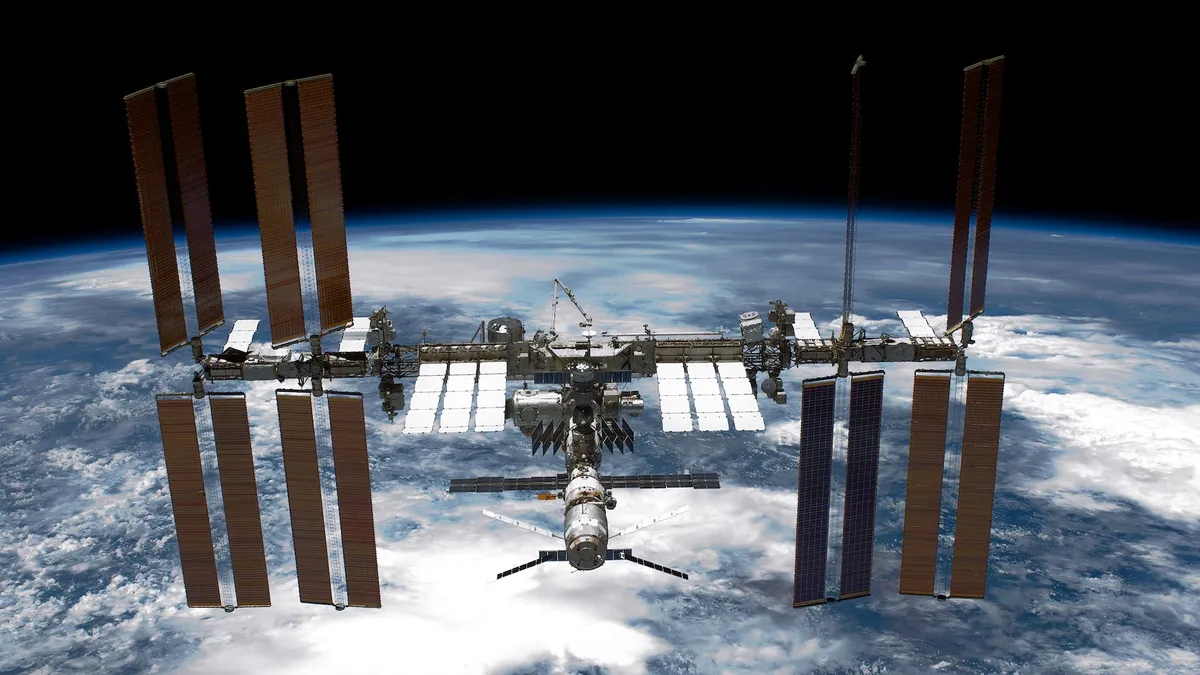
If Wilmore and Williams’ time on board the ISS was not already dramatic enough, in September, a new report highlighted the urgency of a long-running leak aboard the space station and identified 50 additional “areas of concern” related to it.
The leak was first identified in Russia’s section of the ISS in 2019 and has since spawned several other cracks in that part of the station. The leak and resulting cracks have been temporarily treated with “sealant and patches” but are still letting some air escape into space.
The new report warned that a permanent fix is needed to avoid a cascade of other issues and a potential “catastrophic failure” in the next few years. However, the Russian space agency Roscosmos disagrees about the severity of the issue and is so far refusing to fix it, likely because the ISS is scheduled to be demolished in 2030.
Florida house hit by space junk
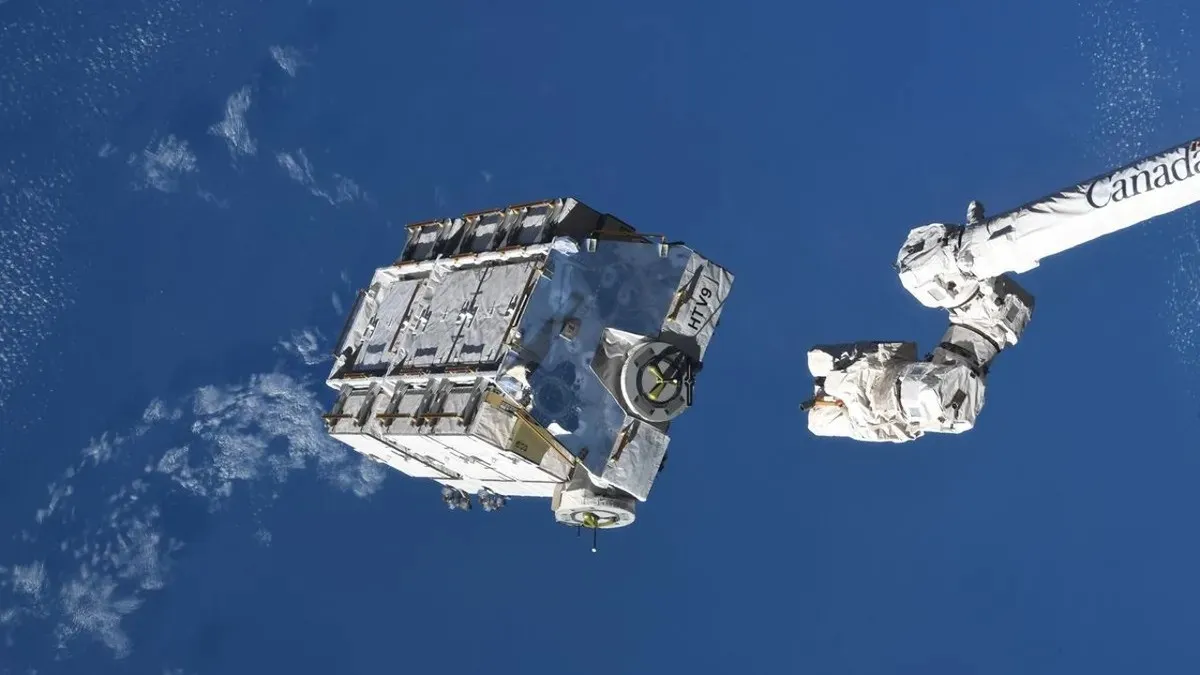
The final and potentially most alarming ISS mishap of note this year was when a mysterious piece of space junk fell back to Earth in March and crashed through the roof of a family house in Naples, Florida.
NASA later admitted that the falling debris, which was around 4 inches (10 centimeters) across, was the charred remains of a pallet of batteries ejected from the ISS in 2021. The debris was expected to completely burn up in the atmosphere, but this did not happen.
In June, the house’s owners filed a lawsuit against NASA, asking the agency to pay up to $80,000 in damages. This case has not been resolved yet.
Moon lander fails
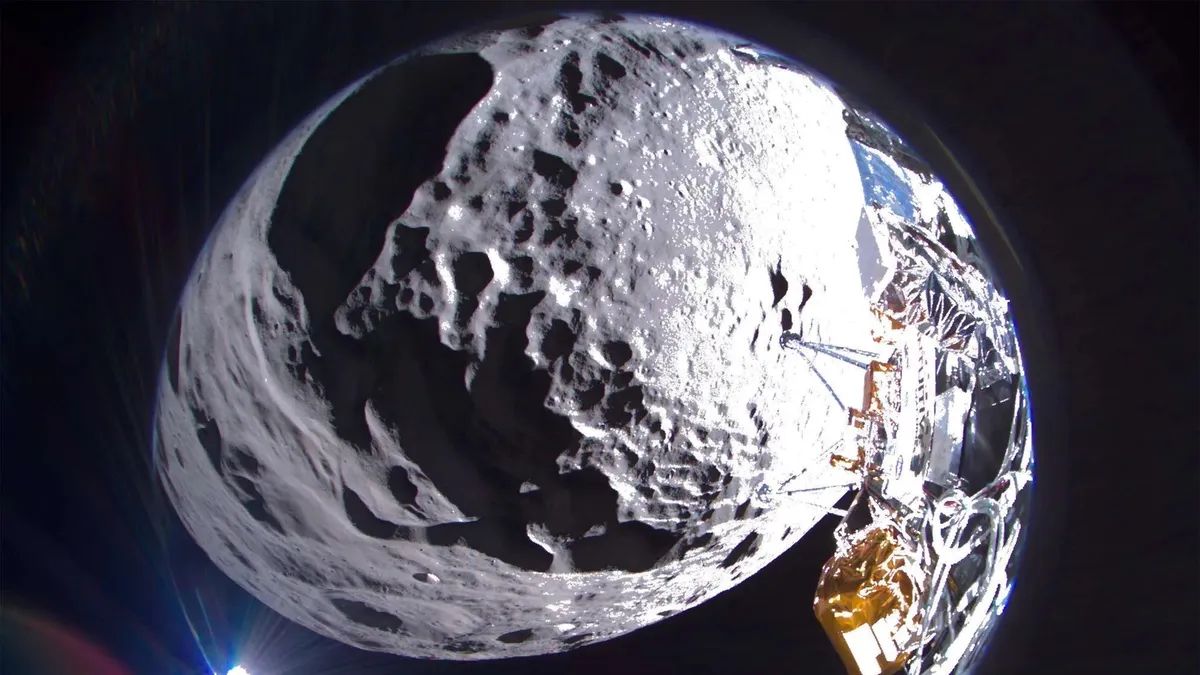
While China’s lunar samples return mission has been a huge success this year, other agencies and private organizations have had less success in sending spacecraft to the moon in 2024.
First, in January, Astrobiotic Technology’s Peregrine spacecraft, which was carrying the first private lunar lander to the moon, malfunctioned shortly after takeoff and became stranded in space before eventually falling back toward our planet and burning up in our atmosphere. This launch had already been heavily criticized before takeoff because the spacecraft was attempting to carry human remains to the moon.
Later the same month, Japan successfully launched and landed its Smart Lander for Investigating the Moon (SLIM), also known as the “moon sniper” thanks to its incredibly accurate navigation system. However, the spacecraft didn’t live up to its nickname and ended up landing upside down. Despite this, the lander managed to survive for several months despite its solar panels being pointed at the ground.
In February, another private lander, Odysseus, completed its trip to the moon and became the first U.S. spacecraft to touch down on the lunar surface in more than 50 years. However, the spacecraft, built by Intuitive Machines, also didn’t quite stick the landing and ended up faceplanting in the dust, shortly before succumbing to the bitter cold of the lunar night.
Tumbling solar sail
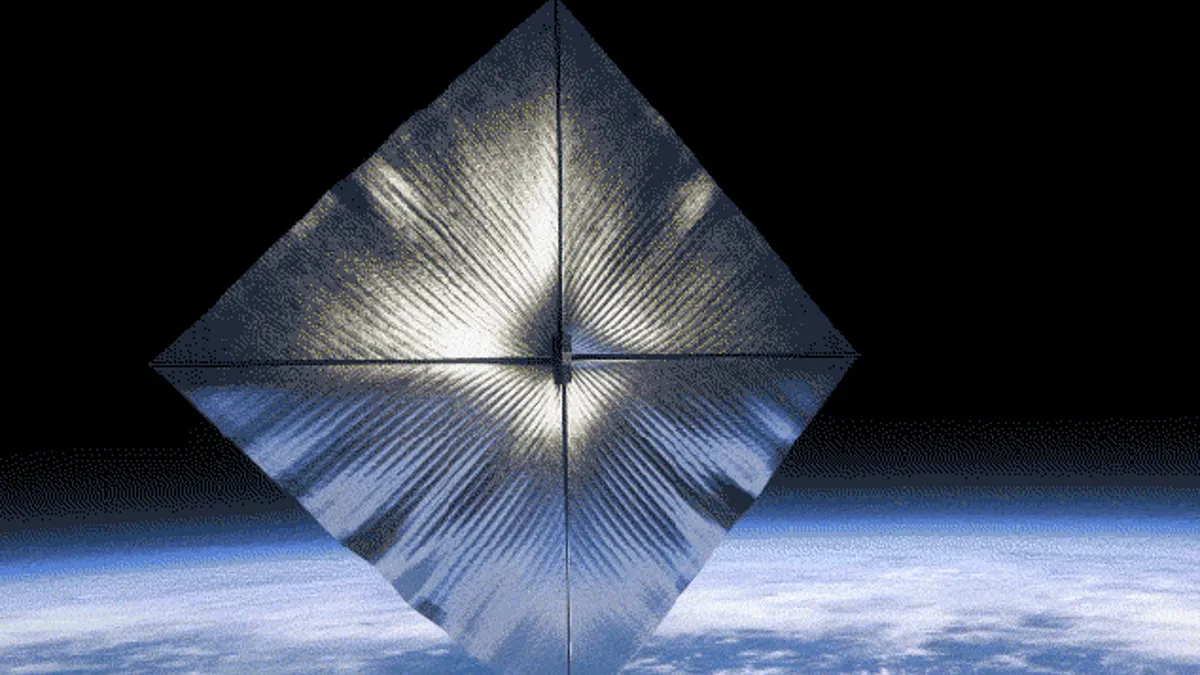
In August, attention turned to NASA’s new Advanced Composite Solar Sail System (ACS3), which finally unfurled its massive 860-square-foot (80 square meters) foil sail after launching into space in April. However, the big reveal didn’t exactly go to plan.
Live Science was the first outlet to report that initial observations suggested the solar sail was uncontrollably tumbling end over end in orbit around Earth, which was later confirmed by the first photos of the giant silver sail. However, mission scientists claimed this had been expected and said the issue would be resolved shortly.
But in October, Live Science’s sister site Space.com revealed that the main boom holding ACS3’s sail had bent and the spacecraft was still tumbling. It is unclear if this problem has been rectified.
Mars robots take a hit

In January, NASA’s Ingenuity helicopter ended its roughly three-year mission after sustaining fatal damage in a crash landing during its 72nd flight on the Red Planet. Subsequent photos revealed a large section was missing from one of the flying robot’s rotor blades, damage which cannot be repaired.
The helicopter is still technically operational and could have a second life as a weather station over the next few decades. But astronauts might need to go to Mars to retrieve any of the data it collects.
NASA’s Curiosity rover, which has been tirelessly surveying Mars for more than 12 years, also sustained some serious damage this year.
Images released in September show a series of holes in the rover’s middle right wheel, including a gaping tear that exposes the inner mechanisms of the wheel’s drum. However, the rover shows no immediate signs of being slowed down by its injuries and is currently en route to explore mysterious Martian “spiderwebs.”
Multiple Voyager issues

After more than 90 combined years of relatively smooth sailing through the solar system, and now interstellar space, NASA’s historic Voyager probes experienced some pretty major issues in 2024.
Voyager 1, which launched in 1977 just a few weeks after Voyager 2, has had the most eventful year of the two probes. The craft spent the first few months of the year transmitting “gibberish” signals. NASA identified the problem and implemented a temporary fix in March when the probe was a staggering 15 billion miles (24 billion kilometers) from Earth. But the problem partially persisted until the agency eventually restored full communication in June.
Then, in September, the probe performed a risky maneuver to start relying on different thrusters, after its main propulsion system suddenly went offline. And in October, NASA temporarily lost contact with the probe again when its main radio transmitter broke and it had to switch to a backup.
Voyager 2 had a quieter year but also experienced some setbacks, including having to shut off one of its long-running scientific instruments to conserve its dwindling power levels.
Falcon 9 rockets grounded (3 times)
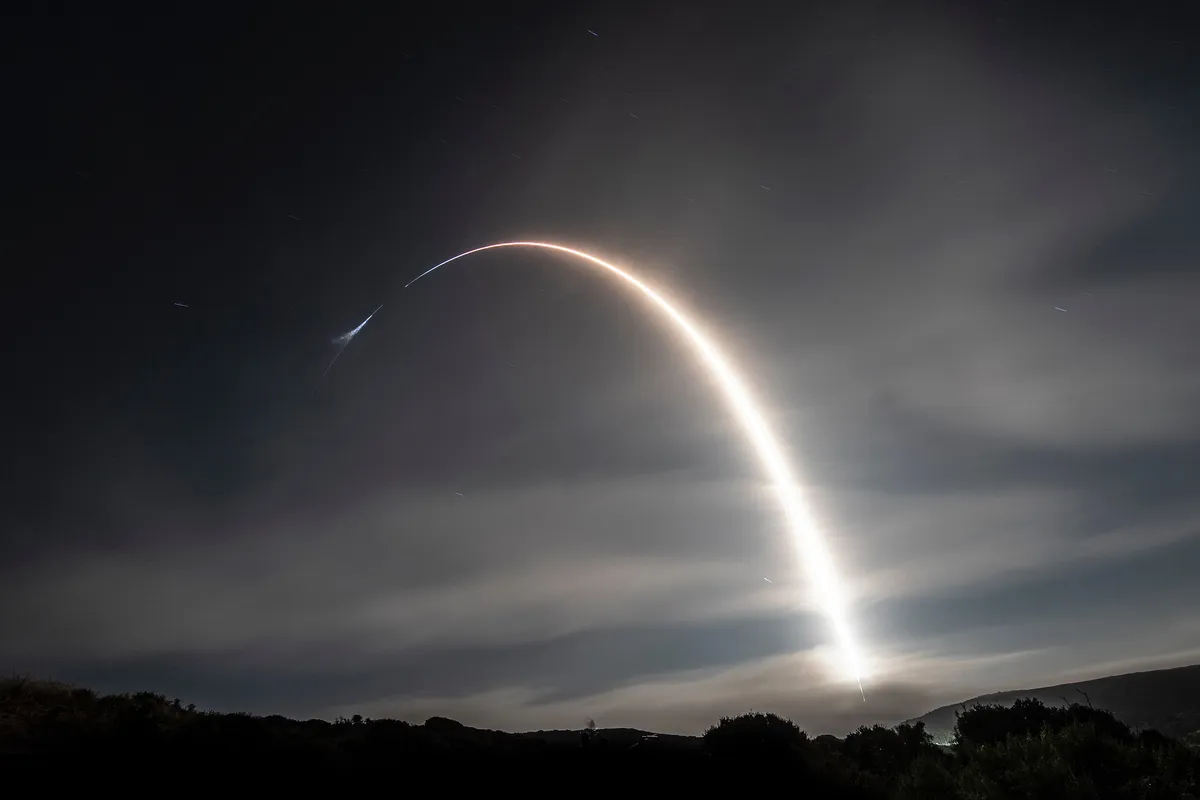
SpaceX’s iconic Falcon 9 rockets have shattered records in 2024, launching more than 120 times this year — mostly to deploy the company’s ever-expanding Starlink megaconstellation.
However, these launches have not always been plain sailing. The rocket was temporarily grounded three times in three consecutive months this year as federal agencies investigated various malfunctions with the spacecraft.
The first grounding occurred in July when 20 Starlink satellites unexpectedly fell to Earth after being prematurely released into low-Earth orbit by their rocket. The second temporary ban came into effect in August when one of the rocket’s reusable boosters exploded during a routine landing. And the third no-flight order came in September when another rocket crashed back to Earth in the wrong part of the ocean.
Starship lost (and blowing holes in the atmosphere)
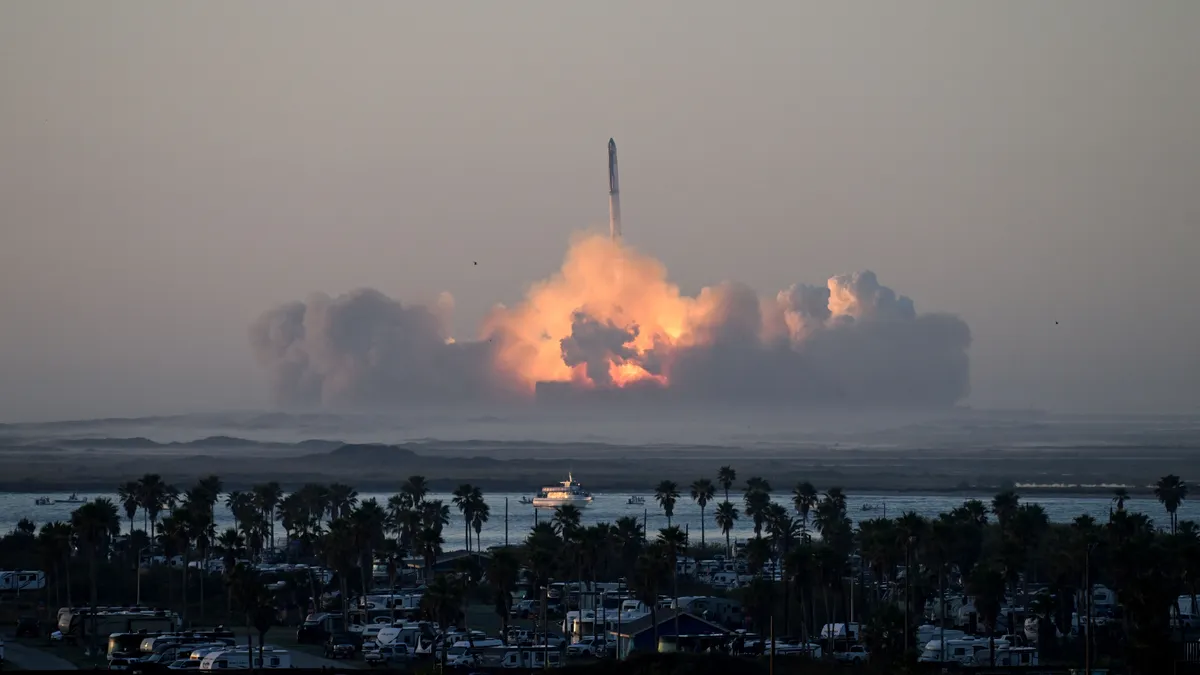
While Falcon 9 has been busy in 2024, SpaceX’s superheavy Starship rocket has often overshadowed its smaller relative with multiple high-profile launches this year — and the first successful recovery of one of its boosters, which was caught with chopstick-like pincers.
However, the larger rocket has also run into a few problems this year, most noticeably when it was lost in the Indian Ocean in March, shortly after making it into orbit around Earth for the first time. The spacecraft was misplaced after a communication error prevented SpaceX from tracking its reentry.
This year it was also revealed that Starship’s second-ever launch, which happened in 2023, triggered a first-of-its-kind atmospheric hole when the rocket exploded shortly after liftoff.
Shattering spacecraft
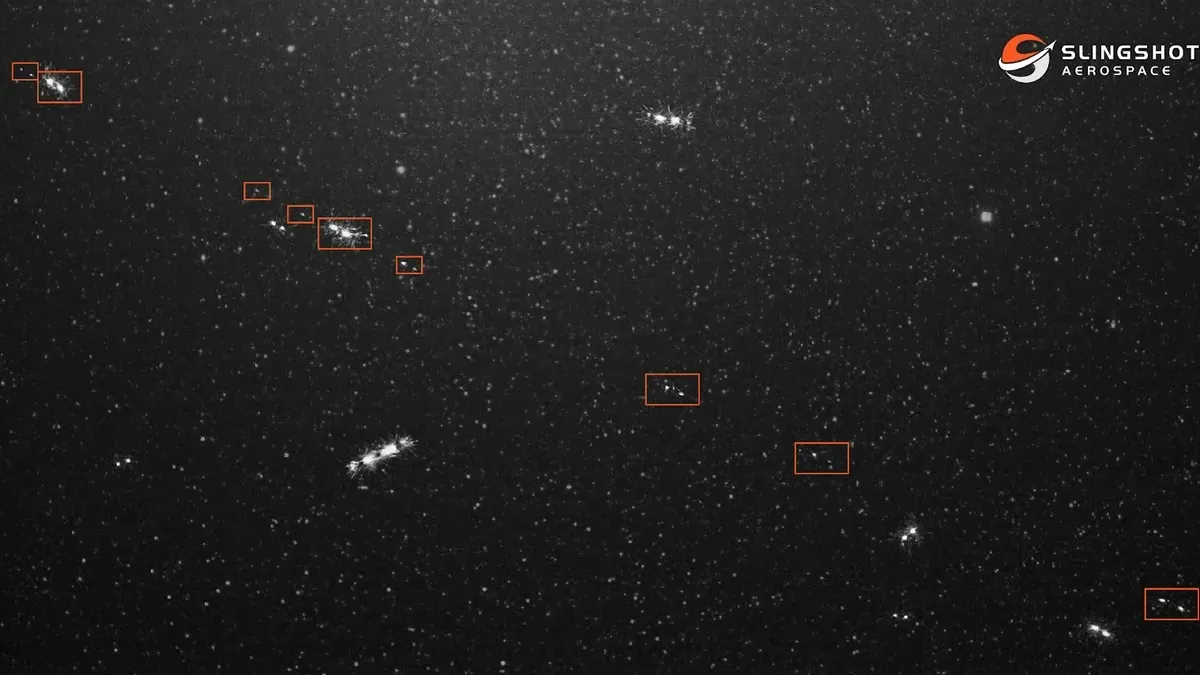
As the space around Earth becomes increasingly crowded, the potential for things to go wrong — and the potential fallout from these disasters — also increases. And 2024 gave us several reminders of this.
First, in June, ISS astronauts had to temporarily shelter in their return capsules — including Boeing’s leaky Starliner pod — when Russia’s Resurs-P1 satellite suddenly broke into more than 100 pieces near the space station.
Then in August, a Chinese rocket exploded into more than 300 pieces after deploying the first of the country’s “Thousand Sails” satellite constellation in space. It is still unclear exactly what went wrong. However, astronomers are concerned about how extremely bright the new satellites are.
And in October, the Boeing-made satellite Intelsat 33e suddenly shattered into more than 20 pieces without warning. Scientists are still trying to figure out what happened.
There was also a close call in February when a NASA probe and a Russian communication satellite narrowly avoided colliding with one another, which could have ended up being even more destructive than the examples above.
