
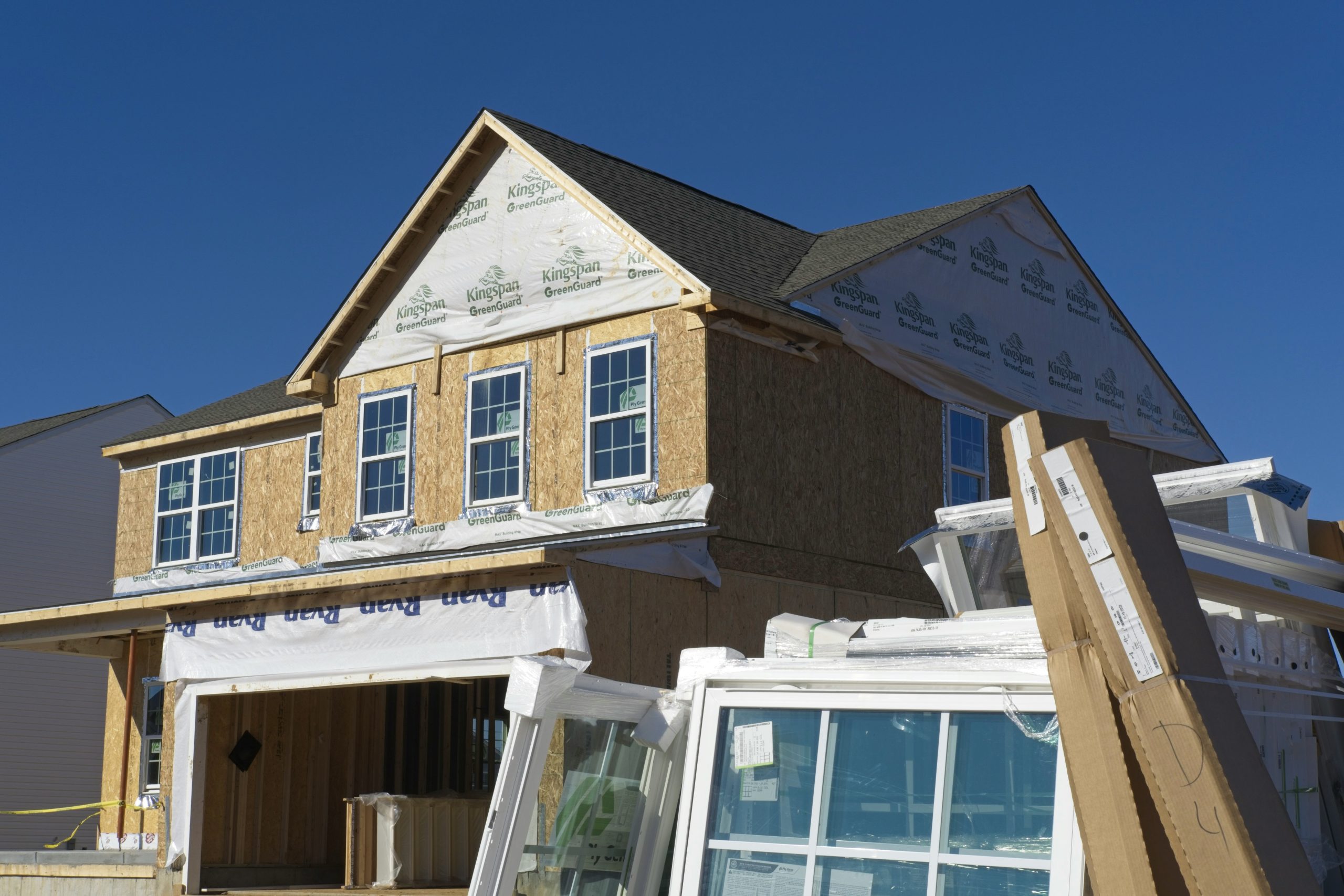
Could this be the year Minnesota finally takes a chunk out of its housing affordability problem? A proposed state bill that’s aiming to rewrite rules to make it easier to build homes and improve supply-driven affordability might finally be able to make it through the Minnesota Legislature.
According to insiders at the Capitol, a zoning compromise driven by a bipartisan group of younger legislators is picking up steam this legislative session, and it could deliver thousands of new homes across the state.
The bill, introduced March 3, is dubbed the Minnesota Starter Home Act. It is a choose-your-own-adventure set of regulations that would allow local governments to establish rules for new housing in their communities and would also block local governments from stopping or slowing housing developers who follow those rules.
To illustrate problems with the current system, Nick Erickson, of Housing First Minnesota, recalls a housing project that the trade association proposed building in Eagan in 2024.
Housing First had planned to build 30 new homes for homeless veterans. The proposal was whittled down to 26 before it was officially submitted to the city to try to meet their specifications. Then, they reduced the project down to 22 units, because city staff asked Housing First to add garages, even though more than four in five of the residents didn’t own a car, according to Erickson. The result was less housing, built more expensively.
Related: New study on affordable housing rekindles long-simmering debate
An Eagan representative says the city pushed back according to code: “To help the development move forward, the City allowed more flexibility from City Code than is typically granted. … This flexibility allowed several more units to be developed than would otherwise have been permitted under standard code requirements.”
But, as Erickson says, “the end result was less housing for veterans.”
Where the bill goes from here
The bill awaits an official hearing in committee. Then, unlike previous versions of this legislation, which never made it out of committee, the hope is that it will move to the full House and Senate for passage.
The primary conflict that has held back a potential deal the last few years centers around whether local governments should be able to set their own housing regulations while also using their planning commissions, or other governing bodies, to further check new construction. The net result is that many housing proposals have shrunk in size, seen their costs driven up — or have been blocked all together.
The bill would give cities a list of regulations local governments must follow, regarding such requirements as increased floor area ratios, height restrictions on new buildings, additional units permitted on parcels zoned for single-family housing, no parking minimums and the formation of local housing trusts. Larger cities would need to comply with more points than smaller towns. Then, municipalities could choose from a list of new rules to decide which work best for them in the lead-up to the bill taking effect in 2028.
In a more recent Eagan example, a developer proposed a plan to build 100 new apartment units in the city. Last week, the Eagan planning commission voted against rezoning the land in a way that would allow the project to move forward, by a vote of 6–1. The developer withdrew its application to build before the city council could issue a final ruling.
Why the current system holds back housing development
Developers must adhere to federal regulations, state regulations and the regulations of whichever county (Minnesota has 87) and municipality (854) they’re trying to build in. It’s a full-time job and then some just to learn the regulations, and it makes it very easy to encounter regulatory roadblocks that thwart the creation of much-needed housing.
That has contributed to Minnesota’s housing shortage, which has in turn inhibited Minnesota’s growth. According to Libby Starling, of the Federal Reserve Bank of Minneapolis, “the State of Minnesota is not only underbuilding the Governor’s Housing Task Force goal of 25,000 new units per year, but also permitting in 2025 less than half the new units permitted in 2004.”
Today, municipal planners can put up additional roadblocks in the form of community meetings, forcing developers to make deals with communities — which often cut units by shrinking projects, or raise costs by altering building materials or structures. Even in situations where developers make it through that gauntlet, delays can hike costs, cause projects to lose financing, and end up driving developers out of the market.
Madison McVan, of the Minnesota Reformer, broke down the state of play over the last two legislative cycles, where a more aggressive approach in 2024 begat a more moderate approach in 2025. That watered-down effort still couldn’t make it out of the necessary Senate committee for the full body to vote it into law.
A key element of the compromise would be an administrative approval process that’s similar to the one Rochester already uses at a municipal level. As long as the developer follows rules set by local governments, they can build. If there’s no legal recourse to deny a project, the city adds the project to the consent agenda without a one-off review. It gets approved, and building can begin.
Rising construction costs making building more difficult
Minnesota is facing a housing shortage, a factor that’s slowing the state’s population growth, according to the Housing Affordability Institute, a think tank linked to homebuilders. “As a result, Minnesota now faces higher prices for both new and existing homes than any state in the region, effectively removing any ‘affordable alternative’ for would-be buyers,” the institute states. A major factor it cites is how expensive it is right now to build.
For housing developers, the math on new construction has changed rapidly in the past few years. Construction costs in Minnesota are up 46.7% in Minnesota since 2020, a number that actually trails the national average and markets like Chicago and Milwaukee, according to Mortenson’s Construction Cost Index.
Many of those cost increases are related to sticky supply chain and inflation issues. With building costs soaring for new housing, zoning practices can make projects unaffordable if they add costs.
Some mayors prefer Met Council approach
Many municipal leaders are not convinced that a state compromise is the right answer. The Metropolitan Council’s comprehensive planning process, which happens every 10 years and is more deliberative, is one that a few mayors prefer to a statewide overhaul. Many of these mayors are philosophically opposed to reducing local governments’ decision making power.
The Met Council, a policy-making board that works to guide Twin Cities metro growth, recently released its 2050 plan. It forecasts that the region will grow by 650,000 people by 2050, and it calls on cities and towns to set aside land for enough housing. However, it falls short of specifying a goal for total units to be built.
Prior Lake mayor Kirt Briggs suggested that issues with housing should be addressed through the Met Council’s plan, rather than through a statewide process. “If there is a problem with the comprehensive planning process, I would contend that those problems could be addressed absent a ‘one-size-fits-all’ legislative change,” he said.
Richfield mayor Mary Supple suggested many elements of zoning reform had already been adopted by Richfield, but she said she preferred local policies to statewide reform. “Many of the changes being proposed are already in our code here in Richfield, but the key point is we made those changes because they were right for our city. I think the Legislature would be wise to incentivize changes instead of mandating them. … Local control also adds a layer of protection against unintended consequences that might not be foreseen in a statewide bill.”
Eagan mayor Mike Maguire shared that he didn’t think the process represented a compromise between two sides working toward a shared goal and that he opposes a state zoning overhaul altogether. “I wouldn’t characterize it as working towards compromise—it’s been legislators making proposals to overhaul local land use perspectives.”
Maguire did mention that he feels the approach this session has been better than in past year. “The challenge is that the legislators took an approach that was driven by the builders and affordability advocates, and they started to move forward without local governments. That dialogue has improved over the years.”
However, he’s still not in favor of the current bill as it’s written. “I am not convinced that the approach they’re taking will increase production and affordability. They are approaching the problem of production and affordability and focusing more on production.”
Why a zoning deal might finally happen
The issue is being driven by younger legislators of both parties, a fact that is not lost on Erickson, of Housing First. “The issue isn’t partisan in a traditional sense — it’s partisan in a generational sense. The Legislature keeps getting younger, and the younger legislators have only lived in a housing affordability crisis.”
The main push for the bill has been bipartisan, pairing Democratic State Senator Lindsey Port and Representative Mike Howard with Republican State Senator Spencer Igo and Jordan Rasmusson as leads on the bills. In a Legislature where the average age is 56 years old, it’s notable that all four are under 44.
Related: Distressed property: Minnesota housing providers struggle to keep up with costs, forcing closure of some buildings
In addition to those four, co-sponsors include an ideologically and geographically diverse set of representatives that include Democratic Representatives Larry Kraft, Katie Jones, Kari Rehrauer and Liish Kozlowski and Republican Rep. Jim Nash, as well as Democratic Sen. Liz Boldon and Republican Sen. Rich Draheim.
Sen. Port believes a solution may finally be in sight. In an email to Twin Cities Business, she mentioned housing affordability as the big driver of her support: “We’re over 114,000 housing units short of what we need, and there is not a single county in the state where the median household income is enough to afford the median home. I think we’re nearing a package that works for everyone.”
This article originally appeared in Twin Cities Business.
