
Usually, the Minnesota Budget and Economic Outlook is a chart-laden oracle in PDF form, shaping the stories politicians tell about the state’s economy and determining how much the Legislature can spend on favored policies.
But the outlook that Minnesota Management and Budget released Friday could be limited in how much it guides lawmakers who are juggling competing policy priorities and an upcoming election.
On the surface, the forecast is positive. At the end of the state’s two-year budget cycle, June 30, 2027, Minnesota is predicted to have a budget surplus of $3.6 billion.
And even at the end of the next two-year budget cycle, the state is anticipated to enjoy a $377 million surplus. This is a far cry from last February’s forecast that anticipated a $6 billion budget deficit in 2029.
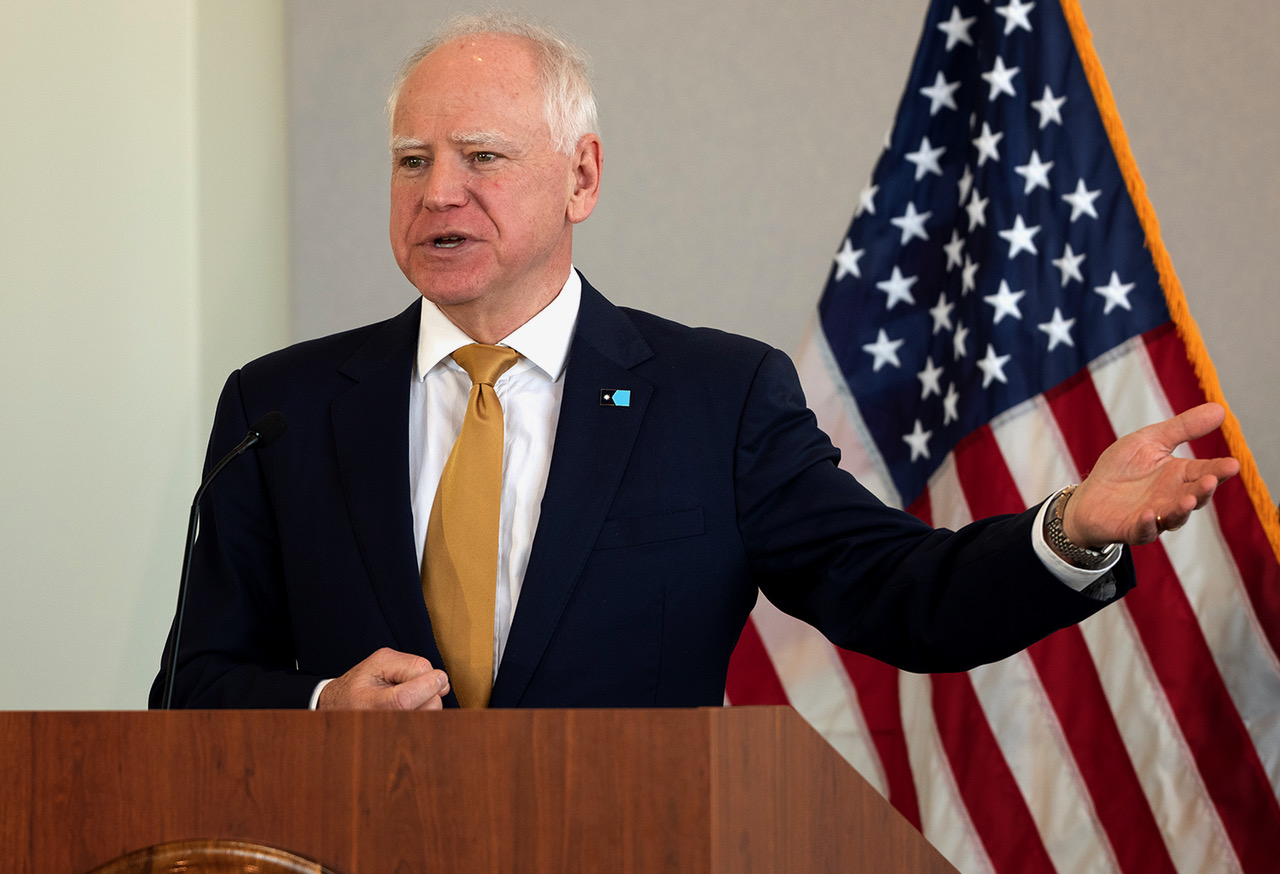
“I’m going to leave the state in good shape,” outgoing Gov. Tim Walz told reporters Friday in St. Paul.
However, officials from Minnesota Management and Budget cautioned that the outlook does not take into account funding that the Trump administration is attempting to take from Minnesota.
Federal officials said Wednesday that they would claw back $259 million in Medicaid funding from the state. This is on top of $2 billion the Trump administration previously threatened to cut from Medicaid, and a $467 million cut in child care funds that is tied up in court.
“This forecast comes with the biggest asterisk ever,” said House DFL Leader Zack Stephenson of Coon Rapids.
State officials also professed uncertainty about what is next regarding federal policy on tariffs and immigration. And forecast authors acknowledged that data “will not be available for several months” to account for the economic impact of Operation Metro Surge.
Meanwhile, Republicans who are a one-vote minority in the Senate and share power in the House, may focus the session on a pair of tax cuts.
Related: Protecting police, pursuing ‘agitators’ and fraud, fraud, fraud: What Republican legislators are up to in St. Paul.
This means that bills from a new vocational training database to emergency rental assistance could stall out in the last legislative session presided over by Walz.
Next month, the governor will release a proposed budget to supplement the two-year budget that he and the Legislature agreed to last session.
Walz said that he would propose a “relatively modest budget across the board.”
He described comprehensive gun control and anti-fraud packages proposed earlier this week as “almost budget neutral.”
Here is what else to know about the state’s economic outlook and how it will shape taxes and state spending.
What did you learn from reading the forecast?
Overall state spending ticked down, mostly due to the state’s audit of direct payments it makes to certain Medicaid providers. The report claimed that the state is projected to save $133 million in this two-year budget cycle thanks to this new prepayment review process.
Forecast spending for this two-year budget cycle is a little over $70 billion. Anticipated revenue, meanwhile, is set at over $67 billion.
The reason the state can spend more than it is generating in revenue is because, over time, Minnesota built a budget surplus that stands at $10 billion.
Also, the forecast for revenue in the state has improved compared with last year’s economic outlook, in large part because of taxes paid by Minnesotans who are reaping profits on stock exchanges.
Minnesota also boasts a $3.7 billion reserve, or rainy day, fund that does not count toward the state’s operating revenue at hand.
Where the forecast gets murkier is predicting the future of the state and national economy. The document warns of a pessimistic scenario of “higher across-the-board tariffs and more retaliatory actions by trading partners.”
The report is mostly mum on the Medicaid and child care cuts, except to state, “Whether or not Congress or the courts will restore funding creates a forecast risk.”
How are DFLers (and Minnesota economists) spinning this?
Walz said it was a “good day” in Minnesota, though the governor was partly referring to the sunny and in the fifties weather.
But Stephenson and Senate Majority Leader Erin Murphy, DFL-St. Paul struck a different note. They both said that it was concerning that the rising revenue was due to Wall Street profiteering instead of a lower unemployment rate or less consumer loan defaults.
Economists interviewed also highlighted the fact that while Minnesota’s economy is growing, state unemployment has risen by 1.1% in the past year.
Related: How’s Minnesota’s economy? The answer depends on your income bracket
“You combine three things that could be considered headwinds – tariff uncertainty, the ICE raids, and rising unemployment – and you would imagine that the economy is tanking. But it’s doing quite well,” said Joe Anderson, economics professor at Macalester University.
Others noted the dangers of a surplus that is buoyed largely by the taxes on “nonwage income,” or the money individuals realize from their stock portfolios.
“It’s lovely to see the revenue forecast as strong as it is but you realize that it wouldn’t take a lot to make that forecast appreciably worse,” said King Banaian, professor of economics at St. Cloud State University.
“We are more sensitive than ever before to a drop of 15-20% in the stock market, even if it is not accompanied by a recession,” said Banaian, a former Republican state legislator from St. Cloud.
How are Republicans spinning this?
House Speaker Lisa Demuth, R-Cold Spring, and Republican front-runner for governor, talked about wanting a state law to conform with a new federal law that says you cannot be taxed on tip and overtime wages.
The Speaker acknowledged that such a state law would result in hundreds of millions of dollars in lost revenue. But Demuth said, “No tax on tips and no tax on overtime” would “help our main street businesses continue to be job creators to keep our state strong.”
Republicans also embraced the Trump administration, even after President Donald Trump said earlier this week that “Somali pirates” in Minnesota have “pillaged” at least $19 billion from taxpayers. Most estimates of fraudulent spending throughout the entire Walz administration hover around $1 billion.
Senate Minority Leader Mark Johnson, R-East Grand Forks, said “cheers” to the federal government and “jeers” to the state government.
