NEWYou can now listen to Fox News articles!
The remains of a 17th-century ship recently resurfaced after winter storms ripped open a beach in the United Kingdom.
The vessel was found at Studland Beach in Dorset, along the southwestern coast of England. Bournemouth University announced the discovery in a Feb. 9 press release.
The ship is believed to be a vessel called “The Fame,” a merchant ship from Hoorn, the Netherlands, that sank in 1631 after running aground.
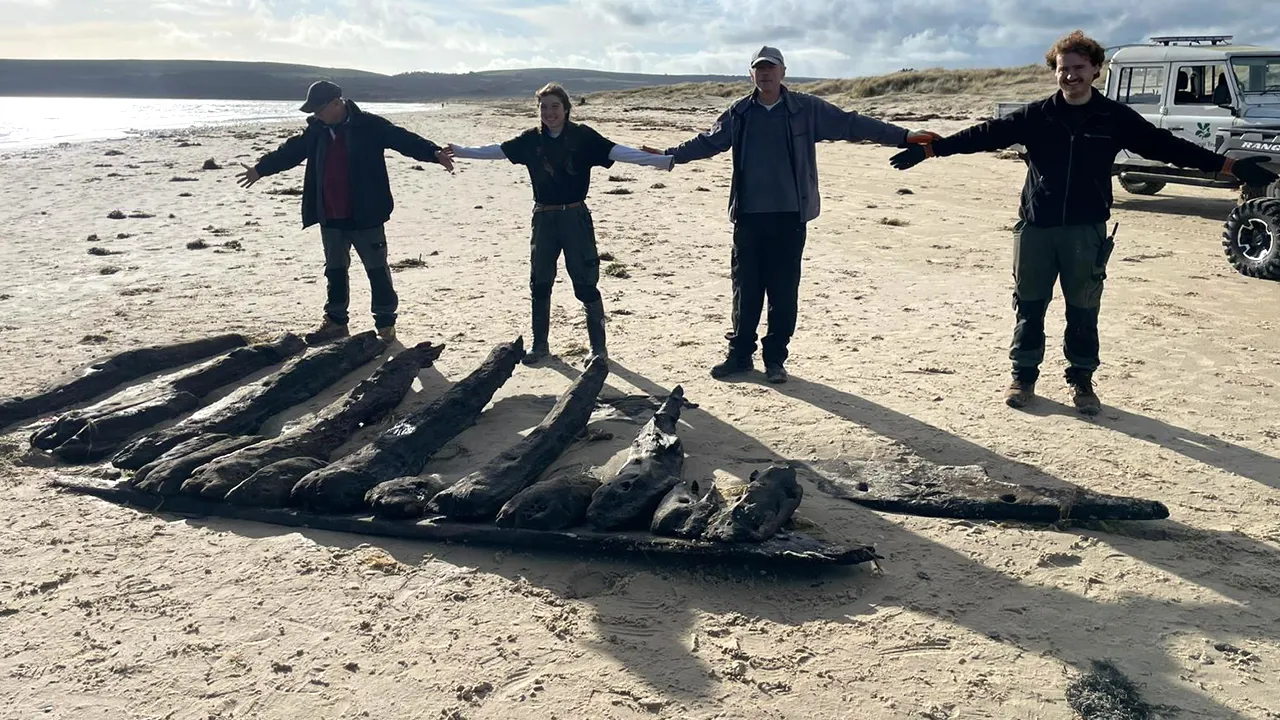
The timbers measure nearly 20 feet long and about 6.5 feet wide, and officials said the ship’s section “consists of at least 15 frames connected with wooden treenails to five outer hull planks.”
The statement noted, “The frames appear eroded, but the hull planks are in excellent condition.”

The remains of a 17th-century merchant ship resurfaced at Studland Beach after powerful winter storms, officials say. Underwater pictures show the Swash Channel wreck, possibly related, at right. (National Trust, Fleur Castell; Bournemouth University)
“There would originally have been another layer of planking on the inside of the vessel, but this appears to have been lost.”
The planks have been buried since the 1630s and have been “intermittently exposed” since, according to the university.
ANCIENT PLEASURE BOAT FOUND NEAR PALACE RUINS TIED TO HISTORY’S MOST CONTROVERSIAL QUEEN
“This explains why the inner planks are missing and frames eroded, while the outer hull planks survive in such good condition,” said the statement.
“The ship was reported to have dragged its anchor, grounding on a nearby, notorious sandbank where it broke its back.”
Though the timbers surfaced only recently, the wreck itself was first discovered in the 1990s in the Swash Channel near Poole Harbor.
During a 2013 excavation, archaeologists noted some pieces were missing — and now believe those sections have been found.
EXTRAORDINARY MASS GRAVES FROM CENTURIES-OLD BATTLES EMERGE ALONG HIGHWAY ROUTE
The ship “would have been capable of carrying more than 40 guns to defend itself against pirates during voyages to the Caribbean to bring back salt,” per the statement.
Also, the ship was reported to have dragged its anchor, grounding on a nearby, notorious sandbank where it broke its back,” the university said.
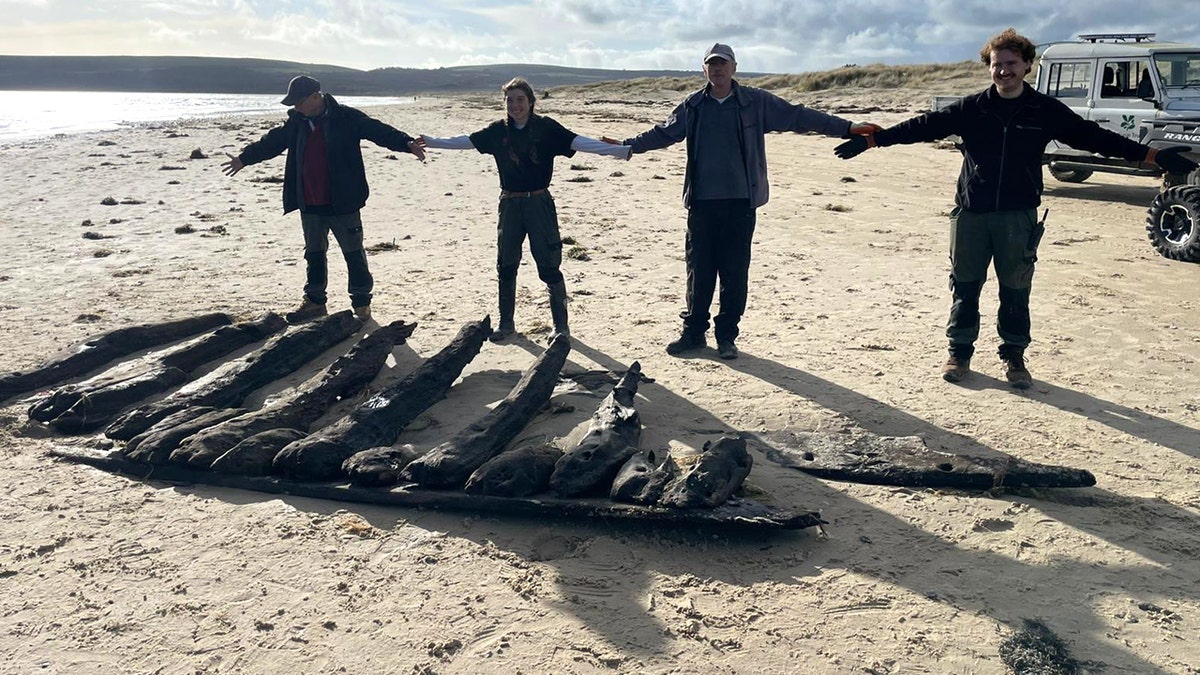
National Trust officials are urging visitors not to touch or damage the exposed timbers, as shifting sands continue to reveal fragile sections of the protected site. (National Trust, Jamie Lamb-Shine)
“Records state that all 45 crew abandoned ship safely, but local residents quickly set to work looting the wreck.”
Tracey Churcher, general manager of the National Trust in Purbeck, called the discovery “a real treasure.”
TEST YOURSELF WITH OUR LATEST LIFESTYLE QUIZ
“I’m always astounded by the history we find at Studland,” she said in a statement.
“The wooden tree nails are still in place and holding after 400 years — what a testament to the craftsmanship at the time.”
“Four hundred years ago, the area that’s now the beach, where the wreck was revealed, was open sea.”
An excavation is slated for the near future, said Fleur Castell, a spokesperson for the National Trust.
Castell told Fox News Digital the discovery “highlights the dynamic and constantly evolving nature of Studland’s coastline.”
CLICK HERE TO SIGN UP FOR OUR LIFESTYLE NEWSLETTER
“Four hundred years ago, the area that’s now the beach, where the wreck was revealed, was open sea,” she said.
Shifting sands and powerful winter storms have accelerated changes along the coastline, Castell added — exposing fragile sections of the protected wreck that officials say must not be disturbed.

The exposed timbers likely belong to “The Fame,” a Dutch merchant vessel that ran aground and sank in 1631, officials said. (Bournemouth University)
The release said visitors “are asked to help protect the site by not touching or damaging the exposed timbers.”
Tom Cousins, a maritime archaeologist who inspected the wreck, told Fox News Digital the site is currently being protected by the National Trust.
CLICK HERE FOR MORE LIFESTYLE STORIES
“Historic England will then fund a project to get the timbers back to our conservation lab in Poole, where we can record them in detail,” he said.
Dendrochronology testing will determine the exact age — and identity, the experts hope — of the ship.
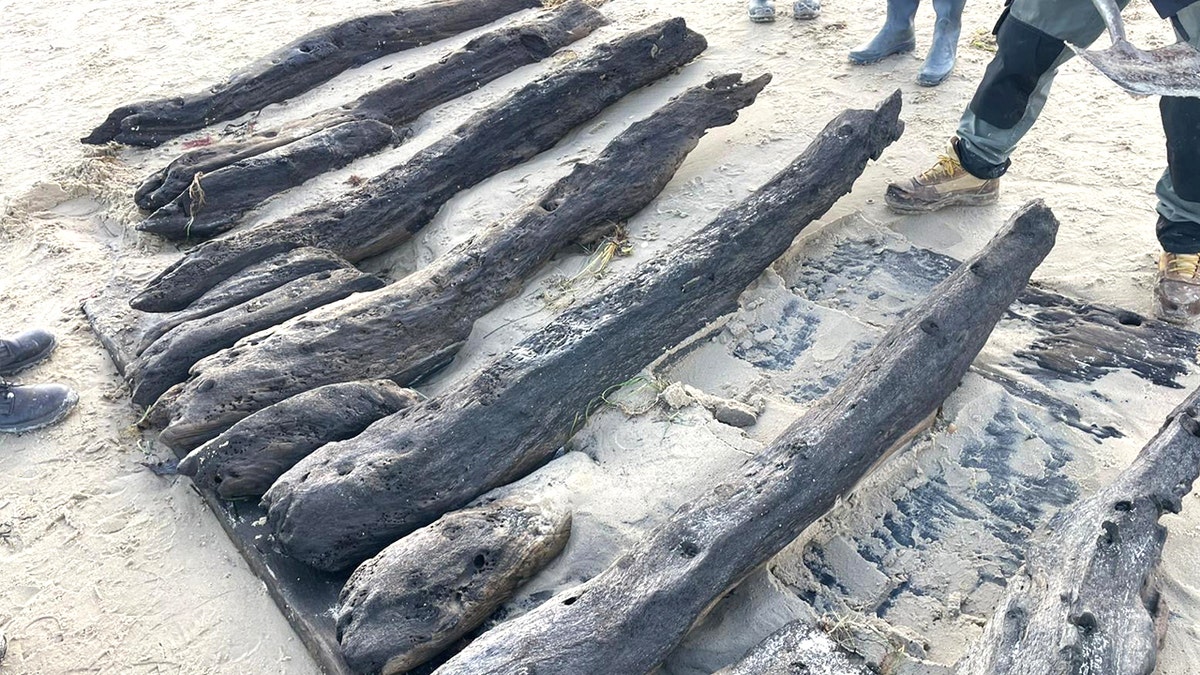
Dendrochronology testing is expected to determine the precise age of the wood and confirm the ship’s identity in the coming months. (National Trust, Jamie Lamb-Shine)
The discovery is the latest in a long list of historic maritime finds over the past year.
Last summer, officials announced that they identified two slave ships off the coast of Central America.
CLICK HERE TO GET THE FOX NEWS APP
Also, last year, a centuries-old ship was found beneath a former fish market in Spain.
Related Article