Close Menu
  • Home
  • UNSUBSCRIBE
  • News
  • Lifestyle
  • Tech
  • Entertainment
  • Sports
  • Travel
Facebook X (Twitter) WhatsApp
Trending
  • Priyanka Chopra on Husband Nick Jonas, Late Dad’s Approval
  • Steak ‘n Shake offers Bitcoin bonus to workers in fast-food industry first
  • Here’s a smarter way to store your files without endless subscription fees
  • Transfer Centre LIVE! 'Spurs players facing wage cuts if club relegated'
  • Lily Collins on Sharing Eating Disorder Struggles
  • Iran-U.S. war chokes key shipping lane and threatens global cargo industry
  • Updating your security mindset: Keep your data private and your devices secure
  • Targett braces helps Middlesbrough secure a vital win in promotion race
Facebook X (Twitter) WhatsApp
Baynard Media
  • Home
  • UNSUBSCRIBE
  • News
  • Lifestyle
  • Tech
  • Entertainment
  • Sports
  • Travel
Baynard Media
Home»Lifestyle»Strange pile of Stone Age skulls unearthed in Italian village baffles archaeologists
Lifestyle

Strange pile of Stone Age skulls unearthed in Italian village baffles archaeologists

EditorBy EditorDecember 4, 2024No Comments3 Mins Read
Share Facebook Twitter Pinterest LinkedIn Tumblr Reddit Telegram Email
Share
Facebook Twitter LinkedIn Pinterest Email

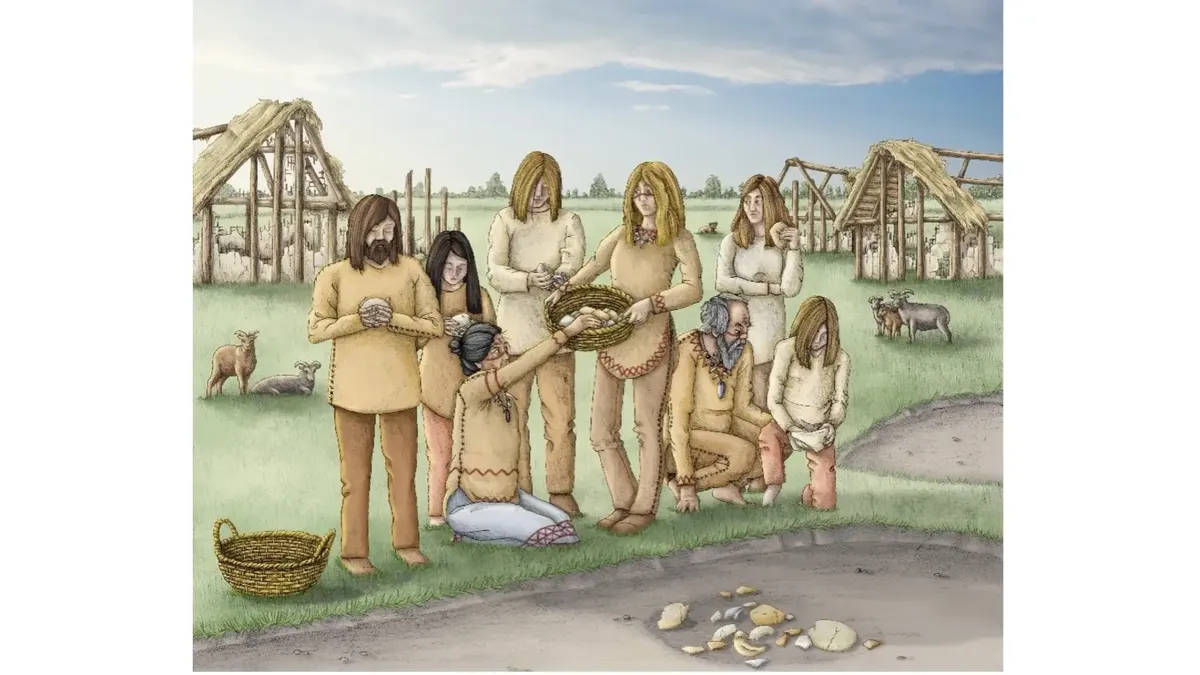
Archaeologists have discovered a pile of 15 human skulls in a Neolithic village in Italy. The bones were worn and broken, but there was no evidence of violence, leading the researchers to suspect the heads were regularly handled as part of an ancient ancestor ritual.

Although human bones are often found in archaeological excavations of burial areas, this particular collection of skulls is unique because it was found inside a building, Jess Thompson, an archaeologist at the University of Cambridge, told Live Science in an email.

In a study published Nov. 13 in the European Journal of Archaeology, Thompson and colleagues wrote that the skull mound was found at the site of Masseria Candelaro, a prehistoric village in the Italian province of Puglia. Radiocarbon dates from some of the 400 bone fragments range from 5618 to 5335 B.C., suggesting the skulls were from Neolithic people who died over the span of nearly three centuries. Most of the skulls appeared to be male.

Masseria Candelaro was a small village encircled by concentric ditches. Within the village, excavators found a sunken feature they called Structure Q, which had layers of both domestic and ritual artifacts inside. The skull cache was found in one of the top layers and lightly covered with soil, suggesting the bones were abandoned rather than buried. Given that Structure Q was not a cemetery, finding bones there is unusual, Thompson said.

Because the skulls did not have cut marks or other evidence of violence, the research team ruled out that these were the heads of enemies collected as trophies. Rather, the way the skulls were broken suggested they were retrieved from burials, amassed by descendants and actively handled over several generations in some kind of ancestor ritual.

Related: Puzzling patchwork skeleton in Belgium contains bones from 5 people spanning 2,500 years

Archaeologists studying skeletal remains on a white table in a lab

Archaeologists Jess Thompson and Sofia Panella study skull bones from Masseria Candelaro. (Image credit: John Robb / University of Cambridge)

“We certainly think that human bone had a specific kind of meaning, and perhaps was understood to be an efficacious or potent substance, given the regularity with which it was interacted with,” Thompson said.

Get the world’s most fascinating discoveries delivered straight to your inbox.

It’s unclear what the Neolithic people were doing with their ancestors’ bones. It may have been a sort of display, Thompson said, “even though we didn’t find any modifications suggesting they were suspended or attached to anything.”

In the end, the final placement of the skulls in Structure Q was unlikely to have been nefarious. Instead, it may have been a way of “decommissioning” the powerful and symbolically charged bones by taking them out of circulation and transforming them into “ex-ancestors,” the research team concluded.

Source link

Share. Facebook Twitter Pinterest LinkedIn Tumblr Email
Previous ArticleFox News AI Newsletter: AI catches cancer that mammogram missed
Next Article What next for South Korea after night of political drama and turmoil
Editor
  • Website

Related Posts

Lifestyle

Lady of Elche: A 2,400-year-old bust of a mysterious ‘highborn’ woman from pre-Roman Spain

March 2, 2026
Lifestyle

Do you weigh more when an elevator goes up or when it comes down?

March 2, 2026
Lifestyle

‘Equinox effect’ could supercharge auroras this March

March 1, 2026
Add A Comment

Comments are closed.

Categories
  • Entertainment
  • Lifestyle
  • News
  • Sports
  • Tech
  • Travel
Recent Posts
  • Priyanka Chopra on Husband Nick Jonas, Late Dad’s Approval
  • Steak ‘n Shake offers Bitcoin bonus to workers in fast-food industry first
  • Here’s a smarter way to store your files without endless subscription fees
  • Transfer Centre LIVE! 'Spurs players facing wage cuts if club relegated'
  • Lily Collins on Sharing Eating Disorder Struggles
calendar
March 2026
M T W T F S S
 1
2345678
9101112131415
16171819202122
23242526272829
3031  
« Feb    
Recent Posts
  • Priyanka Chopra on Husband Nick Jonas, Late Dad’s Approval
  • Steak ‘n Shake offers Bitcoin bonus to workers in fast-food industry first
  • Here’s a smarter way to store your files without endless subscription fees
About

Welcome to Baynard Media, your trusted source for a diverse range of news and insights. We are committed to delivering timely, reliable, and thought-provoking content that keeps you informed
and inspired

Categories
  • Entertainment
  • Lifestyle
  • News
  • Sports
  • Tech
  • Travel
Facebook X (Twitter) Pinterest WhatsApp
  • Contact Us
  • About Us
  • Privacy Policy
  • Disclaimer
  • UNSUBSCRIBE
© 2026 copyrights reserved

Type above and press Enter to search. Press Esc to cancel.