Close Menu
  • Home
  • UNSUBSCRIBE
  • News
  • Lifestyle
  • Tech
  • Entertainment
  • Sports
  • Travel
Facebook X (Twitter) WhatsApp
Trending
  • Supreme Court blocks California ban on telling parents about gender transitions
  • Apple is anticipating high demand from its March 4 releases
  • Today on Sky Sports Racing: Passing Pleasure looks to complete hat-trick at Newcastle with Wolverhampton also live on Tuesday | Racing News
  • Why Pink, Family Moved From Hollywood to New York
  • 6 U.S. service members killed since Iran mission start
  • The DJI Osmo Pocket 3 is $100 off for a limited time
  • F1 2026 rules: Explaining new cars, engines, modes and racing ahead of Australian GP first race with Bernie Collins | F1 News
  • Evil Dead Actor Shares News
Facebook X (Twitter) WhatsApp
Baynard Media
  • Home
  • UNSUBSCRIBE
  • News
  • Lifestyle
  • Tech
  • Entertainment
  • Sports
  • Travel
Baynard Media
Home»Lifestyle»Severe droughts — one lasting 13 years — crippled Maya 1,000 years ago, new study finds
Lifestyle

Severe droughts — one lasting 13 years — crippled Maya 1,000 years ago, new study finds

EditorBy EditorAugust 13, 2025No Comments4 Mins Read
Share Facebook Twitter Pinterest LinkedIn Tumblr Reddit Telegram Email
Share
Facebook Twitter LinkedIn Pinterest Email

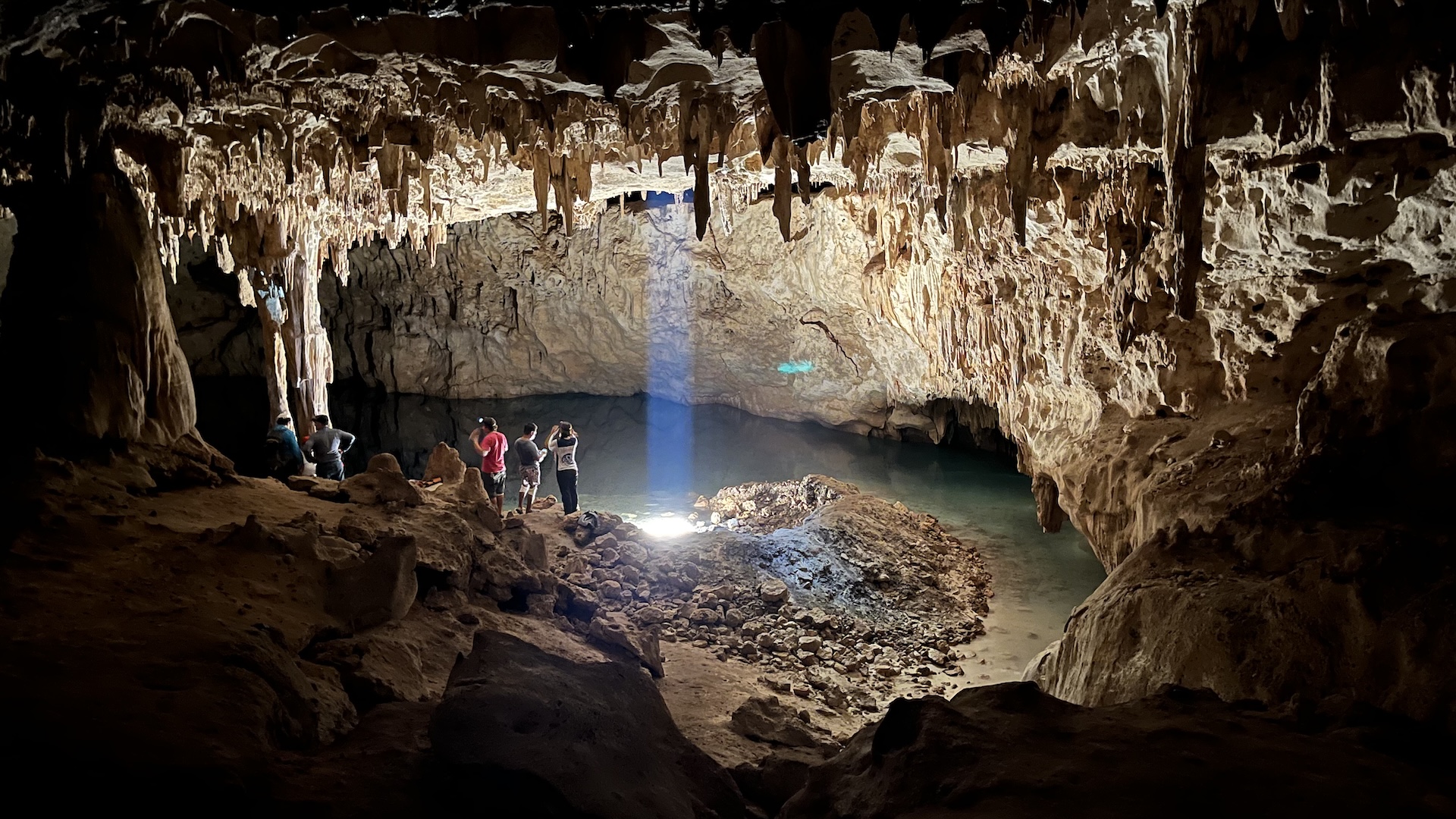
A stalagmite deep inside a cave in Mexico’s Yucatán Peninsula suggests that multiple droughts, including one lasting 13 years, may have contributed to the decline of the Maya civilization in the area.

By studying the mineral formation, the researchers could paint a detailed picture of rainfall by season, which enabled scientists to closely compare climate records with archaeological evidence of instability, according to a study published Wednesday (Aug. 13) in the journal Science Advances.

While the cause — or causes — of the Maya decline in the Yucatán Peninsula are still uncertain, many scientists think droughts played a major role. Previous studies suggested that years-long droughts occurred in southern Mexico during the ninth and 10th centuries, in what’s known as the Terminal Classic period. Maya populations in the region declined during that time, while others thrived farther north, where the climate was drier, the study reported.


You may like

“This period in Maya history has been a cause of fascination for centuries,” study co-author Daniel H. James, who conducted the research while he was a doctoral student in the Department of Earth Sciences at the University of Cambridge, said in a statement. “There have been multiple theories as to what caused the collapse, such as changing trade routes, war or severe drought, based on the archaeological evidence the Maya left behind. But in the past few decades, we’ve started to learn quite a lot about what happened to the Maya and why, by combining the archaeological data with quantifiable climate evidence.”

To better understand rainfall patterns during the Terminal Classic, James and his colleagues studied the annual growth layers of a stalagmite from a cave near Tecoh, a municipality in the Yucatán. Like tree rings, these layers record information about how much water the stalagmite received from water dripping from the cave’s ceiling in a given year. Variations in the chemical composition of each layer gave the scientists information about rainfall in each year’s wet season, which runs from May to October.

“Knowing the annual average rainfall doesn’t tell you as much as knowing what each individual wet season was like,” said James, who is now an archaeologist at University College London. “Being able to isolate the wet season allows us to accurately track the duration of wet season drought, which is what determines if crops succeed or fail.”

Related: Why did the Maya civilization collapse?

Get the world’s most fascinating discoveries delivered straight to your inbox.

Image 1 of 3

A group of people stand in front of an intricate Maya temple
(Image credit: Mark Brenner)

Researchers explore the Yucatán site of Labna, which the Maya seem to have abandoned during the Terminal Classic.

a man works in a dark cave
(Image credit: Sebastian Breitenbach)

Study co-researcher Daniel H. James studies drip rate at a cave in the Yucatán.

a group of people work in a cave
(Image credit: Sebastian Breitenbach)

From left, Daniel H. James, Ola Kwiecien and David Hodell put in a SYP drip water autosampler at a cave in the Yucatán so they can analyze seasonal changes in drip chemistry.


The team found evidence that there were eight wet-season droughts lasting longer than three years between A.D. 871 and 1021, some separated by just one wet year. These extended dry periods would have threatened Maya agriculture and possibly caused famines, the researchers said.

Though Maya in the region carefully managed their water in reservoirs and cisterns, the droughts were likely severe enough to destabilize the regional capital of Uxmal, the researchers wrote in the study. The Maya stopped building monuments and inscribing dates on them during these periods of drought, and the site’s political system collapsed a few years after the most severe drought.

But other sites, like the nearby Chichén Itzá, were able to weather the droughts. While date inscription on monuments still stopped during the droughts, the site recovered, possibly because they relied on their extensive trade network for crops from central Mexico, the researchers noted.

The findings help shape a clearer picture of Maya decline in the Yucatán during the Terminal Classic period and will enable scientists to compare more detailed climate records with archaeological evidence of societal change.

“It hasn’t been possible to directly compare the history of individual Maya sites with what we previously knew about the climate record,” James said in the statement. “Stalagmites allow us to access the fine-grained detail that we’ve been missing.”


Ancient Maya quiz: What do you know about the civilization that built pyramids across Mesoamerica?

Source link

Share. Facebook Twitter Pinterest LinkedIn Tumblr Email
Previous ArticleKansas City mayor claims race drives Trump’s crime crackdown on Black-run cities
Next Article Trump Bureau of Labor Statistics nominee was a ‘bystander’ outside Capitol on Jan. 6, White House says
Editor
  • Website

Related Posts

Lifestyle

Lady of Elche: A 2,400-year-old bust of a mysterious ‘highborn’ woman from pre-Roman Spain

March 2, 2026
Lifestyle

Do you weigh more when an elevator goes up or when it comes down?

March 2, 2026
Lifestyle

‘Equinox effect’ could supercharge auroras this March

March 1, 2026
Add A Comment

Comments are closed.

Categories
  • Entertainment
  • Lifestyle
  • News
  • Sports
  • Tech
  • Travel
Recent Posts
  • Supreme Court blocks California ban on telling parents about gender transitions
  • Apple is anticipating high demand from its March 4 releases
  • Today on Sky Sports Racing: Passing Pleasure looks to complete hat-trick at Newcastle with Wolverhampton also live on Tuesday | Racing News
  • Why Pink, Family Moved From Hollywood to New York
  • 6 U.S. service members killed since Iran mission start
calendar
March 2026
M T W T F S S
 1
2345678
9101112131415
16171819202122
23242526272829
3031  
« Feb    
Recent Posts
  • Supreme Court blocks California ban on telling parents about gender transitions
  • Apple is anticipating high demand from its March 4 releases
  • Today on Sky Sports Racing: Passing Pleasure looks to complete hat-trick at Newcastle with Wolverhampton also live on Tuesday | Racing News
About

Welcome to Baynard Media, your trusted source for a diverse range of news and insights. We are committed to delivering timely, reliable, and thought-provoking content that keeps you informed
and inspired

Categories
  • Entertainment
  • Lifestyle
  • News
  • Sports
  • Tech
  • Travel
Facebook X (Twitter) Pinterest WhatsApp
  • Contact Us
  • About Us
  • Privacy Policy
  • Disclaimer
  • UNSUBSCRIBE
© 2026 copyrights reserved

Type above and press Enter to search. Press Esc to cancel.