Close Menu
  • Home
  • UNSUBSCRIBE
  • News
  • Lifestyle
  • Tech
  • Entertainment
  • Sports
  • Travel
Facebook X (Twitter) WhatsApp
Trending
  • George Kittle’s wife shares live reaction to Achilles injury
  • ‘The scientific cost would be severe’: A Trump Greenland takeover would put climate research at risk
  • Headlines Across OC as Angel Stadium Sale Debate Intensifies
  • Anti-Islam activists clash with pro-Muslim counter-protesters in Dearborn, Michigan
  • Best monitor deal: Get the 45-inch LG Ultragear gaming monitor for its lowest price yet
  • Slovakia U21 0 – 4 England U21
  • 13 Top Sleep Products That Transform Your Bedtime Routine for Better Rest
  • Firefighters rescue puppies from burning house
Facebook X (Twitter) WhatsApp
Baynard Media
  • Home
  • UNSUBSCRIBE
  • News
  • Lifestyle
  • Tech
  • Entertainment
  • Sports
  • Travel
Baynard Media
Home»Lifestyle»Scientists say these North American rivers ‘shouldn’t exist.’ Here’s why they do.
Lifestyle

Scientists say these North American rivers ‘shouldn’t exist.’ Here’s why they do.

EditorBy EditorApril 6, 2025No Comments3 Mins Read
Share Facebook Twitter Pinterest LinkedIn Tumblr Reddit Telegram Email
Share
Facebook Twitter LinkedIn Pinterest Email

Rivers join downstream, flow downhill, and eventually meet an ocean or terminal lake: These are fundamental rules of how waterways and basins are supposed to work. But rules are made to be broken. Sowby and Siegel lay out nine rivers and lakes in the Americas that defy hydrologic expectations.

All exhibit instances of bifurcation, in which a river splits into branches that continue downstream. But unlike typical bifurcations, these examples do not return to the main waterway after branching off.

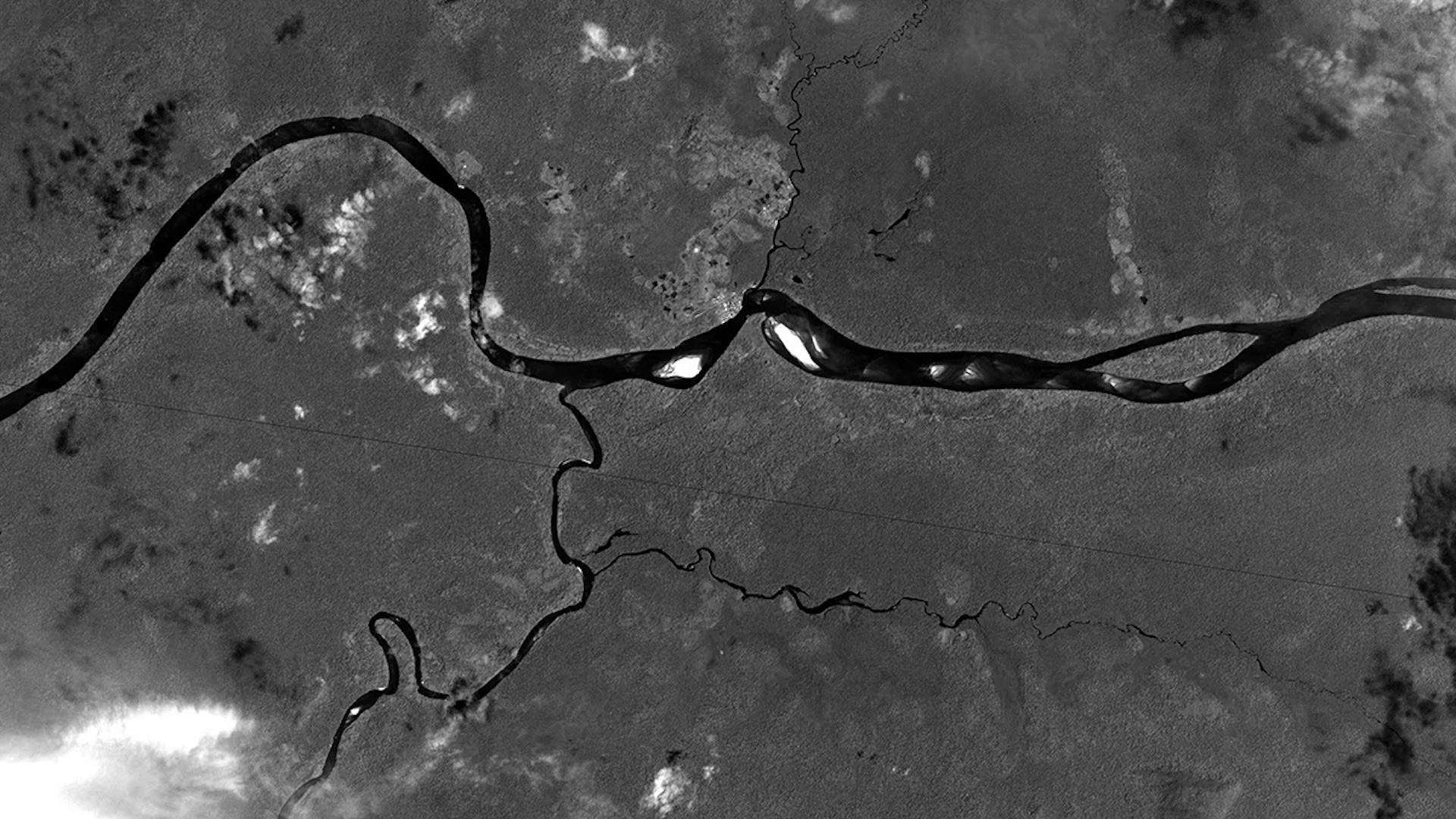
South America’s Casiquiare River, for example, is a navigable waterway that connects the continent’s two largest watersheds, the Orinoco and Amazon basins, by acting as a distributary of the former and a tributary of the latter. It’s “the hydrologic equivalent of a wormhole between two galaxies,” the authors write. The Casiquiare splits from the Orinoco River and meanders through lush, nearly flat rainforests to join the Rio Negro and, ultimately, the Amazon River. The study’s authors point out that the slight slope (less than 0.009%) is enough to send large volumes of water down the river and that this unusual instance results from an incomplete river capture. They note that understanding of the Casiquiare is still evolving.

Related: Ocean’s ‘heart’ is slowing down — and it will affect the entire planet’s circulation

Dutch colonists first mapped the remote Wayambo River in Suriname in 1717. This river can flow either east or west, depending on rainfall and human modifications of flow using locks. It is also near gold and bauxite mining as well as oil production sites, and its two-way flow makes predicting the spread of pollutants difficult.

Of all the rivers they reviewed, the researchers described the Echimamish River, high in the Canadian wilderness, as the “most baffling.” Its name means “water that flows both ways” in Cree. The river connects the Hayes River and the Nelson River, and by some accounts, the Echimamish flows outward from its middle toward both larger rivers. However, its course is flat and punctuated by beaver dams, leading to uncertainty, even today, about the direction of its flow and exactly where the direction shifts.

The authors also explored six other strange waterways, including lakes with two outlets and creeks that drain to both the Atlantic and Pacific oceans. In doing so, they highlighted how much there is still to learn about how our world’s waters work.

Get the world’s most fascinating discoveries delivered straight to your inbox.

This article was originally published on Eos.org. Read the original article.

Source link

Share. Facebook Twitter Pinterest LinkedIn Tumblr Email
Previous ArticleMIT’s ‘remote entanglement’ discovery lets QPUs to communicate at vast distances
Next Article Best binoculars for bird-watching 2025
Editor
  • Website

Related Posts

Lifestyle

‘The scientific cost would be severe’: A Trump Greenland takeover would put climate research at risk

January 17, 2026
Lifestyle

New ‘Transformer’ humanoid robot can launch a shapeshifting drone off its back — watch it in action

November 19, 2025
Lifestyle

Medieval spear pulled from Polish lake may have belonged to prince or nobleman

November 19, 2025
Add A Comment

Comments are closed.

Categories
  • Entertainment
  • Lifestyle
  • News
  • Sports
  • Tech
  • Travel
Recent Posts
  • George Kittle’s wife shares live reaction to Achilles injury
  • ‘The scientific cost would be severe’: A Trump Greenland takeover would put climate research at risk
  • Headlines Across OC as Angel Stadium Sale Debate Intensifies
  • Anti-Islam activists clash with pro-Muslim counter-protesters in Dearborn, Michigan
  • Best monitor deal: Get the 45-inch LG Ultragear gaming monitor for its lowest price yet
calendar
February 2026
M T W T F S S
 1
2345678
9101112131415
16171819202122
232425262728  
« Jan    
Recent Posts
  • George Kittle’s wife shares live reaction to Achilles injury
  • ‘The scientific cost would be severe’: A Trump Greenland takeover would put climate research at risk
  • Headlines Across OC as Angel Stadium Sale Debate Intensifies
About

Welcome to Baynard Media, your trusted source for a diverse range of news and insights. We are committed to delivering timely, reliable, and thought-provoking content that keeps you informed
and inspired

Categories
  • Entertainment
  • Lifestyle
  • News
  • Sports
  • Tech
  • Travel
Facebook X (Twitter) Pinterest WhatsApp
  • Contact Us
  • About Us
  • Privacy Policy
  • Disclaimer
  • UNSUBSCRIBE
© 2026 copyrights reserved

Type above and press Enter to search. Press Esc to cancel.