
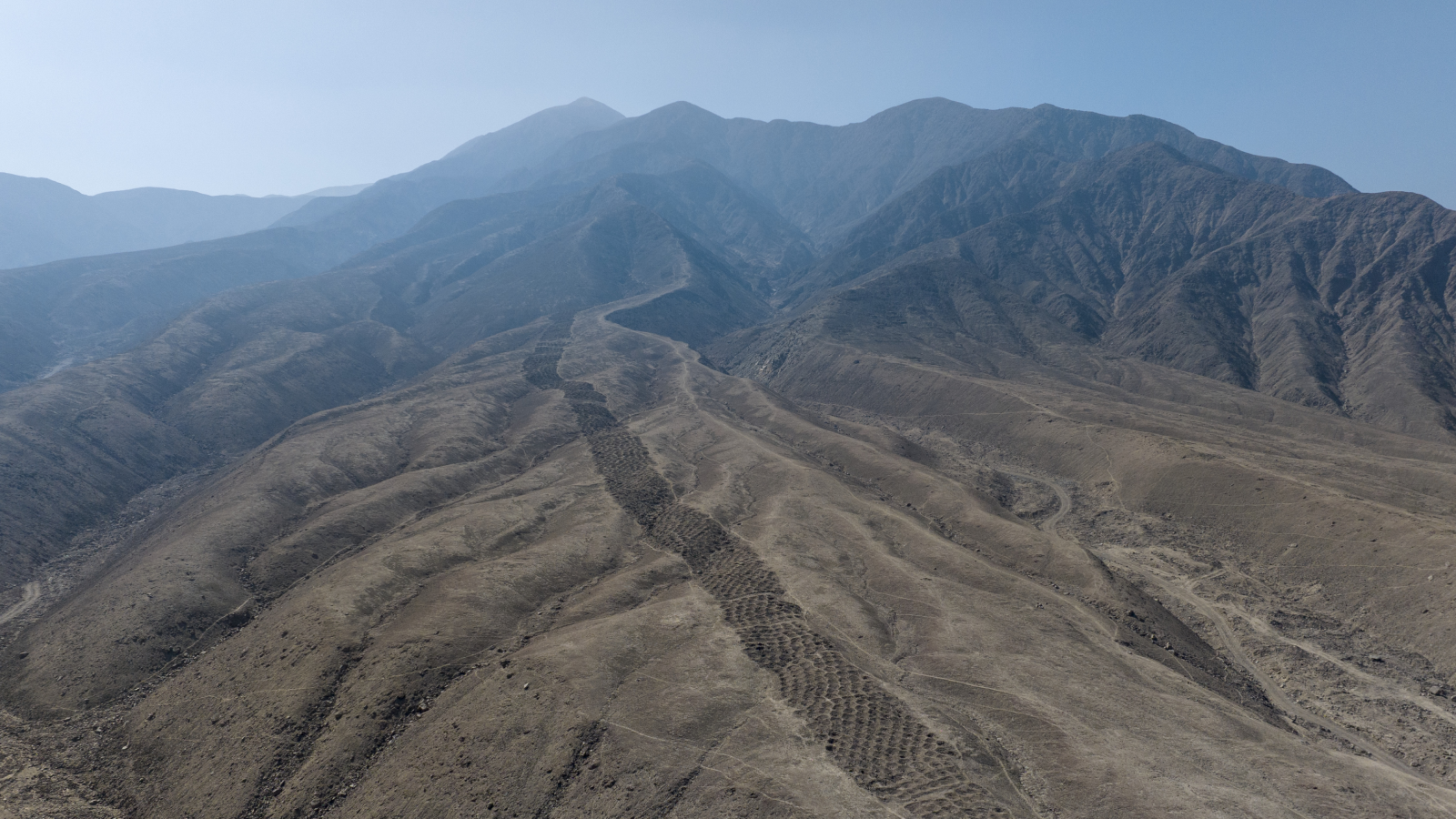
A mysterious Inca-era monument consisting of roughly 5,200 holes high up in the Andes may have been a site for barter and accounting hundreds of years ago, a new study suggests.
The holes are laid out in ordered grids on Monte Sierpe (“Serpent Mountain”) in the southern Peruvian Andes. The site may have been constructed between A.D. 1000 and 1400 as a place of exchange under the powerful Chincha Kingdom, which had a population of more than 100,000 people, according to the study. When the kingdom was conquered by the Inca Empire in the 15th century, the “Band of Holes” site may have been repurposed to collect tribute and taxes from local groups, the authors suggested.
Archaeologists made the finding after analyzing the thousands of holes with drone technology, which enabled the team to detect “mathematical patterning in the layout of the holes” — meaning they were organized into sections and blocks reminiscent of accounting and record-keeping methods of the time. The researchers also analyzed samples taken from the holes, study co-author Charles Stanish, a professor of anthropology at the University of South Florida, said in a statement.
Band of Holes
Monte Sierpe’s mysterious holes are arranged in a long band, split into blocks of a few tens of divots. Altogether, the band is 0.9 miles (1.5 kilometers) long. Each hole is between 3 to 6 feet (1 and 2 meters) across and up to 3 feet (1 m) deep, and some are lined with rocks. The site lies near a defensive settlement and an intersection of roads that predate Hispanic colonization in the 16th century.
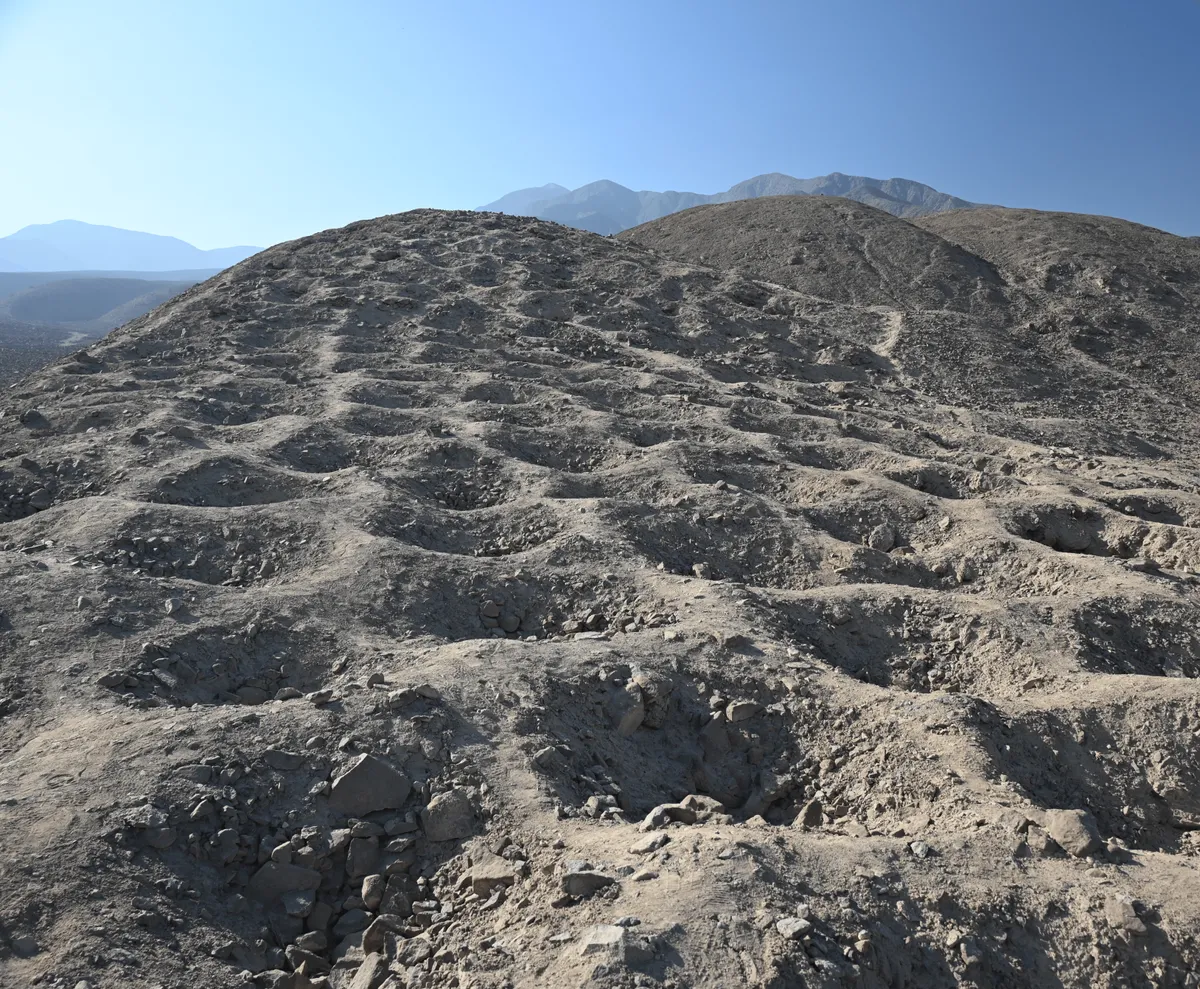
Archaeologists first recorded the site in the 1930s and later surveyed it in the 1970s, but little work has been done on it since then, Stanish said. “The site is isolated and not threatened by development,” he explained. “As a result, there has not been a sense of urgency.”
Researchers have put forward a number of different ideas over the years to explain the vast number of holes.
“Hypotheses regarding Monte Sierpe’s purpose range from defence, storage, and accounting to water collection, fog capture, and gardening”, study co-author Jacob Bongers, an archaeologist at the University of Sydney in Australia, said in a statement. “The function of the site remains unclear.”
In the new study, published Monday (Nov. 10) in the journal Antiquity, the researchers collected aerial images of the site with drones. They also analyzed remnants of centuries-old plants in the rocks and sediment from several of the holes.
The analysis found pollen from crops, including maize, inside the holes, suggesting these plants had been placed in the holes. Maize pollen does not naturally travel far from the plant, so the researchers suspected that humans, rather than natural processes, had brought it to Monte Sierpe. The team also found remnants of bulrush pollen; people in the Chincha Kingdom used bulrush to make baskets.
“These data support the hypothesis that during pre-Hispanic times, local groups periodically lined the holes with plant materials and deposited goods inside them, using woven baskets and/or bundles for transport,” Bongers said.
Barter markets were common in the Peruvian Andes during this period, especially along trade routes. Neighboring communities may have used Monte Sierpe as one such market in Chincha society, the researchers wrote in the study.
The drone images showed that the arrangement of holes at the site bore similarities to Incan khipus — record-keeping devices made from knotted cords. Researchers have previously found khipus alongside similar grids in Inca storage spaces, suggesting both sites may have been used to count and sort different goods. Slight differences in the number of holes in each block at Monte Sierpe might reflect different tribute levels from nearby towns, the researchers suggested.
“This study contributes an important Andean case study on how past communities modified past landscapes to bring people together and promote interaction,” Bongers said. “Our findings expand our understanding of barter marketplaces and the origins and diversity of Indigenous accounting practices within and beyond the ancient Andes.”
