Close Menu
  • Home
  • UNSUBSCRIBE
  • News
  • Lifestyle
  • Tech
  • Entertainment
  • Sports
  • Travel
Facebook X (Twitter) WhatsApp
Trending
  • Iran condemns US strikes that killed Khamenei at UN meeting
  • Skip subscriptions and get Microsoft Office apps for life for less than $5 each
  • Sivo makes MASSIVE break for wonder try!
  • Gay Hockey Romance Heated Rivalry: Everything to Know 
  • Threatened Twin Cities rent strike aims to win protections
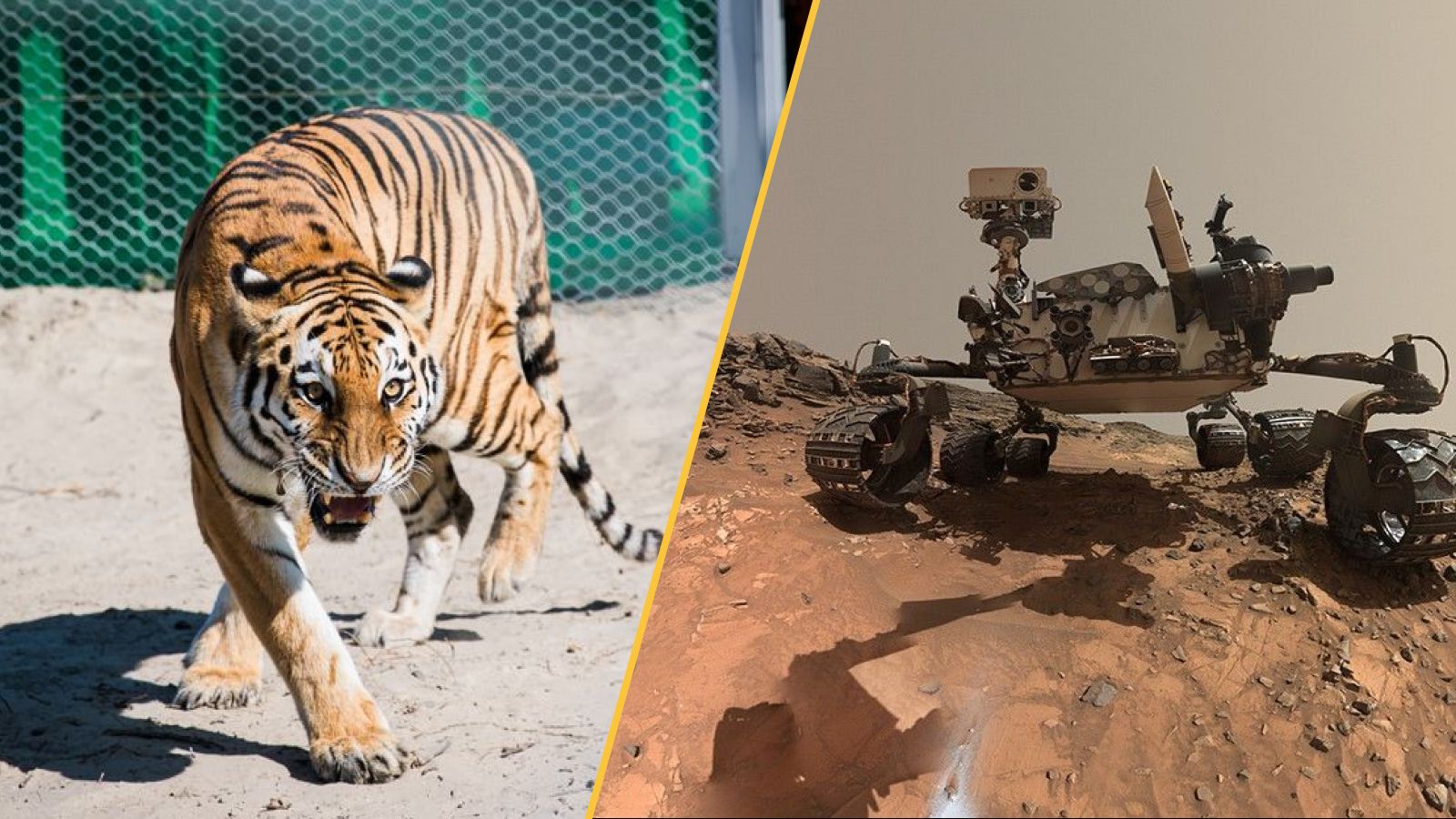
  • Science news this week: ‘Spiderwebs’ on Mars, tigers’ return to Kazakhstan, and 2,000-year-old skull with permanently blackened teeth
  • Stop tab-hopping between AI models and try this tool
  • Shane Lowry takes joint lead of Cognizant Classic with Austin Smotherman after eight-under third round | Golf News
Facebook X (Twitter) WhatsApp
Baynard Media
  • Home
  • UNSUBSCRIBE
  • News
  • Lifestyle
  • Tech
  • Entertainment
  • Sports
  • Travel
Baynard Media
Home»Lifestyle»Science news this week: ‘Spiderwebs’ on Mars, tigers’ return to Kazakhstan, and 2,000-year-old skull with permanently blackened teeth
Lifestyle

Science news this week: ‘Spiderwebs’ on Mars, tigers’ return to Kazakhstan, and 2,000-year-old skull with permanently blackened teeth

EditorBy EditorMarch 1, 2026No Comments6 Mins Read
Share Facebook Twitter Pinterest LinkedIn Tumblr Reddit Telegram Email
Share
Facebook Twitter LinkedIn Pinterest Email

Science news this week was filled with stunning space discoveries, with the largest map of the chaotic gas clouds at the center of the Milky Way leading the pack.

New images, captured in stunning detail by the Atacama Large Millimeter/submillimeter Array (ALMA) radio telescope, show 650 light-years of gas structures that shroud our galaxy’s central black hole. The stunning images could help scientists better understand how the Milky Way evolved.

Elsewhere, astronomers may have caught a star collapsing directly into a black hole for the first time, and they could soon spot a few more using the Vera C. Rubin Observatory, which issued 800,000 alerts in just one day even while semi-operational this week.

A bit closer to home, a new look at Apollo’s moon rocks has cracked a persisting mystery about the moon’s magnetic field; the James Webb Space Telescope spotted giant auroras rolling through Uranus’ atmosphere; and the Curiosity rover got a good look at Martian “spiderwebs” that contain tiny, egg-like structures.

All of that is a healthy distraction from disappointing space news here on Earth, as NASA began rolling back its Artemis II rocket for fixes following a helium leak in its upper stage. On the flip side, the agency also announced a major overhaul to its Artemis program, which now includes an extra in-orbital docking mission in 2027 before it lands on the moon in 2028.

Tigers returning to Kazakhstan

A photo of an Amur tiger being released into an enclosure in Kazakhstan.

Kazakhstan’s tigers will be imported from a closely-related subspecies in Russia. (Image credit: WWF Central Asia)

Tigers are set to roam their historic Central Asian lands after more than 70 years of local extinction, with an initiative that plans to bring them back by the end of the year.

The ambitious program by the government of Kazakhstan has transformed the country’s Lake Balkhash by planting just under 100,000 tree seedlings to recreate the tigers’ lost habitat.

Get the world’s most fascinating discoveries delivered straight to your inbox.

The tigers themselves will likely be imported from Russia, as Siberian tigers were part of the same population as Kazakhstan’s Amur tigers until they were separated in the 19th century. As for the big cats’ food, the burgeoning ecosystem offered by the seedlings is already shaping up to be a home for boar and Bactrian deer. Though they’re pretty cute, if they go unchecked by a predator, these herbivores could multiply until they destabilize their newly restored ecosystem. So, go get ’em, tiger.

Discover more animals and planet earth news

—Scientists find genetic ‘switch’ in mice that turns caring dads into violent brutes

—How can deserts form next to oceans?

—Incomplete remains of world’s ‘youngest’ impact crater spotted lurking in Chinese forest — Earth from space

Life’s Little Mysteries

The front and back of a 11th-century Norse coin. One side has squiggly lines and the other has a cross in a circle.

A Viking coin found in Maine in the 1950s in Maine has long been the subject of speculation. (Image credit: Collections of the Maine State Museum (72.73.1/ME 30.42.1))

Lobster rolls, Moxie, rocky coasts, Stephen King and … Scandinavian invaders? Maine is known for many things, but an 11th-century silver Norse coin discovered there in the 1950s raises the question of whether it was a landing point for Viking seafarers. But did the Vikings actually make it to the Pine Tree State? Or did the coin take another route?

—If you enjoyed this, sign up for our Life’s Little Mysteries newsletter

Black teeth were a fashion statement in ancient Vietnam

a human skull with blackened teeth

People have blackened their teeth for centuries in Vietnam. Now, archaeologists have found the practice goes all the way back to the Iron Age. (Image credit: © 2026 Zhang et al., Archaeological and Anthropological Sciences)

In parts of Vietnam, permanently blackened teeth have been fashionable for centuries. The traditional practice involves using an iron-tannin mixture or chewing betel nuts to stain the teeth with a jet-black sheen.

Now, archaeologists have traced this practice all the way back to the Iron Age, 2,000 years ago. The excavation of skeletons from a site in northern Vietnam’s Red River delta revealed that numerous individuals from that era also had Stygian-hued gnashers. Yet it remains unclear exactly why the practice arose — whether as a rite of passage or a way of hiding betel nut stains.

Discover more archaeology news

—Babies weren’t supposed to be mourned in the Roman Empire. These rare liquid-gypsum burials prove otherwise.

—Humans and Neanderthals interbred — but it was mostly male Neanderthals and female humans who coupled up, study finds

—Far fewer people are related to Genghis Khan than previously assumed, new genomic study suggests

Also in science news this week

—Diagnostic dilemma: A parasite never before seen in humans was behind a woman’s lung infection, organ damage and forgetfulness

—COVID-19 vaccination during pregnancy may cut risk of preeclampsia

—Scientists find genetic ‘switch’ in mice that turns caring dads into violent brutes

—‘Thermodynamic computer’ can mimic AI neural networks — using orders of magnitude less energy to generate images

—Ultrafast quantum chemistry engine could speed up the development of new medicines and materials

Science long read

closeup of blue iris of eye, with pupil and yellow striations

Scientists thought that many retinal diseases were caused by a single gene mutation. But the truth is turning out to be far more complex. (Image credit: Norman Zeb/Getty Images)

The genetic cause of “monogenic” diseases seemed fairly clear to scientists: A mutation in a single gene led to predictable, hereditary disease patterns that would be diagnosed as genetic disorders. But it turns out, that’s not right at all.

According to a growing body of research, monogenic diseases aren’t caused by single gene mutations, as many healthy people have them without showing any sign of illness. So what’s the deal? Live Science contributor Stephanie Pappas investigated in this long read.

Something for the weekend

If you’re looking for something a little longer to read over the weekend, here are some of the best skywatching guides, opinion pieces and word puzzles published this week.

Rare ‘planetary parade’ will return to the evening sky this week — but you’ll have to look at exactly the right time [Skywatching]

How menopause affects the brain — and what we still don’t know [Opinion]

Chain Word: Can you crack our science word of the day puzzle? [Word puzzle]

Science news in pictures

An image of the egg nebula, with a glowing streak of pink gas in the middle surrounded by concentric circles of white like with four diagonal beams of light streaking from top left to bottom right all in front of a deep space starry background

The Egg Nebula consists of four beams of light streaking through pink gas expelled by a star. (Image credit: ESA/Hubble & NASA, B. Balick (University of Washington))

This stunning Hubble Space Telescope image, which looks like a cosmic lighthouse swinging its beams through wide arcs of space, shows the Egg Nebula — the first, youngest and closest pre-planetary nebula ever discovered.

The light in the dust cloud comes from its star, which spewed its dense disk of dust a few hundred years ago. This light now escapes through polar openings around this dust shield, creating twin beams.

Follow Live Science on social media

Want more science news? Follow our Live Science WhatsApp Channel for the latest discoveries as they happen. It’s the best way to get our expert reporting on the go, but if you don’t use WhatsApp we’re also on Facebook, X (formerly Twitter), Flipboard, Instagram, TikTok, Bluesky and LinkedIn.


Source link

Share. Facebook Twitter Pinterest LinkedIn Tumblr Email
Previous ArticleStop tab-hopping between AI models and try this tool
Next Article Threatened Twin Cities rent strike aims to win protections
Editor
  • Website

Related Posts

Lifestyle

‘We’re starting to find a lot more weirdness’: These strange animals can control their body heat

February 28, 2026
Lifestyle

Giant string of organic molecules on Mars may be one of the best signs of life yet

February 28, 2026
Lifestyle

Scientists made AI agents ruder — and they performed better at complex reasoning tasks

February 28, 2026
Add A Comment

Comments are closed.

Categories
  • Entertainment
  • Lifestyle
  • News
  • Sports
  • Tech
  • Travel
Recent Posts
  • Iran condemns US strikes that killed Khamenei at UN meeting
  • Skip subscriptions and get Microsoft Office apps for life for less than $5 each
  • Sivo makes MASSIVE break for wonder try!
  • Gay Hockey Romance Heated Rivalry: Everything to Know 
  • Threatened Twin Cities rent strike aims to win protections
calendar
March 2026
M T W T F S S
 1
2345678
9101112131415
16171819202122
23242526272829
3031  
« Feb    
Recent Posts
  • Iran condemns US strikes that killed Khamenei at UN meeting
  • Skip subscriptions and get Microsoft Office apps for life for less than $5 each
  • Sivo makes MASSIVE break for wonder try!
About

Welcome to Baynard Media, your trusted source for a diverse range of news and insights. We are committed to delivering timely, reliable, and thought-provoking content that keeps you informed
and inspired

Categories
  • Entertainment
  • Lifestyle
  • News
  • Sports
  • Tech
  • Travel
Facebook X (Twitter) Pinterest WhatsApp
  • Contact Us
  • About Us
  • Privacy Policy
  • Disclaimer
  • UNSUBSCRIBE
© 2026 copyrights reserved

Type above and press Enter to search. Press Esc to cancel.