Close Menu
  • Home
  • UNSUBSCRIBE
  • News
  • Lifestyle
  • Tech
  • Entertainment
  • Sports
  • Travel
Facebook X (Twitter) WhatsApp
Trending
  • Iranian women’s soccer team refuses to sing national anthem at Asian Cup
  • A new iPad Air is coming: How and when to preorder
  • Amy Broadhurst: The new mother on returning to GB to chase Olympic glory, beating Imane Khelif and being ‘Baby Canelo’ | Boxing News
  • Why Daniel Radcliffe Says He's a "Fitness Freak” Now
  • Wolves push the pace, show playoff readiness in win over Nuggets
  • Apple Watch Series 11 deal: $299 at Amazon
  • Six Nations trophy damaged by fire in vehicle incident and will be replaced for 2027 edition of tournament | Rugby Union News
  • Traitors' Eric Nam Reveals Why He Never Betrayed Rob Rausch
Facebook X (Twitter) WhatsApp
Baynard Media
  • Home
  • UNSUBSCRIBE
  • News
  • Lifestyle
  • Tech
  • Entertainment
  • Sports
  • Travel
Baynard Media
Home»Lifestyle»Orionids 2025: Meteor shower caused by Halley’s Comet peaks as two new comets cross the sky
Lifestyle

Orionids 2025: Meteor shower caused by Halley’s Comet peaks as two new comets cross the sky

EditorBy EditorOctober 17, 2025No Comments3 Mins Read
Share Facebook Twitter Pinterest LinkedIn Tumblr Reddit Telegram Email
Share
Facebook Twitter LinkedIn Pinterest Email

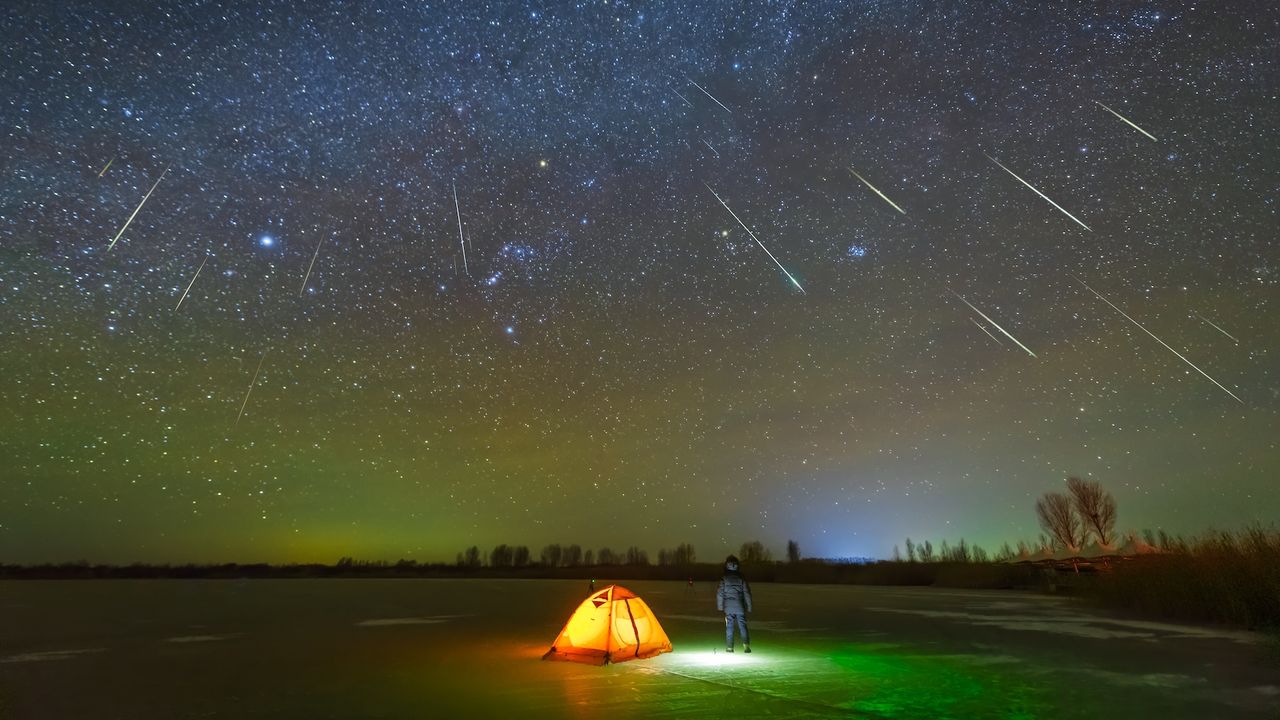
Skywatchers are set for something special after dark on Monday, Oct. 20, through Tuesday, Oct. 21, when an annual meteor shower produced by Halley’s Comet peaks just as two recently discovered comets reach their brightest points in the night sky.

According to the American Meteor Society, the Orionid meteor shower runs from Oct. 2 through Nov. 7, peaking on Oct. 20 to Oct. 21. That coincides with a new moon — when the moon is between Earth and the sun and is absent from the night sky — meaning the rare sky show should benefit from profound darkness. However, clear weather will still be required to see meteors and the brightening comets Lemmon (C/2025 A6) and SWAN (C/2025 R2).

The Orionids are the main event in fall’s “meteor season,” during which a host of minor meteor showers take place. Around 20 “shooting stars” per hour are expected during the Orionids’ peak, with meteors hitting Earth’s atmosphere at a speed of 41 miles per second (66 kilometers per second). The “shooting stars” can occur anywhere in the night sky, but if you trace them backwards, they will appear to come from a region of the night sky just north of the bright reddish star Betelgeuse in the constellation Orion — hence the shower’s name. NASA calls the Orionids one of the most beautiful showers of the year.


You may like

Orionids are the product of Halley’s Comet, which was last seen in the inner solar system in 1986 and will next be seen in 2061. The other meteor shower caused by Halley’s Comet is April’s Eta Aquariids.

While the Orionid meteor shower will be best seen in the hours after midnight on Tuesday, Oct. 21, the viewing window for the comets will take place much earlier the previous evening. Both comets will be in the post-sunset night sky and will be best seen an hour and a half after sunset — primarily with stargazing binoculars, but perhaps with the naked eye too if viewed from a dark sky site.

Comet Lemmon, which was discovered in January by the Mt. Lemmon SkyCenter observatory in Arizona’s Santa Catalina Mountains, will be low in the northwest between the end of the handle of the Big Dipper and the bright star Arcturus. Comet SWAN, which was first spotted in September by NASA’s orbiting Solar Dynamics Observatory, will be low in the south, just below the bright star Altair, one of the three stars in the famous Summer Triangle shape.

Get the world’s most fascinating discoveries delivered straight to your inbox.

Source link

Share. Facebook Twitter Pinterest LinkedIn Tumblr Email
Previous ArticleHow one man dodged Alzheimer's, plus 'trans trend' plunges at colleges
Next Article Kiss Lead Guitarist, Ace Frehley, Dies at 74
Editor
  • Website

Related Posts

Lifestyle

Lady of Elche: A 2,400-year-old bust of a mysterious ‘highborn’ woman from pre-Roman Spain

March 2, 2026
Lifestyle

Do you weigh more when an elevator goes up or when it comes down?

March 2, 2026
Lifestyle

‘Equinox effect’ could supercharge auroras this March

March 1, 2026
Add A Comment

Comments are closed.

Categories
  • Entertainment
  • Lifestyle
  • News
  • Sports
  • Tech
  • Travel
Recent Posts
  • Iranian women’s soccer team refuses to sing national anthem at Asian Cup
  • A new iPad Air is coming: How and when to preorder
  • Amy Broadhurst: The new mother on returning to GB to chase Olympic glory, beating Imane Khelif and being ‘Baby Canelo’ | Boxing News
  • Why Daniel Radcliffe Says He's a "Fitness Freak” Now
  • Wolves push the pace, show playoff readiness in win over Nuggets
calendar
March 2026
M T W T F S S
 1
2345678
9101112131415
16171819202122
23242526272829
3031  
« Feb    
Recent Posts
  • Iranian women’s soccer team refuses to sing national anthem at Asian Cup
  • A new iPad Air is coming: How and when to preorder
  • Amy Broadhurst: The new mother on returning to GB to chase Olympic glory, beating Imane Khelif and being ‘Baby Canelo’ | Boxing News
About

Welcome to Baynard Media, your trusted source for a diverse range of news and insights. We are committed to delivering timely, reliable, and thought-provoking content that keeps you informed
and inspired

Categories
  • Entertainment
  • Lifestyle
  • News
  • Sports
  • Tech
  • Travel
Facebook X (Twitter) Pinterest WhatsApp
  • Contact Us
  • About Us
  • Privacy Policy
  • Disclaimer
  • UNSUBSCRIBE
© 2026 copyrights reserved

Type above and press Enter to search. Press Esc to cancel.